Category: Blog

  • Start Small, Dream Big: Why Growing Slow Is the Smarter Way to Build a Business

    Start Small, Dream Big: Why Growing Slow Is the Smarter Way to Build a Business

    When you talk to seasoned entrepreneurs, one theme keeps popping up: regret usually comes from trying to do too much, too fast. The truth is, one of the best ways to avoid regret in business is to start small.

    Sounds boring, right? But here’s the thing—starting small isn’t playing it safe. It’s playing it smart.

    Why Small Is Powerful

    When you start small, you’re able to test ideas without putting everything on the line. You can experiment, make mistakes, and pivot quickly. No massive overhead. No crushing debt. No pressure to “scale overnight.”

    It’s way easier to grow and scale when you begin with something manageable. Think of it like working out—you don’t walk into the gym and deadlift 400 pounds on day one. You start with what you can handle and build from there. Business works the same way.

    Build in an Industry You Understand

    Another mistake people make is chasing the “next big thing” in industries they know nothing about. That’s a shortcut to regret.

    If you build in an industry you actually understand, you’re already a step ahead. You know the pain points. You know what customers care about. And maybe most importantly, you know what doesn’t work. That insight is gold.

    When you combine starting small with building where you have real knowledge, you create momentum without burning yourself out.

    Scaling Becomes Natural

    Once you’ve got your footing, scaling doesn’t feel like climbing a mountain. It feels like building on a strong foundation. Every step makes sense, because you’ve already tested, refined, and proven your idea on a smaller level.

    Instead of feeling overwhelmed, you’re in control. You know what works. You know your numbers. And you’re confident about pouring fuel on the fire.

    The Big Picture

    Starting small doesn’t mean thinking small. It means giving yourself the freedom to grow into your big vision without risking it all upfront. It’s the best way to avoid the kind of regret that comes from chasing growth before you’re ready.

    Start small. Learn fast. Grow smart. That’s how you build something that lasts.
  • Before You Start a Collection, Check These 5 Boxes

    Before You Start a Collection, Check These 5 Boxes

    Starting a collection is exciting. It’s the thrill of the hunt, the pride of ownership, and the joy of building something that feels uniquely yours. But even icons think carefully before they start a new one. Take Lewis Hamilton, for example. The seven-time Formula 1 world champion made headlines when he got rid of his car collection—yes, the guy who drives the fastest machines in the world—so he could focus on his new passion: collecting art.

    That move shows something important. A great collection isn’t just about what you collect—it’s about why you collect it. Before you dive in headfirst, it’s worth slowing down just long enough to ask yourself a few key questions. Because when you get this part right, your collection becomes more than a hobby. It becomes part of your story.

    Here are five boxes you’ll want to check before deciding where to put your time, money, and energy.

    1. Does it line up with your values?

    Your collection should feel like an extension of you. If you care about sustainability, maybe vintage or upcycled items are your thing. If creativity fuels you, art, music, or design pieces might be the way to go. Whatever you choose, it should make you feel good about what you’re building—not conflicted.

    Lewis Hamilton is a perfect example here. For years, his car collection didn’t align with his growing commitment to sustainability. So he sold it and shifted into art—a field that reflects creativity, culture, and personal expression. He didn’t just pick a collection at random; he chose one that lined up with his values.

    2. What’s the cost?

    Collections can sneak up on your wallet if you’re not careful. Hot Wheels might seem cheap… until you’ve bought 200 of them. On the flip side, comic books, watches, or art can get pricey fast. Decide on your budget early so you can collect with excitement, not guilt.

    3. Will it last?

    Some collections age well—coins, stamps, vintage cars, even sneakers. Others may fizzle out when trends change. Longevity doesn’t just mean financial value, though. It’s also about whether the collection will still matter to you ten years from now. Think beyond the “shiny new” phase.

    Hamilton’s move to art shows the power of longevity too. A car collection might have incredible financial value, but an art collection carries both cultural weight and personal meaning that can last a lifetime.

    4. How much time does it take?

    Let’s be real: some collections demand time. Hunting down rare finds, preserving condition, or learning the history behind items can become a part-time job. Others are more casual—grab-and-go, display, enjoy. Neither is wrong, but know yourself. If you don’t have the time, choose a collection that fits your lifestyle.

    5. Does it do good in the world?

    This is the moral checkmark. Does your collection make the world (or even just your corner of it) a little brighter? Maybe you’re preserving culture, supporting small creators, recycling the old into something new, or simply sparking joy for others when you share it. And here’s the kicker: are you proud to be associated with it? If the answer is yes, that’s a strong green light.

    This is another reason Hamilton’s switch is so powerful. By leaving behind his gas-guzzling car collection and stepping into art, he aligned his collecting habits with his environmental advocacy. That choice doesn’t just feel good for him—it sets an example for millions who look up to him.

    Final Thought

    Starting a collection is more than gathering stuff—it’s about creating meaning. When you check these boxes—values, cost, longevity, time, and impact—you’re not just curating objects. You’re building a reflection of who you are and what you care about.

    And that’s a collection worth showing off.

  • Spot the Trend: How AI Is Shaping the Future of Business Growth

    Spot the Trend: How AI Is Shaping the Future of Business Growth

    The business world has always been about spotting trends before everyone else does. Think about it—every major shift in history, from the rise of the internet to the boom of social media, rewarded the people who paid attention early. Today, that “next big thing” is AI. And it’s not just hype. It’s reshaping how we search, how customers find what they need, and ultimately, how businesses grow.

    The Search Game Has Changed

    Search used to be simple. Type a few words into Google, scroll, click, and repeat until you found what you wanted. Now? Not so much. AI-driven search is changing the rules. People are talking to search engines the same way they talk to a friend. They’re asking for recommendations, solutions, and explanations in full sentences. And guess what? AI doesn’t just give back links anymore—it gives answers.

    If your business isn’t thinking about this shift, you risk being invisible.

    Why This Matters for Growth

    Here’s the thing: scale comes when your customers can find you easily. If AI is the new “gatekeeper” of information, then being positioned correctly in AI-driven search results will either skyrocket your visibility or bury you in digital noise.

    Think of it like this—ten years ago, businesses scrambled to figure out SEO. Today, they need to figure out how AI tools like ChatGPT, Perplexity, or Google’s Gemini decide what content to recommend.

    Spotting Where AI Is Headed

    So how do you actually spot the trend? Start by watching how AI is shaping customer behavior. Are people asking questions instead of typing keywords? Are they looking for faster, summarized answers instead of long blog posts? Are they trusting AI to make recommendations? (Spoiler: they are.)

    The companies that lean into these shifts—by creating helpful, human-centered content that AI can “understand” and pull from—will be the ones who win.

    The Real Opportunity

    This isn’t just about staying relevant in search. It’s about anticipating how your customers will shop, learn, and make decisions in the future. Businesses that spot where AI is going can pivot faster. They’ll know when to double down on personalization, when to use AI to boost customer support, and when to experiment with new channels before competitors even notice them.

    In short: if you want your business to scale, you can’t just react to AI trends—you need to spot them early and ride the wave.

    Final Thought

    Trends aren’t random. They’re signals. Right now, AI is sending out the clearest signal we’ve seen in years: adapt or get left behind. The businesses that pay attention, experiment, and evolve with AI won’t just grow. They’ll lead.

  • Innovation Isn’t Just for Tech Anymore: Why Every Business Needs to Get Creative

    Innovation Isn’t Just for Tech Anymore: Why Every Business Needs to Get Creative

    We usually think of innovation as something happening in Silicon Valley. Apps, AI, robots, driverless cars — that’s where our minds go. But here’s the reality: innovation is no longer just for tech companies. From coffee shops to fitness studios to old-school mom-and-pop stores, the businesses that thrive today are the ones willing to get creative.

    And let’s be honest — the world is changing too quickly for anyone to just “set it and forget it.”

    Innovation Is About Survival, Not Just Growth

    Think about Blockbuster. They thought people would always drive to a store to rent movies. Meanwhile, Netflix was experimenting with DVDs by mail, then streaming, then producing their own shows. The result? Blockbuster is a trivia answer, and Netflix is part of our daily lives.

    Innovation isn’t about bells and whistles. It’s about staying relevant when customer expectations, technology, and lifestyles shift.

    Brick-and-Mortar Businesses Are Getting Bold

    Here’s the fun part: it’s not just online companies rethinking how they operate.

    * Restaurants are using QR code menus, subscription models, and even themed pop-up experiences to keep customers coming back.
    * Gyms and studios are layering in hybrid memberships — online classes plus in-person sessions — to meet people where they are.
    * Retail shops are blending ecommerce with in-store perks, like same-day pickup or in-store exclusives.

    This isn’t “tech business.” It’s just smart business.

    Customers Expect More Now

    People are spoiled for choice. If you don’t deliver convenience, value, or a fresh experience, someone else will. That doesn’t mean small businesses have to reinvent the wheel. Sometimes innovation is as simple as:

    * Rethinking how you price (like bundles or memberships).
    * Finding new ways to market (short-form video, collaborations, events).
    * Creating a unique experience that makes people want to come back.

    The Long Game: Profitability Through Creativity

    Here’s the secret: innovation isn’t about chasing trends. It’s about future-proofing your business. The coffee shop that adds a membership program today is less vulnerable tomorrow when new competitors pop up. The retail store that experiments with online sales now is ready when customer habits shift again.

    Innovation isn’t optional. It’s insurance.

    Final Thought

    Whether you’re building the next app or running a family restaurant, the principle is the same: standing still is falling behind. The good news? Innovation doesn’t have to be massive or expensive. It just has to be thoughtful.

    So the question isn’t, “Should I innovate?” The question is, “What small step can I take today to make my business more relevant tomorrow?”

  • Hot Wheels + Food: The Collabs That Always Hit Different

    Hot Wheels + Food: The Collabs That Always Hit Different

    We’ve been collecting Hot Wheels for a little over two years now, and let me tell you—there’s never a dull moment. Every time we think we’ve seen it all, Mattel drops another batch of wild new releases. Collaborations with fashion brands? Check. Movie tie-ins? Of course. Concept cars that look like they belong in a sci-fi movie? All day.

    But there’s one category that always gets us hyped: the food collaborations.

    Think about it—cars and food are two things that usually don’t belong in the same sentence. And yet, when Hot Wheels mixes the two, it just *works*. It’s playful, nostalgic, and downright fun. Plus, it’s the kind of collectible that sparks conversation the moment you show it off.

    Why Food Collabs Hit Different

    Here’s the thing. Most Hot Wheels already look cool, but the food-themed ones take you back to being a kid. Remember tearing into a Happy Meal or begging your parents for snacks in the grocery store aisle? That’s the vibe these cars bring. They’re a mix of creativity and nostalgia—and let’s be real, they just make you smile.

    Some Standout Favorites

    * The Twinkie Car – A literal snack on wheels. It’s goofy, it’s golden, and it’s one of those pieces you can’t help but show off.
    * The Kool-Aid Cruiser – You can almost hear the “Oh yeah!” when you roll it across the table.
    * The M&M’s Van – Colorful, collectible, and instantly recognizable.
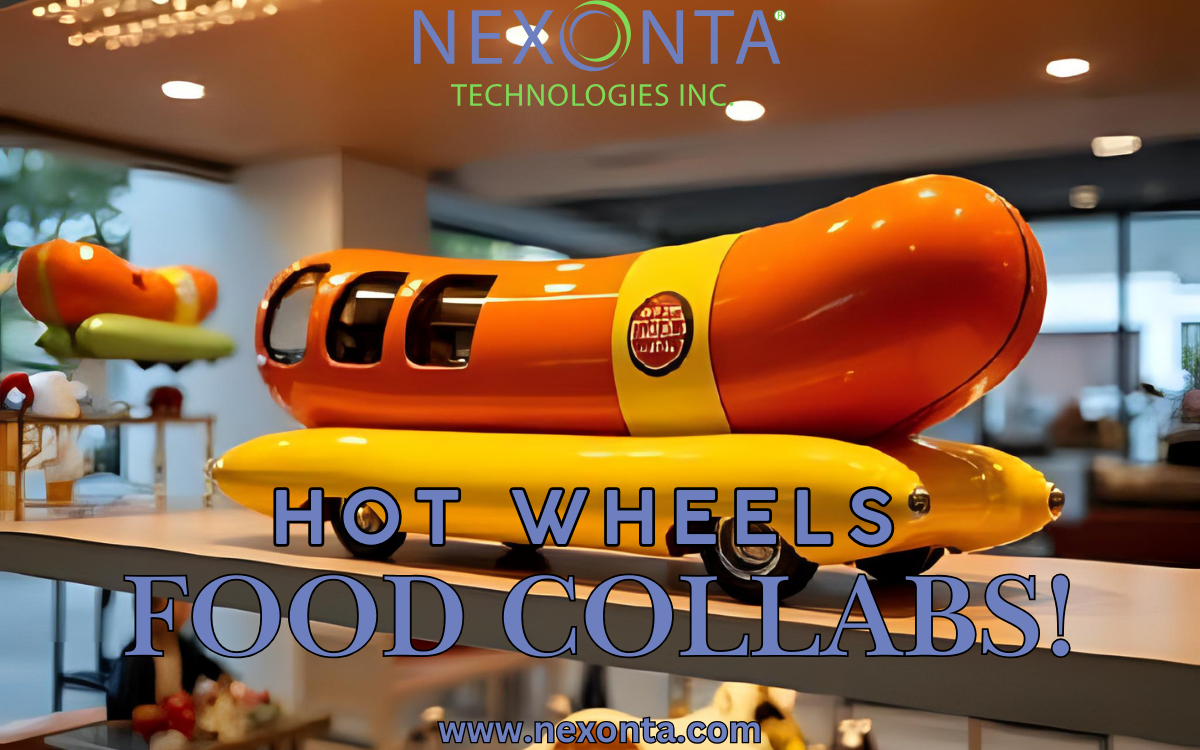
    * The Wienermobile (Hot Wheels edition) – A true legend in real life and in die-cast form.

    And the best part? These food collabs aren’t just gimmicks. They’re clever little tributes to the brands we grew up with.

    The Hunt Makes It Even Sweeter

    Ask any collector—part of the fun is in the chase. You never quite know when you’ll stumble across the next food-themed gem on the pegs. It could be at your local Walmart, hiding at the bottom of a dump bin, or maybe it shows up in a collector group trade. When you finally score one, it feels like finding treasure.

    Why We’ll Always Root for More

    Sure, we love the futuristic concepts and movie tie-ins. But the food collabs? They remind us not to take collecting too seriously. It’s supposed to be fun. A little weird. A little nostalgic. And always surprising.

    So yeah—when it comes to Hot Wheels collaborations, the food-inspired ones will always be winners in our book. They make us laugh, spark memories, and look amazing lined up on the shelf.

    Now the only question is… what’s next? A Hot Wheels Doritos truck? A die-cast Starbucks cup? Who knows—but whatever it is, we’re here for it.

  • Why Your Google Business Profile Is Still the Heart of Being Found

    Why Your Google Business Profile Is Still the Heart of Being Found

    Search is changing fast. Social media keeps grabbing more attention, and SEO feels like it’s getting more complicated by the day. One week it’s keywords, the next it’s AI summaries or video results at the top of the page. It’s a lot.

    But here’s the thing: at the center of all this shifting digital noise, one simple piece of the puzzle hasn’t lost its power — your Google Business Profile (formerly Google My Business).

    Think about it. Where do most people go when they’re looking for a business, whether it’s a new café, a lawyer, or someone to fix a leaky pipe? They Google it. And what pops up first? Those little business listings on the right side of the screen or right at the top of mobile search. That’s prime real estate. That’s your storefront window online.

    Now, imagine someone clicking and finding an old phone number, wrong hours, or an address that doesn’t exist anymore. They’re gone before you even knew they were looking. That’s why keeping this listing accurate and up to date is non-negotiable.

    Here’s what to focus on:

    1. Double-check the basics

    Your name, address, phone number, and website — they all need to be correct. If these don’t line up, Google doesn’t trust you, and neither will customers.

    2. Keep your hours current

    Changing hours for holidays? Summer schedule? Update it. Few things frustrate customers more than showing up to find your business closed.

    3. Add fresh photos

    People are visual. Photos of your space, products, or even your team go a long way in making your listing feel alive and inviting.

    4. Use posts and updates

    Most business owners forget this, but Google lets you share updates, events, and promotions right in your profile. It’s a quick way to stay visible.

    5. Ask for reviews (and reply to them)

    Reviews matter. They build trust faster than any ad ever could. And responding — even to the bad ones — shows you’re paying attention.

    The truth is, no matter how much search evolves with AI, TikTok, or whatever comes next, your Google Business Profile remains a foundation piece. It’s where trust starts. And the businesses that keep it polished and accurate will always have the edge.

    So before you stress about algorithms or the next social media trend, do yourself a favor — check your Google listing today. Is it correct? Is it fresh? If not, that’s your easiest win.

    Because at the end of the day, being found isn’t about chasing every new trend. It’s about showing up where people are actually looking — and for now, that’s still Google.

  • PSA for Entrepreneurs: Things Will Go Wrong (And That’s Okay)

    PSA for Entrepreneurs: Things Will Go Wrong (And That’s Okay)

    If you’re dreaming of starting a business, here’s a friendly public service announcement: things will go wrong. Mistakes will happen. People will disappoint you. And at some point, it will feel like you’re patching holes in a leaky boat while the waves keep crashing in.

    That’s not failure. That’s entrepreneurship.

    What most people don’t realize is that being an entrepreneur is not some polished Instagram version of “freedom.” It’s messy. It’s stressful. And it’s a constant practice of putting out fires and finding a way to keep moving forward.

    The funny part? You rarely hear the unfiltered stories until years later—long after the entrepreneur has made it big. That’s when they’ll casually drop, “Oh yeah, there was a time when we almost went bankrupt,” or “I once signed the wrong contract and nearly lost everything.” In the moment, they don’t broadcast the chaos. They’re too busy surviving it.

    So if you’re in the thick of it right now—if you’re staring at a problem you don’t know how to solve, or you just got blindsided by something you didn’t see coming—don’t panic. You’re not broken. You’re not failing. You’re simply living the real, unedited version of building something from scratch.

    The truth is, entrepreneurship is about resilience more than perfection. It’s about learning to keep your head clear when everything around you feels on fire. It’s about trusting that even the worst day is still part of the bigger story you’ll one day look back on and laugh about.

    So here’s your PSA: the storm isn’t a sign to quit. It’s the training ground that shapes you into the kind of entrepreneur who can handle the success waiting down the road.

    Keep going. The fires die down. The boat keeps floating. And the story you’re living today? That’s the one people will one day want to hear.

  • Seek and You Shall Find: Why Local Search is Coming Back with a Vengeance

    Seek and You Shall Find: Why Local Search is Coming Back with a Vengeance

    Take a walk around your neighborhood or pay attention on your daily commute. You’ll notice something: new businesses are popping up everywhere. After years of uncertainty, closures, and stop-and-go economic activity, it feels like the world is finally starting to flow again.

    And with that flow comes opportunity.

    We’re in what you could call a community build era. People are craving local connections, supporting neighborhood shops, and rediscovering the value of “near me.” Whether it’s grabbing a coffee at a new café, hitting a boutique gym, or trying out that family-run restaurant that just opened, the way we search — and where we search — has shifted.

    That’s why local search marketing is back in the spotlight.

    Why Local Search Matters Now More Than Ever

    Let’s be real: most of us live on our phones. If we want to find something, we don’t think twice — we just search it. But here’s the catch: we don’t just search anywhere. We search nearby.

    “Dentist near me.”
    “Best pizza in town.”
    “Local bookstore open now.”

    These searches are booming. In fact, local intent searches have skyrocketed, and people expect instant, accurate results. If your business isn’t showing up in these moments, you’re invisible.

    The Rebirth of the Local Economy

    The last seven years taught us how fragile global systems can be. At the same time, it reminded us how strong and resilient local communities are. That’s why we’re seeing this resurgence of neighborhood businesses. They’re not just places to spend money — they’re anchors for connection, culture, and even identity.

    And when people are looking for those places? They’re not flipping through a phonebook (remember those?). They’re pulling out their phones and searching.

    Local Search = Survival + Growth

    For small businesses, local search isn’t optional. It’s survival. It’s growth. And it’s also one of the most cost-effective ways to compete with bigger players. With the right strategy — think Google Business Profile optimization, reviews, maps, local keywords — a business can get in front of the exact people ready to walk through the door.

    It’s not just about being online. It’s about being found at the right place, at the right time, by the right people.

    The Bottom Line

    “Seek and you shall find” has never been more true. Consumers are actively searching for what’s around them, and businesses that show up in those searches are the ones thriving.

    Local search is no longer a nice-to-have. It’s the lifeline of this new era of community-driven growth.

    So, the real question is: when your neighbors are searching, will they find you?

  • Why Hot Wheels Is Not a Fad and Here to Stay

    Why Hot Wheels Is Not a Fad and Here to Stay

    Every few years, something takes the world by storm—fidget spinners, Beanie Babies, Tamagotchis. They blow up, everyone has to have them, and then… poof. They disappear into storage bins and yard sales.

    Hot Wheels? Not even close. These little die-cast cars aren’t just hanging on. They’re thriving, growing, and still sparking joy decades after their debut in 1968. Let’s break down why Hot Wheels isn’t just another fad—it’s a permanent part of culture.

    1. Nostalgia That Never Fades

    For a lot of people, the love of Hot Wheels starts in childhood. You can still remember ripping open that tiny blue-and-orange package, sliding a shiny new car onto the track, and sending it flying across the living room. That memory sticks.

    And here’s the thing—nostalgia is powerful. It pulls us back to simpler times, and Hot Wheels delivers that feeling instantly. Adults who once raced them as kids now pass them down to their children and grandchildren. It’s not just a toy; it’s a generational bridge.

    2. Car Culture in the Palm of Your Hand

    Cars are more than just machines. They’re symbols of freedom, design, speed, and even status. But not everyone can own a classic Mustang or a Lamborghini. With Hot Wheels, you can hold a piece of that dream in your hand.

    Car culture runs deep, and Hot Wheels taps into it beautifully. Collectors love the way these little models capture the soul of iconic cars, sometimes better than the real thing. Whether it’s a muscle car, a JDM tuner, or a futuristic concept ride, Hot Wheels makes car culture accessible to everyone.

    3. Collaborations: Something for Everyone

    Hot Wheels isn’t stuck in the past. The brand has mastered the art of staying relevant by teaming up with pop culture icons, fashion brands, and entertainment giants. Think Batman cars, Mario Kart editions, or even sleek designer collabs.

    That variety means there’s a Hot Wheels car for just about everyone. Whether you’re into classic muscle, superheroes, or just want something cool on your desk, there’s a collection that speaks your language.

    4. Toys That Chase Youth

    Let’s be honest—part of the magic of Hot Wheels is how they make you feel like a kid again. No matter how old you get, ripping open a fresh blister pack still sparks the same excitement you had at age eight.

    In a world where we’re all chasing ways to feel young—whether it’s through fitness, fashion, or entertainment—Hot Wheels is an affordable, joyful way to reconnect with that youthful energy. It’s a little time machine you can hold in your hand.

    5. Pure Joy on Four Tiny Wheels

    At the end of the day, Hot Wheels sticks around for one simple reason: they’re fun. Pure, uncomplicated fun. You don’t need instructions. You don’t need Wi-Fi. All you need is a car and a flat surface, and you’ve got entertainment.

    That kind of joy is timeless. Trends come and go, but the thrill of racing, collecting, and showing off your favorites never gets old.

    Hot Wheels isn’t going anywhere. Nostalgia keeps the flame alive, car culture keeps it relevant, collaborations keep it fresh, and the pursuit of youth keeps it exciting. Most of all, the joy of these little cars is universal.

    So no, Hot Wheels isn’t a fad. It’s a legacy—and it’s here to stay.

  • The Honorable Collector: Why Hot Wheels Collectors Are Different

    The Honorable Collector: Why Hot Wheels Collectors Are Different

    When you step into the world of collecting, you quickly realize that not all collectors are cut from the same cloth. Some are competitive, some are secretive, and a few can be downright cutthroat. But then you meet Hot Wheels collectors—and suddenly, the whole game changes.

    Hot Wheels collectors seem to carry themselves with a certain kind of honor. It’s not just about owning the rarest cars or flipping them for a quick profit. It’s about the thrill of the hunt, the joy of discovery, and maybe most importantly, the camaraderie that comes with it.

    Since starting our own collecting journey, we’ve had countless interactions with fellow Hot Wheels enthusiasts. And you know what? About 99% of them have been nothing but positive. That’s a staggering number if you think about it. In a world where negativity often gets the spotlight, this community stands out for being welcoming, generous, and—yes—honorable.

    What Makes Hot Wheels Collectors So Honorable?

    1) They Share the Hunt
    Walk into a store and strike up a conversation with a Hot Wheels collector, and chances are they’ll give you tips on what’s hitting the shelves or even point you toward a good find. There’s an unspoken rule that helping each other out makes the whole experience better.

    2) They Respect the Hobby
    Collecting Hot Wheels isn’t just about stashing away toys in boxes. It’s about preserving little pieces of automotive art. Collectors treat their finds like treasures, not just commodities.

    3) They Welcome Newcomers
    Many collectors remember what it felt like to start from scratch. Instead of gatekeeping, they encourage beginners, sharing advice, knowledge, and sometimes even a car or two to help someone kick off their collection.

    4) They Value Community Over Competition
    Sure, there’s excitement in finding a rare Super Treasure Hunt, but most collectors would rather share stories and swap cars than fight over them. That sense of mutual respect is rare in many collecting circles, but it’s alive and well here.

    Collecting What Everyone Loves

    Maybe the secret lies in the cars themselves. Hot Wheels aren’t just collectibles—they’re icons. Everyone remembers playing with them as kids, racing them down orange tracks, or lining them up on the floor. They tap into nostalgia, joy, and pure fun. When you’re collecting something so universally loved, it’s hard not to feel good about it.

    And that feeling spills over into how collectors treat one another. There’s a sense of “we’re all in this together.” At the end of the day, these little cars aren’t just diecast metal—they’re a bridge between people.

    Why It Matters

    In a world where people can be quick to criticize or compete, Hot Wheels collectors show us a different way. They remind us that hobbies don’t have to be isolating or cutthroat. They can be joyful, inclusive, and built on mutual respect.

    Maybe that’s why so many of us are proud to call ourselves Hot Wheels collectors. It’s not just about the cars on the shelf—it’s about the honor in the community.

    So here’s to the Honorable Collector. Long may the hunt continue.

☎ ✉
f 𝕏