Category: Blog

  • Hot Wheels HRVII Series: Just When You Think You’ve Seen It All!

    Hot Wheels HRVII Series: Just When You Think You’ve Seen It All!

    Just when you think there is nothing new to write about when it comes to collecting Hot Wheels, they release something that leaves you speechless. The Hot Wheels HRVII Series is one of those releases. It reminds you why collecting these little cars never gets old.

    Sometimes, you walk into your favourite hunting spot expecting the usual. Maybe you’ll find something interesting. Maybe you won’t. But every once in a while, you come across a release that stops you right in your tracks.

    And that’s exactly what happened last week!

    A Daily Stop Turns Into an Incredible Find

    Recently, I was visiting one of my favourite Hot Wheels haunts. It’s conveniently located right across the street from the digs I currently share with my business partner, DeeMoney.

    Needless to say, this place gets checked pretty much daily. You never know what’s going to show up on the shelves. That’s part of the fun of collecting!

    On this particular visit, I came across the Hot Wheels Premium 2025 F1 Racing Series – HRVII Series.

    And WOW!

    I was completely blown away.

    The moment I spotted these castings, I knew I was looking at something special. The level of detail, the overall design and the presentation were simply phenomenal.

    These weren’t just another batch of Hot Wheels cars. This was something on a whole other level.

    The Details Make All the Difference

    What really caught my attention was how much thought had gone into these models.

    The castings looked incredible. The detailing was impressive. And the overall layout of the series made it feel like a premium collection that deserved a place in any serious Hot Wheels display.

    It’s one thing to release another collection of cars. It’s quite another to create something that makes collectors stop, take a closer look and appreciate the craftsmanship.

    That’s what makes this release stand out.

    Hot Wheels has always been good at giving collectors something to get excited about. But every so often, they raise the bar in a way that catches even the most enthusiastic collectors off guard.

    The HRVII series did exactly that.

    And Yes, I Bought Them All!

    Now, let’s be honest.

    When you’re a Hot Wheels collector and something this impressive lands right in front of you, there really isn’t much of a decision to make.

    I bought them all!

    Had to.

    These are a fantastic addition to an already wonderful collection. And that’s one of the things I love most about this hobby. You can spend years building a collection, thinking you’ve found some of your favourite pieces.

    Then Hot Wheels comes along and gives you another reason to make room on the shelf.

    It’s never really over, is it?

    Just When You Think You’ve Seen It All…

    That’s the beauty of collecting Hot Wheels.

    You never quite know what the next release will bring. One day you’re checking your regular hunting spot. The next, you’re standing there looking at a collection that completely blows you away.

    The 2025 F1 Racing HRVII Series was one of those moments for me.

    It’s a reminder that Hot Wheels continues to find ways to surprise collectors. The creativity, attention to detail and ability to keep things exciting are what make this hobby so much fun.

    And let’s face it. That’s exactly why we keep going back for more!

    Just when you think you’ve seen it all, Hot Wheels comes along and proves you wrong.

    What a magnificent release!

    What’s Your Latest Hot Wheels Find?

    Have you come across the Hot Wheels Premium 2025 F1 Racing HRVII Series yet?

    I’d love to know what you think. Did these castings impress you as much as they impressed me? And more importantly, did you manage to find the entire series?

    Share your latest Hot Wheels finds, favourite releases and collecting stories with us. After all, half the fun of this hobby is sharing the excitement with other collectors.

    Keep hunting, keep collecting and never assume you’ve seen it all. You never know what’s waiting on the next shelf!

  • What Is Agentic AI? It’s Not Just a Chatbot. It’s About Getting Work Done.

    What Is Agentic AI? It’s Not Just a Chatbot. It’s About Getting Work Done.

    Artificial intelligence is changing how businesses operate. But there is a big difference between using AI to answer questions and using AI to help get work done. That’s where Agentic AI comes in.

    So, what is Agentic AI, and why are more businesses starting to pay attention?

    Think about the everyday activities that keep a business running. Responding to inquiries, updating customer records, scheduling appointments, following up with prospects, managing information and keeping teams informed.

    These tasks often involve several people, different software programs and a lot of back-and-forth communication.

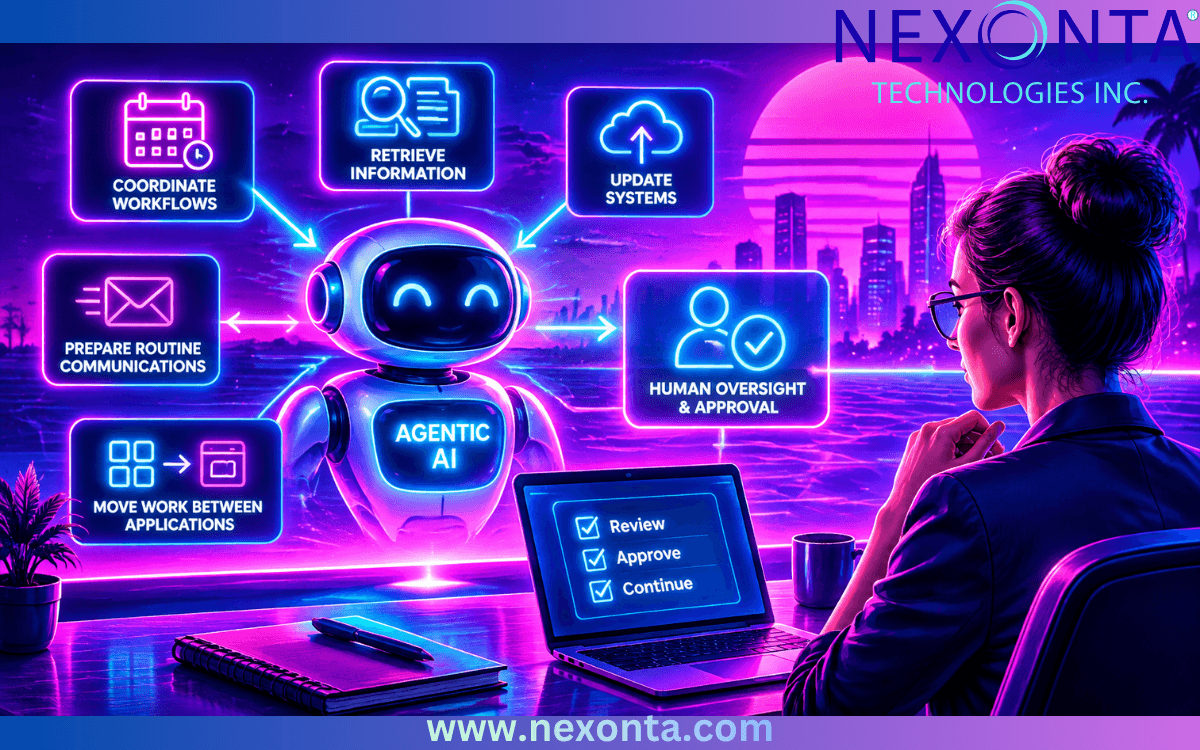
    Agentic AI has the potential to connect these activities, take action within approved systems and help move work forward.

    In simple terms, AI is moving beyond answering questions. It is becoming a tool that can help businesses execute tasks.

    Let’s take a closer look.

    What Is Agentic AI?

    Agentic AI refers to artificial intelligence systems that can work toward defined objectives, make decisions within established rules and take appropriate actions using approved tools and systems.

    Unlike a traditional chatbot, which primarily responds to questions and prompts, an AI agent can potentially do much more.

    Depending on how it is designed and configured, an Agentic AI agent can:

    1. Receive information from different sources.
    2. Understand and interpret text.
    3. Determine the next appropriate action.
    4. Interact with approved software and systems.
    5. Perform defined tasks.
    6. Communicate with people.
    7. Monitor progress.
    8. Escalate exceptions when something needs attention.
    9. Request human approval when necessary.
    10. Continue a workflow based on defined objectives and rules.

    The important distinction is that an AI agent can move beyond providing information and help execute a process.

    It doesn’t simply tell someone what needs to be done. It can potentially help get it done.

    How Is Agentic AI Different From a Chatbot?

    Let’s use a simple business example.

    Imagine a potential customer visits your website and submits an inquiry.

    With a traditional chatbot:

    The chatbot can answer common questions, provide information and direct the visitor to the appropriate department. It may collect contact details or help someone find what they are looking for.

    That’s useful. But the conversation often ends with a person needing to take the next steps.

    With Agentic AI:

    An AI agent could potentially take the inquiry further.

    It could review the information, identify what the prospect needs, check predefined qualification criteria, update the CRM, determine the appropriate next step and initiate an approved follow-up process.

    If an appointment is needed, it could potentially help coordinate scheduling.

    If something falls outside its instructions, it can escalate the matter to a human team member.

    The difference is important.

    A chatbot primarily helps answer questions. Agentic AI can potentially help move the entire business process forward.

    How Is Agentic AI Used at the Enterprise Level?

    At the enterprise level, businesses often have many departments, employees, software platforms and communication channels.

    Sales, marketing, customer service, operations, finance and management all rely on information to make decisions and complete their work.

    The challenge isn’t always a lack of technology. In many cases, it’s that the technology, information and people aren’t properly connected.

    This is where Agentic AI becomes particularly interesting.

    An enterprise Agentic AI environment can potentially connect four important areas:

    1. People

    Employees, managers, customers, prospects and business partners all play a role in getting work done.

    AI agents can help coordinate communication, provide relevant information and support employees as they complete their responsibilities.

    2. Processes

    Every business has processes that need to happen consistently.

    These might include handling new inquiries, qualifying leads, processing requests, managing customer service issues or following up on outstanding tasks.

    Agentic AI can help coordinate these activities and move work from one step to the next.

    3. Software and Data

    Most businesses already use multiple software platforms.

    These might include CRM systems, websites, accounting software, marketing platforms, databases, scheduling tools and internal management systems.

    Agentic AI can potentially interact with approved systems and move information between them, subject to permissions, integrations and business rules.

    4. Communication

    Communication connects everything.

    Customers need responses. Employees need updates. Managers need visibility. Departments need to know what has happened and what needs to happen next.

    AI agents can help coordinate these communications and keep the appropriate people informed.

    When these four areas work together, businesses can create more connected workflows.

    The result can be a combination of automated actions, human collaboration, monitoring and escalation.

    What Does an Agentic AI Workflow Look Like in a Real Business?

    Let’s look at a practical example.

    Imagine a company receives 50 new inquiries through its website every week.

    Each inquiry needs to be reviewed, categorized, assigned, entered into the CRM and followed up.

    Depending on the business, this could involve several employees and multiple software platforms.

    An Agentic AI workflow could potentially handle many of the steps.

    Here’s how it might work:

    1. Receive an inquiry: An agent receives a new customer inquiry from the website or another approved communication channel.
    2. Read and classify: It reviews the message and identifies the type of inquiry.
    3. Extract information: It gathers relevant details such as the customer’s name, contact information, business requirements and areas of interest.
    4. Check qualification criteria: It compares the information against predefined business rules.
    5. Update the CRM: It creates a new customer record or updates an existing one.
    6. Determine the next action: It identifies the appropriate next step based on the company’s instructions.
    7. Coordinate an appointment: It may propose or schedule an appointment using approved scheduling rules.
    8. Send an approved response: It communicates with the prospect using authorized messaging and information.
    9. Create follow-up tasks: It assigns or creates the next tasks for the appropriate team members.
    10. Monitor progress: It tracks the interaction and checks whether the required steps have been completed.
    11. Escalate exceptions: If something requires additional attention, it brings a human into the process.

    Imagine having this type of workflow supporting your business every day.

    Instead of employees spending so much time moving information between systems, checking records and remembering follow-ups, they can spend more time on conversations, decisions and customer relationships.

    Of course, the level of automation depends on the systems involved, the quality of the integrations, the permissions provided and the rules established by the business.

    Does Agentic AI Replace People?

    This is one of the biggest questions businesses have about AI.

    And it’s an important one.

    The objective of Agentic AI should not be to eliminate the people who make a business successful.

    It’s about reducing unnecessary administrative steps that get in the way of people doing their jobs.

    There will always be situations where human judgment, experience, approval and relationship management are important.

    For example:

    • A sales representative may need to speak directly with a qualified prospect.
    • A manager may need to approve an important business decision.
    • A customer service representative may need to resolve a sensitive complaint.
    • An employee may need to review information that doesn’t meet established criteria.

    Agentic AI can help prepare the information, coordinate the next steps and bring the right person into the process.

    The human remains involved where it matters.

    The goal is to give people more time to focus on work that requires their knowledge, experience and personal attention.

    Can Agentic AI Work With Existing Business Software?

    Yes. And this is an important consideration for businesses exploring Agentic AI.

    Many companies have already invested in their websites, CRM platforms, accounting systems, marketing tools and internal software.

    They don’t necessarily want to replace everything they already own.

    The good news is that Agentic AI can potentially connect existing business activities rather than requiring a company to start from scratch.

    Through approved integrations, APIs and other system connections, AI agents can potentially interact with existing platforms.

    For example, a business may be able to connect its website inquiry process to its CRM, scheduling system and customer communication tools.

    This creates an opportunity to improve how existing technology works together.

    However, not every system can connect in the same way. Some platforms may require additional development, and security, permissions and data access must be considered.

    The starting point should be understanding how the business currently operates and identifying where better connections could make the biggest difference.

    Where Should a Business Start With Agentic AI?

    It’s tempting to look at AI and immediately think about automating everything.

    But that’s not necessarily the best approach.

    A better starting point is to look at the everyday activities that consume time, involve repetitive administrative work or require information to move between multiple systems.

    Ask yourself:

    • Where are employees spending too much time on repetitive tasks?
    • Where does information get entered more than once?
    • Are customer inquiries being followed up consistently?
    • Do departments struggle to share information?
    • Are employees switching between multiple systems to complete one task?
    • Where do delays occur because someone is waiting for information or approval?

    These questions can help identify opportunities where Agentic AI may provide real business value.

    The next step is to understand the existing processes, identify the systems involved and determine which tasks can be automated safely and effectively.

    Start with a clearly defined workflow. Measure the results. Then look at where additional improvements can be made.

    The Future of Business Is About Connecting the Work

    AI is evolving quickly.

    But the biggest opportunity for businesses isn’t simply having another chatbot on their website or another tool that can generate content.

    It’s understanding how AI can help connect people, processes, software, data and communication.

    Agentic AI has the potential to help businesses move information, coordinate activities, complete defined tasks and keep work progressing.

    It can also help employees spend less time on unnecessary administration and more time on the activities that actually grow the business.

    The question is no longer just, “How can we use AI?”

    It’s becoming:

    “How can we use AI to help our business get more work done, more efficiently, without losing the human involvement that matters?”

    That’s a much bigger opportunity.

    Want to Explore What Agentic AI Could Do for Your Business?

    At Nexonta, we believe the best place to start is by understanding how your business actually operates.

    Before recommending AI solutions, we look at your existing systems, processes, communication and day-to-day activities.

    We help identify where Agentic AI could potentially reduce administrative work, improve coordination, connect existing technology and support your team’s productivity.

    You don’t necessarily need to replace the systems you already use. You need to understand how they could work better together.

    Let’s explore what’s possible.

    Visit Nexonta to learn more and start a conversation about how Agentic AI could help your business work smarter.

  • The Cost of Doing Business: All About the Benjamins

    The Cost of Doing Business: All About the Benjamins

    What is your business really spending on its day-to-day processes? And what could you achieve if you improved them?

    The cost of doing business goes beyond salaries, rent, software, and office expenses. It also includes the time your team spends on repetitive tasks, manual processes, and work that could be done more efficiently.

    Think about it. How many hours does your team spend every week copying information, updating records, preparing reports, answering routine questions, or following up on tasks?

    Now imagine putting some of that time back into your business.

    That’s where things get interesting. And yes, it really is all about the Benjamins!

    At Nexonta, we believe businesses should look beyond the cost of implementing new technology. The bigger question is this: What business value could you create by improving the way you work?

    Let’s break it down.

    1. Start With the Cost of Your Current Process

    Before investing in new technology, you need to understand what your current processes are costing you.

    You don’t need a complicated financial model to get started. Sometimes, a simple calculation can reveal a surprising opportunity.

    Let’s look at an example.

    Company A: The Cost of Repetitive Work

    Imagine a company with 10 employees who each spend 30 minutes a day completing the same repetitive process.

    That might involve entering data, updating customer records, processing requests, or preparing information for another department.

    Here’s what that time adds up to:

    • Employees involved: 10
    • Time spent per employee: 30 minutes per day
    • Working days per year: 250
    • Total time spent annually: 1,250 hours
    • Estimated fully loaded labour cost: $35 per hour

    Let’s do the math.

    10 employees × 0.5 hours per day × 250 working days = 1,250 hours per year.

    Now multiply those hours by the estimated labour cost.

    1,250 hours × $35 per hour = $43,750 per year.

    That’s right. One repetitive process could account for $43,750 in annual labour capacity.

    And that’s just one process.

    What happens if your business has five, ten, or twenty processes that consume valuable employee time?

    Suddenly, the opportunity becomes much more interesting.

    The question isn’t simply how much a process costs. It’s what your business could accomplish if that time were put to better use.

    2. Five Categories Every Agentic AI Business Proposal Should Consider

    A good Agentic AI business proposal shouldn’t focus only on the technology or the initial investment.

    It should look at the bigger picture.

    Where can improvements create measurable value? How will those improvements affect your people, your customers, and your bottom line?

    Here are five important categories to consider.

    Category 1: Labour Efficiency and Productivity

    Let’s start with the example we just explored.

    When employees spend hours on repetitive work, they have less time available for other responsibilities.

    Improving that process could give some of those hours back.

    Depending on the task, Agentic AI may help coordinate workflows, retrieve information, update systems, prepare routine communications, or move work between applications. Appropriate human oversight and approval can remain part of the process.

    The potential benefit goes beyond completing tasks faster.

    Your team could redirect its time towards higher-value activities, such as:

    • Providing better customer service.
    • Following up with sales prospects.
    • Increasing production capacity.
    • Supporting management and operations.
    • Developing new business opportunities.
    • Completing higher-value professional work.

    Think about what your business could do with an additional 1,250 hours of employee capacity each year.

    That could mean more customer conversations, faster turnaround times, or more time for work that directly supports business growth.

    The key is to identify where that time can make the greatest difference.

    Remember: Recovered employee time doesn’t automatically equal cash savings. It creates capacity that your business can use to improve productivity, increase output, reduce overtime, or potentially lower costs. The actual financial benefit depends on how the business uses that capacity.

    Category 2: Revenue Growth and Sales Opportunities

    Time is valuable. But what happens when your team has more time to focus on generating revenue?

    Consider how much time salespeople spend on administrative tasks.

    They may be updating customer relationship management (CRM) systems, researching prospects, preparing follow-up emails, scheduling meetings, or tracking opportunities.

    Those tasks matter. But they aren’t all the same as having a meaningful conversation with a potential customer.

    Agentic AI can help coordinate parts of the sales process, prepare information, support follow-ups, and move tasks forward according to defined rules and permissions.

    Your sales team can then spend more time building relationships, understanding customer needs, and pursuing qualified opportunities.

    The business value might come from:

    • More time available for prospecting.
    • Faster follow-up with potential customers.
    • Fewer missed opportunities.
    • Better visibility into the sales pipeline.
    • More consistent communication.

    Of course, more activity doesn’t guarantee more sales.

    The opportunity is to remove unnecessary friction from the sales process so your people can focus on the activities most likely to generate revenue.

    Category 3: Customer Experience and Retention

    Customers expect timely responses, clear communication, and a smooth experience.

    When internal processes are slow, customers often feel the effects.

    A request may sit in someone’s inbox. A follow-up may be missed. Information may need to be entered into multiple systems before a customer receives an answer.

    These delays can create frustration for customers and extra work for employees.

    Agentic AI can help coordinate customer-related workflows, retrieve relevant information, route requests, and support timely follow-ups.

    With the right systems and safeguards, businesses may be able to improve response times and deliver a more consistent customer experience.

    Consider the potential value of:

    • Responding to routine enquiries faster.
    • Keeping customer information organized.
    • Following up on outstanding requests.
    • Identifying issues that need human attention.
    • Helping employees access the information they need.

    Better customer experiences can support customer loyalty and retention.

    And keeping an existing customer can be just as important as winning a new one.

    The goal isn’t to remove the human element from customer service. It’s to give your people better tools and more time to provide it.

    Category 4: Operational Efficiency and Business Throughput

    Every business has processes that affect how much work it can complete.

    These might include processing orders, preparing quotes, scheduling jobs, managing documents, coordinating departments, or moving information between systems.

    When one step slows down, the entire process can suffer.

    A delayed approval might hold up a project. Missing information might require several follow-up emails. A manual handoff might leave a task waiting until someone has time to deal with it.

    These small delays can add up.

    Agentic AI can help coordinate connected tasks, identify the next step in a workflow, and move information between supported systems.

    This may help businesses reduce delays and improve the flow of work.

    Potential benefits include:

    • Faster processing times.
    • Fewer unnecessary handoffs.
    • Better coordination between departments.
    • Less time spent chasing information.
    • Greater capacity to handle existing workloads.

    For a growing business, this matters.

    You may be able to serve more customers or complete more work without increasing administrative effort at the same rate.

    That’s an important opportunity to explore before assuming that growth requires more people, more software, or more overhead.

    Category 5: Quality, Accuracy, and Risk Reduction

    Let’s talk about another hidden cost of doing business: mistakes.

    Manual processes can create opportunities for errors, inconsistent information, missed steps, and incomplete records.

    When something goes wrong, the cost often extends beyond fixing the original problem.

    Employees may need to investigate, correct information, contact customers, repeat work, or explain what happened.

    In some industries, mistakes can also create compliance, security, or financial risks.

    Agentic AI may help by following defined workflows, checking information against established rules, flagging exceptions, and maintaining records of completed actions.

    Depending on the application, this could support:

    • More consistent processes.
    • Earlier identification of missing information.
    • Fewer avoidable errors.
    • Better documentation.
    • More reliable handoffs between systems.

    Of course, AI isn’t error-free. It can introduce new risks if it’s poorly designed or implemented.

    That’s why an effective proposal should consider data quality, security, access permissions, testing, and human approval where appropriate.

    The objective is to improve the process while keeping the right controls in place.

    3. Add Up the Business Value

    Now let’s return to Company A.

    We’ve identified a process that consumes 1,250 hours each year, representing an estimated $43,750 in annual labour capacity.

    What if an improved process reduced the time required by 50%?

    The potential result would be:

    MeasureAnnual result
    Current time spent1,250 hours
    Potential time recovered625 hours
    Estimated labour capacity released$21,875

    That’s 625 hours that could potentially be redirected to other business activities.

    But let’s be clear about what the numbers mean.

    The $21,875 represents the estimated value of the labour capacity released. It isn’t automatically a $21,875 reduction in payroll or a guaranteed financial saving.

    To determine the actual return on investment, the business would also need to consider implementation costs, ongoing technology expenses, employee time required for oversight, and the measurable benefits achieved.

    For example, if the recovered hours allow employees to handle more customer requests, pursue additional sales, or increase production, the company should estimate the financial value of those improvements.

    If the process reduces overtime or eliminates an external service expense, the company may be able to identify more direct savings.

    The goal is to build a business case based on realistic assumptions, measurable outcomes, and the company’s actual priorities.

    Good business decisions start with understanding the numbers. Great ones connect those numbers to an opportunity.

    4. Why Agentic AI Should Start With the Business Problem

    It’s easy to get caught up in the excitement around AI.

    There are new tools, new platforms, and new possibilities appearing all the time.

    But choosing a technology before understanding the problem can lead to unnecessary expense and disappointing results.

    A better approach is to start with a few straightforward questions:

    • Which business processes consume the most time?
    • Where are employees doing repetitive work?
    • Which delays affect customers or revenue?
    • Where do errors create additional costs?
    • Which activities limit your ability to grow?
    • What would improving these processes be worth to your business?

    Once you understand the answers, you can assess whether Agentic AI is an appropriate solution.

    Some problems may be solved by improving an existing workflow. Others may require better integration between systems, process redesign, conventional automation, or a combination of technologies.

    Not every problem needs AI.

    The right solution is the one that delivers meaningful business value.

    At Nexonta, we believe the starting point should always be the business objective, not the technology.

    5. Your Next Business Advantage Could Already Be Inside Your Company

    Here’s something worth thinking about.

    You may not need to hire more people to make progress on every business priority.

    You may not need another software subscription.

    And you may not need to work longer hours.

    You may need to take a closer look at how work gets done today.

    The time your employees spend on repetitive tasks, the delays between departments, and the manual steps that slow down your operations could reveal opportunities to improve productivity and create more value.

    Agentic AI offers new ways to address some of these challenges. But the real opportunity comes from identifying the right processes, setting clear objectives, and measuring the results.

    Start with one process.

    Understand its current cost. Identify what could be improved. Estimate the potential value. Then determine whether the expected benefits justify the investment.

    You don’t need to transform your entire business overnight.

    You need to find the right opportunity and build from there.

    Let’s Talk About Your Bottom Line

    At Nexonta, we help businesses explore how Agentic AI and connected business systems can improve the way work gets done.

    Our approach starts with understanding your business, your existing processes, and the challenges you want to solve.

    Together, we can identify opportunities to reduce repetitive work, improve operational efficiency, support your team, and create more room for growth.

    The first step is understanding what your current processes are costing you — and what improving them could be worth.

    Ready to discover where your business could create more value?

    Contact Nexonta to discuss an Agentic AI opportunity assessment.

    Let’s look at the numbers, identify the opportunities, and build a practical plan focused on business results.

    Because when it comes to the cost of doing business, every hour counts.

    And yes, it’s all about the Benjamins!

  • The Hot Wheels Ford Mustang GTD RC Car: Should I Open It or Keep It Sealed?

    The Hot Wheels Ford Mustang GTD RC Car: Should I Open It or Keep It Sealed?

    Every Hot Wheels collector knows the feeling of finding something special. But the Hot Wheels Ford Mustang GTD RC car has me facing a serious collector’s dilemma. I was fortunate enough to come across one recently, and my first reaction? I was beyond happy! But now that I have it in my collection, there’s just one problem. I really, really want to open it!

    Meet My Latest Mustang GTD Discovery

    Let’s start with the car itself.

    The first thing that caught my eye was its matte grey finish. Add the black wheel spokes, completely blacked-out windows, and those sleek Mustang GTD lines, and you’ve got a car that looks seriously good.

    And this isn’t your typical Hot Wheels casting.

    The car is about twice the size of a regular Hot Wheels car, which gives it a much bigger presence. It also comes with a black remote control featuring grey and blue buttons.

    Now, I have to admit, there’s something exciting about a car that promises more than just looking good on a shelf.

    This Mustang is meant to move!

    And that’s where my problem begins.

    We’re Not Just Hot Wheels Collectors

    Huey and I, along with DeeMoney as part of our collecting adventures, have built up quite a collection over the years.

    While Hot Wheels cars are a big part of what we collect, we don’t limit ourselves to one brand or type of toy car. We have plenty of other die-cast vehicles, toy cars, and remote control cars in our collection.

    In fact, our collection has grown into something pretty impressive.

    Here’s another detail that might surprise you. Around 99% of our collection is still in its original packaging!

    Yes, we’re those collectors.

    We love finding new additions, admiring the details, and keeping our cars in the condition they came in. There’s something satisfying about seeing a collection grow while knowing each piece has been carefully preserved.

    But every now and then, a car comes along that makes you question your collecting habits.

    And this Mustang GTD is doing exactly that.

    The Great Collector Debate: To Open or Not to Open?

    If you’re a collector, you probably understand the struggle.

    You find a car you’ve been looking for. You bring it home. You admire it from every angle. Maybe you even find the perfect spot for it in your collection.

    Then the temptation hits.

    What would it be like if I actually opened it?

    With most of our sealed cars, the answer is pretty simple. Once you open the packaging, you can take the car out, admire the casting, appreciate the details, and display it somewhere.

    And there’s absolutely nothing wrong with that!

    But once it’s out of the package, the experience changes. You can’t put it back into its original sealed condition.

    For someone who enjoys keeping almost everything packaged, that’s a big decision.

    The Mustang GTD RC car is different, though.

    This isn’t just another car to admire. It’s a remote control car that promises excitement, adventure, and hours of fun.

    Imagine taking it out of the box, picking up the remote, and seeing what it can actually do.

    How fast will it go? How will it handle? Will it be as much fun to drive as it is to look at?

    There’s only one way to find out.

    And that’s exactly why I’m having such a hard time leaving it alone!

    My Plan? Keep It as My Emergency Fun Car!

    For now, I’m going to exercise a little self-control.

    The Mustang GTD is staying in its original packaging. At least for the time being.

    I’m calling it my break-the-case-in-case-of-an-emergency car.

    You know, for those days when the urge to open something in the collection becomes too much to handle!

    Of course, I’m joking. Sort of.

    There may come a day when curiosity finally wins. Maybe I’ll decide that enjoying the car is more important than keeping it sealed. After all, these cars are made to be enjoyed, and there’s a lot to be said for actually playing with something you’ve collected.

    For now, though, I’ll keep admiring that matte grey finish, those black wheels, and the sleek Mustang styling through the packaging.

    And I’ll keep imagining what happens when I finally pick up that remote.

    One thing’s for sure. When that day comes, I think I’ll have a lot of fun!

    What’s Your Take, Hot Wheels Collectors?

    This is one of those collecting debates that never really goes away.

    Some collectors believe everything should stay in its original packaging. Others believe that if you buy a car, you should open it, enjoy it, and let it do what it was designed to do.

    And then there are collectors like me, who sometimes find a car that makes them question everything!

    So, here’s my question for you: Would you open the Hot Wheels Ford Mustang GTD RC car, or would you keep it sealed?

    I’d love to hear what you think.

    Share your thoughts in the comments, and tell us about a car in your own collection that was almost too tempting to leave in its packaging.

    Because sometimes, the hardest part of collecting isn’t finding the car.

    It’s deciding what to do with it once you get it home!

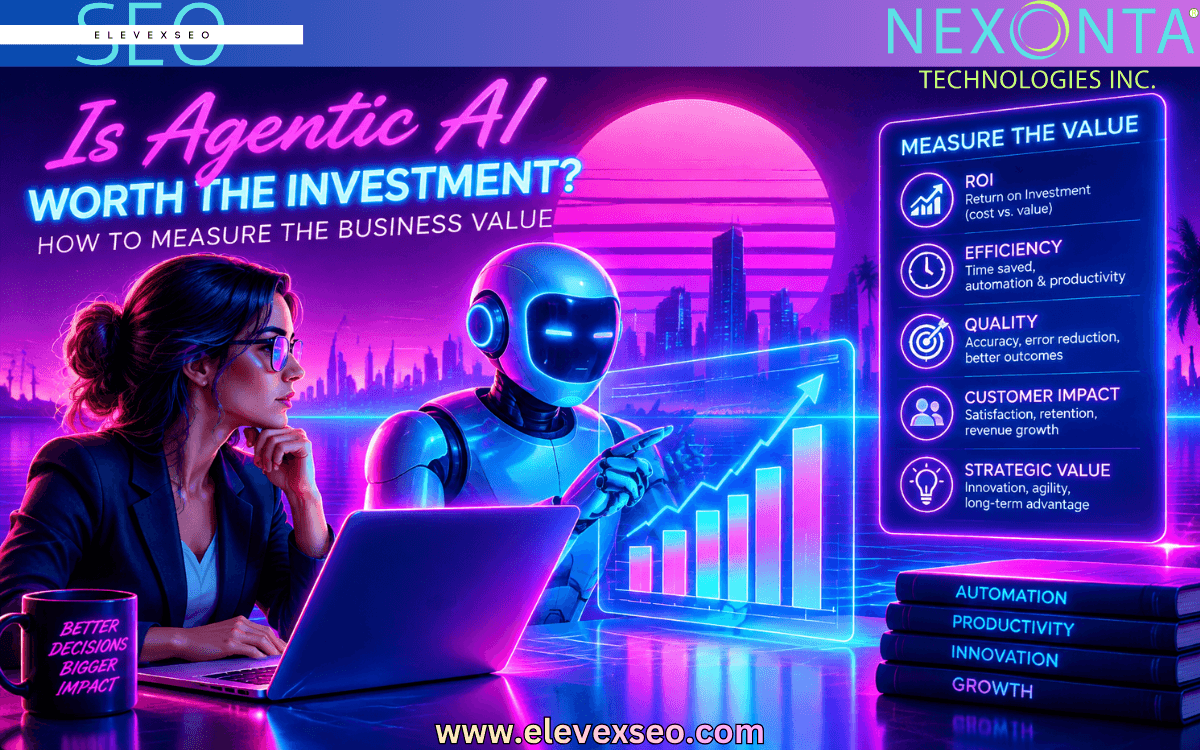
  • Is Agentic AI Worth the Investment? How to Measure the Business Value

    Is Agentic AI Worth the Investment? How to Measure the Business Value

    Agentic AI can create significant business value, but how do you know if it makes financial sense for your organization? Before investing in AI, businesses need to understand where time, money, and opportunities are being lost. The key is to measure the problem first. Once you know what a process costs your business, you can determine whether Agentic AI could deliver a worthwhile return.

    AI is attracting attention across almost every industry. But adopting new technology simply because everyone else is doing it isn’t a business strategy.

    The real question is simple: Can AI solve a meaningful business problem and deliver measurable value?

    Let’s look at how to find out.

    Why Businesses Need a Clear AI Business Case

    Every organization has processes that take more time than they should.

    Employees might spend hours entering data, following up on leads, preparing reports, updating customer records, or moving information between disconnected systems.

    Individually, these tasks may seem manageable. Over time, however, they can become expensive.

    They can also prevent your team from focusing on work that drives growth.

    This is where Agentic AI deserves a closer look.

    Unlike traditional automation, which typically follows predefined rules, Agentic AI can work toward a goal, make decisions within defined boundaries, and carry out multiple steps across connected systems. Depending on the solution, it can also identify when a task needs human review.

    For businesses, this creates new opportunities to improve workflows and reduce unnecessary manual work.

    But there is an important first step.

    Before deciding where to use AI, you need to understand what the existing problem is costing your organization.

    Step 1: Quantify the Problem

    You cannot measure the value of a solution without understanding the problem it needs to solve.

    Start by identifying a repetitive task, inefficient process, or operational bottleneck.

    Then ask five simple questions.

    1. How many times per week does this happen?

    Look at the frequency of the task.

    Does it happen 20 times a week? Hundreds of times? Thousands?

    The more frequently a task occurs, the greater the potential opportunity to improve it.

    2. How long does each occurrence take?

    Estimate the time employees spend completing the task.

    Include the full process, not just the obvious steps.

    For example, processing a customer request might involve opening an email, reviewing the information, entering data, updating a system, and sending a response.

    Each step adds time.

    3. How many employees are involved?

    A task that takes 10 minutes might not seem expensive when one employee handles it.

    But what happens when 12 employees perform the same task every day?

    Small inefficiencies can add up quickly across a team.

    4. What happens when the task isn’t completed?

    This question is especially important.

    Does a delayed task create a backlog? Does a customer wait longer for a response? Could a missed follow-up result in lost revenue?

    Sometimes the biggest cost isn’t the time spent doing the work. It’s the business opportunity lost when the work doesn’t get done.

    5. What is the approximate labour cost?

    Once you understand the frequency, time, and number of employees involved, you can estimate the labour cost of the task.

    You don’t need a complicated financial model to get started.

    A Simple Formula to Calculate Labour Cost

    Use this formula to estimate the weekly labour cost of a repetitive task:

    Weekly Labour Cost =

    (Occurrences per Week × Minutes per Occurrence × Number of Employees ÷ 60) × Hourly Labour Cost

    Let’s look at an example.

    Imagine a company has 10 employees who each spend 15 minutes a day on a repetitive administrative task. The task happens five days a week, and the estimated labour cost is $35 per hour.

    Here’s the calculation:

    • Occurrences: 5 times per week per employee
    • Time per occurrence: 15 minutes
    • Employees involved: 10
    • Hourly labour cost: $35

    The calculation looks like this:

    (5 × 15 × 10 ÷ 60) × $35 = $437.50 per week

    That works out to approximately $22,750 per year, assuming 52 weeks.

    And that’s just one task.

    Now imagine the company has five or ten similar processes across different departments.

    The potential cost becomes much more significant.

    Keep in mind that this is an estimate of labour capacity spent on the task, not necessarily cash savings the business can realize. The actual financial benefit depends on whether the time can be redirected, overtime reduced, hiring avoided, or other costs eliminated.

    You also don’t need perfect numbers at this stage.

    A reasonable estimate is often enough to decide whether a deeper assessment is worthwhile.

    The goal isn’t to build a complicated spreadsheet. It’s to identify where the business may be losing time, money, or opportunities.

    Step 2: Determine the Business Impact

    Labour cost is only one part of the picture.

    To understand whether Agentic AI makes commercial sense, you also need to consider its broader impact on the organization.

    We recommend evaluating five areas.

    1. Time: What Could Your Team Do Instead?

    Time is one of the most overlooked business costs.

    When employees spend hours on repetitive tasks, they have less time for activities that require their expertise, creativity, and judgment.

    Consider what your team could accomplish if some of that time were redirected.

    Your sales team could spend more time speaking with qualified prospects.

    Your customer service team could focus on more complex customer needs.

    Your operations team could work on improving processes instead of constantly managing administrative tasks.

    Agentic AI may help reduce the time spent on suitable repetitive workflows.

    The important question is not simply how many hours AI could save.

    It’s what your organization could achieve with those hours back.

    That is where the business value becomes more interesting.

    2. Cost: Where Can You Reduce Expenses?

    Administrative work can create costs in several ways.

    These may include:

    • Overtime required to clear backlogs.
    • Additional administrative support.
    • Repeated manual data entry.
    • Duplicated work across departments.
    • Extra costs caused by inefficient processes.

    Agentic AI may help reduce some of these expenses by streamlining workflows and coordinating tasks across connected systems.

    However, not every time saving creates an immediate reduction in payroll or operating expenses.

    The business case should distinguish between costs that can actually be removed and employee time that can be put to better use.

    For example, if AI helps your existing team handle more work without increasing overtime, that may create meaningful value even if headcount remains unchanged.

    The objective is to understand where costs can realistically be reduced or avoided.

    3. Errors and Future Hiring Requirements: Can You Scale More Efficiently?

    Manual processes can introduce errors.

    Information may be entered incorrectly. Customer records may be incomplete. Reports may need to be corrected. Employees may have to repeat work because something was missed.

    These problems consume additional time and resources.

    When evaluating Agentic AI, consider how much time your organization spends correcting errors and completing work that should have been done correctly the first time.

    Also, think about future growth.

    If your business expects to increase its workload by 30%, will you need to hire more people just to manage repetitive administrative work?

    Could better workflows help your existing team handle more of that workload?

    Agentic AI may help increase operational capacity without requiring the same proportional increase in administrative staffing.

    That doesn’t mean every organization can avoid hiring. It means you should assess whether improved processes could reduce future staffing requirements or delay the need for additional hires.

    Sometimes the value of AI isn’t replacing existing work. It’s helping your business grow without allowing administrative overhead to grow at the same rate.

    4. Revenue: Are You Losing Business Opportunities?

    This is where the commercial impact can become particularly significant.

    Consider a company that receives 100 new sales inquiries each week.

    What happens if some inquiries aren’t answered promptly? What if follow-ups are missed because the sales team is busy? What if qualified prospects lose interest while waiting for a response?

    Every missed opportunity can affect revenue.

    Agentic AI may help businesses manage parts of the sales process, such as routing inquiries, updating customer records, coordinating follow-up tasks, and supporting timely communication.

    The exact capabilities depend on the systems involved, the workflow design, and the level of human oversight.

    When assessing the potential value, ask:

    • How many leads are currently missed or left without follow-up?
    • How long does it take to respond to a new inquiry?
    • How many sales opportunities are abandoned?
    • Is the team limited by the time available to manage prospects?
    • Could a more consistent process help improve conversion rates?

    You don’t need to assume that AI will increase sales.

    Start by identifying the existing problem and estimating its impact.

    Then determine whether an AI-supported process could realistically improve the outcome.

    For example, if faster follow-up helps your team convert more qualified leads, the additional gross profit may be more meaningful than the labour savings alone.

    Just be careful not to count the same benefit twice. Revenue growth, gross profit, and labour savings should be measured separately.

    5. Customer Experience: What Does Inefficiency Cost Your Customers?

    Not every business benefit appears directly on a spreadsheet.

    Customer experience matters, too.

    Delayed responses, inconsistent communication, and gaps in service can frustrate customers and damage trust.

    A customer who has to explain the same issue multiple times may question whether your organization is paying attention.

    A prospect who waits several days for a response may choose a competitor.

    An existing customer who doesn’t receive a timely update may lose confidence in your service.

    Agentic AI can help coordinate information and routine tasks across connected systems, potentially improving response times and service continuity.

    But technology alone doesn’t guarantee a better customer experience. The workflow must be designed properly, information must be accurate, and customers must be able to reach a person when needed.

    Ask yourself:

    If we improved this process, would our customers notice the difference?

    Would they receive faster responses? More consistent updates? Fewer mistakes? Better service?

    If the answer is yes, those improvements belong in your business case.

    Even when customer experience is difficult to quantify precisely, it should still be considered when deciding whether an AI investment makes sense.

    Step 3: Determine Whether the Opportunity Justifies an AI Investment

    Once you’ve quantified the problem and assessed the business impact, you’re ready to take the next step.

    Compare the potential benefits with the total cost of implementing and operating the solution.

    This means looking beyond the initial purchase price.

    Your assessment should consider:

    • AI solution and implementation costs.
    • Integration with existing software and systems.
    • Data preparation and workflow redesign.
    • Employee training and change management.
    • Ongoing maintenance and operating costs.
    • Human oversight, security, and governance requirements.

    Then estimate the realistic financial benefit.

    For example, a solution might reduce the time spent on a repetitive process by 50%. That doesn’t automatically mean the company will save 50% of the associated labour cost.

    The actual benefit depends on what happens to the time recovered.

    Can employees use it to generate more revenue? Can the company reduce overtime? Can it avoid additional hiring? Can it eliminate an external service expense?

    These are the questions that turn an interesting AI project into a credible business case.

    A Simple Way to Think About Return on Investment

    At its simplest, the calculation is:

    Net Annual Benefit = Annual Financial Benefits − Annual AI Costs

    You can then calculate the return on investment:

    ROI = (Annual Financial Benefits − Annual AI Costs) ÷ Annual AI Costs × 100

    Let’s use a hypothetical example.

    Suppose an organization estimates that an AI-supported workflow could deliver $30,000 in annual financial benefits.

    The annualized cost of implementing and operating the solution is $12,000.

    The estimated net annual benefit would be $18,000.

    The estimated ROI would be:

    ($30,000 − $12,000) ÷ $12,000 × 100 = 150%

    These figures are illustrative, not a prediction of what an AI project will deliver.

    A proper assessment should use realistic assumptions, account for implementation costs, and avoid counting benefits that cannot be demonstrated.

    It should also consider how long it takes to recover the initial investment.

    The purpose of the calculation is to help decision-makers determine whether the opportunity deserves further investigation.

    Step 4: Start With the Right Problem, Not the Biggest AI Project

    One of the biggest mistakes organizations can make is trying to transform everything at once.

    A better approach is to identify a specific business problem, establish a baseline, and evaluate whether AI can improve the process.

    Look for tasks that are repetitive, time-consuming, measurable, and important to the business.

    Then assess whether the necessary data and systems are available, whether the workflow can be improved safely, and where human approval is required.

    A focused starting point makes it easier to measure results.

    It also helps your organization understand what works before expanding AI adoption into other areas.

    Remember, not every problem requires Agentic AI. Some may be better addressed through traditional automation, process improvements, or better software integration.

    The goal is to choose the right solution for the problem, rather than forcing AI into a process simply because the technology is available.

    The Bottom Line: Make AI Adoption a Business Decision

    Agentic AI has the potential to change how organizations manage work, coordinate systems, and use their people.

    But potential isn’t the same as proven value.

    Before investing, take the time to understand what your current processes cost, where inefficiencies are affecting performance, and which improvements would make the biggest difference.

    Start with the numbers you have.

    Estimate the time involved. Identify the people affected. Consider the financial and operational consequences. Then determine whether the opportunity justifies a closer look.

    You don’t need every answer before you begin.

    You need a clear problem, a reasonable estimate, and a practical way to measure success.

    The best AI investment isn’t necessarily the most advanced technology. It’s the solution that addresses a real business need and delivers measurable value.

    Ready to Find Out Where Agentic AI Could Create Value in Your Business?

    At ElevexSEO, we believe successful AI adoption starts with understanding your business.

    Before recommending a solution, it’s important to identify the inefficiencies, repetitive tasks, disconnected systems, and missed opportunities that may be holding your organization back.

    Our approach focuses on connecting the right people, processes, and technology to help businesses work more efficiently and make better use of their resources.

    Don’t invest in AI just because it’s the latest trend. Discover where it could make a real difference to your bottom line.

    Request an AI Business Assessment from ElevexSEO and take the first step toward identifying practical opportunities for improvement.

    Let’s start with your business challenges, quantify the opportunity, and determine whether Agentic AI makes commercial sense for your organizati

  • Before You Implement Agentic AI, Understand Your Business First

    Before You Implement Agentic AI, Understand Your Business First

    When considering Agentic AI adoption, it’s tempting to start by looking at the technology. What can it do? Which systems can it connect to? How much time can it save?

    But there’s a more important place to start: understanding the business itself.

    Agentic AI can affect workflows, software systems, employees, customer experience, data security, and the way an organization operates. Before deciding where and how to implement it, you need a clear picture of how the business works today.

    That’s where discovery comes in.

    A well-planned discovery process helps identify where Agentic AI could make a real difference, which challenges need attention, and whether implementation makes business sense.

    At Nexonta, we believe the first step toward a successful AI strategy is understanding the people, processes, and priorities behind the business.

    Let’s look at three important steps to get started.

    Step 1: Understand the Business

    Before looking at individual processes, take a step back and look at the organization as a whole.

    Every business has its own goals, challenges, departments, and ways of working. What works for one company may not work for another. That’s why Agentic AI adoption should never begin with a one-size-fits-all approach.

    During discovery, start by asking some fundamental questions:

    • What does the company do?
    • How does it generate revenue?
    • What are its primary departments?
    • Where is the company growing?
    • What are the organization’s current priorities?
    • What challenges are affecting performance or growth?

    These questions help establish the bigger picture.

    For example, a company may want to increase sales. But the real challenge might not be a lack of leads. It could be slow follow-up, inconsistent qualification, disconnected software, or delays in preparing proposals.

    Without understanding the business, it’s easy to focus on the wrong problem.

    The goal is to understand what the organization is trying to achieve and what’s getting in the way.

    Once you have that foundation, you can begin looking at how work actually gets done.

    Step 2: Map Out the Work

    Understanding the business is only the beginning. The next step is to examine its processes.

    A useful way to do this is to follow the journey of a customer or prospect. Start at the first point of contact and follow the work through to completion.

    Depending on the business, that journey might look something like this:

    1. Lead generation
    2. Initial inquiry
    3. Qualification
    4. Proposal preparation
    5. Follow-up
    6. Sales and closing
    7. Customer onboarding
    8. Service and support
    9. Billing
    10. Customer retention

    Each stage gives you an opportunity to understand what happens behind the scenes.

    For every step, ask a few practical questions:

    • What happens at this stage?
    • Who is responsible for the work?
    • Which software systems are involved?
    • How much of the process is manual?
    • Where does information come from?
    • What happens when something goes wrong?
    • What needs to happen before the next stage can begin?

    These questions help uncover how work moves through the organization.

    For instance, a sales representative might receive a new inquiry through a website. They then enter the information into a CRM, send an email, schedule a follow-up, and update another system.

    Some of those tasks may be necessary. Others might involve repetitive work that could be handled more efficiently.

    The important thing is to understand the entire process before deciding what should change.

    Why Process Mapping Matters for Agentic AI

    Agentic AI can do more than answer questions or generate content. Depending on its design, permissions, and integration with business systems, it can work toward defined goals, make decisions within established boundaries, and coordinate actions across multiple steps.

    But it needs the right processes, information, and safeguards to do that effectively.

    If a workflow is poorly understood, important steps can be missed. If information is incomplete or systems don’t communicate properly, implementation becomes more complicated.

    Mapping the work helps identify where Agentic AI might fit, which systems it may need to interact with, and where human oversight should remain part of the process.

    You can’t improve a process effectively until you understand how it works today.

    Step 3: Identify the Friction

    Now that you understand the business and have mapped its workflows, it’s time to look for friction.

    Friction is anything that slows work down, creates unnecessary effort, increases costs, or makes the customer experience more difficult than it needs to be.

    Some of these problems are obvious. Others have become so familiar that employees no longer question them.

    During discovery, ask questions such as:

    • Where does work slow down?
    • Where do employees duplicate work?
    • Where does information have to be entered more than once?
    • Where are customers left waiting?
    • Where do mistakes commonly occur?
    • When does management need to step in to keep things moving?
    • What happens outside normal business hours?
    • What work gets postponed when the team is busy?

    The answers can reveal opportunities that aren’t always visible in a high-level review of the business.

    Look Beyond the Obvious Problems

    Consider a company that receives more customer inquiries than its team can handle promptly.

    At first glance, the problem might appear to be a staffing issue.

    But discovery may reveal something different.

    Perhaps inquiries arrive through several channels. Employees manually transfer information between systems. Follow-ups depend on someone remembering to complete them. Managers have limited visibility into outstanding requests.

    The result is a process that takes more time and effort than necessary.

    Could Agentic AI help?

    Potentially, yes. Depending on the systems involved, an AI agent might help classify inquiries, gather relevant information, update connected systems, coordinate follow-up tasks, or flag requests that need human attention.

    However, the right solution depends on what the discovery process uncovers. Some problems may be better addressed by improving an existing workflow, integrating software, or clarifying responsibilities before introducing AI.

    That’s an important distinction.

    The objective isn’t to add AI to every process. It’s to identify where the right solution can create meaningful business value.

    Why Discovery Is Essential Before Agentic AI Implementation

    Agentic AI adoption can have implications well beyond a single department.

    An implementation may affect how employees work, how information moves between systems, how customers receive service, and how decisions are made. It may also introduce new requirements for data access, security, governance, and human oversight.

    That’s why discovery needs to consider the wider organization.

    Before moving forward, decision-makers should have a clear understanding of:

    • Business objectives: What should the implementation help the organization achieve?
    • Current workflows: How does work move through the business today?
    • Operational challenges: Where are the delays, duplication, and unnecessary costs?
    • Technology and data: Which systems are involved, and can they support the proposed solution?
    • People and responsibilities: Who will use the system, oversee its work, and handle exceptions?
    • Security and governance: What permissions, controls, and approval processes are required?
    • Measurable outcomes: How will the organization determine whether the implementation is successful?

    These questions help establish whether Agentic AI is a practical fit for the organization.

    They also help create a realistic implementation plan, with clear priorities and measurable goals.

    From Discovery to a Practical AI Strategy

    Once discovery is complete, the next step is to evaluate the opportunities.

    Not every process needs Agentic AI. Some tasks may benefit from traditional automation. Others may require better software integration, clearer procedures, or improved data quality.

    The key is to match the solution to the problem.

    For suitable opportunities, the organization can assess the potential benefits against the costs, complexity, risks, and resources required.

    This might include estimating time saved, reducing manual work, improving response times, supporting employees, or creating a more consistent customer experience.

    From there, the business can prioritize the strongest opportunities and determine what a sensible implementation should look like.

    Starting with a focused, measurable use case can also help the organization learn what works before expanding to other departments.

    The result is a more informed approach to Agentic AI adoption. One based on business needs rather than assumptions about what technology can do.

    The Bottom Line

    Agentic AI has the potential to change how businesses operate. But successful implementation doesn’t begin with a software demonstration or a list of AI features.

    It begins with asking the right questions.

    Understand the business. Map out the work. Identify the friction.

    These three steps provide the foundation for determining where Agentic AI could deliver meaningful value, where other improvements may be needed, and how to move forward with confidence.

    At Nexonta, we believe technology should serve a clear business purpose. The goal isn’t simply to introduce AI. It’s to help organizations work smarter, improve their operations, and make better use of their time and resources.

    Ready to Explore Agentic AI for Your Business?

    Before investing in Agentic AI, take the time to understand where your organization stands today.

    Nexonta can help you identify operational challenges, evaluate potential opportunities, and explore where Agentic AI could make a meaningful difference.

    Visit Nexonta to learn more about our approach to Agentic AI and start a conversation about your organization’s goals.

    Let’s identify the right opportunities before investing in the technology.

  • Hot Wheels for Every Mood: There’s a Car for Every Day

    Hot Wheels for Every Mood: There’s a Car for Every Day

    Hot Wheels has a funny way of making ordinary days feel a little more special. Over the past few years, we’ve been posting a different Hot Wheels car on our Instagram account every day. And along the way, we started noticing something pretty amazing.

    There really is a Hot Wheels for every day. And every mood.

    Some days call for something fast and flashy. Other days, you might want something classic, cool, tough, funny, or just plain different. With thousands of Hot Wheels models out there, it’s not hard to find one that seems to match exactly how you’re feeling.

    There’s a Hot Wheels for Every Feeling

    That’s one of the things we love most about collecting.

    Hot Wheels aren’t just little cars sitting on a shelf. Each one can have its own personality.

    Feeling energetic? Grab a car that looks like it’s ready to hit the track.

    Having one of those days when you need a little attitude? There’s a Hot Wheels for that too.

    Maybe you’re feeling nostalgic and want a classic model that takes you back to another time. Or perhaps you just want something fun that makes you smile.

    That’s the beauty of the collection.

    There’s always another car that seems to fit the moment.

    Our Daily Hot Wheels Tradition

    For the past few years, we’ve made a habit of sharing a Hot Wheels car on Instagram every day.

    At first, it was simply a fun way to share the collection.

    But over time, it became something more.

    Choosing a car each day started to feel like a little daily ritual. Some days the choice was easy. Other days, we would look through the collection and think, “Which car feels right today?”

    And sometimes the answer surprised us.

    That’s when we realized that collecting Hot Wheels isn’t only about finding rare cars or adding another model to the collection.

    It can also be about enjoying the little things.

    The Joy of Finding Your Match

    One of the best parts of collecting Hot Wheels is that everyone can have a different favourite.

    Your favourite might be a Ferrari, Porsche, Lamborghini, Corvette, Batmobile, or an exotic supercar.

    Or maybe it’s a car that nobody else would pick.

    That’s perfectly fine.

    There’s no right or wrong choice.

    Your Hot Wheels collection tells a story about what catches your eye and what makes you happy. And sometimes, the car you connect with today might not be the one you would have picked yesterday.

    That’s what makes it fun.

    So, What Hot Wheels Are You Feeling Today?

    For me, today’s choice is the Golden ’67 Corvette.

    It has that classic look that just feels right. It’s stylish, unmistakable, and has plenty of personality.

    So today, this is my Hot Wheels mood.

    Tomorrow could be something completely different.

    And that’s the fun of collecting.

    You never really know which little car is going to catch your eye next.

    Your Turn

    Take a look at your own Hot Wheels collection.

    Forget about which car is the rarest or most valuable for a moment.

    Instead, ask yourself:

    What Hot Wheels are you feeling today?

    Maybe it’s your favourite car. Maybe it reminds you of a great memory. Or maybe you simply looked at it and thought, “Yep. That’s the one.”

    Whatever the reason, share it with us.

    Follow along on Instagram and join us as we find a Hot Wheels for every day, every mood, and every moment.

    Because sometimes, it only takes a little car to make an ordinary day feel a little more special.

  • The Opportunity Cost of Waiting: Why Businesses Can’t Afford to Ignore Agentic AI

    The Opportunity Cost of Waiting: Why Businesses Can’t Afford to Ignore Agentic AI

    Opportunity cost is the value of what you give up when you choose one option over another.

    In business, that can be a difficult concept to see when the decision involves new technology. If you decide not to embrace Agentic AI, there may be no immediate cost on your balance sheet. But that doesn’t mean the decision is free. The real cost may be what your business misses while others move forward.

    We’ve seen something similar before.

    Remember What Happened With the Internet?

    Go back to the early days of the internet.

    When the dot-com bubble burst in 2000 and 2001, confidence in the internet economy took a major hit. Companies failed. Investments disappeared. Many people became cautious about the technology and questioned whether the internet had been overhyped.

    It was understandable.

    The technology was still developing. The business models were changing. And there was plenty of uncertainty.

    But the internet itself wasn’t going away.

    Businesses that continued investing in websites, e-commerce, digital communication and online services helped shape what came next. Over time, the internet became part of the basic infrastructure of modern business.

    The lesson wasn’t that every early internet investment was a winner.

    The lesson was that a technology can go through a period of volatility without disappearing.

    And that distinction matters when we look at AI today.

    AI Isn’t Going Away

    Artificial intelligence has already moved beyond being a futuristic idea.

    It is becoming part of how businesses research, communicate, analyze information, create content, support customers and automate repetitive work.

    Now we are seeing another step forward: Agentic AI.

    Unlike a traditional AI tool that simply responds to a prompt, Agentic AI can be designed to work through a series of tasks toward a specific goal.

    It can help research information, make decisions within defined parameters, use connected tools and complete multi-step workflows.

    That changes the conversation.

    The question is no longer simply:

    “Should we use AI?”

    A better question may be:

    “What is the opportunity cost of waiting?”

    The Cost of Doing Nothing Isn’t Always Obvious

    When a company decides not to adopt a new technology, the decision can feel safe.

    There is no new software to implement.

    No employees need to be trained.

    No processes need to change.

    No budget needs to be allocated.

    For the moment, everything stays the same.

    But your competitors may not be staying the same.

    They may be using AI to respond to customers faster. They may be automating administrative work. They may be analyzing data more efficiently. They may be finding new ways to reach customers and improve their internal processes.

    None of this means AI automatically makes one company better than another.

    It does mean that the technology can change the economics of how work gets done.

    And that creates an opportunity cost for businesses that wait too long.

    Waiting Has a Cost

    Imagine two businesses operating in the same industry.

    Both have capable employees. Both have good products. Both have loyal customers.

    One begins experimenting with Agentic AI.

    It starts small.

    The company identifies repetitive tasks. It tests AI-assisted workflows. It learns what works and what doesn’t. Employees become more comfortable working alongside AI.

    The other company decides to wait.

    Maybe it wants to see what happens first.

    That sounds reasonable.

    But six months later, the first company has six months of experience that the second company doesn’t have.

    A year later, it may have redesigned several workflows.

    Its employees may understand how to use AI effectively.

    Its leadership may have a clearer idea of where AI creates value and where it doesn’t.

    That experience itself has value.

    And it is part of the opportunity cost of waiting.

    You Don’t Have to Bet the Company on AI

    Embracing Agentic AI doesn’t mean handing your business over to a machine.

    It doesn’t mean replacing every employee.

    And it certainly doesn’t mean adopting every new AI product that comes along.

    Smart adoption can start much smaller.

    Look at your business and ask:

    * What tasks take too much employee time?
    * Where are people repeatedly doing the same work?
    * Where are customers waiting for answers?
    * What information takes too long to find?
    * Which processes involve too many manual steps?
    * Where could better automation improve the customer or employee experience?

    Those questions can reveal opportunities.

    You may discover that Agentic AI has a role to play in one small area of the business.

    That’s often a better place to start than trying to transform everything at once.

    The Biggest Risk May Be Standing Still

    Every new technology brings uncertainty.

    There will be companies that adopt AI badly.

    There will be tools that disappear.

    There will be products that fail to deliver what they promise.

    There will also be companies that find practical ways to use AI to improve how they work.

    That is why the goal shouldn’t be to chase the latest AI trend.

    The goal should be to understand the technology well enough to make informed decisions.

    Because there is a difference between being cautious and standing still.

    The internet taught businesses that a technology can be messy in its early stages and still become incredibly important.

    Agentic AI may be following a similar path.

    We don’t know exactly what the next five or ten years will look like.

    But we do know that AI is continuing to develop.

    The question for business leaders is what they choose to do with that reality.

    The Opportunity Cost Question Every Business Should Ask

    Instead of asking only:

    “What will it cost us to adopt Agentic AI?”

    Ask another question:

    “What could it cost us if we don’t?”

    That doesn’t mean every business needs to adopt Agentic AI immediately.

    It means every business should understand the opportunity before deciding.

    Research it.

    Test it.

    Start with one workflow.

    Measure the results.

    Learn from the experience.

    Then decide where it makes sense to go next.

    Because the biggest cost may not be the money spent experimenting with AI.

    It may be the opportunities, efficiencies and experience your business misses while waiting for everyone else to figure it out.

    AI Is Moving Forward. Is Your Business?

    The businesses that navigated the early internet era successfully weren’t necessarily the ones that predicted everything correctly.

    They were the ones willing to learn, adapt and figure out where the technology could create real value.

    Agentic AI gives businesses another opportunity to do exactly that.

    You don’t have to predict the future.

    You just have to be willing to explore it.

    Ready to Explore the Opportunity?

    Don’t wait until Agentic AI becomes something your competitors already understand.

    Start by identifying one process in your business that could be improved through AI.

    Learn what is possible. Ask the right questions. Test a practical use case. And build your AI strategy from there.

    The first step isn’t adopting everything. It’s understanding what’s possible.

    Explore how Agentic AI could work for your business today.

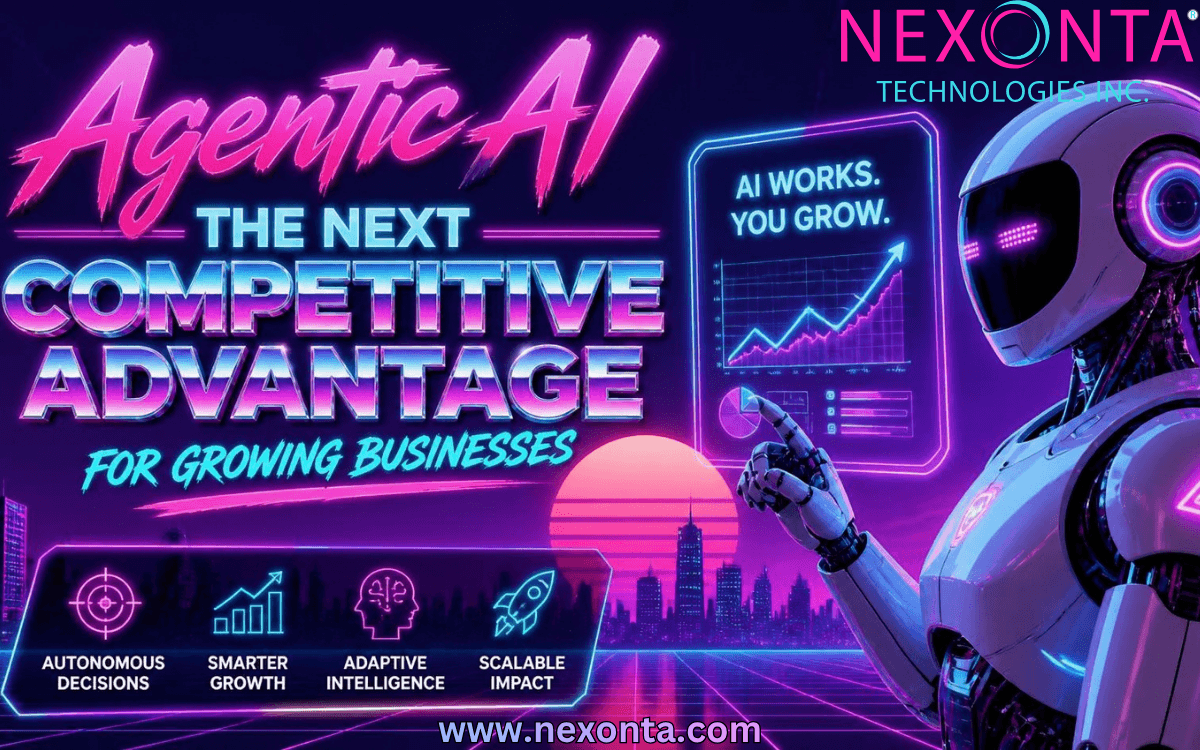
  • Agentic AI: The Next Competitive Advantage for Growing Businesses

    Agentic AI: The Next Competitive Advantage for Growing Businesses

    Agentic AI is changing the way businesses think about growth, productivity, sales, marketing, and scale. At Nexonta Technologies, we believe this is more than another technology trend. It represents a major shift in how organizations will get work done and compete in the years ahead.

    The question is no longer whether AI will become part of business.

    The bigger question is how deeply AI will become part of your business.

    AI Has Already Changed the Game

    Think about how quickly generative AI changed the way we work.

    A few years ago, if you wanted to write a research paper, you might spend hours searching for information, organizing your thoughts and writing everything yourself.

    Today, you can use a tool like ChatGPT to help research, organize, draft and refine that same work in a fraction of the time.

    That does not mean the human becomes unnecessary.

    It means the human has a much more powerful tool.

    Now imagine taking that idea much further.

    Instead of AI simply helping you complete a task, Agentic AI can help manage a series of tasks, make decisions within defined boundaries, interact with systems and move work forward.

    That is where things start to get very interesting for businesses.

    What Is Agentic AI?

    Traditional software usually waits for you to tell it what to do.

    Generative AI can respond to your questions and requests.

    Agentic AI takes another step forward.

    It is designed to work toward a goal. Depending on how it is built and governed, an AI agent can plan steps, use tools, interact with business systems and carry out parts of a workflow with less human intervention.

    In simple terms:

    Generative AI helps you do the work.

    Agentic AI can help move the work forward.

    That difference could have a major impact on how businesses operate.

    The Race Has Started

    This is where business leaders need to start paying attention.

    Organizations are already exploring and scaling AI agents across areas such as technology, knowledge management, software development, marketing, sales and operations. Recent 2026 research from McKinsey shows that larger organizations are moving from AI experimentation toward scaling AI agents, although adoption is still far from universal.

    That creates an interesting situation.

    Not every competitor is using Agentic AI.

    But some are.

    And the gap between experimenting with AI and actually building it into business processes could become increasingly important.

    The competitive advantage may not come from simply having access to AI.

    It may come from knowing how to use it as part of the way your business operates.

    What Could Agentic AI Mean for Your Business?

    Every organization is different. That means there is no single Agentic AI strategy that works for everyone.

    But there are some areas where businesses are already looking at opportunities.

    Sales

    AI agents can help organize information, support lead research, assist with follow-up processes and help sales teams spend more time on meaningful conversations.

    Marketing

    Marketing teams can use AI to support research, content development, campaign workflows, customer insights and other repetitive processes.

    Customer Service

    AI agents can help manage routine requests, find information and support customers across different stages of the customer journey.

    Operations

    Businesses can look at repetitive workflows and identify where AI could help coordinate tasks, move information between systems or reduce manual work.

    Business Intelligence

    AI can help teams work with large amounts of information and surface useful insights faster.

    The goal is not to replace every person or automate everything.

    The goal is to identify where intelligent technology can help your people work smarter and your business move faster.

    This Is Bigger Than Another AI Tool

    This is an important distinction.

    Adding another AI tool to your technology stack is not necessarily an AI strategy.

    Agentic AI becomes much more interesting when it connects with the way your business actually operates.

    That means looking at your workflows.

    Your data.

    Your systems.

    Your customers.

    Your sales process.

    Your marketing.

    Your internal operations.

    And then asking a simple question:

    Where could AI create meaningful leverage?

    That is a much better starting point than simply asking, “What AI tool should we buy?”

    Big Tech Is Moving Fast

    There is another reality businesses need to recognize.

    The biggest technology companies are investing heavily in AI infrastructure, agents, orchestration and enterprise applications.

    The technology is evolving quickly.

    And the rules of the AI ecosystem are being shaped by companies with enormous resources, data, infrastructure and development teams.

    That creates both an opportunity and a challenge for smaller and mid-sized organizations.

    You may not have the resources of a global technology company.

    But you do not necessarily need them.

    The opportunity is to understand what these technologies can do and identify where they can create value inside your own organization.

    You Don’t Need to Transform Everything at Once

    One of the biggest mistakes a business can make is thinking that adopting Agentic AI means changing everything overnight.

    It doesn’t.

    A smarter approach is to start with the business.

    Look at where your team spends time.

    Look for repetitive processes.

    Identify bottlenecks.

    Find areas where employees are spending valuable time on work that could potentially be assisted or coordinated by AI.

    Then build from there.

    This approach also gives organizations an opportunity to put the right governance and controls in place. As AI agents become more autonomous, oversight, security, data quality and accountability become increasingly important.

    The Real Question Is: Where Do You Want to Go?

    At Nexonta Technologies, we see Agentic AI as an important part of the next generation of sales and marketing technology.

    Our focus is on helping organizations understand where technology can create real business value.

    Because technology should not be adopted simply because it is new.

    It should have a purpose.

    It should solve problems.

    It should help people.

    And ultimately, it should help businesses grow and scale.

    The organizations that take the time to understand Agentic AI now will be in a much better position to make informed decisions as the technology continues to develop.

    You don’t have to know exactly what your AI strategy should look like today.

    But it is worth asking the question.

    What happens if your competitors figure it out before you do?

    The AI Race Isn’t About Being First. It’s About Being Ready.

    The AI landscape is moving quickly.

    You do not need to chase every new tool.

    You do need to understand what is changing.

    Agentic AI represents a shift from AI that simply assists people toward AI that can potentially participate more directly in business workflows.

    For small, medium and large organizations, that creates a new conversation about productivity, growth and scale.

    And that conversation is already happening.

    Ready to Explore What Agentic AI Could Mean for Your Business?

    Nexonta Technologies helps organizations explore the next generation of sales and marketing technology, including opportunities created by Agentic AI.

    Let’s look at where AI could make a meaningful difference in your business — and where it may not.

    Start the conversation with Nexonta Technologies and discover where Agentic AI could fit into your growth strategy.

  • So Excited for the Fall Drop of Hot Wheels!

    So Excited for the Fall Drop of Hot Wheels!

    There is something exciting about the fall drop of Hot Wheels, especially when you never quite know what you are going to find when you walk up to the pegs. I don’t know if anyone else has noticed this, but this year it feels like there have been more Hot Wheels drops than usual. Every time we stop by one of our Hot Wheels stomping grounds, there seems to be something sitting there that we have never seen before.

    Maybe there really have been more drops this year.

    Or maybe it just feels that way.

    Either way, we are definitely not complaining!

    Every Visit Seems to Bring Something New

    One of the best parts of collecting Hot Wheels is that you never really know what you are going to find.

    You can walk into a store thinking you are just going to take a quick look at the pegs. Then you spot something new.

    And suddenly, that “quick look” turns into a full search.

    We have had quite a few of those moments lately.

    Every time we visit one of our regular Hot Wheels stops, there seems to be a new model, a different colour, a fresh assortment, or something we simply don’t remember seeing before.

    That is what makes the hunt so much fun.

    You just never know what might be waiting for you.

    Is There Really More Hot Wheels This Year?

    Now, this is where we have to admit that we could be imagining it.

    We haven’t been keeping an official count of every Hot Wheels drop throughout the year. So we can’t say for certain that there have actually been more releases or cases hitting the stores.

    But it sure feels like it!

    And honestly, does it really matter?

    Part of the fun is noticing those little changes when you are out hunting.

    Maybe the pegs look different.

    Maybe there are new models showing up.

    Maybe a store that was picked over last week suddenly has something interesting.

    Whatever the reason, it gives us another excuse to stop and take a look.

    The Fall Drop Makes the Hunt Even More Exciting

    There is something about the fall season that makes Hot Wheels hunting feel a little different.

    The new drops start showing up, and suddenly we are paying even closer attention to the pegs.

    What is new?

    What haven’t we seen yet?

    Is there a Treasure Hunt hiding in there?

    Is there a casting we have been waiting for?

    And, of course, is there something completely unexpected sitting right in front of us?

    That is the fun of collecting.

    You can never be completely sure what you are going to find.

    And That Keeps Us Coming Back

    One of the biggest reasons we keep checking the pegs is simple.

    There is always the possibility of finding something new.

    Even when we don’t find a car we are looking for, there is still something exciting about seeing what has arrived since our last visit.

    Sometimes we find exactly what we hoped for.

    Sometimes we find something we didn’t even know we wanted.

    And sometimes we walk away empty-handed.

    That is all part of the hunt.

    You never know what the next visit will bring.

    Bring On the Fall Hot Wheels!

    So, are there actually more Hot Wheels drops this year?

    We honestly don’t know.

    Maybe there are.

    Maybe we are just noticing them more.

    But either way, we are having a lot of fun with it.

    The fall drop has us checking the pegs a little more often and wondering what might show up next.

    And really, isn’t that what collecting is all about?

    The surprise.

    The hunt.

    The excitement of finding something new.

    So bring on the fall Hot Wheels!

    We will be checking those pegs.

    And who knows what we might find next?

    Are You Finding More Hot Wheels This Year?

    We want to hear from other collectors!

    Have you noticed more Hot Wheels drops or new models showing up at your regular stores this year?

    Leave a comment and tell us what you have been finding on the pegs.

    And if you are enjoying the Hot Wheels hunt with us, keep checking back for more collecting stories, new finds, and Hot Wheels adventures.

☎ ✉
f 𝕏