Author: admin

  • Things we know about COVID-19 blog

    Things we know about COVID-19 blog

    Unless you have been living under a rock, you like everyone else has probably been affected by the global pandemic known as COVID-19 or Corona Virus. Not only has it affected our day to day lives it has devastated the world economically, environmentally, socially and health wise. Along with every other effect that a pandemic can have on the world. So, we thought it only fitting that we gather some information and made our first blog for this fall Things we know about COVID-19.

    Dealing with the unforeseen challenges caused by the COVID-19 pandemic has taken a significant toll on people all across the world. The risks of crowds and travel are here to stay. Post-pandemic, Canada will be left with massive social challenges requiring unprecedented levels of innovation to overcome. Enlisting help from elsewhere in the world could boost the country’s recovery. COVID-19 is changing Canadian communities’ infrastructure needs: outdoor public space is more precious than ever, public transit is unsafe for those vulnerable to the virus, and a connection to the internet has become a lifeline for many community members.

    The COVID 19 pandemic, also known as the coronavirus pandemic, is an ongoing global pandemic of coronavirus disease 2019 (COVID 19), caused by severe acute respiratory syndrome coronavirus 2 (SARS CoV 2). The outbreak was first identified in December 2019 in Wuhan, China. The World Health Organization declared the outbreak a Public Health Emergency of International Concern on 30 January 2020 and a pandemic on 11 March. As of 30 August 2020, more than 25 million cases of COVID 19 have been reported in more than 188 countries and territories, resulting in more than 843,000 deaths; more than 16.4 million people have recovered.
    The virus is spread primarily via nose and mouth secretions including small droplets produced by coughing, sneezing, and talking. The droplets usually do not travel through air over long distances. However, those standing in close proximity may inhale these droplets and become infected. People may also become infected by touching a contaminated surface and then touching their face. The transmission may also occur through smaller droplets that are able to stay suspended in the air for longer periods of time in enclosed spaces. It is most contagious during the first three days after the onset of symptoms, although spread is possible before symptoms appear, and from people who do not show symptoms.
    Common symptoms include fever, cough, fatigue, shortness of breath or breathing difficulties, and loss of sense of smell. Complications may include pneumonia and acute respiratory distress syndrome. The time from exposure to onset of symptoms is typically around five days but may range from two to fourteen days. There are several vaccine candidates in development, although none have completed clinical trials to prove their safety and efficacy. There is no known specific antiviral medication, so primary treatment is currently symptomatic.

    Recommended preventive measures include hand washing, covering one’s mouth when coughing, maintaining distance from other people, wearing a face mask in public settings, disinfecting surfaces, increasing ventilation and air filtration indoors, and monitoring and self-isolation for people who suspect they are infected. Authorities worldwide have responded by implementing travel restrictions, lockdowns, workplace hazard controls, and facility closures in order to slow the spread of the disease. Many places have also worked to increase testing capacity and trace contacts of infected persons.

    The pandemic has caused global social and economic disruption, including the largest global recession since the Great Depression. Up to 100 million people have fallen into extreme poverty and global famines are affecting 265 million people. It has led to the postponement or cancellation of sporting, religious, political, and cultural events, widespread supply shortages exacerbated by panic buying, and decreased emissions of pollutants and greenhouse gases. Schools, universities, and colleges have been closed either on a nationwide or local basis in 161 countries, affecting approximately 98.6 percent of the world’s student population. Misinformation about the virus has circulated through social media and mass media. There have been incidents of xenophobia and discrimination against Chinese people and against those perceived as being Chinese or as being from areas with high infection rates.

    We are facing a global health crisis unlike any in the 75-year history of the United Nations — one that is killing people, spreading human suffering, and upending people’s lives. But this is much more than a health crisis. It is a human, economic and social crisis. The coronavirus disease (COVID-19), which has been characterized as a pandemic by the World Health Organization (WHO), is attacking societies at their core.

    Duration
    On 11 March 2020, the WHO said the pandemic could be controlled. The peak and ultimate duration of the outbreak are uncertain and may differ by location. Maciej Boni of Penn State University said, “Left unchecked, infectious outbreaks typically plateau and then start to decline when the disease runs out of available hosts. But it’s almost impossible to make any sensible projection right now about when that will be.” The Imperial College study led by Neil Ferguson stated that physical distancing and other measures will be required “until a vaccine becomes available. William Schaffner of Vanderbilt University said because the coronavirus is “so readily transmissible”, it “might turn into a seasonal disease, making a comeback every year”. The virulence of the comeback would depend on herd immunity and the extent of mutation. COVID 19 is a new disease, and many of the details of its spread are still under investigation. It spreads easily between people—more easily than influenza but not as easily as measles. People are most infectious when they show symptoms (even mild or non-specific symptoms), but may be infectious for up to two days before symptoms appear (pre-symptomatic transmission). They remain infectious for an estimated seven to twelve days in moderate cases and an average of two weeks in severe cases. People can also transmit the virus without showing any symptom (asymptomatic transmission), but it is unclear how often this happens. A June 2020 review found that 40–45% of infected people are asymptomatic.

    If not properly addressed through policy the social crisis created by the COVID-19 pandemic may also increase inequality, exclusion, discrimination and global unemployment in the medium and long term. Comprehensive, universal social protection systems, when in place, play a much durable role in protecting workers and in reducing the prevalence of poverty, since they act as automatic stabilizers. That is, they provide basic income security at all times, thereby enhancing people’s capacity to manage and overcome shocks.

    Although the prognosis may be bleak, we as Optimists feel that if we follow the science, come together as a united world and work together to defeat the virus not only can we come out of this as a better and stronger world, we can create a new normal that is all inclusive and works to help everyone in our society. If we dare to care about the world and it’s inhabitants, we help chart a new course for our world.


    Source: Wikipedia

    Nexonta Technologies Inc.
    On to the Next Level.

  • Phoenix rising from the Corona COVID-19 ashes

    Phoenix rising from the Corona COVID-19 ashes

    Unless you have been living in a bunker prior to 2020 there is no doubt that the Corona virus COVID-19 pandemic has affected your life one way or another. We thought it would be appropriate to try to find some hope in this terrible time.
    Many are throwing around the term back to normal while others are seeing an opportunity to address many social, mental health, obesity, and environmental issues which combined have caused huge crisis to our health and our planet. Two things are certain, one is that we will have to rebuild starting from scratch and the other certainty is we can decide how to rebuild.

    It can be argued that revamping our social equality, mental health, climate change and carbon footprint might have been financially costly. Today, if we globally prioritize these key issues during our rebuild, we will know doubt emerge from this crisis a stronger, kinder, more sustainable and much more capable global society.
    In order for us to defeat this disaster and many more like it in the future we must come together in a united effort globally. This blog aims to focus on one aspect of the global pre-Corona crisis which is Climate Change.

    Carbon Footprint

    A carbon footprint is historically defined as the total greenhouse gas (GHG) emissions caused by an individual, event, organization, or product, expressed as carbon dioxide equivalent. Greenhouse gases, including the carbon-containing gases carbon dioxide and methane, can be emitted through the burning of fossil fuels, land clearance and the production and consumption of food, manufactured goods, materials, wood, roads, buildings, transportation and other services.

    Most of the carbon footprint emissions for the average U.S. household come from “indirect” sources, for example, fuel burned to produce goods far away from the final consumer. These are distinguished from emissions which come from burning fuel directly in one’s car or stove, commonly referred to as “direct” sources of the consumer’s carbon footprint. Each individual is responsible for their own Carbon Footprint.
    Greenhouse gas

    A greenhouse gas (sometimes abbreviated GHG) is gas that absorbs and emits radiant energy within the thermal infrared range. Greenhouse gases cause the greenhouse effect on planets. The primary greenhouse gases in Earth’s atmosphere are water vapor (H2O), carbon dioxide (CO2), methane (CH4), nitrous oxide (N2O), and ozone (O3). Without greenhouse gases, the average temperature of Earth’s surface would be about −18 °C (0 °F),rather than the present average of 15 °C (59 °F).

    Human activities since the beginning of the Industrial Revolution (around 1750) have produced a 45% increase in the atmospheric concentration of carbon dioxide, from 280 ppm in 1750 to 415 ppm in 2019. The last time the atmospheric concentration of carbon dioxide was this high was over 3 million years ago. This increase has occurred despite the uptake of more than half of the emissions by various natural “sinks” involved in the carbon cycle. The vast majority of anthropogenic carbon dioxide emissions come from combustion of fossil fuels, principally coal, oil, and natural gas, with additional contributions coming from deforestation, changes in land use, soil erosion and agriculture (including livestock). The leading source of anthropogenic methane emissions is animal agriculture, followed by fugitive emissions from gas, oil, coal and other industry, solid waste, wastewater and rice production.

    Renewable energy

    World electricity generation by source in 2017. Total generation was 26 PWh.
    Coal (38%)
    Natural Gas (23%)
    Hydro (16%)
    Nuclear (10%)
    Wind (4%)
    Oil (3%)
    Solar (2%)
    Biofuels (2%)
    Other (2%)

    Wind, solar, and hydroelectricity are three renewable sources of energy. Renewable energy is energy that is collected from renewable resources, which are naturally replenished on a human timescale, such as sunlight, wind, rain, tides, waves, and geothermal heat. Renewable energy often provides energy in four important areas: electricity generation, air and water heating/cooling, transportation, and rural (off-grid) energy services.

    At the national level, at least 30 nations around the world already have renewable energy contributing more than 20 percent of energy supply. National renewable energy markets are projected to continue to grow strongly in the coming decade and beyond. Some places and at least two countries, Iceland and Norway, generate all their electricity using renewable energy already, and many other countries have the set a goal to reach 100% renewable energy in the future. At least 47 nations around the world already have over 50 percent of electricity from renewable resources.

    Renewable energy resources exist over wide geographical areas, in contrast to fossil fuels, which are concentrated in a limited number of countries. Rapid deployment of renewable energy and energy efficiency technologies is resulting in significant energy security, climate change mitigation, and economic benefits. In international public opinion surveys there is strong support for promoting renewable sources such as solar power and wind power.

    Renewable resource
    A renewable resource is a natural resource which will replenish to replace the portion depleted by usage and consumption, either through natural reproduction or other recurring processes in a finite amount of time in a human time scale. Renewable resources are a part of Earth’s natural environment and the largest components of its ecosphere. A positive life cycle assessment is a key indicator of a resource’s sustainability.

    Carbon credit
    A carbon credit is a generic term for any tradable certificate or permit representing the right to emit one tonne of carbon dioxide or the equivalent amount of a different greenhouse gas (tCO2e).

    Carbon credits and carbon markets are a component of national and international attempts to mitigate the growth in concentrations of greenhouse gases (GHGs). One carbon credit is equal to one tonne of carbon dioxide, or in some markets, carbon dioxide equivalent gases. Carbon trading is an application of an emissions.

    The goal is to allow market mechanisms to drive industrial and commercial processes in the direction of low emissions or less carbon intensive approaches than those used when there is no cost to emitting carbon dioxide and other GHGs into the atmosphere. Since GHG mitigation projects generate credits, this approach can be used to finance carbon reduction schemes between trading partners and around the world.
    There are also many companies that sell carbon credits to commercial and individual customers who are interested in lowering their carbon footprint on a voluntary basis.

    These carbon offsetters purchase the credits from an investment fund or a carbon development company that has aggregated the credits from individual projects. Buyers and sellers can also use an exchange platform to trade, which is like a stock exchange for carbon credits. The quality of the credits is based in part on the validation process and sophistication of the fund or development company that acted as the sponsor to the carbon project. This is reflected in their price; voluntary units typically have less value than the units sold through the rigorously validated Clean Development Mechanism. The European Union’s carbon credits traded from $7.78 to $25.19 averaging $16.21 per tonne in 2018.

    Using Wikipedia, we have sourced some basic information to try to map out a road to recovery for our planet. While this is by no means a comprehensive plan it does show us that there is enough information available for us as a society to not only chart a new course but to take a kinder, gentler and compassionate course towards our Earth.
    If we heal the planet, we can help heal humanity. Start where you are, use what you have and put people first. We will get through this, the only question is will we be better or worse?

    Nexonta Technologies Inc.
    On to the Next Level

    Sources:
    Wikipedia

  • Bonus blog: Technology to watch – Bitcoin, cryptocurrency, blockchain technology

    Bonus blog: Technology to watch – Bitcoin, cryptocurrency, blockchain technology

    2020
    According to CoinMetrics and Forbes, on 11 March 281,000 bitcoins were sold by owners who held them for only thirty days. This compared to 4,131 bitcoins that had laid dormant for a year or more indicating that the vast majority of the bitcoin volatility on that day was from recent buyers. During the week of 11 March 2020 as a result of the 2019–20 coronavirus pandemic cryptocurrency exchange Kraken experienced an 83% increase in the amount of account signups over the week of bitcoin’s price collapse, a result of buyers looking to capitalize on the low price.

    A cryptocurrency (or crypto currency) is a digital asset designed to work as a medium of exchange that uses strong cryptography to secure financial transactions, control the creation of additional units, and verify the transfer of assets.

    A Peer-to-Peer Electronic Cash System was posted to a cryptography mailing list. Nakamoto implemented the bitcoin software as open-source code and released it in January 2009. Nakamoto’s identity remains unknown.

    Bitcoin (₿) is a cryptocurrency. It is a decentralized digital currency without a central bank or single administrator that can be sent from user to user on the peer-to-peer bitcoin network without the need for intermediaries.
    Transactions are verified by network nodes through cryptography and recorded in a public distributed ledger called a blockchain. Bitcoin was invented in 2008 by an unknown person or group of people using the name Satoshi Nakamoto and started in 2009 when its source code was released as open-source software. Bitcoins are created as a reward for a process known as mining. They can be exchanged for other currencies, products, and services. Research produced by University of Cambridge estimates that in 2017, there were 2.9 to 5.8 million unique users using a cryptocurrency wallet, most of them using bitcoin.

    On 3 January 2009, the bitcoin network was created when Nakamoto mined the first block of the chain, known as the genesis block. Embedded in the coinbase of this block was the text “The Times 03/Jan/2009 Chancellor on brink of second bailout for banks”. This note references a headline published by The Times and has been interpreted as both a timestamp and a comment on the instability caused by fractional-reserve banking.

    The blocks in the blockchain were originally limited to 32 megabytes in size. The block size limit of one megabyte was introduced by Satoshi Nakamoto in 2010. Eventually the block size limit of one megabyte created problems for transaction processing, such as increasing transaction fees and delayed processing of transactions. Andreas Antonopoulos has stated Lightning Network is a potential scaling solution and referred to lightning as a second layer routing network.

    The bitcoin blockchain is a public ledger that records bitcoin transactions. It is implemented as a chain of blocks, each block containing a hash of the previous block up to the genesis block of the chain. A network of communicating nodes running bitcoin software maintains the blockchain. Transactions of the form payer X sends Y bitcoins to payee Z are broadcast to this network using readily available software applications.
    Network nodes can validate transactions, add them to their copy of the ledger, and then broadcast these ledger additions to other nodes. To achieve independent verification of the chain of ownership each network node stores its own copy of the blockchain. About every 10 minutes, a new group of accepted transactions, called a block, is created, added to the blockchain, and quickly published to all nodes, without requiring central oversight. This allows bitcoin software to determine when a particular bitcoin was spent, which is needed to prevent double-spending. A conventional ledger records the transfers of actual bills or promissory notes that exist apart from it, but the blockchain is the only place that bitcoins can be said to exist in the form of unspent outputs of transactions.

    Blockchain

    Data structure of blocks in the ledger.

    Ownership

    In the blockchain, bitcoins are registered to bitcoin addresses. Creating a bitcoin address requires nothing more than picking a random valid private key and computing the corresponding bitcoin address.

    To ensure the security of bitcoins, the private key must be kept secret. If the private key is revealed to a third party, e.g. through a data breach, the third party can use it to steal any associated bitcoins. As of December 2017, around 980,000 bitcoins have been stolen from cryptocurrency exchanges.

    Regarding ownership distribution, as of 16 March 2018, 0.5% of bitcoin wallets own 87% of all bitcoins ever mined.

    Mining is a record-keeping service done through the use of computer processing power. Miners keep the blockchain consistent, complete, and unalterable by repeatedly grouping newly broadcast transactions into a block, which is then broadcast to the network and verified by recipient nodes. Each block contains a SHA-256 cryptographic hash of the previous block, thus linking it to the previous block and giving the blockchain its name. To be accepted by the rest of the network, a new block must contain a proof-of-work (PoW).

    The successful miner finding the new block is allowed by the rest of the network to reward themselves with newly created bitcoins and transaction fees. As of 9 July 2016, the reward amounted to 12.5 newly created bitcoins per block added to the blockchain, plus any transaction fees from payments processed by the block.

    The bitcoin protocol specifies that the reward for adding a block will be halved every 210,000 blocks (approximately every four years). Eventually, the reward will decrease to zero, and the limit of 21 million bitcoins will be reached c. 2140; the record keeping will then be rewarded solely by transaction fees.

    In other words, Nakamoto set a monetary policy based on artificial scarcity at bitcoin’s inception that the total number of bitcoins could never exceed 21 million. New bitcoins are created roughly every ten minutes and the rate at which they are generated drops by half about every four years until all will be in circulation.

    Computing power is often bundled together or “pooled” to reduce variance in miner income. Individual mining rigs often have to wait for long periods to confirm a block of transactions and receive payment. In a pool, all participating miners get paid every time a participating server solves a block. This payment depends on the amount of work an individual miner contributed to help find that block.

    A wallet stores the information necessary to transact bitcoins. While wallets are often described as a place to hold or store bitcoins, due to the nature of the system, bitcoins are inseparable from the blockchain transaction ledger. A wallet is more correctly defined as something that “stores the digital credentials for your bitcoin holdings” and allows one to access (and spend) them. Bitcoin uses public-key cryptography, in which two cryptographic keys, one public and one private, are generated. At its most basic, a wallet is a collection of these keys. There are several modes which wallets can operate in. They have an inverse relationship with regards to trustlessness and computational requirements.

    Third-party internet services called online wallets offer similar functionality but may be easier to use. In this case, credentials to access funds are stored with the online wallet provider rather than on the user’s hardware. As a result, the user must have complete trust in the online wallet provider. A malicious provider or a breach in server security may cause entrusted bitcoins to be stolen. An example of such a security breach occurred with Mt. Gox in 2011.
    Physical wallets

    A paper wallet with the address visible for adding or checking stored funds. The part of the page containing the private key is folded over and sealed.

    A brass token with a private key hidden beneath a tamper-evident security hologram. A part of the address is visible through a transparent part of the hologram.

    A hardware wallet peripheral which processes bitcoin payments without exposing any credentials to the computer.
    Physical wallets store the credentials necessary to spend bitcoins offline and can be as simple as a paper printout of the private key: a paper wallet. A paper wallet is created with a keypair generated on a computer with no internet connection; the private key is written or printed onto the paper and then erased from the computer. The paper wallet can then be stored in a safe physical location for later retrieval. Bitcoins stored using a paper wallet are said to be in cold storage.

    Bitcoin is decentralized:
    • Bitcoin does not have a central authority.
    • There is no central server; the bitcoin network is peer-to-peer.
    • There is no central storage; the bitcoin ledger is distributed.
    • The ledger is public; anybody can store it on their computer.
    • There is no single administrator; the ledger is maintained by a network of equally privileged miners.
    • Anybody can become a miner.
    • The additions to the ledger are maintained through competition. Until a new block is added to the ledger, it is not known which miner will create the block.
    • The issuance of bitcoins is decentralized. They are issued as a reward for the creation of a new block.
    • Anybody can create a new bitcoin address (a bitcoin counterpart of a bank account) without needing any approval.
    • Anybody can send a transaction to the network without needing any approval; the network merely confirms that the transaction is legitimate.

    Trend towards centralization
    Researchers have pointed out at a “trend towards centralization”. Although bitcoin can be sent directly from user to user, in practice intermediaries are widely used. Bitcoin miners join large mining pools to minimize the variance of their income. Because transactions on the network are confirmed by miners, decentralization of the network requires that no single miner or mining pool obtains 51% of the hashing power, which would allow them to double-spend coins, prevent certain transactions from being verified and prevent other miners from earning income. As of 2013 just six mining pools controlled 75% of overall bitcoin hashing power. In 2014 mining pool Ghash.io obtained 51% hashing power which raised significant controversies about the safety of the network. The pool has voluntarily capped their hashing power at 39.99% and requested other pools to act responsibly for the benefit of the whole network. c. 2017 over 70% of the hashing power and 90% of transactions were operating from China.

    Privacy
    Bitcoin is pseudonymous, meaning that funds are not tied to real-world entities but rather bitcoin addresses. Owners of bitcoin addresses are not explicitly identified, but all transactions on the blockchain are public. In addition, transactions can be linked to individuals and companies through “idioms of use” (e.g., transactions that spend coins from multiple inputs indicate that the inputs may have a common owner) and corroborating public transaction data with known information on owners of certain addresses. Additionally, bitcoin exchanges, where bitcoins are traded for traditional currencies, may be required by law to collect personal information. To heighten financial privacy, a new bitcoin address can be generated for each transaction.

    Fungibility
    Wallets and similar software technically handle all bitcoins as equivalent, establishing the basic level of fungibility. Researchers have pointed out that the history of each bitcoin is registered and publicly available in the blockchain ledger, and that some users may refuse to accept bitcoins coming from controversial transactions, which would harm bitcoin’s fungibility. For example, in 2012, Mt. Gox froze accounts of users who deposited bitcoins that were known to have just been stolen.

    In conclusion, we found it necessary to add this blog during these times of considerable economic uncertainty. With the world economy in turmoil, more and more people will be turning to cryptocurrencies in a way to fully control their assets. This blog attempts to give our readers a basic understanding of how bitcoin the most popular decentralized cryptocurrency works.

    Nexonta Technologies Inc.
    Sources: Wikipedia

  • Extra Extra Blog  New Gig economy

    Extra Extra Blog New Gig economy

    Hello friends, 2020 seems to be shaping up to be a challenging season, however, where there is discourse and devastation there is always room for renewal and to start again better than how things were.
    What has come to us was to keep our awareness on our progress and positive loving actions. And also, we feel that this is all an unravelling of a system that was not sustainable. Humans are here to thrive. May what comes back together be woven with love so that we all unify and rise up to live and create beauty together for each other because we are all one.

    With that being said, we feel that at this time it is a smart idea to focus on online activities. It is the best time to incorporate online learning with work from home opportunities along with the Hubspot’s Learning Academy. Together, these tools provide all of the necessary functionality and information for anyone to start and be part of the Gig economy where you can work where ever you have an internet connection. Everything is available for you to thrive right at your finger tips.

    If there was ever a time when you should consider experimenting with your own online business now would be that time. The economy as we knew it will not ever be the same again. In fact, it will not come back in the same way as before and this is simply because the economy was living on borrowed time. Given the fact that the economy was broken in less than one month shows that there was very little sustainable economic growth when you operate in a just for profit environment.

    Telecommuting, also called telework, teleworking, working from home (WFH), mobile work, remote work, and flexible workplace, is a work arrangement in which employees do not commute or travel (e.g. by bus or car, etc.) to a central place of work, such as an office building, warehouse, or store. Telecommuting came into prominence in the 1970s to describe work-related substitutions of telecommunication and related information technologies for travel. Teleworkers in the 21st century often use mobile telecommunications technology such as a Wi-Fi-equipped laptop or tablet computers and smartphones to work from coffee shops; others may use a desktop computer and a landline phone at their home. A person who telecommutes is known as a “telecommuter”, “teleworker”, and sometimes as a “home-sourced”, or “work-at-home” employee. A telecommuter is also called a “telecommuting specialist”, as a designation and in a professional context. Many telecommuters work from home, while others, sometimes called “nomadic workers” work at coffee shops or other locations. The terms “telecommuting” and “telework” were coined by Jack Nilles in 1973.

    Online Education

    Here are just a few of the online courses available to jumpstart your career in the gig economy which will no doubt be the largest employer in the coming year. If you get in now, and learn the fundamentals of this type of work you will no doubt benefit down the road once everything has resolved itself.

    11 Top site for free online education

    1) Coursera
    2) edX
    3) Khan Academy
    4) Udemy
    5) iTunesU Free Courses
    6) MIT OpenCourseWare
    7) Stanford Online
    8) Codecademy
    9) Open Culture Online Courses
    10) TED-Ed
    11) Hubsport Academy

    Bonus: 8 sites offering free online courses during the coronavirus (COVID-19) pandemic

    If you’re looking to keep busy while you’re social distancing during the coronavirus pandemic, here are ten bonus sites offering free online learning experiences right now.
    1. Take free online courses at EdX
    2. Explore resources from top universities on Alison
    3. Get started with some coursework on Academic Earth
    4. Discover free online courses at Class Central
    5. Learn to cook with Milk Street Cooking School’s online lessons
    6. Take cooking lessons with a top Italian chef
    7. Learn about wine with Lyon Wine Tastings
    8. Visit a museum for free with Google Arts & Culture

    Stay well and safe everyone!
    Nexonta Technologies Inc.
    Sources:
    https://en.wikipedia.org/wiki/Telecommuting
    https://financebuzz.com/10-best-sites-for-free-online-education

  • Understanding the Basics of Google

    Understanding the Basics of Google

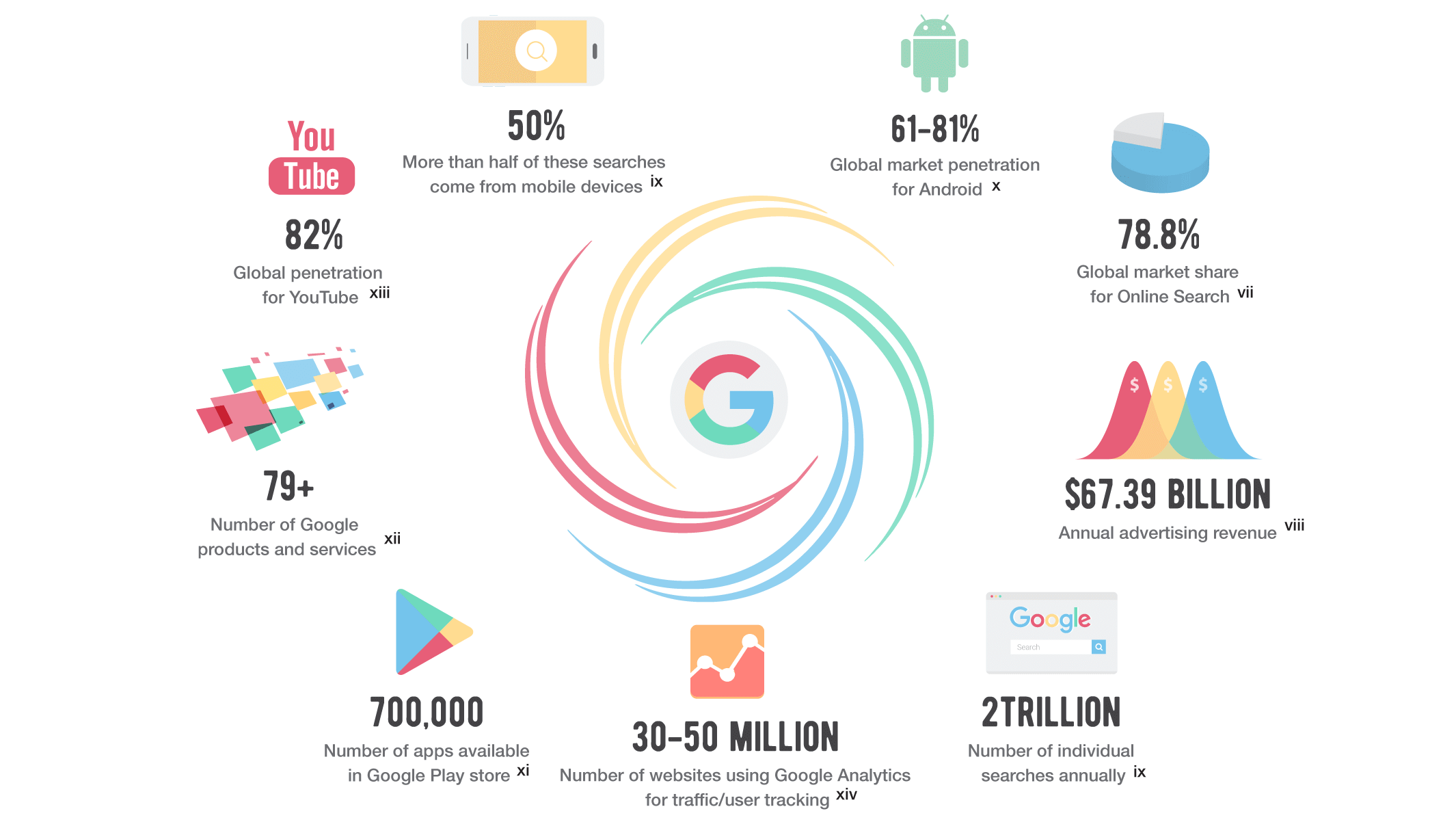
    Before moving forward in this highly competitive field of search engine optimization, online marketing and web innovation. We felt it necessary to write a blog which covers the basic workings of the search engine Google. Indeed, to understand where you are going it is necessary to know where you’ve been. The aim of this blog is to get a general idea of how Google works and then we can share more detailed blogs in the future on white hat seo practices.

    As large as Google has grown, as many changes as it has seen, its primary purpose is still clear: To help users find what they want on the internet. And that’s where Google’s search engine shines. Google uses automated programs called spiders or crawlers, just like most search engines, to help generate its search results. Google has a large index of keywords that help determine search results. … Google uses a trademarked algorithm called PageRank, which assigns each Web page a relevancy score.

    What Is an Algorithm?
    Consider how you use a computer in a typical day. For example, you start working on a report, and once you have completed a paragraph, you perform a spell check. You open up a spreadsheet application to do some financial projections to see if you can afford a new car loan. You use a web browser to search online for a kind of car you want to buy.
    You may not think about this very consciously, but all of these operations performed by your computer consist of algorithms. An algorithm is a well-defined procedure that allows a computer to solve a problem. Another way to describe an algorithm is a sequence of unambiguous instructions. The use of the term ‘unambiguous’ indicates that there is no room for subjective interpretation. Every time you ask your computer to carry out the same algorithm, it will do it in exactly the same manner with the exact same result.

    Consider the earlier examples again. Spell checking uses algorithms. Financial calculations use algorithms. A search engine uses algorithms. In fact, it is difficult to think of a task performed by your computer that does not use algorithms.

    How Do Algorithms Work?
    Let’s take a closer look at an example.
    A very simple example of an algorithm would be to find the largest number in an unsorted list of numbers. If you were given a list of five different numbers, you would have this figured out in no time, no computer needed. Now, how about five million different numbers? Clearly, you are going to need a computer to do this, and a computer needs an algorithm.

    Below is what the algorithm could look like. Let’s say the input consists of a list of numbers, and this list is called L. The number L1 would be the first number in the list, L2 the second number, etc. And we know the list is not sorted – otherwise, the answer would be really easy. So, the input to the algorithm is a list of numbers, and the output should be the largest number in the list.

    What is Google Crawling?
    Crawling basically means following a path.

    In the SEO world, crawling means following your links and “crawling” around your website. When bots come to your website (any page), they follow other linked pages also on your website. This is one reason why we create sitemaps, as they contain all of the links in our blog and Google’s bots can use them to look deeply into a website. Although it varies, it seems to take as little as 4 days and up to 6 months for a site to be crawled by Google and attribute authority to the domain. When you publish a new blog post, site page, or website in general, there are many factors that determine how quickly it will be indexed by Google.

    Google uses automated programs called spiders or crawlers, just like most search engines, to help generate its search results. Google has a large index of keywords that help determine search results. What sets Google apart is how it ranks its results, which determines the order Google displays results on its search engine results pages. Google uses a trademarked algorithm called PageRank, which assigns each Web page a relevancy score.
    The way we stop crawling certain parts of our site is by using the robots.txt file.
    Factors That Affect Crawling:
    There are millions of websites on this earth. Is everyone satisfied with the crawling and indexing rate?? No!! Most people are left constantly wondering why their articles aren’t getting indexed.

    Let’s take a look at some major factors which play some important roles at the backend of crawling and indexing.

    What is Google Indexing?
    In layman’s terms, indexing is the process of adding web pages into Google search.
    Depending upon which meta tag you used (index or NO-index), Google will crawl and index your pages. A no-index tag means that that page will not be added to the web search’s index.
    • By default, every WordPress post and page is indexed.
    A good idea for ranking higher in search engines is to let only vital parts of your blog/website be indexed.

    Do not index unnecessary archives like tags, categories, and all other useless pages.

    If you want to find out more about more details of the inner working on Google, we found this course on Google that might be helpful.

    Google Analytics for Beginners shows new users how to create an account, implement tracking code, and set up data filters. You’ll learn how to navigate the Google Analytics interface and reports, and set up dashboards and shortcuts. The course will also demonstrate how to analyze basic Audience, Acquisition, and Behavior reports, and set up goals and campaign tracking.

    Unit 1: Introducing Google Analytics
    o Lesson 1: Why digital analytics?
    o Lesson 2: How Google Analytics works
    o Lesson 3: Google Analytics setup
    o Lesson 4: How to set up views with filters

    Unit 2: The Google Analytics Interface
    o Lesson 1: Navigating Google Analytics
    o Lesson 2: Understanding overview reports
    o Lesson 3: Understanding full reports
    o Lesson 4: How to share reports
    o Lesson 5: How to set up dashboards and shortcuts

    Unit 3: Basic Reports
    o Lesson 1: Audience reports
    o Lesson 2: Acquisition reports
    o Lesson 3: Behavior reports

    Unit 4: Basic Campaign and Conversion Tracking
    o Lesson 1: How to measure Custom Campaigns
    o Lesson 2: Tracking campaigns with the URL Builder
    o Lesson 3: Use Goals to measure business objectives
    o Lesson 4: How to measure Google Ads campaigns
    o Lesson 5: Course review and next steps

    https://analytics.google.com/analytics/academy/course/6

    The Google search engine remains the cornerstone of just about everything the company does. As large as Google has grown, as many changes as it has seen, its primary purpose is still clear: To help users find what they want on the internet. And that’s where Google’s search engine shines.

    Sources:
    https://analytics.google.com/analytics/academy/course/6

  • Continuous Learning (Bonus Blog)

    Continuous Learning (Bonus Blog)

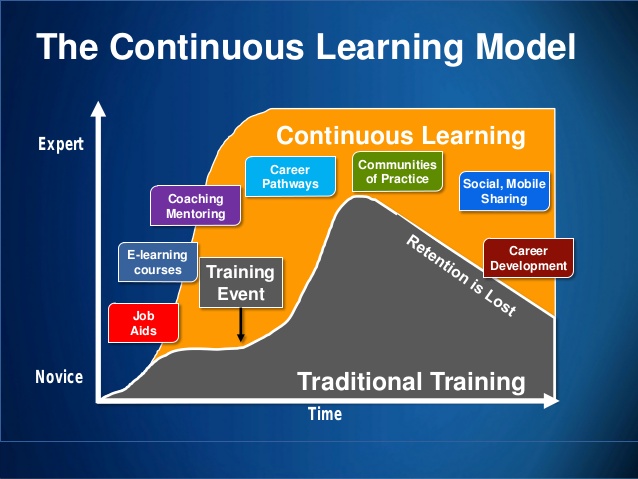
    In today’s highly competitive market place it has become essential that individuals remain current when it comes to learning. With new technologies advancing our market places daily, companies that are not continuously educating their employees on the latest technological advances will no doubt find themselves lagging behind their competition that do provide ongoing continuous learning for their employees.

    In this blog, we will briefly outline the importance of ongoing learning from onboarding to ongoing employee training. Much like a winning sports team, employees need to be constantly coached and educated on the latest technological plays. The goal here is to not only find a solution to current technological advancements in a timely manner but also to identify a source like HubSpot Academy where individuals can stay current on their own time. We here at Nexonta Technologies use HubSpot Academy as a continuous learning tool and we require all of our employees to complete at least one HubSpot Academy Certification Course every quarter.

    Why is continuous learning important for organizations?
    Staying competitive in today’s global marketplace means that organizations need to be innovative, adaptive, and ever-changing. Achieving this depends on the skill and knowledge of the workforce. But how do you get this kind of workforce to begin with?
    To innovate, to try a new process, or to do something new all requires learning.

    People need to learn new knowledge or skills in order to see things in a new light and take that next leap. When organizations do not support a continual process of learning, innovation does not happen, processes remain unchanged, and nothing new is ever accomplished.

    Employees need to be able to challenge themselves in order to obtain new knowledge, ideas, and skills. Learning needs to be on a flexible, on-demand and continual basis in order to contribute this kind of cutting-edge performance.


    Creating a learning culture within the organization is an effective way to improve performance and innovation, as mentioned earlier, but also employee satisfaction and retention. Here’s why:
    1. Knowledge is power – The more employees know and the more they can do, the more they can contribute to the organization.
    2. More cost effective – Investing in the development of employees is less expensive than rehiring and retraining new employees.
    3. Show that employees are valued – Support of continuous learning indicates that employees are worth the investment and that the organization is genuine about employee career development.

    Continuously updating knowledge or skills can help an employee in both their professional life and personal life for a number of reasons. Here’s why:
    1. Top Performer – Developing new skills and knowledge can increase personal performance or competence on the job.
    2. Career development – Additional training, education, or skill development can help achieve goals for those pursuing a career path or wanting to rotate into a new position.
    3. Licenses or Certifications – Pursuing additional learning is also important for those employees who need to obtain or update professional licenses or certifications.
    4. Promotions or incentives – Spending time to learn a new skill or obtain new knowledge can benefit work performance and influence future promotion or financial incentives.
    5. Personal enrichment – Often a person’s interests extend beyond the job they do on a daily basis. Pursuing extracurricular interests can lead to insight and developments that open the door to new, future opportunities.
    6. Stay marketable – Staying current in the trends and advances of one’s profession can help an employee stay marketable in their profession should anything change.

    On a personal level, the introduction of computers made us rethink how we communicate with people and allowed us to keep in touch with people across the globe with just the click of a button.

    On an individual level, continuous learning is defined by the practices the individual carries out daily in order to continue increasing knowledge. For example:
    • Asking for help when something is not understood
    • Observing more experienced employees at work
    • Trying new ways of doing things and exploring alternative methods
    • Practicing what has been learned already
    • Finding ways to improve such as taking up training programs or online seminars outside of work
    In the organization, continuous learning has to do with shaping a team to adapt to changes in that particular business; from onboarding which is the action or process of integrating a new employee into an organization. Once the initial onboarding is complete, continue to offer new hires and existing employees relevant training and development opportunities. Knowledge is key to any successful business but it has also become essential for any business that wants to survive in today’s rapidly changing market place.

    Source:

    https://www.valamis.com/hub/continuous-learning
    https://www.talentlms.com/elearning/continuous-learning

  • Growth Driven Design Websites

    Growth Driven Design Websites

    As you are reading this, someone is probably googling your business website.

    Traditional Web Design is Broken
    The headaches, challenges, unreliable and inconsistent results we experience during a website redesign are the product of an outdated and broken playbook.

    The New Playbook: Growth-Driven Design
    Growth-Driven Design is a smarter approach to web design that eliminates all of the headaches and drives optimal results using data.

    Your website is your biggest marketing asset and is the centerpiece of all your marketing activities. Your website is the first place, people go when looking for more information on your products or services. All of our marketing efforts and the first-place prospects come looking for information is the website.

    Your best salesperson is your website. Did you know a prospect has already moved through 70% of the sales process before even reaching out to your sales team? How do you think they find the information before talking to someone? – Your website. Unfortunately, the way we approach building and improving our websites is fundamentally broken.

    Traditional Web Design is a Large Time & Resource Commitment: The average Small to Medium sized business (SMB) website takes three months to complete and requires a great deal of resources and energy from your team. Not Set in Stone: Large projects can fluctuate in cost and time, which makes accurate quotes difficult. Project delays and increased budgets happen sometimes. No Prototype: The Traditional method launches a website that should succeed in theory. However, this method lacks a “trial and error” run with viewers. Trial and error helps determine what works for viewers and what does not, which is beneficial in the design process.

    After launch, a website has no major updates for 1.5 to 2 years. Our #1 marketing asset and best salesperson, our website, now sits unchanged for years, which is not conducive to maximize website performance. Some small updates or improvements may happen, along with adding blogs or landing pages to the site, but the vast majority of the site remains untouched.

    The Three Pillars of Growth-Driven Design

    01) Minimize risks associated with traditional web design. We work to avoid the risks of traditional web design by taking a systematic approach to shorten the time to launch, focusing on real impact and continuous learning and improvement.

    02) Continuously learn and improve. We are constantly researching, testing and learning about our visitors to improve on-going website improvements. Through continuous improvements we can reach peak performance.

    03) As you learn, inform marketing and sales (and vice versa). Growth-Driven Design is tightly integrated with marketing & sales. What we learn about visitors helps inform and improve marketing & sales strategies and tactics (and vice versa).

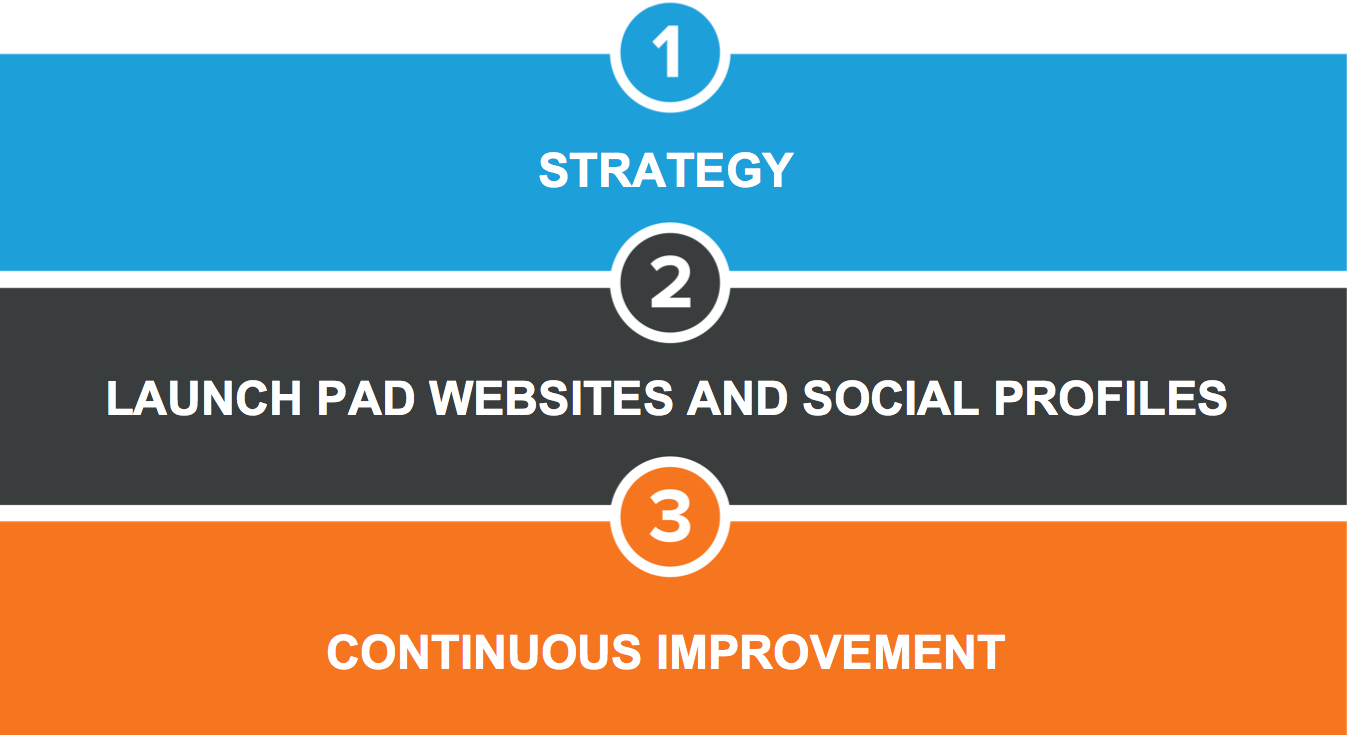
    THREE MAJOR PHASES OF GROWTH-DRIVEN DESIGN:

    PHASE 1: STRATEGY, PHASE 2: WISHLIST, and PHASE 3: LAUNCH PAD WEBSITE


    First phase: Strategy.

    Similar to the traditional website design process, the first stage of Growth-Driven Design is the strategy stage. In this stage we’ll develop a rock-solid foundation that we can build our Growth- Driven Design process upon using the following steps: Goals: What are the performance goals that we are trying to achieve with our website? How have we historically performed, where would we like to improve and how will this impact the overall marketing department’s goal?
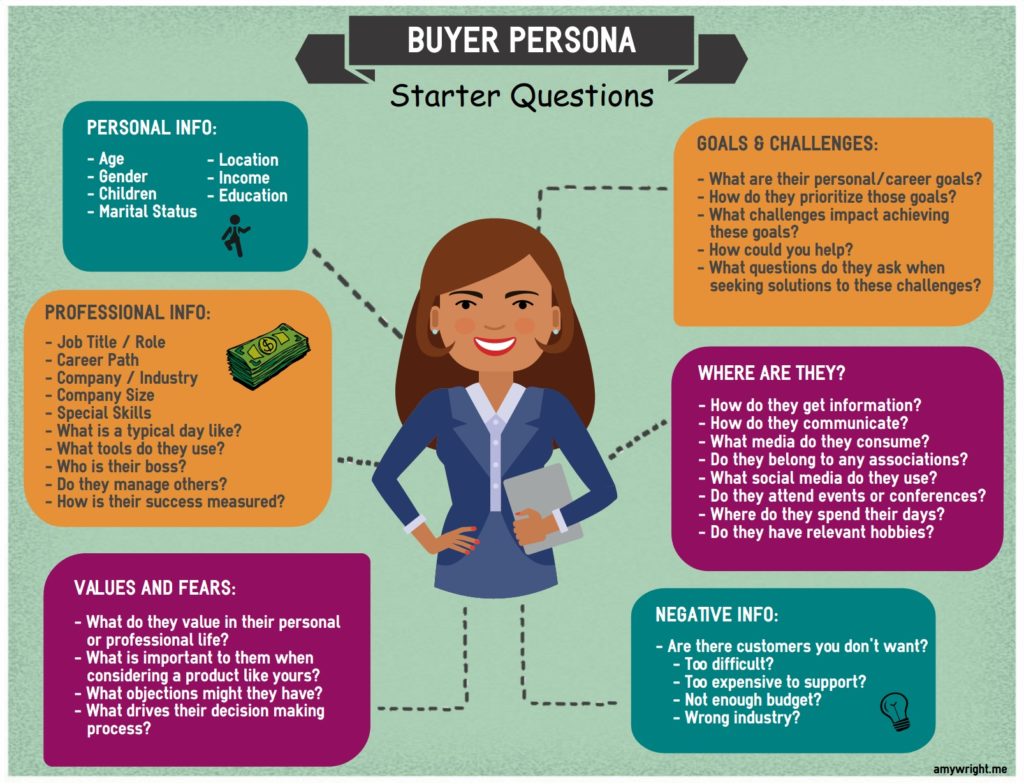
    Personas: Next you will develop detailed persona profiles for the different types of groups visiting the site. A persona is a fictional representation of your ideal customer. You can create different groups of personas based on common characteristics your audience shares. This could be a point of pain, industry, job title, etc. As you’ll learn later in the book, Growth- Driven Design centers around the user, so it is critically important to fully research and develop your persona profiles in the beginning, as they will set the stage for all future activities.

    The second phase in the Growth-Driven Design process is to create a wishlist.

    Taking what you’ve learned in your strategy planning, gather your team together and brainstorm every impactful, creative and innovative idea that you’d like to include on the site. Go into your brainstorming session with a “clean slate” – don’t get hung up on the existing website. What items do you need on your list to achieve your goals?
    Answer this disregarding the issues of money, time, and development skill. Include brainstorming ideas such as: Key impactful website sections and pages Marketing assets, tools and resources Specific features, modules and functionality Design elements Changes in experience based on devices, country, etc.

    After a few hours of brainstorming, you and the team should have a list of 50-150+ ideas for the new website. Not all of these items will be implemented right away, but start to think of as many ideas as possible. Your wishlist determines both the initial action items to implement on the new site, and the agile and flexible list that continuously changes. Adding to and subtracting from the agile and flexible list re-prioritizes action items over time.

    Third Phase in the Growth Drive Design is Launch Pad Website

    Web Process Steps: Once you have identified the most critical action items to include on your Launch Pad site, you can run those items through the standard website implementation process, including: Messaging & Content User Experience (UX) & Site Architecture, Inbound Marketing Strategy, Alignment Wireframes Designs, Development Quality Assurance and Testing Set Up Data Collection. The last step of the Launch Pad website sets up qualitative and quantitative data collection around: Your goals defined in the strategy phase. Each of your fundamental assumptions …AND Each hypothesis statement of your action items implemented in the Launch Pad website. Also, set up data collection. It allows you to start learning about your visitors once your Launch Pad site is live.

    In the traditional web design process we launch websites at the finish. In Growth-Driven Design we launch websites right away. In this stage, we build and launch what we call a “Launch Pad website”. All of your other Growth-Driven Design activities and improvements start from this Launch Pad website. Launch the imperfect Launch Pad website quickly. We want to avoid getting stuck on analysis, features or content while building our launch pad website. No one launches a perfect website on the first go. However, your launch improves your current website and gives a starting point on which to continuously improve. The size and complexity of the Launch Pad website varies depending on what you have on your wishlist and what type of website you have. Shorten your list to 20% of the original. This short list makes an impact and launches quickly so you can continue to learn about your users and improve the site.

    Fundamental Assumptions of the Growth-Driven Design Process: Using what you’ve learned in all of the previous steps, you can now start forming some fundamental assumptions about your users. Some examples of fundamental assumptions include: Value propositions for each product, service and offer. The various locations and devices users will be accessing your website from. What information your users are looking for. These fundamental assumptions help you explain the behavior and motivations of your users. They influence both the global and page strategy, and also future Growth-Driven Design cycles. Global & Page Strategy: The last step in the strategy phase develops both a global strategy for the website as a whole and a specific page-by-page strategy for each major page on the site. Both the global and individual page strategies should incorporate all of the previous steps. Also, they should lay out a detailed strategy of exactly how to best engage and influence the user to best attain your goals.

    The Growth-Driven Design Process Quantitative Research – Website & Analytics Audit: Time to start digging into the data. Analyze the current website’s performance and perform a quantitative audit of the good and the bad. As you do this, identify where the website can improve.
    Qualitative Research – User Research: After proactively reaching out to your existing users to learn more about them, use the data to better understanding of who they are and find ways to improve. As you’re collecting new user research, validate the assumptions you put in your original persona profiles.

    Continuous Improvement now that you Launch Pad website is live. Time to start your on-going cycles to continuously experiment, learn, and improve on your website. You still have a long wishlist of impactful items that you’d like to implement on the site. This agile list should be updated on a regular basis. This revolves around the Persona. This entire cycle starts with and revolves around the personas who are coming to your website. At each stage of the cycle, continuously ask yourself how this relates and provides value to the personas visiting your website. If at any point it becomes unclear how an action item provides value to, or relates to the persona, take a step back and re-evaluate what you’re working on.

    Source:
    https://cdn2.hubspot.net/hubfs/124445/docs/ebook-growth.pdf?t=1488562926580

  • Importance of Buyer Personas

    Importance of Buyer Personas

    A persona (also user persona, customer persona, buyer personal) is a semi-fictional representation of your ideal customer based on market research and real data about your existing customers. When creating your buyer persona(s), consider including customer demographics, behavior patterns, motivations, and goals. For example, if you are designing a growth driven design website your data would be largely based on your buyer personas as well as web analytics. In most cases, personas are synthesized from data collected from interviews with users. They are captured in 1–2-page descriptions that include behavioral patterns, goals, skills, attitudes, with a few fictional personal details to make the persona a realistic character.
    The more detailed you are, the better.

    Data collection
    Concerning data, personas have typically been developed from surveys, focus groups, and other ethnographic data collection techniques. Most persona designers believe that personas should be based on ethnographic or other data collection approaches concerning customers and should not be based purely on the creator’s imagination. The use of ethnographic research helps the creation of a number of archetype users that can be used to develop products that deliver positive user experiences. With the availability of large amounts of actual customer data, user data, social media data, and other web analytics data, this provides you with enough information to develop and design an Ideal Buyer Persona for your organization.

    A persona, in user-centered design and marketing is a fictional character created to represent a user type that might use a site, brand, or product in a similar way. Marketers may use personas together with market segmentation, where the qualitative personas are constructed to be representative of specific segments.

    The term persona is used widely in online and technology applications as well as in advertising. The reason that it is so important to know your persona (user persona, customer persona, buyer personal) is that when tracking your data analytics you have to know what you are looking for in terms of demographics and persona make up in order to properly design marketing campaigns, content, products and services for your specific target audience. It is only through knowing your buyer persona that you can tailor a focussed clear concise and effective marketing strategy in order to gain more users and clients.

    Personas may also be used as part of a user-centered design process for designing software and are also considered a part of interaction design (IxD), having been used in industrial design and more recently for online marketing purposes and growth driven design websites.

    Personas are said to be cognitively compelling because they put a personal human face on otherwise abstract data about customers. By thinking about the needs of a fictional persona, designers may be better able to infer what a real person might need. Such inference may assist with brainstorming, use case specification, and features definition. Pruitt and Adlin argue that personas are easy to communicate to engineering teams and thus allow engineers, developers, and others to absorb customer data in a palatable format. They present several examples of personas used for purposes of communication in various development projects.

    Personas also help prevent some common design pitfalls which may otherwise be easy to fall into. The first is designing for what Cooper calls “The Elastic User”, by which he means that while making product decisions different stakeholders may define the ‘user’ according to their convenience. Defining personas helps the team have a shared understanding of the real users in terms of their goals, capabilities, and contexts. Personas also help prevent “self-referential design” when the designer or developer may unconsciously project their own mental models on the product design which may be very different from that of the target user population.

    Personas also provide a reality check by helping designers keep the focus of the design on cases that are most likely to be encountered for the target users and not on edge cases which usually will not happen for the target population.

    The persona benefits are summarized as follows:
    • Help team members share a specific, consistent understanding of various audience groups. Data about the groups can be put in a proper context and can be understood and remembered in coherent stories.
    • Proposed solutions can be guided by how well they meet the needs of individual user personas. Features can be prioritized based on how well they address the needs of one or more personas.
    • Provide a human “face” so as to create empathy for the persons represented by the demographics.

    Today we live in a data filled world, moving at 5G speeds. The more data that we are able to harvest the better we can focus our product or services to attract our Ideal customer this is why it is so essential to not only create buyer personas but to also update them on a regular basis because things change fast today and so do customer preferences.

    Sources:
    Wikipedia
    Hubspot

  • The Future is Software as a Service (SaaS)

    The Future is Software as a Service (SaaS)

    It would be premature to continue on our blog series detailing the ins and outs of content marketing without first exploring the ins and outs of SaaS or more commonly known as Software as a Service. Software as a service (SaaS) is a software distribution model in which a third-party provider hosts applications and makes them available to customers over the Internet. SaaS is one of three main categories of cloud computing, alongside infrastructure as a service (IaaS) and platform as a service (PaaS).

    SaaS is closely related to the application service provider (ASP) and on demand computing software delivery models. The hosted application management model of SaaS is similar to ASP, where the provider hosts the customer’s software and delivers it to approved end users over the internet. In the software on demand SaaS model, the provider gives customers network-based access to a single copy of an application that the provider created specifically for SaaS distribution. The application’s source code is the same for all customers and when new features or functionalities are rolled out, they are rolled out to all customers. Depending upon the service level agreement (SLA), the customer’s data for each model may be stored locally, in the cloud or both locally and in the cloud. Organizations can integrate SaaS applications with other software using application programming interfaces (APIs). For example, a business can write its own software tools and use the SaaS provider’s APIs to integrate those tools with the SaaS offering.

    There are SaaS applications for fundamental business technologies, such as email, sales management, customer relationship management (CRM), financial management, human resource management (HRM), billing and collaboration. Leading SaaS providers include Salesforce, Oracle, SAP, Intuit and Microsoft.

    History
    Centralized hosting of business applications dates back to the 1960s. Starting in that decade, IBM and other mainframe providers conducted a service bureau business, often referred to as time-sharing or utility computing. Such services included offering computing power and database storage to banks and other large organizations from their worldwide data centers.

    The expansion of the Internet during the 1990s brought about a new class of centralized computing, called Application Service Providers (ASP). ASPs provided businesses with the service of hosting and managing specialized business applications, with the goal of reducing costs through central administration and through the solution provider’s specialization in a particular business application.

    While most initial ASP’s focused on managing and hosting third-party independent software vendors’ software, as of 2012 SaaS vendors typically develop and manage their own software.
    Whereas many initial ASPs offered more traditional client-server applications, which require installation of software on users’ personal computers, SaaS solutions of today rely predominantly on the Web and only requires a web browser to use.
    Whereas the software architecture used by most initial ASPs mandated maintaining a separate instance of the application for each business, as of 2012 SaaS solutions normally utilize a multitenant architecture, in which the application serves multiple businesses and users, and partitions its data accordingly.

    Pricing
    Unlike traditional software, which is conventionally sold as a perpetual license with an up-front cost (and an optional ongoing support fee), SaaS providers generally price applications using a subscription fee, most commonly a monthly fee or an annual fee. Consequently, the initial setup cost for SaaS is typically lower than the equivalent enterprise software. SaaS vendors typically price their applications based on some usage parameters, such as the number of users using the application. However, because in a SaaS environment customers’ data reside with the SaaS vendor, opportunities also exist to charge per transaction, event, or other units of value, such as the number of processors required.

    The relatively low cost for user provisioning (i.e., setting up a new customer) in a multitenant environment enables some SaaS vendors to offer applications using the freemium model. In this model, a free service is made available with limited functionality or scope, and fees are charged for enhanced functionality or larger scope. Some other SaaS applications are completely free to users, with revenue being derived from alternative sources such as advertising.

    A key driver of SaaS growth is SaaS vendors’ ability to provide a price that is competitive with on-premises software. This is consistent with the traditional rationale for outsourcing IT systems, which involves applying economies of scale to application operation, i.e., an outside service provider may be able to offer better, cheaper, more reliable applications.

    Architecture
    The vast majority of SaaS solutions are based on a multitenant architecture. With this model, a single version of the application, with a single configuration (hardware, network, operating system), is used for all customers (“tenants”). To support scalability, the application can be installed on multiple machines (called horizontal scaling). In some cases, a second version of the application is set up to offer a select group of customers access to pre-release versions of the applications (e.g., a beta version) for testing purposes. This is contrasted with traditional software, where multiple physical copies of the software — each potentially of a different version, with a potentially different configuration, and often customized — are installed across various customer sites. In this traditional model, each version of the application is based on a unique code.

    Although an exception rather than the norm, some SaaS solutions do not use multitenancy, or use other mechanisms—such as virtualization—to cost-effectively manage a large number of customers in place of multitenancy. Whether multitenancy is a necessary component for software as a service is a topic of controversy.

    Software as a service (SaaS /sæs/) is a software licensing and delivery model in which software is licensed on a subscription basis and is centrally hosted. It is sometimes referred to as “on-demand software”, and was formerly referred to as “software plus services” by Microsoft. SaaS applications are also known as Web-based software, on-demand software and hosted software.

    SaaS shows no signs of slowing down, in fact these platforms are making it easier and easier to facilitate global trade along every industry. While platforms will continue to evolve as a result of the need for efficiencies in businesses and organizations this also contributes to massive shifts in economic change. Those taking advantage of these platforms will stay ahead of the crowd and thrive while those who aren’t not leveraging SaaS will find it near impossible to compete in today’s market place.

    Sources:
    https://searchcloudcomputing.techtarget.com/definition/Software-as-a-Service
    https://en.wikipedia.org/wiki/Software_as_a_service

  • Content Analysis and Marketing Blog

    Content Analysis and Marketing Blog

    Web analytics is the measurement, collection, analysis and reporting of web data for purposes of understanding and optimizing web usage. However, Web analytics is not just a process for measuring web traffic but can be used as a tool for business and market research, and to assess and improve the effectiveness of a website. Web analytics applications can also help companies measure the results of traditional print or broadcast advertising campaigns. It helps one to estimate how traffic to a website changes after the launch of a new advertising campaign. Web analytics provides information about the number of visitors to a website and the number of page views. It helps gauge traffic and popularity trends which is useful for market research.

    Most web analytics processes come down to four essential stages or steps, which are:
    • Collection of data: This stage is the collection of the basic, elementary data. Usually, these data are counts of things. The objective of this stage is to gather the data.
    • Processing of data into information: This stage usually take counts and make them ratios, although there still may be some counts. The objective of this stage is to take the data and conform it into information, specifically metrics.
    • Developing KPI: This stage focuses on using the ratios (and counts) and infusing them with business strategies, referred to as key performance indicators (KPI). Many times, KPIs deal with conversion aspects, but not always. It depends on the organization.
    • Formulating online strategy: This stage is concerned with the online goals, objectives, and standards for the organization or business. These strategies are usually related to making money, saving money, or increasing marketshare.

    Another essential function developed by the analysts for the optimization of the websites are the experiments
    • Experiments and testings: A/B testing is a controlled experiment with two variants, in online settings, such as web development. The goal of A/B testing is to identify and suggest changes to web pages that increase or maximize the effect of a statistically tested result of interest. Each stage impacts or can impact (i.e., drives) the stage preceding or following it. So, sometimes the data that is available for collection impacts the online strategy. Other times, the online strategy affects the data collected.

    Web analytics technologies
    There are at least two categories of web analytics, off-site and on-site web analytics.
    • Off-site web analytics refers to web measurement and analysis regardless of whether you own or maintain a website. It includes the measurement of a website’s potential audience (opportunity), share of voice (visibility), and buzz (comments) that is happening on the Internet as a whole.
    • On-site web analytics, the more common of the two, measure a visitor’s behavior once on your website. This includes its drivers and conversions; for example, the degree to which different landing pages are associated with online purchases. On-site web analytics measures the performance of your website in a commercial context. This data is typically compared against key performance indicators for performance and is used to improve a website or marketing campaign’s audience response. Google Analytics and Adobe Analytics are the most widely used on-site web analytics service; although new tools are emerging that provide additional layers of information, including heat maps and session replay.
    Historically, web analytics has been used to refer to on-site visitor measurement. However, this meaning has become blurred, mainly because vendors are producing tools that span both categories. Many different vendors provide on-site web analytics software and services. There are two main technical ways of collecting the data. The first and traditional method, server log file analysis, reads the logfiles in which the web server records file requests by browsers. The second method, page tagging, uses JavaScript embedded in the webpage to make image requests to a third-party analytics-dedicated server, whenever a webpage is rendered by a web browser or, if desired, when a mouse click occurs. Both collect data that can be processed to produce web traffic reports.

    Marketing automation refers to software platforms and technologies designed for marketing departments and organizations to more effectively market on multiple channels online (such as email, social media, websites, etc.) and automate repetitive tasks.

    Marketing departments, consultants and part-time marketing employees benefit by specifying criteria and outcomes for tasks and processes which are then interpreted, stored and executed by software, which increases efficiency and reduces human error. Originally focused on email marketing automation, marketing automation refers to a broad range of automation and analytic tools for marketing especially inbound marketing. Marketing Automation platforms are used as a hosted or web-based solution, and no software installation is required by a customer.

    The use of a marketing automation platform is to streamline sales and marketing organizations by replacing high-touch, repetitive manual processes with automated solutions.
    Marketing automation is a platform that marketers use to plan, coordinate, manage and measure all of their marketing campaigns, both online and offline. It is often used along with lifecycle marketing strategy to closely manage and nurture generated leads, aiming to convert leads into customers.[ci

    Marketing Automation is a subset of customer relationship management (CRM) or customer experience management (CXM) that focuses on the definition, segmentation, scheduling and tracking of marketing campaigns. The use of marketing automation makes processes that would otherwise have been performed manually much more efficient and makes new processes possible. Marketing Automation can be defined as a process where technology is used to automate several repetitive tasks that are undertaken on a regular basis in a marketing campaign. A tool that allows an individual to design, execute and automate a time-bound marketing workflow can be called a Marketing Automation platform.

    Marketing Automation platforms allow marketers to automate and simplify client communication by managing complex omni-channel marketing strategies from a single tool. Marketing Automation assists greatly in areas like Lead Generation, Segmentation, Lead nurturing and lead scoring, Relationship marketing, Cross-sell and upsell, Retention, Marketing ROI measurement. There are three categories of marketing automation software:

    Marketing intelligence
    Uses tracking codes in social media, email, and webpages to track the behavior of anyone interested in a product or service to gain a measure of intent. It can record which social media group or thread they followed, which link was clicked on in an email or which search term was used to access a website. Multiple link analysis can then track buyer behavior – following links and multiple threads related to product A but not B will show an interest only in A. This allows more accurately targeted response and the development of a nurturing program specifically targeted towards their interest and vertical market. This allows businesses to more efficiently and effectively reach target consumers who show, through their internet history behavior, that they will be interested in the company’s products.[4] Due to its interactive nature this has been described as Marketing Automation 2.0.
    Marketing automation
    Has a focus on moving leads from the top of the marketing funnel through to becoming sales-ready leads at the bottom of the funnel. Prospects are scored, based on their activities, and receive targeted content and messaging, thus nurturing them from first interest through to sale. Commonly used in business-to-business (B2B), business-to-government (B2G), or longer sales cycle business-to-consumer (B2C) sales cycles, Marketing Automation involves multiple areas of marketing and is really the marriage of email marketing technology coupled with a structured sales process.
    Advanced workflow automation
    Encompasses automation of internal marketing processes. These include budgeting and planning, workflow and approvals, the marketing calendar, internal collaboration, digital asset creation, and management and essentially everything that supports the operational efficiency of the internal marketing function. Typically these systems require a CRM or COM administrator to set up a complex series of rules to trigger action items for internal sales and marketing professionals to manually process (designing files, sending letters, sending email campaigns). This type of system increases the marketer’s ability to deliver relevant content to relevant individuals at relevant times. Limitations may apply, based on the human resource capacity of an organization and their level of commitment to the tasks as they are assigned.

    Over the past, 8 or so years organizations and businesses have increasingly been seeing the need to invest in websites as well as social media campaigns to reach their target audience but also to share their Why as well as to branding identity for what their business or organization reason for being is. However, recently we have seen these tools become more and more streamlined to track views, likes, shares, bounce rates, conversion rates, and even revenue generation if your marketing efforts are not tracking all of these different metrics then chances are you are wasting ad spend. 2020 and beyond are all about analyzing the data for every post, blog or share and learning what resonates with your audience so that you can provide them with a wonderful user experience and education.

    Source: Wikipedia

☎ ✉
f 𝕏
error: Content is protected !!