Tag: artificial intelligence

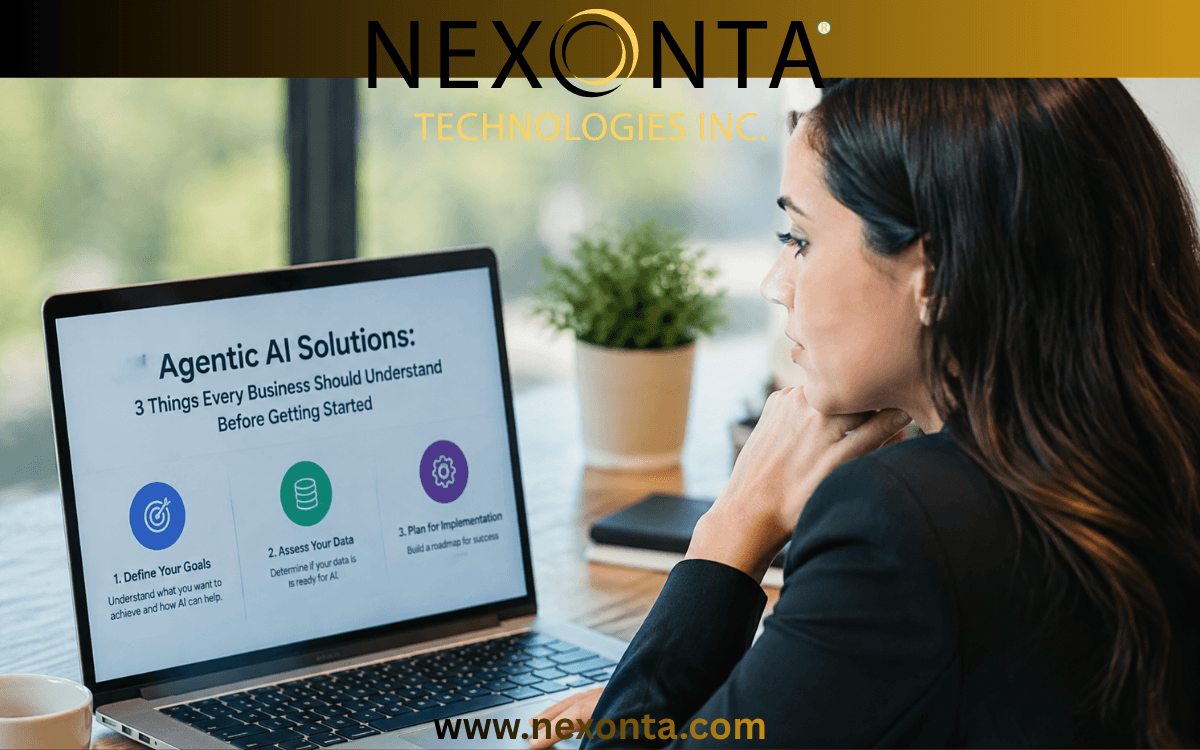
  • Agentic AI Solutions: 3 Things Every Business Should Understand Before Getting Started

    Agentic AI Solutions: 3 Things Every Business Should Understand Before Getting Started

    Artificial intelligence is changing how businesses operate. But choosing the right agentic AI solutions can be a challenge when new platforms, features and technologies seem to appear almost every day. At Nexonta, our team has been focusing on web design, automation and agentic AI template development. We’re seeing more businesses explore ways to reduce repetitive work, remove bottlenecks and improve efficiency. The big question is: where do you start?

    With so many AI products available, it helps to understand a few basic concepts before investing in a solution. This week, we’re breaking down three important topics that can help business owners make more informed decisions.

    Let’s start with the basics.

    1. Where Does Your AI Solution Actually Run? Understanding Hosting Options

    When businesses look at AI solutions, they often focus on what the software can do. That’s important, but there’s another question worth asking.

    Where will the AI application actually run?

    The hosting environment can affect performance, security, flexibility and operating costs. Here are three terms you will often hear.

    Sandbox Environments

    Think of a sandbox as a controlled, isolated workspace.

    It is commonly used to run code or processes that should not have unrestricted access to the rest of a system. For example, an AI agent may need to execute generated code, test a script or work with files.

    A sandbox creates boundaries around that activity. This helps reduce the risk of an unexpected action affecting other systems.

    When is it useful?

    • Running code generated by an AI system.
    • Testing scripts and applications.
    • Working with potentially untrusted code.
    • Limiting access to sensitive systems.

    One important point: a sandbox is an isolation approach. It can run on infrastructure such as containers or virtual machines. It is not necessarily a standalone hosting alternative.

    Virtual Machines (VMs)

    A virtual machine is essentially a computer running inside another physical computer.

    It has its own operating system, storage, memory and allocated processing resources. A software layer called a hypervisor allows multiple virtual machines to run on the same physical server.

    VMs are popular because they offer a good balance of flexibility, control and cost.

    When are they useful?

    • Hosting websites and business applications.
    • Running AI applications and supporting services.
    • Managing databases and integrations.
    • Scaling resources as business needs change.

    For many organizations, virtual machines are a practical starting point.

    Bare Metal Servers

    Bare metal takes a different approach.

    Instead of sharing the underlying physical server with other virtual machines, the business has dedicated access to the physical machine’s resources.

    This can provide greater hardware control and more predictable performance. It can also be useful for demanding workloads that need direct hardware access.

    When is it useful?

    • Large-scale data processing.
    • High-performance computing.
    • Specialized AI workloads.
    • Applications with demanding hardware requirements.

    However, bare metal can involve higher costs and more infrastructure management.

    So, Which Hosting Option Is Best?

    There isn’t one answer for every business.

    A smaller company running an AI-powered customer support application may be perfectly comfortable with a managed cloud platform or virtual machine.

    A larger organization handling demanding AI workloads may need more control over its infrastructure.

    The important thing is to consider your security requirements, data sensitivity, performance needs and expected growth before making a decision.

    2. What’s the Difference Between an AI Model and an AI Agent?

    This is one of the most important distinctions to understand when exploring agentic AI.

    The terms are often used interchangeably, but they describe different things.

    What Is an AI Model?

    An AI model is the underlying technology that processes information and generates responses.

    It can understand language, analyze information, recognize patterns, summarize documents and help solve problems.

    Think of the model as the engine.

    On its own, a model can provide impressive answers. However, that doesn’t automatically mean it can complete an entire business process.

    For example, an AI model can help write a customer follow-up email. But writing the email is different from managing the complete follow-up process.

    What Is an AI Agent?

    An AI agent uses an AI model as part of a larger system.

    It is given a goal, instructions and access to selected tools. It can then work through multiple steps to accomplish a task.

    Depending on its setup and permissions, an agent can:

    • Retrieve information from business systems.
    • Analyze incoming requests.
    • Decide which available tools to use.
    • Complete approved actions.
    • Check results and determine the next step.

    Let’s use a simple business example.

    Imagine a company receives a new sales lead through its website.

    A basic AI model might help summarize the inquiry or draft a response.

    An AI agent could take the process further. It might review the inquiry, look up the customer’s information in the CRM, classify the lead, prepare a personalized response and create a follow-up task.

    Some actions may happen automatically. Others may require approval from a team member.

    Here’s the simple difference:

    An AI model provides the intelligence. An AI agent uses that intelligence, along with tools and instructions, to complete a process.

    That’s where the real opportunity for business automation begins.

    3. What’s the Difference Between an AI Tool and MCP?

    This is another area where the terminology can get confusing.

    As AI systems become more connected, you’ll hear more about tools, integrations, APIs and something called MCP.

    Let’s break it down.

    What Is an AI Tool?

    An AI tool is a specific function or action that an AI agent can use.

    Think of it as giving an agent the ability to do something rather than simply provide an answer.

    For example, an agent might have access to tools that allow it to:

    • Search a database.
    • Look up a customer record.
    • Create a CRM contact.
    • Retrieve information from a website.
    • Send a notification.

    Each tool provides a particular capability.

    Without tools, an agent may be limited to generating information. With the right tools, it can interact with other business systems.

    What Is MCP (Model Context Protocol)?

    MCP stands for Model Context Protocol.

    It is an open standard introduced by Anthropic that provides a consistent way for AI applications to connect with external systems, information and tools.

    Here’s an easy way to think about it.

    Imagine buying a new computer. You don’t want to build a completely different connection every time you need to plug in a device.

    You want a standard connection that allows compatible devices to communicate.

    MCP aims to do something similar for AI applications.

    An MCP server can make multiple capabilities available to an AI application through a common connection. These can include tools, information sources and reusable prompts.

    For example, an MCP server connected to a company’s CRM might make it possible for a compatible AI application to search customer records, retrieve account information or access approved CRM actions.

    Instead of developing every connection from scratch, developers can use a standardized approach.

    However, there is an important distinction.

    MCP is not itself a bundle of AI tools. It is the protocol that allows compatible applications and servers to communicate. The server provides the capabilities, and the AI application must support the connection.

    Tool vs. MCP: The Simple Comparison

    A tool is an individual action an AI agent can perform.

    MCP is a standardized connection method that can make multiple tools and other resources available to an AI application.

    Both are important when building connected AI workflows.

    4. Before Choosing an Agentic AI Solution, Start With Your Business Needs

    Understanding the technology is useful. But the most important decision isn’t which AI platform has the longest feature list.

    It’s identifying where your business actually needs help.

    Before choosing a solution, consider these questions:

    1. What process is taking too much time?

    Look at repetitive administrative tasks, customer inquiries, data entry, lead management and internal workflows.

    2. What systems need to communicate?

    Your website, CRM, email platform, databases and internal applications may all need to work together.

    3. What information should the AI be allowed to access?

    Consider privacy, security, permissions and whether human approval is required before certain actions.

    4. How will you measure success?

    Look at time saved, fewer manual steps, faster response times and reduced operating costs.

    The answers will help you decide whether you need a simple AI integration, a traditional automation workflow or a more advanced agentic AI solution.

    And remember, not every business problem needs an AI agent. Sometimes a well-designed website, a straightforward integration or a simple automation is the better solution.

    The goal is to solve the problem, not add technology for the sake of it.

    Final Thoughts: Build Smarter, Not Just Bigger

    AI is creating exciting opportunities for businesses of all sizes.

    But with so many platforms, models, tools and integrations available, it’s easy to get caught up in the technology.

    Start with your business processes. Identify the bottlenecks. Look at the systems you already use. Then decide where AI can make a meaningful difference.

    At Elevex, we’re continuing to explore web design, agentic AI templates and connected business solutions that help organizations work smarter.

    The future isn’t simply about having more AI tools. It’s about getting the right systems to work together.

    Ready to Explore What Agentic AI Could Do for Your Business?

    You don’t need to automate everything at once.

    Start with one process that takes too much time or creates unnecessary work for your team.

    The right solution could be simpler than you think.

    Connect with the Nexonta team to discuss your business workflows, website needs and opportunities for agentic AI automation. Let’s find a practical starting point for your business.
  • Agentic AI: Making Your Business Work Smarter, Not Replacing People

    Agentic AI: Making Your Business Work Smarter, Not Replacing People

    Agentic AI is changing how businesses approach operational efficiency. But the goal isn’t to replace people with technology. It’s to help people do their jobs better by connecting the four areas that keep a business running: people, processes, software, and communication.

    Think about how much time your team spends on administrative work. Updating records. Chasing information. Correcting errors. Scheduling meetings. Following up with customers. Moving data from one system to another.

    These tasks are part of running a business. But they can also take time away from the work that really matters.

    What if your existing operation could work more intelligently, without adding unnecessary complexity?

    That’s where Agentic AI comes in.

    The Real Goal of Agentic AI Is Better Workflows

    There’s a lot of discussion about artificial intelligence replacing jobs. But that’s not the only way to look at it.

    A better question is this:

    How can we make your existing operation work more intelligently?

    This question changes the conversation. Instead of looking for ways to eliminate employees, we start by looking at the unnecessary steps surrounding their work.

    Your employees bring experience, judgment, creativity, and relationships to the business. Those things matter. The goal is to give them more time to use those strengths.

    Agentic AI can help by connecting tasks, systems, and information that might otherwise remain disconnected.

    Rather than simply answering questions, an AI agent can help carry out a workflow. Depending on how it’s designed and authorized, it might gather information, update records, coordinate steps, flag problems, or prepare actions for an employee to approve.

    The result? Less time spent managing administrative tasks and more time spent moving the business forward.

    Four Areas That Need to Work Together

    Most businesses already have people, processes, software, and communication tools. The problem is that these four areas don’t always work together as well as they should.

    Let’s look at each one.

    1. People: Let Your Team Focus on What Matters

    Your employees are often the ones who understand your customers, recognize problems, and make important decisions.

    But how much of their day is spent doing repetitive administrative work?

    An employee might spend hours updating spreadsheets, entering the same information into different systems, or searching for documents needed to complete a task.

    Agentic AI can help reduce this burden by handling suitable routine steps and bringing relevant information together.

    People remain involved where their knowledge, judgment, and approval are needed.

    The objective is simple: help employees spend less time managing tasks and more time creating value.

    2. Processes: Find the Steps That Slow Everything Down

    Every business has processes. Some work well. Others have developed over time without anyone stepping back to ask whether they still make sense.

    Consider a customer renewal.

    Someone must identify the upcoming renewal, check the account details, prepare the necessary information, contact the customer, and record the outcome.

    If these steps depend on manual reminders and disconnected systems, things can easily fall through the cracks.

    An appropriately designed AI workflow could identify upcoming renewals, gather the relevant information, prepare a reminder, and notify the right employee when action is required.

    The employee can then review the situation and handle the customer relationship.

    Before introducing AI, it’s important to understand the existing process. Automating a poor process doesn’t necessarily make it better. It may simply help the same problems happen faster.

    The first step is to improve the workflow. The next step is to determine where AI can help.

    3. Software: Connect the Tools You Already Use

    Businesses often invest in software for different departments and purposes.

    Sales has its CRM. Accounting has its financial system. Customer service has its ticketing platform. Operations may rely on spreadsheets, scheduling tools, and project management software.

    Each system may work perfectly well on its own.

    The challenge comes when employees must move information between them manually.

    This creates extra work, delays, and opportunities for mistakes.

    Agentic AI can help connect supported systems and coordinate tasks across them, where suitable integrations and permissions are available.

    For example, information from a customer inquiry might be used to prepare a CRM update, notify a sales representative, and create a follow-up task.

    Instead of asking employees to manage every step manually, the workflow can help move information to where it needs to go.

    The goal isn’t necessarily to replace your existing software. It’s to make better use of the systems you already have.

    4. Communication: Get the Right Information to the Right Person

    Communication problems can be expensive.

    A customer waits too long for a response. A sales representative doesn’t receive an important update. A manager misses a deadline because information was buried in an email.

    These issues may seem small individually. Over time, they can affect customer satisfaction, productivity, and revenue.

    Agentic AI can help by organizing information, preparing responses, routing requests, and alerting the right people when something needs attention.

    For example, a customer request could be categorized, matched with the relevant account information, and directed to the appropriate team member.

    More routine requests may be handled automatically when the business has approved the workflow. Sensitive or complex situations can be escalated to a person.

    This is what a human-in-the-loop approach looks like. AI helps move the work forward, while people remain involved where oversight, judgment, or approval is important.

    The Hidden Cost of Operational Inefficiency

    Here’s a question every business leader should ask:

    What does it cost your business when a process goes wrong?

    It’s easy to measure the cost of software, salaries, and equipment. It’s much harder to see the cumulative cost of everyday inefficiencies.

    Consider these common problems:

    • Duplicated data entry: Employees spend time entering the same information into multiple systems.
    • Incorrect information: Errors create rework, confusion, and poor decisions.
    • Missed deadlines: Important tasks slip through because reminders or handoffs fail.
    • Delayed customer responses: Customers wait longer than they should for answers.
    • Missed renewals: Opportunities are lost because nobody followed up at the right time.
    • Incorrect scheduling: Double bookings and scheduling conflicts disrupt the workday.
    • Lost documentation: Employees waste time searching for information or recreating missing records.

    One problem might only cost a few minutes. But what happens when it occurs dozens or hundreds of times each month?

    The cost can add up through wasted employee hours, slower service, missed opportunities, and avoidable mistakes.

    There is also an opportunity cost. Every hour spent correcting preventable errors is an hour that could have been spent serving customers, supporting sales, improving operations, or developing the business.

    This is why operational efficiency deserves more attention.

    The real question isn’t simply how much AI costs. It’s also how much your current processes cost you.

    What Can a Well-Designed Agentic AI Solution Deliver?

    The value of Agentic AI should be measured by what improves in the business, not by how advanced the technology sounds.

    A well-designed solution may help deliver several practical benefits.

    Time: Reduce the hours employees spend on repetitive administrative tasks.

    Capacity: Help your existing team handle more work without increasing administrative demands at the same rate.

    Responsiveness: Get information and follow-ups to the right people sooner.

    Consistency: Apply agreed procedures more reliably and reduce avoidable variations.

    Scalability: Support growing workloads without requiring every task to be handled manually.

    Operational visibility: Make it easier to see where tasks stand, where delays occur, and what needs attention.

    Better workflows: Coordinate activities across people, processes, and connected systems.

    Reduced administrative friction: Cut down on unnecessary handoffs, duplicate entry, and repetitive follow-up.

    Improved customer experiences: Give employees more time to respond thoughtfully and help customers.

    These benefits aren’t automatic. They depend on the quality of the workflow, the systems involved, the data available, and the controls built into the solution.

    That’s why the starting point should always be a real business problem.

    Humans in the Loop: A Smarter Way to Work

    The most effective approach isn’t to remove people from every process. It’s to decide which tasks need human involvement and which can be supported or completed by AI.

    Some tasks are repetitive and follow clear rules. Others require experience, empathy, judgment, or accountability.

    A practical Agentic AI solution recognizes the difference.

    For example, AI might gather customer information, prepare a report, identify an overdue action, or draft a response. An employee can then review the result, make a decision, and approve the next step when necessary.

    As the workflow becomes more established, certain low-risk tasks may be suitable for greater automation, subject to appropriate permissions and safeguards.

    This creates a working relationship between people and technology.

    AI helps coordinate the work. People provide direction, judgment, and oversight.

    The aim is not to make people less important. It’s to remove unnecessary administrative steps so they can focus on the work that needs them most.

    Start With the Business Problem, Not the Technology

    It’s tempting to begin an AI project by asking which tool to buy or which tasks to automate.

    A better starting point is to understand how the business operates today.

    Where does work slow down? Which tasks require repeated manual effort? Where do employees have to enter the same information twice? Which customer requests take too long to resolve? Where do missed handoffs create problems?

    These questions help identify opportunities that matter.

    From there, the business can assess which workflows would benefit from better coordination, what systems need to connect, where human approval is required, and how success will be measured.

    Useful measures might include time saved, fewer errors, faster response times, fewer missed follow-ups, and improved visibility into outstanding work.

    This approach also helps avoid investing in technology without a clear business purpose.

    AI is the mechanism. A better workflow is the goal.

    When businesses keep that distinction in mind, the conversation becomes much more practical.

    It moves away from technology for technology’s sake and toward measurable improvements in the way work gets done.

    Is Your Business Ready to Work More Intelligently?

    Your business may not need another disconnected tool. It may need a better way for the people, processes, software, and communication systems you already have to work together.

    Agentic AI offers an opportunity to rethink how everyday work gets done. Not by removing the human element, but by giving people better support and reducing the administrative friction that slows them down.

    The first step is identifying where that friction exists.

    At Nexonta, we believe AI should serve a clear business purpose. That means understanding your operation, identifying inefficiencies, and finding practical opportunities to improve how work flows through your organization.

    Let’s Find the Opportunities in Your Business

    Ready to discover where Agentic AI could make a difference in your operation?

    Contact Nexonta to discuss your current workflows, identify areas of unnecessary administrative work, and explore where a practical AI solution could help your team work more intelligently.

    Let’s start with your business challenges and build from there.

    Visit Nexonta to start the conversation.

  • Agentic AI Is Changing How Businesses Compete

    Agentic AI Is Changing How Businesses Compete

    Over the past 15 years, we have watched technology evolve at a remarkable pace. Agentic AI is now taking that evolution to another level. Unless you have been closely following technology, it can be easy to fall behind. What once seemed like something reserved for large technology companies is quickly becoming accessible to businesses of all sizes.

    And this is where things get interesting.

    Technology Is Moving Faster Than Ever

    Think about how much has changed in just 15 years.

    We moved from desktop-heavy businesses to cloud computing. Smartphones became essential business tools. Social media changed how companies communicate with customers. E-commerce transformed how people shop. Then came generative AI and large language models.

    Now we are entering the next phase.

    AI is moving from answering questions to taking action.

    That is a major shift.

    Traditional AI can help you find information, analyze data, write content, or answer questions. Agentic AI takes things further by allowing AI systems to work toward a goal, make decisions within defined parameters, use different tools, and complete a series of tasks.

    Instead of simply asking AI, “What should I do?”

    Businesses can increasingly tell AI, “Here is the goal. Help me get it done.”

    That changes the conversation completely.

    The Rise of Agentic AI and Agentic Systems

    Over the next several years, we are likely to see significant growth in Agentic AI and agentic systems.

    These systems can connect different parts of a business workflow.

    Imagine a company where AI agents can help monitor customer inquiries, organize information, identify opportunities, prepare reports, support marketing activities, manage repetitive administrative work, and help teams make faster decisions.

    The important point is not that AI will replace every person or every job.

    The bigger opportunity is that businesses can begin using AI to multiply what their existing teams can accomplish.

    That could be especially important for small and medium-sized businesses.

    Small Businesses Can Think Bigger

    For decades, large enterprises have had an advantage.

    They could afford larger teams, specialized departments, expensive technology, data analysts, automation systems, and complex infrastructure.

    A smaller company might have a handful of people doing many of the same jobs.

    That gap is beginning to change.

    Agentic AI could give smaller businesses access to capabilities that previously required significant financial and human resources.

    A small company may not need to build a massive technology department to automate parts of its operation.

    Instead, it may be able to connect AI agents to the tools it already uses and create workflows that operate continuously.

    That does not make a small business identical to Amazon or Shopify.

    But it can potentially give smaller organizations access to enterprise-style efficiencies without enterprise-level costs.

    And that is a significant change.

    Speed May Become a Competitive Advantage

    Business has always rewarded companies that can move quickly.

    But speed has traditionally required people.

    More people meant more capacity. More capacity meant higher costs.

    Agentic AI introduces another variable.

    Businesses may be able to increase the speed of certain processes without increasing their workforce at the same rate.

    For example, an AI-powered workflow could monitor information, identify a task, gather the required data, create a draft, send it through an approval process, and update another system.

    The human team can then focus on the decisions that actually require human judgment.

    That combination of human expertise + AI-driven execution could become one of the defining business models of the next decade.

    The LLM Could Become Part of the Business Infrastructure

    There is another change worth watching.

    Today, most people think about large language models as tools they interact with.

    We open ChatGPT, Claude, Gemini, or another platform and ask a question.

    But the next stage may look very different.

    AI could become embedded directly into business operations.

    Instead of employees constantly opening an AI application, AI may operate behind the scenes as part of a company’s workflow.

    At some point, a significant share of business transactions and processes may be supported by a particular large language model or network of AI agents.

    The AI becomes less visible.

    The workflow becomes more automated.

    And the business becomes more connected.

    This Is Bigger Than Another Technology Trend

    It is easy to look at every new technology and call it a trend.

    But Agentic AI represents something different because it can affect how work actually gets done.

    The shift is not simply from one software platform to another.

    It is potentially a shift from software that people operate to systems that can actively participate in completing business processes.

    That could affect marketing.

    It could affect sales.

    It could affect customer service.

    It could affect accounting, administration, research, operations, logistics, and many other areas.

    And because these changes are happening globally, businesses do not have to wait for the largest companies to make the first move.

    The opportunity is already beginning to develop.

    The Businesses That Adapt Will Have More Options

    Nobody can predict exactly what the business environment will look like five or ten years from now.

    Technology will continue to change. AI models will evolve. Regulations will change. New platforms will emerge. Some technologies will disappear.

    But one thing is becoming increasingly clear:

    Businesses will need to understand how AI fits into the way they operate.

    The question is no longer simply whether a company should use AI.

    The more important question is:

    Where can AI create real value inside the business?

    That is where the conversation needs to go.

    Start with the repetitive work.

    Look at the bottlenecks.

    Identify where employees spend time moving information from one system to another.

    Look at customer response times.

    Look at reporting.

    Look at marketing workflows.

    Look at the tasks that slow the business down.

    Then ask a simple question:

    Could an AI agent help?

    The Next Business Revolution Is Already Underway

    Agentic AI is still developing, and there will undoubtedly be challenges along the way.

    Businesses will need to think carefully about security, privacy, oversight, accuracy, integration, and human accountability.

    But the potential is difficult to ignore.

    For the first time, small and medium-sized businesses have the opportunity to access increasingly sophisticated technology without having to build everything from the ground up.

    That could change the competitive landscape.

    The future may not belong only to companies with the biggest teams or the largest technology budgets.

    It may increasingly belong to businesses that know how to combine people, technology, data, and intelligent automation effectively.

    The technology is moving quickly.

    The question is whether your business is moving with it.

    Ready to Explore What Agentic AI Could Do for Your Business?

    You do not need to automate everything at once.

    Start with one workflow.

    Find one repetitive process. Identify one bottleneck. Look at one area where your team is spending too much time on work that could potentially be automated.

    Then start testing.

    Agentic AI is not simply about doing more with technology. It is about creating a smarter way for people and technology to work together.

    The businesses exploring that opportunity today may have very different ways of working tomorrow.

    Ready to see where AI could fit into your business? Start by identifying the processes that consume the most time, create the most friction, and offer the greatest opportunity for improvement.

    The next era of business is already taking shape.

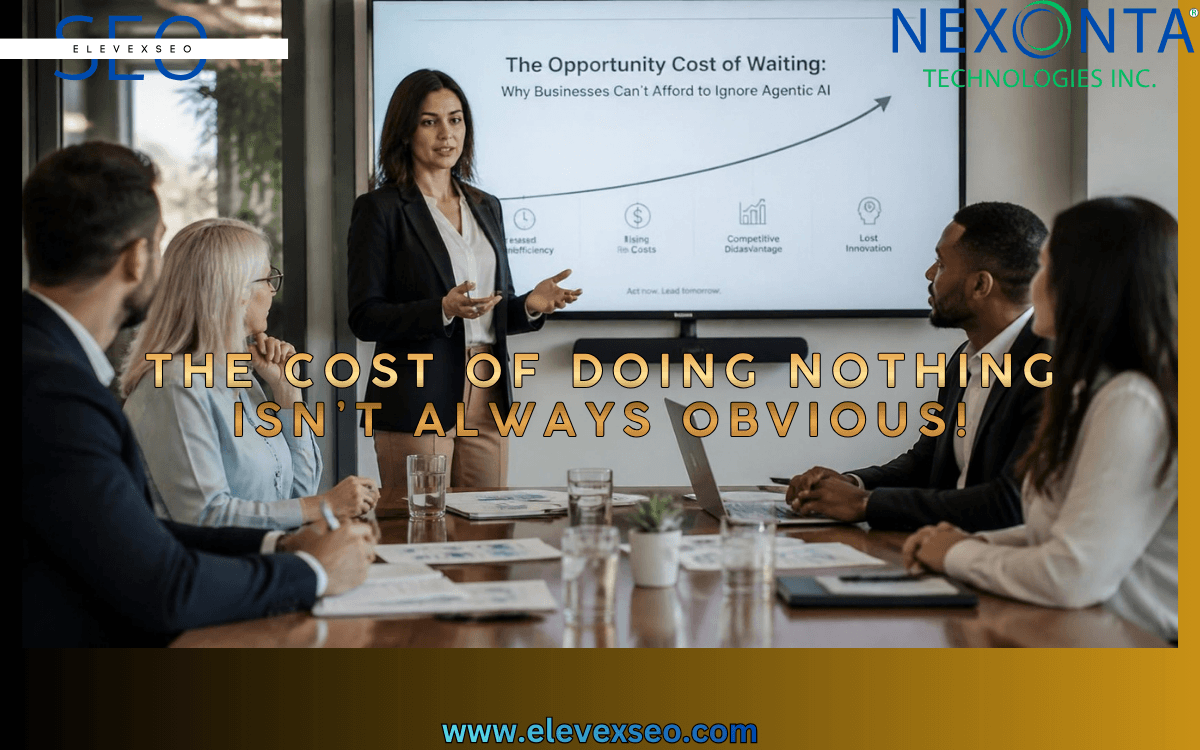
  • The Opportunity Cost of Waiting: Why Businesses Can’t Afford to Ignore Agentic AI

    The Opportunity Cost of Waiting: Why Businesses Can’t Afford to Ignore Agentic AI

    Opportunity cost is the value of what you give up when you choose one option over another.

    In business, that can be a difficult concept to see when the decision involves new technology. If you decide not to embrace Agentic AI, there may be no immediate cost on your balance sheet. But that doesn’t mean the decision is free. The real cost may be what your business misses while others move forward.

    We’ve seen something similar before.

    Remember What Happened With the Internet?

    Go back to the early days of the internet.

    When the dot-com bubble burst in 2000 and 2001, confidence in the internet economy took a major hit. Companies failed. Investments disappeared. Many people became cautious about the technology and questioned whether the internet had been overhyped.

    It was understandable.

    The technology was still developing. The business models were changing. And there was plenty of uncertainty.

    But the internet itself wasn’t going away.

    Businesses that continued investing in websites, e-commerce, digital communication and online services helped shape what came next. Over time, the internet became part of the basic infrastructure of modern business.

    The lesson wasn’t that every early internet investment was a winner.

    The lesson was that a technology can go through a period of volatility without disappearing.

    And that distinction matters when we look at AI today.

    AI Isn’t Going Away

    Artificial intelligence has already moved beyond being a futuristic idea.

    It is becoming part of how businesses research, communicate, analyze information, create content, support customers and automate repetitive work.

    Now we are seeing another step forward: Agentic AI.

    Unlike a traditional AI tool that simply responds to a prompt, Agentic AI can be designed to work through a series of tasks toward a specific goal.

    It can help research information, make decisions within defined parameters, use connected tools and complete multi-step workflows.

    That changes the conversation.

    The question is no longer simply:

    “Should we use AI?”

    A better question may be:

    “What is the opportunity cost of waiting?”

    The Cost of Doing Nothing Isn’t Always Obvious

    When a company decides not to adopt a new technology, the decision can feel safe.

    There is no new software to implement.

    No employees need to be trained.

    No processes need to change.

    No budget needs to be allocated.

    For the moment, everything stays the same.

    But your competitors may not be staying the same.

    They may be using AI to respond to customers faster. They may be automating administrative work. They may be analyzing data more efficiently. They may be finding new ways to reach customers and improve their internal processes.

    None of this means AI automatically makes one company better than another.

    It does mean that the technology can change the economics of how work gets done.

    And that creates an opportunity cost for businesses that wait too long.

    Waiting Has a Cost

    Imagine two businesses operating in the same industry.

    Both have capable employees. Both have good products. Both have loyal customers.

    One begins experimenting with Agentic AI.

    It starts small.

    The company identifies repetitive tasks. It tests AI-assisted workflows. It learns what works and what doesn’t. Employees become more comfortable working alongside AI.

    The other company decides to wait.

    Maybe it wants to see what happens first.

    That sounds reasonable.

    But six months later, the first company has six months of experience that the second company doesn’t have.

    A year later, it may have redesigned several workflows.

    Its employees may understand how to use AI effectively.

    Its leadership may have a clearer idea of where AI creates value and where it doesn’t.

    That experience itself has value.

    And it is part of the opportunity cost of waiting.

    You Don’t Have to Bet the Company on AI

    Embracing Agentic AI doesn’t mean handing your business over to a machine.

    It doesn’t mean replacing every employee.

    And it certainly doesn’t mean adopting every new AI product that comes along.

    Smart adoption can start much smaller.

    Look at your business and ask:

    * What tasks take too much employee time?
    * Where are people repeatedly doing the same work?
    * Where are customers waiting for answers?
    * What information takes too long to find?
    * Which processes involve too many manual steps?
    * Where could better automation improve the customer or employee experience?

    Those questions can reveal opportunities.

    You may discover that Agentic AI has a role to play in one small area of the business.

    That’s often a better place to start than trying to transform everything at once.

    The Biggest Risk May Be Standing Still

    Every new technology brings uncertainty.

    There will be companies that adopt AI badly.

    There will be tools that disappear.

    There will be products that fail to deliver what they promise.

    There will also be companies that find practical ways to use AI to improve how they work.

    That is why the goal shouldn’t be to chase the latest AI trend.

    The goal should be to understand the technology well enough to make informed decisions.

    Because there is a difference between being cautious and standing still.

    The internet taught businesses that a technology can be messy in its early stages and still become incredibly important.

    Agentic AI may be following a similar path.

    We don’t know exactly what the next five or ten years will look like.

    But we do know that AI is continuing to develop.

    The question for business leaders is what they choose to do with that reality.

    The Opportunity Cost Question Every Business Should Ask

    Instead of asking only:

    “What will it cost us to adopt Agentic AI?”

    Ask another question:

    “What could it cost us if we don’t?”

    That doesn’t mean every business needs to adopt Agentic AI immediately.

    It means every business should understand the opportunity before deciding.

    Research it.

    Test it.

    Start with one workflow.

    Measure the results.

    Learn from the experience.

    Then decide where it makes sense to go next.

    Because the biggest cost may not be the money spent experimenting with AI.

    It may be the opportunities, efficiencies and experience your business misses while waiting for everyone else to figure it out.

    AI Is Moving Forward. Is Your Business?

    The businesses that navigated the early internet era successfully weren’t necessarily the ones that predicted everything correctly.

    They were the ones willing to learn, adapt and figure out where the technology could create real value.

    Agentic AI gives businesses another opportunity to do exactly that.

    You don’t have to predict the future.

    You just have to be willing to explore it.

    Ready to Explore the Opportunity?

    Don’t wait until Agentic AI becomes something your competitors already understand.

    Start by identifying one process in your business that could be improved through AI.

    Learn what is possible. Ask the right questions. Test a practical use case. And build your AI strategy from there.

    The first step isn’t adopting everything. It’s understanding what’s possible.

    Explore how Agentic AI could work for your business today.

  • Agentic AI: The Next Competitive Advantage for Growing Businesses

    Agentic AI: The Next Competitive Advantage for Growing Businesses

    Agentic AI is changing the way businesses think about growth, productivity, sales, marketing, and scale. At Nexonta Technologies, we believe this is more than another technology trend. It represents a major shift in how organizations will get work done and compete in the years ahead.

    The question is no longer whether AI will become part of business.

    The bigger question is how deeply AI will become part of your business.

    AI Has Already Changed the Game

    Think about how quickly generative AI changed the way we work.

    A few years ago, if you wanted to write a research paper, you might spend hours searching for information, organizing your thoughts and writing everything yourself.

    Today, you can use a tool like ChatGPT to help research, organize, draft and refine that same work in a fraction of the time.

    That does not mean the human becomes unnecessary.

    It means the human has a much more powerful tool.

    Now imagine taking that idea much further.

    Instead of AI simply helping you complete a task, Agentic AI can help manage a series of tasks, make decisions within defined boundaries, interact with systems and move work forward.

    That is where things start to get very interesting for businesses.

    What Is Agentic AI?

    Traditional software usually waits for you to tell it what to do.

    Generative AI can respond to your questions and requests.

    Agentic AI takes another step forward.

    It is designed to work toward a goal. Depending on how it is built and governed, an AI agent can plan steps, use tools, interact with business systems and carry out parts of a workflow with less human intervention.

    In simple terms:

    Generative AI helps you do the work.

    Agentic AI can help move the work forward.

    That difference could have a major impact on how businesses operate.

    The Race Has Started

    This is where business leaders need to start paying attention.

    Organizations are already exploring and scaling AI agents across areas such as technology, knowledge management, software development, marketing, sales and operations. Recent 2026 research from McKinsey shows that larger organizations are moving from AI experimentation toward scaling AI agents, although adoption is still far from universal.

    That creates an interesting situation.

    Not every competitor is using Agentic AI.

    But some are.

    And the gap between experimenting with AI and actually building it into business processes could become increasingly important.

    The competitive advantage may not come from simply having access to AI.

    It may come from knowing how to use it as part of the way your business operates.

    What Could Agentic AI Mean for Your Business?

    Every organization is different. That means there is no single Agentic AI strategy that works for everyone.

    But there are some areas where businesses are already looking at opportunities.

    Sales

    AI agents can help organize information, support lead research, assist with follow-up processes and help sales teams spend more time on meaningful conversations.

    Marketing

    Marketing teams can use AI to support research, content development, campaign workflows, customer insights and other repetitive processes.

    Customer Service

    AI agents can help manage routine requests, find information and support customers across different stages of the customer journey.

    Operations

    Businesses can look at repetitive workflows and identify where AI could help coordinate tasks, move information between systems or reduce manual work.

    Business Intelligence

    AI can help teams work with large amounts of information and surface useful insights faster.

    The goal is not to replace every person or automate everything.

    The goal is to identify where intelligent technology can help your people work smarter and your business move faster.

    This Is Bigger Than Another AI Tool

    This is an important distinction.

    Adding another AI tool to your technology stack is not necessarily an AI strategy.

    Agentic AI becomes much more interesting when it connects with the way your business actually operates.

    That means looking at your workflows.

    Your data.

    Your systems.

    Your customers.

    Your sales process.

    Your marketing.

    Your internal operations.

    And then asking a simple question:

    Where could AI create meaningful leverage?

    That is a much better starting point than simply asking, “What AI tool should we buy?”

    Big Tech Is Moving Fast

    There is another reality businesses need to recognize.

    The biggest technology companies are investing heavily in AI infrastructure, agents, orchestration and enterprise applications.

    The technology is evolving quickly.

    And the rules of the AI ecosystem are being shaped by companies with enormous resources, data, infrastructure and development teams.

    That creates both an opportunity and a challenge for smaller and mid-sized organizations.

    You may not have the resources of a global technology company.

    But you do not necessarily need them.

    The opportunity is to understand what these technologies can do and identify where they can create value inside your own organization.

    You Don’t Need to Transform Everything at Once

    One of the biggest mistakes a business can make is thinking that adopting Agentic AI means changing everything overnight.

    It doesn’t.

    A smarter approach is to start with the business.

    Look at where your team spends time.

    Look for repetitive processes.

    Identify bottlenecks.

    Find areas where employees are spending valuable time on work that could potentially be assisted or coordinated by AI.

    Then build from there.

    This approach also gives organizations an opportunity to put the right governance and controls in place. As AI agents become more autonomous, oversight, security, data quality and accountability become increasingly important.

    The Real Question Is: Where Do You Want to Go?

    At Nexonta Technologies, we see Agentic AI as an important part of the next generation of sales and marketing technology.

    Our focus is on helping organizations understand where technology can create real business value.

    Because technology should not be adopted simply because it is new.

    It should have a purpose.

    It should solve problems.

    It should help people.

    And ultimately, it should help businesses grow and scale.

    The organizations that take the time to understand Agentic AI now will be in a much better position to make informed decisions as the technology continues to develop.

    You don’t have to know exactly what your AI strategy should look like today.

    But it is worth asking the question.

    What happens if your competitors figure it out before you do?

    The AI Race Isn’t About Being First. It’s About Being Ready.

    The AI landscape is moving quickly.

    You do not need to chase every new tool.

    You do need to understand what is changing.

    Agentic AI represents a shift from AI that simply assists people toward AI that can potentially participate more directly in business workflows.

    For small, medium and large organizations, that creates a new conversation about productivity, growth and scale.

    And that conversation is already happening.

    Ready to Explore What Agentic AI Could Mean for Your Business?

    Nexonta Technologies helps organizations explore the next generation of sales and marketing technology, including opportunities created by Agentic AI.

    Let’s look at where AI could make a meaningful difference in your business — and where it may not.

    Start the conversation with Nexonta Technologies and discover where Agentic AI could fit into your growth strategy.

  • The Future Belongs to Agentic AI: Why Businesses Should Start Adopting It Now

    The Future Belongs to Agentic AI: Why Businesses Should Start Adopting It Now

    Agentic AI is changing the way businesses use artificial intelligence, and companies that start exploring it early will have an opportunity to build a real advantage over time. Until recently, most businesses were just beginning to experiment with AI. Tools like ChatGPT and Claude have made large language models accessible to almost everyone. They are powerful tools, and they have changed the way people think about AI.

    But something much bigger is happening now.

    AI is moving beyond simply answering questions, writing content, or analyzing information.

    We are entering the age of Agentic AI.

    From Asking AI Questions to Getting Things Done

    There is an important difference between using an AI chatbot and using an AI agent.

    You can ask ChatGPT to write an email. You can ask Claude to summarize a document. You can ask an AI model to analyze information or help you brainstorm an idea.

    All of that is useful.

    But what if AI could take the next step?

    What if you could tell an AI system:

    “Here is a problem in my business. Find a way to solve it.”

    That is where Agentic AI becomes particularly interesting.

    Instead of simply responding to a prompt, an AI agent can be designed to work toward a specific goal. Depending on the system, it can analyze information, make decisions, use different software tools, complete tasks, check its work, and move through multiple steps to accomplish an objective.

    The shift is significant.

    We are moving from AI that answers questions to AI that can help perform work.

    ChatGPT and Claude Are Only the Beginning

    For many companies, the introduction to AI has been through tools such as ChatGPT and Claude.

    That makes perfect sense.

    They are easy to access and can be incredibly useful for everyday business tasks.

    Companies are using large language models to help with writing, research, customer communications, brainstorming, coding, data analysis, marketing and much more.

    But these are only part of the larger AI landscape.

    There is a rapidly expanding ecosystem of AI models, tools, platforms and specialized systems. Different models can be better suited to different types of tasks.

    One model might be useful for writing.

    Another might be better suited to coding.

    Another could specialize in analyzing images, processing data, searching information or handling a specific business workflow.

    The opportunity comes from connecting these capabilities together.

    That is one of the reasons Agentic AI is so exciting.

    What Is Agentic AI?

    In simple terms, Agentic AI refers to AI systems designed to pursue goals and carry out a series of actions with a greater degree of autonomy.

    Think of the difference between an assistant who waits for instructions and one who understands the objective and works through the steps needed to accomplish it.

    For example, imagine a company wants to improve its lead-generation process.

    A traditional AI chatbot might help write a marketing email.

    An Agentic AI system could potentially be designed to support a much larger workflow.

    It might:

    * Research a target market
    * Identify potential prospects
    * Analyze available information
    * Organize the data
    * Help personalize outreach
    * Track responses
    * Identify follow-up opportunities
    * Generate reports
    * Recommend the next action

    The exact capabilities depend on the technology, integrations, permissions and human oversight involved.

    But the underlying idea is powerful.

    Instead of using AI for one task at a time, businesses can begin thinking about AI in terms of complete workflows and business outcomes.

    Businesses Can Start With the Problem

    This may be one of the biggest changes Agentic AI brings to the table.

    You don’t necessarily have to start by asking:

    “Which AI tool should we buy?”

    You can start with a much better question:

    “What problem are we trying to solve?”

    Maybe your sales team spends hours researching prospects.

    Maybe customer information is scattered across several systems.

    Maybe your employees spend too much time moving information from one platform to another.

    Maybe reporting takes days.

    Maybe your marketing team is producing content but struggling to maintain a consistent process.

    Maybe there is a repetitive workflow that nobody enjoys doing but someone has to do it.

    These are business problems first.

    The technology comes second.

    An experienced Agentic AI agency can look at the problem, examine the existing workflow and determine where AI agents, automation, data and other technologies may fit.

    That changes the conversation completely.

    From Buying Software to Building Solutions

    For years, businesses have largely approached technology by purchasing software.

    Need accounting? Buy accounting software.

    Need customer relationship management? Buy a CRM.

    Need email marketing? Buy an email platform.

    Need project management? Buy project management software.

    Those tools remain important.

    But Agentic AI introduces another possibility.

    Instead of forcing every business problem into an existing software package, companies can increasingly explore custom AI-powered solutions built around the way their business actually operates.

    That does not mean every business needs a custom AI agent.

    It doesn’t.

    Sometimes an existing tool is exactly what a company needs.

    But when a business has a complex workflow or a problem that doesn’t fit neatly into an off-the-shelf solution, Agentic AI can open up new possibilities.

    The Rise of the Agentic AI Agency

    This is where the role of an Agentic AI agency becomes particularly interesting.

    Most business owners don’t want to become AI engineers.

    They don’t want to spend months learning how different AI models work.

    They want their business problems solved.

    An Agentic AI agency can help bridge that gap.

    The conversation can begin with the business rather than the technology.

    You explain what is happening.

    You explain what isn’t working.

    You explain where your team is spending time.

    You explain what you would like to accomplish.

    From there, an AI-focused team can investigate the available technologies and determine what type of solution could potentially address the problem.

    That might involve one AI model.

    It might involve several models.

    It might involve AI agents, automation, APIs, databases, existing business software and human oversight working together.

    The goal isn’t to use AI simply because AI is fashionable.

    The goal is to use the right technology to solve the right business problem.

    Early Adoption Doesn’t Mean Rushing In

    There is an important distinction between being an early adopter and jumping into every new AI tool that appears.

    Businesses don’t need to chase every shiny new technology.

    In fact, that can create more problems than it solves.

    Early adoption should be thoughtful.

    Start with a real business need.

    Look at the process.

    Understand the risks.

    Determine where human oversight is required.

    Protect sensitive information.

    Measure the results.

    Then improve the system over time.

    The businesses that learn how to work effectively with AI may be better positioned to adapt as the technology continues to develop.

    And that learning process can start today.

    Agentic AI Could Change the Way We Think About Business

    For decades, businesses have looked for ways to make processes faster and more efficient.

    Computers changed how information was processed.

    The internet changed how businesses communicated and sold products.

    Cloud computing changed how companies accessed software and data.

    Automation changed how repetitive tasks were handled.

    AI is now pushing that evolution further.

    Agentic AI could change how businesses think about work itself.

    Instead of asking:

    “How can we make this task faster?”

    businesses may increasingly ask:

    “Can this entire process be redesigned?”

    That is a much bigger question.

    And it opens the door to some very interesting possibilities.

    The Businesses That Start Learning Now Will Be Better Prepared for What Comes Next

    Nobody knows exactly what the AI landscape will look like five or ten years from now.

    The technology is moving too quickly.

    New models are appearing.

    New tools are being developed.

    New business applications are emerging.

    What we can see already is that AI is becoming more capable and more integrated into everyday business operations.

    That makes now a good time for businesses to learn.

    Not necessarily to automate everything.

    Not necessarily to replace people.

    But to understand what is possible.

    Start by identifying the repetitive, expensive or frustrating problems inside your business.

    Then ask a simple question:

    “Could Agentic AI help us solve this?”

    You might be surprised by the answer.

    The Future of AI Is About More Than Chatbots

    ChatGPT and Claude helped introduce millions of people to the possibilities of generative AI.

    But they are not the entire story.

    The next phase is about connecting AI capabilities with tools, information, workflows and business objectives.

    That is where Agentic AI enters the picture.

    The future may not belong to businesses that simply use the most AI tools.

    It may belong to businesses that learn how to use AI strategically to solve real problems.

    And the companies that begin exploring those possibilities now will have more experience to build on as the technology continues to evolve.

    Ready to Explore What Agentic AI Could Do for Your Business?

    You don’t need to know which AI model to use.

    You don’t need to understand every new AI platform.

    Start with your business problem.

    Tell us what isn’t working, what is taking too much time, or what you wish your business could do better.

    Our team can help explore where Agentic AI may fit and what a practical AI-powered solution could look like for your organization.

    The future of AI isn’t just about asking better questions. It’s about creating better solutions.

    Ready to see what Agentic AI could do for your business? Let’s start with the problem you’re trying to solve.

  • Is Agentic AI the New Website?

    Is Agentic AI the New Website?

    Twenty-something years ago, businesses started realizing that websites could change the way they attract customers and get work done, much like the Yellow Pages and directories changed business before it. Back then, relying only on word of mouth, referrals, the Yellow Pages, and business directories was no longer enough.

    Then the internet changed everything.

    Websites became the new front door for businesses. Google became the place people went to find them. Over time, websites and search engines became essential parts of marketing, sales, customer service, and day-to-day operations.

    Today, we may be standing at the beginning of another major shift.

    Agentic AI is the new kid on the block.
    And this time, the change could go much further than simply having another tool on your computer.

    From the Yellow Pages to Google

    Think about how much business has changed over the past two decades.
    There was a time when someone looking for a plumber, accountant, lawyer, restaurant, or local retailer might pick up the Yellow Pages.
    Then came the website.

    Instead of asking, “Who do you know?” people could search online.

    Google quickly became one of the most important places for businesses to be found. A company’s website became its digital storefront. It was available 24 hours a day, seven days a week.

    Businesses learned that having a website was no longer optional.

    It became part of doing business. Then came social media, online advertising, e-commerce, online reviews, marketing automation, customer relationship management systems, and countless other digital tools.

    Each step changed how businesses connected with customers.

    Now another shift is happening.

    What Is Agentic AI?

    So, what exactly is Agentic AI? In simple terms, Agentic AI refers to AI systems that can take action toward a goal instead of simply responding to a question or generating content.

    Traditional AI might answer a question.
    Agentic AI can potentially take the next steps.
    It can help organize information, analyze data, complete repetitive tasks, coordinate workflows, monitor activity, and interact with other systems.
    Instead of saying:
    “Here is how you could do this.”
    An agentic system may be able to say:
    “I’ve completed the steps that were assigned to me.”
    That difference is important.
    The real opportunity isn’t simply having a smarter chatbot.
    It is having digital systems that can help businesses do more of the work automatically.

    Large Companies Have Already Been Moving in This Direction

    Large multinational organizations have been investing heavily in artificial intelligence and automation for years.
    For many of these organizations, the goal isn’t necessarily to replace people. It is to remove repetitive work.
    Think about all the tasks inside a business that happen over and over again.
    Sorting information.
    Moving data between systems.
    Preparing reports.
    Following up with customers.
    Scheduling.
    Monitoring processes.
    Answering common questions.
    Checking information.
    Generating routine communications.

    These tasks can consume enormous amounts of time. When technology can handle some of that work, people can spend more time on activities that require judgment, creativity, relationships, problem-solving, and strategic thinking. That is where Agentic AI becomes particularly interesting.

    The Big Change: AI Is Moving From Assistant to Worker

    This may be one of the biggest changes we’re going to see.
    For years, we’ve thought about technology as something we operate.
    We open an application.
    We type something.
    We click a button.
    We wait for the result.
    Agentic AI starts to change that relationship.
    Instead of simply using software, we can begin giving software goals and instructions.
    For example:
    “Review these customer inquiries and identify the ones that need immediate attention.”
    Or:
    “Look at this week’s sales information and prepare a summary of the biggest changes.”
    Or:
    “Monitor these leads and flag the ones that haven’t been contacted.”
    The technology can potentially handle multiple steps in the process.
    That doesn’t mean humans disappear from the process.
    In many cases, it means humans can move further up the value chain.

    Why This Matters to Small and Medium-Sized Businesses

    For a long time, advanced technology was often something that belonged to the biggest companies.
    They had the budgets.
    They had the IT departments.
    They had teams of developers and consultants.
    Small and medium-sized businesses often didn’t have those resources.
    That is changing.
    AI tools are becoming increasingly accessible to smaller organizations.
    A small business doesn’t necessarily need a massive technology department to begin exploring how AI could help with marketing, customer service, administration, research, sales support, or internal operations.
    That creates an interesting opportunity.
    A smaller company may be able to use technology that, not that long ago, was mainly available to much larger organizations.

    Is Agentic AI Actually the New Website?

    This is where things get interesting.
    A website changed how customers found a business.
    Agentic AI could change how businesses interact with customers and get work done.
    Your website might tell people who you are, what you do, and how to contact you.
    An AI agent could potentially help someone find the right information, answer questions, qualify an inquiry, schedule a meeting, follow up, or move a request into the next stage of the process.
    That is a very different role.
    And it doesn’t mean websites are going away.
    Quite the opposite.
    Your website, Google presence, social media, online reviews, and other digital assets may become even more important because they provide the information that AI systems use to understand your business.
    The difference is that the way people access that information may be changing.

    Your Online Presence Still Matters

    This is an important point for business owners.
    Agentic AI doesn’t eliminate the need for a strong online presence.
    It may make one even more important.
    If an AI system is helping someone find a business, it needs reliable information to work with.
    Who are you?
    What do you offer?
    Where are you located?
    Who do you serve?
    What makes your business different?
    How can someone contact you?
    Are your business details accurate across the web?
    Does your website clearly explain what you do?
    These fundamentals still matter.
    In fact, businesses may need to start thinking about their online presence not only in terms of being found by people, but also in terms of being understood by AI systems.

    The Website Isn’t Dead. The Digital Front Door Is Evolving.

    Twenty years ago, the big question was:
    “Does your business have a website?”
    Today, that question isn’t nearly enough.
    The bigger question may become:
    “Can your business be found, understood, and acted on by AI?”
    That is a much bigger conversation.
    The businesses that start exploring Agentic AI now don’t necessarily need to completely transform everything overnight.
    They can start small.
    Look at the repetitive tasks inside the business.
    Identify where employees spend too much time doing manual work.
    Look at customer questions that come up again and again.
    Look at lead follow-up.
    Look at reporting.
    Look at research.
    Then ask a simple question:
    Could AI help us do this better or faster?
    You may be surprised by how many opportunities you find.
    The Next Digital Shift Is Already Underway
    The internet didn’t eliminate relationships.
    Websites didn’t eliminate salespeople.
    Google didn’t eliminate businesses.
    They changed how businesses were discovered and how people interacted with them.
    Agentic AI may follow a similar path.
    It isn’t necessarily about replacing the people behind a business.
    It is about giving those people better tools.
    The companies that understand this early will have an opportunity to rethink how they market, communicate, sell, and operate.
    And just as businesses eventually learned that they needed a website, there may come a time when businesses realize they need to think about AI agents as part of their digital infrastructure.
    The question isn’t whether the technology will continue to evolve.
    It will.
    The more interesting question is:
    How will your business use it?

    Ready to Explore What Agentic AI Could Do for Your Business?

    You don’t need to rebuild your entire business to get started.
    Start by looking at the repetitive tasks that take up time every week. Then look at where AI could help your team work smarter, respond faster, and spend more time on the things that actually require a human touch.
    Agentic AI is still evolving. But the opportunity to start exploring it is already here.
    Want to see where Agentic AI could fit into your business?
    Let’s start the conversation.

  • Agentic AI Deployment: Building the AI Infrastructure Your Organization Needs

    Agentic AI Deployment: Building the AI Infrastructure Your Organization Needs

    Agentic AI deployment is quickly becoming a serious business conversation.

    Over the past several months, we have noticed a shift in how organizations are thinking about AI. The conversation is moving beyond experimentation and individual productivity tools. It is now reaching the operations and enterprise levels, where the focus is on how AI can actually help an organization run better.

    That shift makes sense.

    Margins are tighter. Teams are being asked to do more with less. Businesses are looking for efficiencies without sacrificing service, quality, or growth.

    AI, when deployed well, can help.

    But there is an important distinction between using AI and building an organization around AI agents.

    That distinction could become one of the biggest competitive advantages of the next five years.

    From AI Tools to AI Agents

    Most organizations have already experimented with AI in some form.

    Employees use AI to write emails, summarize documents, research topics, create content, analyze information, or speed up everyday tasks.

    Those applications are useful.

    But they are only the beginning.

    The next step is moving from AI that simply responds to requests to AI agents that can carry out processes.

    An AI agent can be designed to work through a series of tasks. It can gather information, analyze it, make decisions within defined parameters, trigger another process, and report the results.

    Instead of simply asking:

    “How can AI help my employees?”

    Organizations are beginning to ask:

    “What work can AI agents actually do for us?”

    That is a much bigger question.

    What Is Agentic AI?

    Agentic AI refers to AI systems that can work toward a defined goal and take actions along the way.

    Think of it as moving from an AI assistant to an AI-powered worker within a specific business process.

    For example, an organization might have an AI agent that helps manage a customer onboarding process.

    It could:

    * Collect information
    * Check that required information is complete
    * Organize the data
    * Identify missing information
    * Trigger follow-up communications
    * Update systems
    * Notify the appropriate team member
    * Create a summary for review

    The important point is that the agent is not simply generating text.

    It is participating in a workflow.

    That is where the real opportunity starts to appear.

    Why Organizations Are Paying More Attention

    There is a practical reason for the growing interest in agentic AI.

    Businesses are under pressure to improve efficiency.

    Redundant processes cost money. Manual data entry costs money. Repetitive communication costs money. Moving information between systems costs money.

    And perhaps most importantly, employee time costs money.

    Many organizations have built layers of processes over the years. Some are necessary. Others exist simply because that is how the organization has always done things.

    AI creates an opportunity to take a fresh look at those processes.

    Instead of asking employees to spend hours completing repetitive work, an organization can begin asking:

    Can this process be automated?

    Then:

    Can an AI agent manage it?

    And finally:

    Where should a human remain in the process?

    That last question is extremely important.

    The goal should not be to remove people from every process.

    The goal should be to let people spend more of their time on work that actually requires human judgment, creativity, relationships, and accountability.

    Agentic AI Infrastructure Matters

    This is where many organizations may underestimate the challenge.

    Deploying an AI agent is not simply a matter of purchasing software and turning it on.

    The organization needs the right AI infrastructure behind it.

    That infrastructure can include:

    * Reliable business data
    * Clear workflows
    * Defined permissions
    * Secure systems
    * API and software integrations
    * Data governance
    * Human oversight
    * Monitoring
    * Performance measurement
    * Clear rules for decision-making

    In other words, an AI agent is only as useful as the environment it operates within.

    If the underlying processes are messy, the data is inconsistent, or systems cannot communicate with each other, adding AI may simply make the mess move faster.

    That is why AI deployment needs to begin with the organization itself.

    Start With the Workflow, Not the Technology

    One of the biggest mistakes organizations can make is starting with the technology.

    They find an impressive AI platform and then try to figure out where it fits.

    A better approach is the opposite.

    Start with the business.

    Look at the workflows that consume the most time.

    Look for repetitive tasks.

    Identify bottlenecks.

    Find processes where employees spend hours collecting, moving, checking, or organizing information.

    Then ask where an AI agent could create measurable value.

    This approach makes AI deployment much more strategic.

    It also makes it easier to calculate the return on investment.

    Where Could AI Agents Make the Biggest Difference?

    The opportunities will be different for every organization, but several areas stand out.

    Customer Operations

    AI agents can help manage repetitive customer interactions, organize information, route requests, and support follow-up processes.

    This can allow customer-facing employees to focus on more complex situations.

    Sales Operations

    AI agents can help research prospects, organize information, prepare reports, manage follow-ups, and keep sales systems updated.

    The objective isn’t to replace the salesperson.

    It is to remove some of the administrative work surrounding the salesperson.

    Finance and Administration

    Finance teams deal with large amounts of structured information and repetitive processes.

    AI agents may be able to help collect information, identify inconsistencies, prepare summaries, and move information between systems.

    Human oversight remains important, particularly when financial decisions are involved.

    Marketing

    Marketing is another area where AI agents can support workflows.

    Research, content planning, reporting, campaign monitoring, customer segmentation, and other repetitive activities can potentially be connected into more efficient processes.

    Internal Operations

    Perhaps the biggest opportunity is simply improving how information moves through the organization.

    An AI agent may be able to take information from one system, process it, and initiate the next step without requiring an employee to manually move the work forward.

    Multiply that across hundreds or thousands of processes and the potential becomes significant.

    The Human Element Still Matters

    There is a temptation to think that agentic AI means organizations will become completely automated.

    That is unlikely to be the best approach.

    The strongest organizations will probably be the ones that understand **where AI should act and where humans should remain firmly in control**.

    An AI agent can handle defined tasks.

    A person can handle exceptions.

    An AI agent can process information.

    A person can apply judgment.

    An AI agent can identify an opportunity.

    A person can decide whether acting on that opportunity makes sense.

    This creates a model where humans and AI work together rather than competing for the same role.

    The Next Five Years Could Be a Defining Period

    We believe the next five years will be an important period for AI adoption.

    There will be organizations that experiment with AI occasionally.

    There will be organizations that deploy a few AI tools.

    And there will be organizations that take a much bigger step.

    They will begin building AI agents directly into their operations.

    Those organizations could have a significant advantage.

    Why?

    Because the benefits of AI are not limited to saving a few minutes here and there.

    When AI becomes part of the operating structure of a business, efficiencies can compound.

    One improved workflow affects another.

    Better data movement improves decision-making.

    Less administrative work gives employees more time.

    Faster processes improve customer experiences.

    And more efficient operations can make it easier to scale.

    That is a very different proposition from simply giving employees access to an AI chatbot.

    AI Deployment Needs a Strategy

    The companies that benefit most from agentic AI will not necessarily be the companies that adopt the most AI tools.

    They will be the companies that deploy AI strategically.

    That means understanding:

    What should we automate?

    What should remain human?

    What data does the AI need?

    What systems need to connect?

    What decisions can an AI agent make?

    Where is human approval required?

    How will we measure the results?

    These questions create the foundation for responsible and effective AI deployment.

    And that foundation matters.

    Because once AI agents become embedded in an organization, changing the underlying architecture can become much more difficult.

    Don’t Wait Until Everyone Else Has Started

    There is still an opportunity for organizations to get ahead.

    The goal isn’t to rush into AI for the sake of saying you are using AI.

    The goal is to identify where AI can genuinely improve the way your organization operates.

    Start small.

    Choose a process.

    Measure the current cost in time and resources.

    Design the workflow.

    Introduce the right AI agent.

    Keep humans involved where they add the most value.

    Measure the results.

    Then expand.

    That creates a much more practical path toward enterprise AI adoption.

    The Real Competitive Advantage

    AI itself is not necessarily the competitive advantage.

    How an organization uses AI may be.

    Two companies can have access to the same AI technology and get completely different results.

    One may use AI as another productivity tool.

    The other may build AI into its operating model.

    That second organization could potentially move faster, reduce redundancies, respond to customers more quickly, and scale without increasing its workforce at the same rate.

    That is where agentic AI becomes much more than a technology trend.

    It becomes an operational strategy.

    The Time to Start Is Now

    The next five years could change how organizations operate.

    Companies that begin understanding their processes, preparing their data, connecting their systems, and deploying AI agents thoughtfully will have a head start.

    The winners won’t necessarily be the organizations with the biggest AI budgets.

    They may be the organizations that understand where AI belongs inside the business and deploy it in a way that creates measurable value.

    AI done well should not make your organization more complicated.

    It should make it more efficient, more responsive, and easier to scale.

    The opportunity is there.

    The question is whether your organization will start building for it now.

    Ready to Explore Agentic AI for Your Organization?

    The first step doesn’t have to be complicated.

    Start by identifying the repetitive processes, operational bottlenecks, and manual workflows that are slowing your organization down.

    From there, you can determine where AI agents could create the greatest impact and build a practical deployment strategy around your existing systems.

    If you are ready to explore how agentic AI could improve your organization’s operations, let’s start the conversation.

    [Explore Your AI Deployment Opportunities →]

  • AI Can Build the Marketing Plan. Humans Still Have to Drive

    AI Can Build the Marketing Plan. Humans Still Have to Drive

    AI marketing agencies are entering a new chapter. Tools like ChatGPT and Claude have changed the way businesses think about marketing. Today, an organization can describe its business, ideal customer and goals to an AI tool and, within seconds, receive a surprisingly detailed marketing plan.

    That is a big change.

    For years, businesses often relied on marketing agencies to tell them what they needed to do. They would sit down with an agency, explain their business and wait for a strategy to be developed.

    Now, companies can get a first look at that strategy themselves.

    So, does that mean marketing agencies are becoming obsolete?

    Not at all.

    It means their role is changing.

    And in many ways, AI may be taking a backseat while humans get back in the driver’s seat.

    Marketing Has Changed. Again.

    Marketing has always evolved with technology.

    Print advertising changed the game. Then came radio and television. The internet transformed everything again. Search engines created SEO. Social media changed how brands communicate with customers.

    Then AI arrived.

    Large language models like ChatGPT and Claude have taken things another step forward.

    A business owner can now ask:

    “How should I market my business to women between 45 and 60 who are interested in improving their health?”

    Within seconds, AI can suggest target audiences, content ideas, advertising channels, messaging, budgets, timelines and even campaign concepts.

    That is incredibly powerful.

    It also changes the conversation between businesses and marketing agencies.

    The End of One-Size-Fits-All Marketing

    One of the biggest changes AI has brought to marketing is access to information.

    Businesses no longer have to accept a generic marketing package simply because that is what an agency sells.

    The old approach might have looked something like this:

    Website + social media + Google Ads + SEO + email marketing = marketing plan.

    But what if that isn’t what the business actually needs?

    AI makes it easier to ask better questions.

    What is the company’s ideal customer?

    Where does that customer spend time?

    What problem is the company solving?

    How competitive is the market?

    How much can the business realistically spend?

    What should happen first?

    How long might it take to see results?

    These questions can now be explored before a business ever signs a marketing contract.

    That is a good thing.

    It forces everyone to become more thoughtful about marketing.

    AI Can Create the Plan. But Can It Execute It?

    This is where things get interesting.

    AI can produce a marketing strategy in seconds.

    But a strategy sitting inside a document doesn’t generate leads.

    Someone still has to build the website.

    Someone has to optimize the pages.

    Someone has to create the content.

    Someone has to set up campaigns.

    Someone has to analyze what is working.

    Someone has to make changes when something isn’t working.

    And most importantly, someone has to understand the business behind the numbers.

    This is where humans still matter.

    AI can tell you that your company should target a particular audience.

    A human has to understand whether that audience actually makes sense for the business.

    AI can recommend a content strategy.

    A human has to know whether the content sounds like the company or like something generated by a machine.

    AI can suggest keywords.

    A human still needs to understand the customer’s intent behind those searches.

    The difference is important.

    AI can help create the roadmap. Humans still have to drive the car.

    The Marketing Agency Is Becoming the Execution Partner

    This may be one of the biggest shifts we see over the next few years.

    Marketing agencies may spend less time selling businesses on what marketing they need and more time executing the marketing strategy those businesses have already researched.

    That doesn’t make agencies less valuable.

    It changes where their value comes from.

    Instead of saying:

    “Trust us. We know what you need.”

    The conversation becomes:

    “You know where you want to go. Let’s build the right system to get you there.”

    That is a very different relationship.

    And frankly, it could be a better one.

    Businesses become more informed.

    Agencies become more accountable.

    And marketing becomes more focused on execution and measurable results.

    AI Makes Marketing Budgets Easier to Understand

    Another major advantage is budgeting.

    Marketing has traditionally been difficult for businesses to forecast.

    A company might ask:

    “How much should we spend on marketing?”

    The answer has always depended on the business, the market, the competition, the customer and the goals.

    AI can’t predict the future.

    But it can help businesses build reasonable scenarios.

    A company can explore different approaches and ask questions such as:

    * What could a $2,000 monthly marketing budget support?
    * What would a $5,000 budget allow us to do?
    * Which activities should come first?
    * What could we realistically accomplish in six months?
    * Which channels should we test before investing more heavily?

    That information can make marketing conversations much more productive.

    Instead of starting with a blank sheet of paper, businesses can start with a working hypothesis.

    Then the humans take over.

    This Is Where ElevexSEO Fits In

    At ElevexSEO, we see this shift as an opportunity.

    We don’t believe businesses should have to choose between AI and human marketing expertise.

    They should use both.

    AI can help businesses research opportunities, organize ideas, identify potential strategies and make better decisions.

    Then experienced marketing professionals can take those ideas and turn them into an actual workflow.

    That could include SEO, content creation, website optimization, keyword targeting, technical improvements and ongoing performance analysis.

    The goal isn’t to replace the human.

    The goal is to give the human better tools.

    And that is where AI becomes really useful.

    The Future Isn’t AI vs. Humans

    There has been a lot of discussion about whether AI will replace marketing professionals.

    We think that is the wrong question.

    The better question is:

    How can humans use AI to become better marketers?

    The businesses that figure this out will have an advantage.

    They won’t blindly hand their marketing over to AI.

    They also won’t ignore it.

    They will use AI to research faster, think through possibilities and build better strategies.

    Then they will rely on people to bring those strategies to life.

    That is the balance.

    AI provides speed.

    Humans provide judgment.

    AI provides ideas.

    Humans provide context.

    AI can process enormous amounts of information.

    Humans understand relationships, emotions, nuance and the real-world challenges of running a business.

    Put those things together and marketing becomes much more powerful.

    Marketing Agencies Aren’t Going Away. Their Role Is Evolving.

    The marketing agency of the future may look very different from the agency of the past.

    Businesses will be more informed.

    AI will handle more of the research and planning.

    Marketing teams will have better data.

    And agencies will increasingly become execution partners, technology partners and optimization partners.

    That isn’t a step backward.

    It may actually be a step forward.

    The days of paying for a generic marketing package and hoping it works are slowly disappearing.

    Businesses want to know what they are doing, why they are doing it and what they can realistically expect.

    AI is helping make that possible.

    But someone still needs to turn the plan into action.

    That’s where humans come back into the driver’s seat.

    Ready to Put AI to Work for Your Marketing?

    You don’t have to figure out the future of marketing alone.

    At ElevexSEO, we combine AI-powered tools with human marketing expertise to help businesses turn ideas and strategies into real SEO and digital marketing workflows.

    If you’ve already used ChatGPT or another AI tool to explore your marketing options, that’s a great starting point.

    Now let’s turn those ideas into action.

    Want to see what your marketing strategy could look like?

    Talk to ElevexSEO today and let’s build a marketing plan that makes sense for your business, your budget and your ideal customer.

  • AI for Solopreneurs: Finding Your Business Voice in a Changing Economy

    AI for Solopreneurs: Finding Your Business Voice in a Changing Economy

    The global economy has changed dramatically, but one thing has stayed the same: AI for solopreneurs still comes down to something very human. People like doing business with people they know, trust, and relate to. That is why finding your business voice is so important, especially when you are just starting out.

    And this is where artificial intelligence can become a surprisingly valuable business partner.

    Not because AI should replace you.

    It shouldn’t.

    Instead, think of it as a tool that can help you find your direction, organize your thoughts, and work through some of the growing pains that come with starting a business.

    The Fundamentals of Business Have Not Changed

    Technology changes. Markets change. Consumer habits change.

    The tools we use to run businesses today would probably look completely different to a business owner from 20 years ago.

    But the basic fundamentals are still there.

    People want to do business with people they trust.

    They want to understand what you offer. They want to know why you are different. And they want to feel like there is a real person behind the business.

    This is especially important for the solopreneur.

    When you are running a business on your own, you are often the salesperson, marketer, customer service representative, strategist and content creator all at once.

    That’s a lot of hats to wear.

    AI can help take some of that pressure off.

    Your AI Assistant Can Help You Find Your Voice

    One of the biggest challenges when starting a business isn’t always knowing what you sell.

    It’s figuring out how to talk about it.

    You may understand your product or service perfectly. But when you sit down to write a website page, social media post or email, suddenly everything feels complicated.

    What should you say?

    How should you say it?

    Does it sound professional enough?

    Does it sound like you?

    This is where tools such as ChatGPT and Claude can be useful.

    You can have a conversation with the AI about your business. Explain what you are trying to accomplish. Talk about your customers. Share your ideas. Explain what you like and what you don’t like.

    Then ask it to help you organize those thoughts.

    The more you use an AI model as part of your regular workflow, the more useful the conversations can become. You can give it feedback and direction. You can tell it when something doesn’t sound like you.

    Over time, you can build a much clearer picture of your business voice and the type of communication you want to put into the world.

    That doesn’t mean AI becomes your voice.

    You are still the voice.

    AI simply gives you another set of tools to help bring that voice into focus.

    AI Can Help You Through the Growing Pains

    Starting a business can be overwhelming.

    There are websites to build. Content to create. Emails to write. Customers to find. Processes to develop. Social media to manage.

    And then there are all the questions you didn’t even know you were going to have.

    This is one of the areas where AI can be incredibly helpful.

    You can use it to brainstorm ideas, create outlines, explain unfamiliar concepts, organize information, prepare questions for professionals and help you think through different options.

    It can even help you prepare before you sit down with an accountant, lawyer or other professional.

    That preparation can be valuable.

    Instead of walking into a meeting saying, “I don’t really know what I need,” you can arrive with a list of questions and a better understanding of the issues you want to discuss.

    That can make your professional consultations much more productive.

    Use AI Before You Spend Thousands on Answers

    There is another potential benefit for a new business owner.

    Professional advice can be expensive.

    And it should be.

    Accountants, lawyers and other licensed professionals bring specialized knowledge and experience to the table. There are times when you absolutely need that expertise.

    But you may not need to pay a professional to explain every basic question that comes up during the early stages of your business.

    AI can help you do some of the preliminary work.

    For example, you might use AI to help you understand the difference between different business structures, create a list of questions for your accountant, organize your expenses or explain terminology you don’t understand.

    Then you can take that information to the appropriate professional and ask better questions.

    That’s where AI can become a money-saving tool.

    There is an important distinction, though.

    AI tools are not a replacement for licensed accounting, legal or tax advice. Their answers can also be wrong, incomplete or based on information that needs to be verified.

    When the stakes are high, get professional advice.

    The goal isn’t to replace the professional.

    The goal is to make better use of your time with them.

    Think of AI as Your Business Sounding Board

    Perhaps one of the most useful ways to use AI is simply as a sounding board.

    Have an idea?

    Talk it through.

    Not sure if your website message makes sense?

    Ask AI to look at it from a customer’s perspective.

    Writing an email?

    Ask for feedback.

    Trying to figure out your ideal customer?

    Start a conversation.

    Have five different ideas and no idea which one to pursue?

    Talk through the pros and cons.

    Sometimes, simply putting your thoughts into words helps you understand what you actually want to do.

    AI can help with that process.

    But don’t forget the most important part.

    You make the decisions.

    AI can give you ideas. It can help you organize information. It can challenge your thinking and give you different perspectives.

    But it doesn’t know your business the way you do.

    It doesn’t know your customers the way you do.

    And it doesn’t have your personal experience.

    That’s your advantage.

    Don’t Try to Sound Like Everyone Else

    This is probably one of the biggest lessons for anyone using AI to create content.

    Don’t ask AI to make you sound like a giant corporation if you are a one-person business.

    Your personality is an asset.

    If you’re friendly, be friendly.

    If you’re direct, be direct.

    If you have a sense of humour, let some of that personality show.

    People don’t necessarily want another perfectly polished corporate message.

    They want to know who they are dealing with.

    That’s why your business voice matters.

    AI can help you refine that voice, but it shouldn’t erase it.

    Find an AI Tool You Feel Comfortable Using

    If you are a solopreneur or thinking about starting a business, I would suggest finding an AI platform that you feel comfortable using on a regular basis.

    It doesn’t have to be complicated.

    Start with the questions you already have.

    Use it to brainstorm.

    Use it to learn.

    Use it to organize your ideas.

    Use it to prepare for conversations with professionals.

    And most importantly, give it feedback.

    Tell it what you like.

    Tell it what you don’t like.

    Tell it when something doesn’t sound like you.

    The more intentionally you use your AI assistant, the more valuable it can become as part of your daily business routine.

    AI Isn’t the Business. You Are.

    There is a lot of excitement around artificial intelligence right now.

    And there should be.

    The technology is changing how people work, market businesses and solve problems.

    But it’s important not to lose sight of the bigger picture.

    Successful businesses are still built around people.

    Relationships still matter.

    Trust still matters.

    Good communication still matters.

    And knowing who you are as a business still matters.

    AI can help you get there faster.

    It can help you work through questions, organize your ideas and reduce some of the friction that comes with starting something new.

    But your experience, personality and perspective are what make your business different.

    Use AI as your assistant, not your replacement.

    That may be one of the smartest ways for a new solopreneur to navigate today’s changing business world.

    Ready to Make AI Part of Your Business?

    If you’re building a business on your own, you don’t have to figure everything out from scratch.

    Start using AI as your everyday business sounding board. Ask questions, test ideas, organize your thoughts and use it to prepare before making important decisions.

    The technology is already available. The next step is learning how to make it work for you.

    Start today. Choose an AI assistant you feel comfortable with, have your first conversation about your business, and begin building your business voice one conversation at a time.

☎ ✉
f 𝕏