Category: Blog

  • Why Digital Marketing is the future?

    Why Digital Marketing is the future?

    Digital marketing is the component of marketing that uses the Internet and online based digital technologies such as desktop computers, mobile phones and other digital media and platforms to promote products and services. Its development during the 1990s and 2000s changed the way brands and businesses use technology for marketing.

    As digital platforms became increasingly incorporated into marketing plans and everyday life, and as people increasingly use digital devices instead of visiting physical shops, digital marketing campaigns have become prevalent, employing combinations of search engine optimization (SEO), search engine marketing (SEM), content marketing, influencer marketing, content automation, campaign marketing, data-driven marketing, e-commerce marketing, social media marketing, social media optimization, e-mail direct marketing, display advertising, e–books, and optical disks and games have become commonplace.

    About 66 percent of marketers expect to see revenue growth in 2022 and beyond. 90 percent of them say that 2020 helped to increase digital engagement, a trend that’s likely to continue moving forward and well into 2022 (one of those consumer habits that’s not likely to change).

    Digital marketing doesn’t refer to any one strategy—rather, it’s a broad term encompassing marketing that uses digital technology. Though digital marketing is only as old as smartphones and the internet, today, nearly every business and marketing professional uses at least one digital marketing tactic to target customers in new and interesting ways.

    Personalization Becoming More Important
    Customers like personalization. Just think of the personalized suggestions you get on Netflix, Amazon or Spotify. They have all been incredibly successful in suggesting products, movies and songs based on their customer’s personalized preferences.

    Video Marketing for Better Engagement
    Video content marketing has exploded in popularity, and there’s no sign it’s slowing down any time soon. Biteable, a video creation platform, conducted a survey that found that 60% of businesses use video as a marketing tool, 74% say video has a better return on investment than static imagery and 52% say video helps build trust with potential customers.
    Facebook, Instagram and LinkedIn all support video content, and are all great channels to experiment with video marketing. Start by repurposing or republishing existing content in the form of a video. Or create a video and then publish the transcription as an article or a podcast. Whatever way you slice it, there are ways to increase your video marketing without putting in too much effort. Get as much mileage as you can out of your content and adapt it to all formats, including video.

    According to Google, there are more people are searching for ways to do things from home. For example, since gyms and fitness centres are closed, people have been looking for virtual or live stream workout classes. Other searches may include looking for ways to work from home without distractions, baking tutorials, and other online classes. Searches on these changes may or may not last as the world finds its new normal.

    All great marketing campaigns start with identifying your Ideal Buyer Persona. Hubspot’s definition of a buyer persona is a semi-fictional representation of your ideal buyer based on data, interviews, and some educated guesses. It’s essentially a definition of your ideal buyer presented in a way that sounds like it’s talking about a specific person. Read more on buyer personas

    Nexonta Technologies Inc.
    On to the next level

    Sources:
    Wikipedia
    Elite Digital Agency

  • Getting To Know Your Customers by Creating Buyer Personas

    Getting To Know Your Customers by Creating Buyer Personas

    Do you know who your business’s buyer personas are? And if so, how much do you know about them? Buyer personas are semi-fictional representations of your ideal customers based on data and research. They help you focus your time on qualified prospects, guide product development to suit the needs of your target customers, and align all work across your organization – from marketing to sales to service.

    A buyer persona, in user-centered design and marketing is a fictional character created to represent a user type that might use a site, brand, or product in a similar way. Marketers may use personas together with market segmentation, where the qualitative personas are constructed to be representative of specific segments. Personas are said to be cognitively compelling because they put a personal human face on otherwise abstract data about customers. By thinking about the needs of a fictional persona, designers may be better able to infer what a real person might need. Such inference may assist with brainstorming, use case specification, and features definition. Pruitt and Adlin argue that personas are easy to communicate to engineering teams and thus allow engineers, developers, and others to absorb customer data in a palatable format. https://www.hubspot.com/make-my-persona?utm_source=mktg-resources

    Personas also help prevent some common design pitfalls which may otherwise be easy to fall into. The first is designing for what Cooper calls “The Elastic User”, by which he means that while making product decisions different stakeholders may define the ‘user’ according to their convenience. Defining personas helps the team have a shared understanding of the real users in terms of their goals, capabilities, and contexts. Personas also help prevent “self-referential design” when the designer or developer may unconsciously project their own mental models on the product design which may be very different from that of the target user population. Personas also provide a reality check by helping designers keep the focus of the design on cases that are most likely to be encountered for the target users and not on edge cases which usually will not happen for the target population. According to Cooper, edge cases which should naturally be handled properly should not become the design focus.

    The persona benefits are summarized as follows:
    • Help team members share a specific, consistent understanding of various audience groups. Data about the groups can be put in a proper context and can be understood and remembered in coherent stories.
    • Proposed solutions can be guided by how well they meet the needs of individual user personas. Features can be prioritized based on how well they address the needs of one or more personas.
    • Provide a human “face” so as to create empathy for the persons represented by the demographics.
    When you first created your buyer personas, you looked at trends in your database in addition to getting feedback from your marketing and sales teams. To validate your buyer personas quantitatively, you’re going to re-examine the data initially collected.

    “You do another contact analysis based on everything you’ve learned up until that point — that’s the re-evaluation process,” Karin says. “Anything that you use to qualify the buyer personas, you should be measuring against that. Is it true that job title majority is Vice President of Ops or are we seeing that 80% of the job titles coming in are CTO instead? If that’s the case, either you have your personas wrong or the content you create isn’t speaking to the right personas.”

    Data-driven personas
    Data-driven personas (sometimes also called quantitative personas) these methods generally take numerical input data, reduce its dimensionality, and output higher level abstractions (e.g., clusters, components, factors) that describe the patterns in the data. These patterns are typically interpreted as “skeletal” personas, and enriched with personified information (e.g., name, portrait picture). Quantitative personas can also be enriched with qualitative insights to generate mixed method personas (also called hybrid personas).
    Buyer personas help you understand your customers (and prospective customers) better. This makes it easier for you to tailor your content, messaging, product development, and services to meet the specific needs, behaviors, and concerns of the members of your target audience.

    Look at the demographic and firmographic information in addition to their digital body language. Were their early touchpoints through the channels you thought were most effective for reaching them? Did they follow the conversion paths you expected them to? Are your customers coming from the locations or industries you expected them to?

    Additionally, look at how the changes in your contact database compare to your company’s growth goals. Even if you currently have a healthy contact database that matches with your buyer personas, if it isn’t growing the way your company wants to, you’ll have difficulty meeting your goals in the future.

    Key is always be reviewing your results against your personas and revising with the current information by doing so you are continuously learning about your buyers and can cater your marketing messaging to them better.

    Subscribe to our Newsletter today!
    Sources:
    Wikipedia
    Hubspot Marketing Blog
    New Breed Revenue

    Nexonta Technologies Inc.
    On to the Next Level

  • 8 Unique and Creative Ways to Enhance your Mental Wellness

    8 Unique and Creative Ways to Enhance your Mental Wellness

    We all know that getting enough sleep and exercising daily is important for our mental health. But there is a lot more you can do to keep your mental wellness in check. If exercising and eating healthy isn’t doing it for you, don’t hesitate to explore some more fun and creative ways to give yourself a little mental boost! Here are some unique ideas for inspiration.

    Launch a Nonprofit

    Doing some good for your community is a great way to boost your sense of self-confidence. If you’re looking for ways to get involved locally and you have some free time on your hands, consider launching a nonprofit! The bylaws of your nonprofit dictate important considerations including how a nonprofit is governed, how voting works, how board members are elected, and how often meetings are held.

    Go Forest Bathing

    Forest bathing offers numerous benefits for your mental wellbeing. According to Greater Good Magazine, spending time in nature has been shown to reduce stress and anxiety, strengthen the immune system, and boost overall wellbeing. To get started with forest bathing, find a quiet spot in a green area—even just an urban park—and walk slowly, tuning your senses to the sounds, smells, and sights around you.

    Consider Adopting a Pet

    Many people recommend adopting a pet to help with stress and depression. However, new pets come with many new responsibilities which can actually increase your anxiety. Puppies, in particular, can hurt your mental health more than they help. If you’re looking for a stress-relieving companion animal, ask your local animal shelter to match you with a calm, older pet that will fit into your existing lifestyle easily. Most importantly, make sure you do your research and prepare your home properly before adopting.

    Clean Your House

    Cleaning your house is a great way to refresh your environment and clear your mind. If you feel like the energy in your home is dragging you down, some cleaning and decluttering can have a surprising impact on your overall mood. Aim to create a healthy and nourishing atmosphere in your home.

    Practice Pranayama

    Meditation is a great way to relieve stress and build your mental resilience against feelings of discomfort. Often, meditation involves pranayama or the practice of breath regulation. Practicing pranayama outside of meditation will enable you to enjoy the benefits of breath regulation whenever you need to calm your nervous system.

    Sing in the Car

    Sometimes the best way to cope with tough emotions is to get in the car and sing your heart out. Put on your favorite playlist, take a drive down some of your favorite roads, and sing along! HuffPost explains that blasting music that you like triggers the release of oxytocin, a chemical often referred to as the “love hormone” because it elicits feelings of stability, relaxation, and happiness.

    Make Time for Play

    Adults don’t play enough. If you’re feeling run down and overworked, try to make more room for play in your schedule. Decide what fun means to you, whether it’s joining some friends for a game night or getting on a bike and riding around town, and make it a regular event. Adults need to let loose and have fun too!

    Limit Your Screen Time

    Limiting screen time is another beneficial move that parents can borrow from children. Too much screen time can be just as bad for us grown-ups as it is for our kids. It can reduce your overall activity levels, destroy your sleep quality, damage your self-esteem, and worsen symptoms of depression. Step away from your devices for a while and do something in the real world!

    Whether you’re meditating, adopting a pet, forest bathing, or starting a nonprofit, there are countless things you can do to give your mental health a boost. Just remember, what works for one person might not necessarily improve your mental health in the same way. Play around with different activities and behaviors until you know what makes you feel your best!

    Trust Nexonta Technologies for expert app development, web design, and social media marketing services. Complete this form to schedule a consultation.

  • What is WCAG?

    What is WCAG?

    Statistics show that there are at least 2.2 Billion visually impaired people globally.

    The Web Content Accessibility Guidelines (WCAG) are an important asset for businesses, organizations, and other entities who want to make their digital content accessible to all people. Just like the name states, WCAG is a step-by-step set of technical guidelines explaining how you can make your website, app or other digital properties accessible to people with various kinds of disabilities.

    The set of guidelines specify what to look for when reviewing a website, application, or digital document for accessibility barriers. Most importantly, WCAG compliance, (although not the technically accurate phrase since WCAG is a set of guidelines and not law), means your business is conforming with WCAG standards, thereby complying with international, federal, state, or local regulations.

    Universally Accepted Standards
    What’s special about WCAG is that it’s developed by a working group of experts from around the world, and it’s been universally accepted and adopted. The World Wide Web Consortium (W3C) leads the international community that develops WCAG and WCAG compliance and conformance criteria. This group of staff, member organizations, and public members from all over the globe combine their expertise and energy to create important standards for the web.

    The founder of the W3C is Sir Tim Berners-Lee, an England-based computer scientist. While Berners-Lee can’t take the credit for inventing the Internet itself, back in 1989 he came up with the world wide web (www): the organization of a space in which we all connect, using the Internet to communicate and exchange information with each other.

    It’s noteworthy that he envisioned it as an open system, universally available to everyone. Therefore, WCAG embraces the initial vision of an open, accessible-to-all communication platform.

    Versions of WCAG
    WCAG compliance criteria takes into account the different ways that users with disabilities use the web, such as with assistive technology or keyboard-only access. WCAG exists in three versions: 1.0, 2.0, and 2.1, regularly updated to keep pace with changes in technology. The first version of WCAG, known as WCAG 1.0, was released in 1999. A later version, WCAG 2.0, came out in 2008, and for 10 years it was the most up-to-date and most universally accepted set of web accessibility guidelines available. In June 2018, the W3C released WCAG 2.1, which builds upon the guidelines in 2.0, including additional information about newer technologies, and addressed a broader range of disability-related needs. We anticipate the release of WCAG 2.2 in 2022.

    WCAG itself is not, a piece of legislation, therefore not legally enforced. However, a best practice for your organization is to conform with WCAG 2.1 standards, making your experience as accessible as possible to as many people as possible.

    Requirements for WCAG Compliance and Conformance
    WCAG covers an exhaustive list of digital elements that can create barriers for people with disabilities. The guidelines address common barriers that prevent people from using digital platforms. Barriers can be tricky because unless they directly affect you, you might have an extremely difficult time knowing they exist.
    The guidelines cover a wealth of success criteria for making a digital experience and ensuring it’s compliant with regulations. The following are just some examples of what the WCAG addresses.

    New WCAG 2.2 Release Impacts 2021 Web Accessibility

    • Conformance Levels
    • All versions of WCAG contain three conformance levels: A, AA, AAA. Each conformance level has an increasingly higher standard of accessibility.
    • Unless you know otherwise, focus on conforming to level AA before attempting to incorporate AAA. Even AA conformance can be quite a challenge to achieve.
    • Additionally, level AA is invariably what laws around the globe require – no matter what version of WCAG they require.
    • For example, the Accessibility for Ontarians with Disabilities Act (AODA) requires conformance with WCAG 2.0 AA for large (50+) and public sector organizations (and governmental entities) as of January 1, 2021.

    What are some of the new changes with WCAG 2.2
    The W3C has stated that this update provides additional support for people with cognitive and learning disabilities, users with low vision, and users with disabilities on mobile devices, all areas where WCAG 2.1 can be improved upon.
    Nexonta Technologies Inc.
    On to the next level.
    Sources
    Web Content Accessibility Guidelines (WCAG) 2.0 (w3.org)

  • Discover the Skills Companies Will Prioritize in the Future

    Discover the Skills Companies Will Prioritize in the Future

    According to a KPMG survey, the shortage of tech skills in the job market is greater today than during the global financial crisis of 2008. The shortage of professionals with skills that companies will need in the future, such as data analysts, AI experts, and Cyber Security specialists, is severe. Therefore, it is important to learn how to be a qualified candidate for the new workforce.

    The modern professional in the new economy no longer requires as many traditional academic skills as before. Currently, a tech skillset is necessary as the main support of your knowledge to grow in the workforce. If you are looking to optimize your results in the development of large projects in your area, you will learn which skills will dominate the companies of the future in this article.

    Top Four Skills That Employers Will Look For This Decade
    In addition to tech skills, smart organizations need professionals with excellent soft skills for daily activities. Pay attention to the top four essential skills you must develop in conjunction with your technical talents. Take a look.

    Emotional Intelligence
    Emotional intelligence is one of the soft skills that define the personality of a professional in the workplace. Given the high levels of stress that a manager or leader of a large company can experience, the most important thing is to manage decision-making and its potential consequences, whether positive or negative.

    This skill is one of the most valued by employers due to the enormous impact it will have on the future job market and the current one. This quality also generates personal benefits. According to the Journal of Vocational Behavior study by ScienceDirect, high emotional intelligence is one of the most reliable indicators of professional success and good salary levels.

    Cognitive Flexibility
    An expert in business, finance, information technology, cyber ​​security, or other fields has the cognitive qualities to design growth strategies for new projects. This skill consists of changing and conceptualizing many complex ideas simultaneously. Focus on becoming an advanced multitasker. Employers and recruiters look for candidates with this characteristic.

    Digital Literacy and Computational Thinking
    To make this skill part of your professional profile, spend time learning and practicing the SMAC (Social, Mobile, Analytics, and Cloud) model. This method consists of developing creative and strategic thinking to manage the computing resources offered by emerging technologies. Artificial intelligence, machine learning, the Internet of things (IoT), and data science are the usual fields.

    Cyber Security
    In a world where technology is constantly evolving, it’s no surprise that cyber security has become one of the most sought-after skills in the workforce. Cyber attacks are on the rise, making it more important than ever for businesses to have employees who can protect their networks and data.

    If you’re looking for a way to stand out, then consider adding cyber security to your list of skills. Employers are always on the lookout for candidates with strong cyber security knowledge and experience.

    What Issues Do Skilled Future Citizens Have to Consider?
    Add value beyond what digital machines and systems can offer: this implies working on creativity, solving moral problems, critical thinking, and disseminating values.

    Operate in a digital environment: a digital workplace can be a solution for operations in a company. For that reason, mastery of technological resources is crucial to success in any career today.

    Continuously adapt to new forms of work: evolving in methodologies and knowledge will be a constant in the future of work in the coming years. Focus on learning new work schemes.

    Conclusion
    Professional and financial success is not in the career path but in how you exploit your talent and your skills to level up in your respective industry. Study the skills mentioned above so that you can be a high-performance professional. The economy and the job market are constantly changing. Don’t be left behind!

    Guest Blog for Nexonta Technologies Inc.by:
    Aldolfo
    Editor/Writer

    https://www.globalprassociates.com

  • Welcome to our statistics blog of 2022.

    Welcome to our statistics blog of 2022.

    It takes about 50 milliseconds (that’s 0.05 seconds) for users to form an opinion about your website that determines whether they like your site or not, whether they’ll stay or leave. You only get one chance to make a first impression.

    Online advertising is on the increase and there seems to be no end in sight and so we thought it might be helpful to provide our readers with some statics on online marketing growth in 2022 and beyond. Source Hub Spot.
    In 2010, there were over 2 billion internet users worldwide. In 2021, there were over 4.6 billion.
    To attract and engage this growing base of online users, websites are being created at a rapid pace. In 2010, there were a little over 210 million websites. Today, there are over 1.8 billion.

    1. In the first quarter of 2021, mobile devices generated 54.8 percent of global website traffic. (Statista, 2021)
    2. 32% of small businesses already have a mobile app and 42% plan to build one in the future. 26% of small businesses, on the other hand, are unlikely to ever release one. (Top Design Firms, 2021)
    3. 50% of smartphone users are more likely to use a company or brand’s mobile site when browsing or shopping on a smartphone because they don’t want to download an app. (Google/Ipsos, 2019)
    4. In a study commissioned by Google and conducted by 55 and Deloitte, decreasing mobile site load times by just one tenth of a second resulted in major increases in conversion rates — specifically, 8.4% for retail sites and 10.1% for travel sites. (Deloitte, 2019)
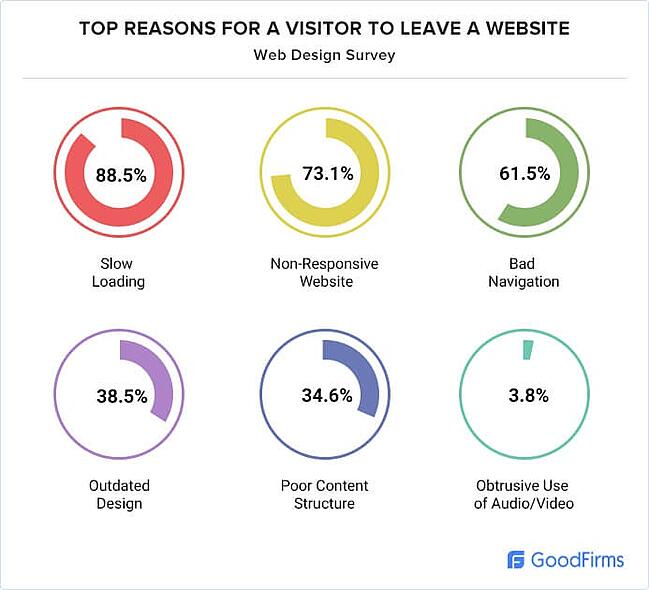
    5. 73.1% of web designers believe that a non-responsive design is a top reason why visitors leave a website. (GoodFirms, 2021)
    6. 53.8% of web designers cite “not being responsive on all devices” as a top reason for a website to be redesigned. (GoodFirms, 2021)
    7. In 2020, the total number of web developers and designers in the United States was around 178,900. By 2030, this number is projected to reach over 205,000. (Statista, 2021)
    8. Employment of web developers and digital designers is projected to grow 8 percent from 2019 to 2029, much faster than the average for all occupations. (U.S. Bureau of Labor Statistics, 2021)
    9. The median annual wage for web developers and digital designers was $77,200 in May 2020. (U.S. Bureau of Labor Statistics, 2021)
    10. 50% of consumers believe that website design is crucial to a business’s overall brand. (Top Design Firms, 2021)
    11. When asked what visual elements they value on a company website, 40% of consumers said images, 39% said color, and 21% said video. (Top Design Firms, 2021)
    12. 84.6% of web designers believe crowded web design is the most common mistake made by small businesses. (GoodFirms, 2021)
    13. 42% of people will leave a website because of poor functionality. (Top Design Firms, 2021)
    14. 38.5% of web designers believe that outdated design is a top reason why visitors leave a website. (GoodFirms, 2021)
    15. 26% of consumers prefer primary color schemes, 21% prefer complementary, and 20% prefer analogous. (Top Design Firms, 2021)
    16. 22% of consumers visiting a website for the first time look for eye-catching colors. But 21% of consumers will leave a site with “outlandish” colors. (Top Design Firms, 2021)
    17. When looking at a website for the first time, 38% of consumers look at a page’s layout or navigational links. (Top Design Firms, 2021)
    18. As of June 2021, Google.com is the most popular website worldwide, with 86.9 billion total monthly visits. (Statista, 2021)
    19. In 2021, 53.9 percent of all retail e-commerce is expected to be generated via mobile devices. (Statista, 2021)
    20. 24% of small retail businesses without a website responded that their reason for not having one was that they don’t know how to create/run a website. (Digital.com, 2021)
    21. As of June 2021, Amazon was the most popular ecommerce site in the United States, with approximately 2.45 billion total monthly visits. (Statista, 2021)
    These are just a few statistics to help with your online marketing journey.
    Source Hub Spot
    https://blog.hubspot.com/marketing/web-design-stats-for-2020

    Nexonta Technologies Inc.

  • Covid-19 has created the new frontier.

    Covid-19 has created the new frontier.

    In a National News article – the Covid-19 pandemic may result in a cumulative global gross domestic product loss of $16 trillion through 2025, according to research from Australian National University.  This worst-case scenario forecasts waves of the pandemic to keep on emerging until 2025 and countries that enforced movement restrictions to curb its spread, eschewing shutdowns during future outbreaks.

    The UN’s trade and development agency said “Apart from the tragic human consequences of the COVID-19 coronavirus epidemic, the economic uncertainty it has sparked will likely cost the global economy $1 trillion in 2020”. Keep in mind we are all in this together.

    The SARS-CoV-2 (severe acute respiratory syndrome coronavirus 2) pandemic is the greatest threat to prosperity and well-being the US has encountered since the Great Depression. This Viewpoint aggregates mortality, morbidity, mental health conditions, and direct economic losses to estimate the total cost of the pandemic in the US on the optimistic assumption that it will be substantially contained by the fall of 2021. These costs are similar to those associated with global climate change.

    Since the onset of coronavirus disease 2019 (COVID-19) in March, in the US 60 million claims have been filed for unemployment insurance. Before COVID-19, the greatest number of weekly new unemployment insurance claims (based on data from 1967 on) was 695 000 in the week of October 2, 1982. For 20 weeks beginning in late March 2020, new unemployment claims exceeded 1 million per week; as of September 20, new claims have been just below that amount.

    The high costs of COVID-19 are evident in lost jobs, dramatic falls in GDP growth, compromised schooling, shuttered restaurants, and much more. Some of these losses will be recovered over time, some will not. The human costs of the pandemic—above and beyond the gruesome death toll—are much more difficult to assess.

    As March 14, 2021 the total worldwide covid cases are 120 Million, Recovered are 67.8 Million and Deaths are 2.65 Million.

    If you are reading this blog you like us are probably waiting for the vaccine to reach 80% so that we can resume some sort of new normal. It is fairly clear to see that the Covid-19 virus has affected every corner of the world and life as we know it for future generations. In approximately one year, our world has changed completely. Most people are already getting things in motion, to get back into the swing of things, but there are many individuals who were running small businesses and intending on starting or restarting their businesses and they are wondering just where to start and what the economic landscape will look like once most of the world has been vaccinated. The key though is we should go ahead and start something and see where it goes. There has never been a better time to be an entrepreneur than today it is truly the best time in recent history to build something truly great.

    The key is to stay on message and also to build green with the environment at top of mind. Money is important and it is important to make a profit for your endeavours, however, it is equally important to have a purpose and a cause in order to build a better world. It is important that we focus on sustainability and growth for not only your company but for humanity. The big question is where to start, and the answer to that question is to just start. There are endless opportunities in today economy with little barriers to entry in most industries. Literally now would be the time to start anything and as long as you are willing to work long and hard at it to bring your dream into reality.

    If I learned anything from the past year it’s that life is a delicate balance and at any time circumstances can change and take away any security from us that we thought we had. This is an opportunity to start over and do things different this time. I can’t say that much has changed for us over here at Nexonta Technologies Inc. as we have always been about building a really solid foundation and working with people who you truly consider family. Find something you love and people you love working with and do it. The money will come. At the end of the day, if you enjoy what you are doing the next time something like Covid 19 happens, it will just feel like a bit of turbulence rather than a full-on life altering explosion.

    On to the Next Level
    Nexonta Technologies Inc.

    Sources:
    https://www.weforum.org/agenda/2020/03/coronavirus-covid-19-cost-economy-2020-un-trade-economics-pandemic/
    https://jamanetwork.com/journals/jama/fullarticle/2771764
    https://www.brookings.edu/research/the-human-costs-of-the-pandemic-is-it-time-to-prioritize-well-being/
    https://www.google.com/search?q=worldwide+covid+deaths&spell=1&sa=X&ved=2ahUKEwjkgpaV-LDvAhVN-qwKHURbBeIQBSgAegQIMBAw&biw=1920&bih=937
    https://www.thenationalnews.com/business/economy/covid-19-may-cost-global-economy-35-3-trillion-by-2025-1.1069246

  • Climate change blog building back better

    Climate change blog building back better

    Where do we start!!!

    While it’s no secret that climate change has been a topic for both concern and discussion since the 1960’s and 1970’s. It is about time that we start taking steps in order to reach zero carbon emissions by 2050 to 2060. There are a lot of indicators that we should start taking action to help remedy climate change. For example, you have rising water levels, greenhouse gas emissions, temperature dipping, melting of the glaciers, etc. Now, I think it’s fair to say, that climate change is something which concerns us all and whether or not you believe it to be true it makes sense to address all of these issues because if you are hoping to leave a better world for your children then chances are you will do everything within your power in order to address any issues that you children might inherit from your indifference to climate change or lack of action towards climate change.

    Currently, there is a pandemic sweeping the world and disrupting daily life on every level. While this is both terrible and disastrous it does present an opportunity to rebuild better. The pandemic has not spared anyone rich, poor, race, culture, educated. It has taught us one thing; this is what happens when you don’t follow the science. For all of the climate change deniers who refuse to acknowledge that climate change is real, look at the way the virus has blown out of control. Follow the science and the scientists. While we here at Nexonta Technologies Inc., we are neither scientists or experts on climate change we are going to educate ourselves so that we can start taking small steps to help in the reduction in our carbon footprint by 2050 to 2060. We also will be providing information to help others be more informed as to steps that they can take in the reduction of their carbon footprints both for companies and individuals.

    The road ahead presents a lot of challenges when it comes to rebuilding our society because of the ravages of Covid-19. However, this does provide a wonderful opportunity for us to rebuild from the ground up to create a better world than we had before all of this devastation.

    Climate change and global warming have become one of the most pressing environmental concerns and the greatest global challenges in society today. As this issue continues to dominate the international agenda, researchers from different academic sectors have for long been devoting great efforts to explore effective solutions to climate change, with technologists and planners devising ways of mitigating and adapting to climate change; economists estimating the cost of climate change and the cost of tackling it; development experts exploring the impact of climate change on social services and public goods. However, Cammack (2007) points out two problems with many of the above discussions, namely the disconnection between the proposed solutions to climate change from different disciplines; and the devoid of politics in addressing climate change at the local level. Further, the issue of climate change is facing various other challenges, such as the problem of elite-resource capture, the resource constraints in developing countries and the conflicts that frequently result from such constraints, which have often been less concerned and stressed in suggested solutions. In recognition of these problems, it is advocated that “understanding the political economy of climate change is vital to tackling it”.

    Meanwhile, the unequal distribution of the impacts of climate change and the resulting inequity and unfairness on the poor who contribute least to the problem have linked the issue of climate change with development study, which has given rise to various programs and policies that aim at addressing climate change and promoting development. Although great efforts have been made on international negotiations concerning the issue of climate change, it is argued that much of the theory, debate, evidence-gathering and implementation linking climate change and development assume a largely apolitical and linear policy process. In this context, Tanner and Allouche (2011) suggest that climate change initiatives must explicitly recognize the political economy of their inputs, processes and outcomes so as to find a balance between effectiveness, efficiency and equity.
    With the recent US election, the Biden-Harris government have made the environment a top priority in the rebuilding of the global economy. This is fantastic because when the United States sneezes the rest of the world catches a cold. And with the US government mandate on fighting climate change and rejoining the Paris Climate Agreement, this presents a fantastic opportunity for various other countries to do the same.

    In the climate change domain, Tanner and Allouche (2011) define the political economy as “the processes by which ideas, power and resources are conceptualized, negotiated and implemented by different groups at different scales”. While there have emerged a substantial literature on the political economy of environmental policy, which explains the “political failure” of the environmental programmes to efficiently and effectively protect the environment, systematic analysis on the specific issue of climate change using the political economy framework is relatively limited.

    Here are a few different worldviews on climate change.

    Nowadays, because of the perception of science as a dominant policy driver, much of the policy prescription and action in the climate change arena have concentrated on assumptions around standardized governance and planning systems, linear policy processes, readily transferable technology, economic rationality, and the ability of science and technology to overcome resource gaps. As a result, there tends to be a bias towards technology-led and managerial approaches to address climate change in apolitical terms. Besides, a wide range of different ideological worldviews would lead to a high divergence of the perception of climate change solutions, which also has a great influence on decisions made in response to climate change. Exploring these issues from a political economy perspective provides the opportunity to better understand the “complexity of politic and decision-making processes in tackling climate change, the power relations mediating competing claims over resources, and the contextual conditions for enabling the adoption of technology”.

    Unintended negative consequences of adaptation policies that fail to factor in environmental-economic trade-offs: Successful adaptation to climate change requires balancing competing economic, social, and political interests. In the absence of such balancing, harmful unintended consequences can undo the benefits of adaptation initiatives. For example, efforts to protect coral reefs in Tanzania forced local villagers to shift from traditional fishing activities to farming that produced higher greenhouse gas emissions.

    Socio-political Constraints
    The role of political economy in understanding and tackling climate change is also founded upon the key issues surrounding the domestic socio-political constraints.

    While, it is going to be a long road ahead to fix these problems that we as a society have helped create, we will have to rebuild regardless and so we might as well rebuild putting the environment first. Whereas, before the pandemic, one could argue that climate change would require too much effort and money. As we now have no choice but to rebuild, we also have no choice but to put the environment in the forefront of our rebuilding efforts.

    One can say that the virus was the wake-up call as well as the catalyst for us to take massive action towards addressing climate change and reducing carbon emissions and following the science. With the handling of Covid-19 coronavirus, it has taught us what will happen when you don’t follow the science.

    Nexonta Technologies Inc.
    On to the Next Level

    Source: Wikipedia

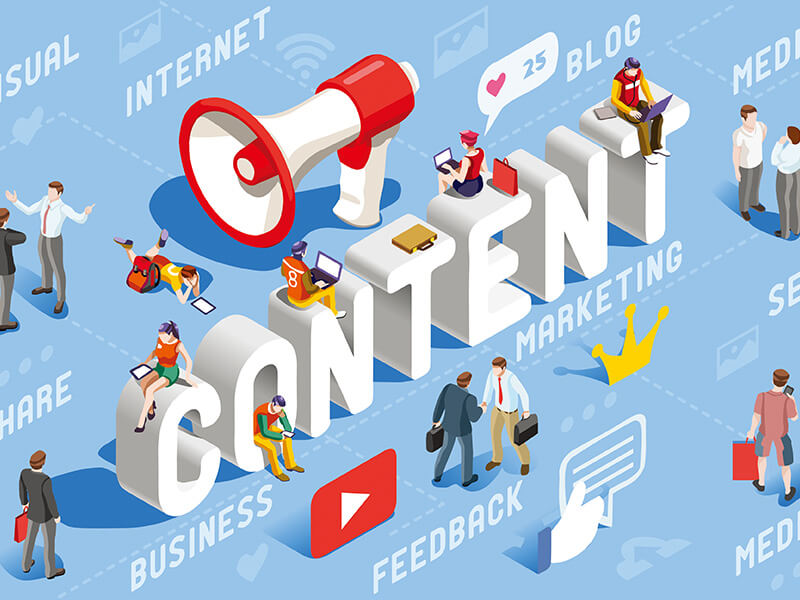
  • Fourteen of the biggest threats to Content marketing success.

    Fourteen of the biggest threats to Content marketing success.

    Quality content is much challenging and vital for a brand to gain reliability. It is important because it solves the audience’s queries. With content marketing, you establish trust and increase conversion rate. Plus connect with the audience and generate leads.

    Quality and engaging Content have a high impact on audience decision-making.

    Here are a few of the biggest threats to content marketing success:


    1. Deliver high-quality Content

    Content Marketing is one of the most effective ways to foster a brand. High-quality Content can have a significant impact on buyers expectation. Producing unique and informative Content, unlike others, attracts customers to buy your service/product.

    Comparing with competitors and performance in SERP gives you clarity on your Content. Based on bounce rate and content quality google ranks your page. Understand why great content is important for blog/website.

    If you want your page to rank in Google, you should create a unique and original piece of Content for readers. And aim to create Content that is far better than anything currently in SERPs.

    Most universities assign paperwork   and research for students to get exposure. With the help of marketing assignment help, you will get high-quality papers at best rates. These specialists offer paper written from scratch that benefits in scoring good grades.

    2. Content expertise

    To create high-quality Content, an individual should have creative and technical expertise skills. You can always hire new talents who are skilled enough to produce content in-house. If you need external resources for good Content, then you can appoint an external agency. Not only they complete work on time. But you can also enjoy their expertise and know what’s most effective in content marketing.

    3. Producing constant Content

    You must produce high-quality Content consistently, to see your brand on top. Approximately 60% of marketers face hurdles in making a name in the content marketing industry. Majority of businesses do not create a content strategy. This is the main reason they fail to understand the market. They end up providing low-quality work.

    Develop a content calendar and keep track of it for next 6 months track your competitor’s results. This helps you to understand how much content needs to be created to make an impact on the market.

    4. Produce Content in a custom-made way

    It is vital to produce content in a variety of styles to lead the market. Plus to hold the attention from B2B buyers. When you have invested time and money, make sure you have used it fullest. Be sure it can be used for reuse in the form of infographics and blogs to get much exposure. If you want to create engaging content, ensure you assure Content provide solutions.

    5. Content needs to serve a buyer’s journey.

    The Content you produce should fill the needs of customers in every stage. Most B2B buyers read through many contents before proceeding. Articles help to spread awareness of your brand. Plus case studies and demonstrations allow people to gauge your work potentiality.

    6. Create long term opportunities among contributors

    Well researched and written content can have a significant impact on customers. It is challenging to land on a good marketplace. It is always great to have a good base and strategy to achieve your goal. Customers expectations are always high with quality and price. You make them understand long-term benefits and opportunities of content marketing.

    Set up a purpose for each Content, like raising organic traffic, track on analytics on these goals. Following these tricks can show the results of your Content and help to showcase the expense. Plus process to your stakeholders, displaying processes can gain traction in the market.

    7. Keeping track of ROI

    Rising funds in data-driven marketing is nothing but focus on measurement and analytics. If you aren’t keeping track of analytics, you never know how hard your Content is working. Grant some budget for each website visitor. Plus quantify the number of visits each page of content gains. Automation Marketing tools like Pardot and Hubspot help to keep track on sale. Measuring ROI needs the right tools and ensures they are configured accurately. Google Analytics and Google search console are analytical technologies most B2B organizations use.

    8. Understand buyers persona

    Buyers are unlike each other, and every individual expects Content in unique ways. You can fulfill their needs only when you go deeper than knowing their gender, age or interests. The easiest way to understand customers is having one to one conversation. Approximately 58% of B2B marketers never try to have a direct conversation.


    9. Focus on SEO

    SEO(Search Engine Optimization) is a key ingredient for your Content to rank on google. Know basic SEO strategies to get high visibility for your contents.

    Here are a few things to be kept in mind to write Content for SEO:

    ● Make sure the primary keyword phrase is in the title of your blog/ webpage.

    ● The primary keyword and other keywords should be dispersed all over the Content. Make you try to fit in words, forcefully let keywords and sentences flow in.

    ● You should use LSI (Latent Semantic Indexing) if you feel you are overusing the main keywords.

    ● Try using keywords (Plus LSI keywords) within <h1>, <h1> and <h3> tags to get high visibility.

    ● Use keywords as anchor text while linking to other pages/blog on your website.

    SEO and Content cannot work great separately. But it is linked to one another, so you should focus on producing great content if you want to improve rankings.

    10 Enhance visibility on Social Media

    Content is not always a bunch of words. Content involves creativity and a skill set to showcase information in the form of posts and videos. Social media helps to enhance your brand and increase visibility. The visual view is the best way to grab people attention.

    11. Increase in Budget

    Most brands assume cheaper Content will help them to stop economic storms. But brands that deliver Content in cheap costs tend to lose attention and integrity. Brands should focus on producing high-quality Content than price. The audience keeps an eye on Content and has high expectations on Content delivered.

    12. Keep track of Competitors performance

    Competitive analysis is a way of knowing your competitors and gauging their strategies. You get a clear picture of how they are leading the market and tactics used to clutch customers. A competitive analysis aims to collect the data to find a way and develop a market strategy.

    Porter’s five forces is a platform to understand your business and your strategy’s profitability.

    Here are porter’s five forces and use of them:

    ● Competitive Rivalry: It shows the number and strengths of competitors. How many competitors do you have? Who are they? Compare the quality of service with yours?

    ● Supplier Power: It displays how easy it is for suppliers to increase their price? And a number of potential suppliers you have? It includes the uniqueness of product or service they provide? And expenses if you switch to other suppliers?

    ● Buyers Power: In this, it shows how easy it is buyers to push prices down? How much it costs to switch from your products to competitors? When you deal with a few potential customers, they have more power. But your ability enhances if you have many customers.

    ● Threats of substitution: It shows the possibility of your customers selecting alternative service. Example if you are producing an entirely manual software tool. But people may substitute it with automated. Because most businesses purchase tools to reduce human resources. And if they have to hire extra people to operate those tools, then obviously they find a substitute for it.

    ● The threat of new entry: You should be smart enough if you want to lead the market. How easy is it to get a place in your industry? How much would it cost and how tight your sector is?

    13. Mobile compatibility

    A mobile-compatible site/blog that doesn’t contain flash. It means the blog/site we can view on a smartphone or tablet, but it is not optimized for other devices.

    Compatibility Testing is checking whether your application behaves the same in other devices.
    Challenges customers face:

    ● Content-A complete site/blog does not fit a small mobile device.

    ● Mobile navigation requires more diverse navigation methods than a full-size site.

    ● In smaller screens, fonts and objects need to be sized.

    ● Functions and features are not always fit on the various devices.

    14. Not having enough skill

    Content marketing is broad and technical expertise is must to land on the market. A brand or individual should be updated on a trending market and requirement. If they fail to keep up trends, there is a high chance of losing customers and brand value decrease.


    Conclusion: Content marketing is an ocean, and it’s a never-ending process. If your brand should find a marketplace, then make sure to produce high-quality content. Plus increased visibility on social media has consistency in work.


    Author Bio:-Mary Jones is the co-founder and editor-in-chief at TopMyGrades, which focuses on career counselling for university students in the US, Canada, UK and Australia. Mary also provides help with assignments for University students as an online service to guide them in with a range of University courses and certifications. When free, she loves to read inspirational novels and biographies

  • Things we know about COVID-19 blog

    Things we know about COVID-19 blog

    Unless you have been living under a rock, you like everyone else has probably been affected by the global pandemic known as COVID-19 or Corona Virus. Not only has it affected our day to day lives it has devastated the world economically, environmentally, socially and health wise. Along with every other effect that a pandemic can have on the world. So, we thought it only fitting that we gather some information and made our first blog for this fall Things we know about COVID-19.

    Dealing with the unforeseen challenges caused by the COVID-19 pandemic has taken a significant toll on people all across the world. The risks of crowds and travel are here to stay. Post-pandemic, Canada will be left with massive social challenges requiring unprecedented levels of innovation to overcome. Enlisting help from elsewhere in the world could boost the country’s recovery. COVID-19 is changing Canadian communities’ infrastructure needs: outdoor public space is more precious than ever, public transit is unsafe for those vulnerable to the virus, and a connection to the internet has become a lifeline for many community members.

    The COVID 19 pandemic, also known as the coronavirus pandemic, is an ongoing global pandemic of coronavirus disease 2019 (COVID 19), caused by severe acute respiratory syndrome coronavirus 2 (SARS CoV 2). The outbreak was first identified in December 2019 in Wuhan, China. The World Health Organization declared the outbreak a Public Health Emergency of International Concern on 30 January 2020 and a pandemic on 11 March. As of 30 August 2020, more than 25 million cases of COVID 19 have been reported in more than 188 countries and territories, resulting in more than 843,000 deaths; more than 16.4 million people have recovered.
    The virus is spread primarily via nose and mouth secretions including small droplets produced by coughing, sneezing, and talking. The droplets usually do not travel through air over long distances. However, those standing in close proximity may inhale these droplets and become infected. People may also become infected by touching a contaminated surface and then touching their face. The transmission may also occur through smaller droplets that are able to stay suspended in the air for longer periods of time in enclosed spaces. It is most contagious during the first three days after the onset of symptoms, although spread is possible before symptoms appear, and from people who do not show symptoms.
    Common symptoms include fever, cough, fatigue, shortness of breath or breathing difficulties, and loss of sense of smell. Complications may include pneumonia and acute respiratory distress syndrome. The time from exposure to onset of symptoms is typically around five days but may range from two to fourteen days. There are several vaccine candidates in development, although none have completed clinical trials to prove their safety and efficacy. There is no known specific antiviral medication, so primary treatment is currently symptomatic.

    Recommended preventive measures include hand washing, covering one’s mouth when coughing, maintaining distance from other people, wearing a face mask in public settings, disinfecting surfaces, increasing ventilation and air filtration indoors, and monitoring and self-isolation for people who suspect they are infected. Authorities worldwide have responded by implementing travel restrictions, lockdowns, workplace hazard controls, and facility closures in order to slow the spread of the disease. Many places have also worked to increase testing capacity and trace contacts of infected persons.

    The pandemic has caused global social and economic disruption, including the largest global recession since the Great Depression. Up to 100 million people have fallen into extreme poverty and global famines are affecting 265 million people. It has led to the postponement or cancellation of sporting, religious, political, and cultural events, widespread supply shortages exacerbated by panic buying, and decreased emissions of pollutants and greenhouse gases. Schools, universities, and colleges have been closed either on a nationwide or local basis in 161 countries, affecting approximately 98.6 percent of the world’s student population. Misinformation about the virus has circulated through social media and mass media. There have been incidents of xenophobia and discrimination against Chinese people and against those perceived as being Chinese or as being from areas with high infection rates.

    We are facing a global health crisis unlike any in the 75-year history of the United Nations — one that is killing people, spreading human suffering, and upending people’s lives. But this is much more than a health crisis. It is a human, economic and social crisis. The coronavirus disease (COVID-19), which has been characterized as a pandemic by the World Health Organization (WHO), is attacking societies at their core.

    Duration
    On 11 March 2020, the WHO said the pandemic could be controlled. The peak and ultimate duration of the outbreak are uncertain and may differ by location. Maciej Boni of Penn State University said, “Left unchecked, infectious outbreaks typically plateau and then start to decline when the disease runs out of available hosts. But it’s almost impossible to make any sensible projection right now about when that will be.” The Imperial College study led by Neil Ferguson stated that physical distancing and other measures will be required “until a vaccine becomes available. William Schaffner of Vanderbilt University said because the coronavirus is “so readily transmissible”, it “might turn into a seasonal disease, making a comeback every year”. The virulence of the comeback would depend on herd immunity and the extent of mutation. COVID 19 is a new disease, and many of the details of its spread are still under investigation. It spreads easily between people—more easily than influenza but not as easily as measles. People are most infectious when they show symptoms (even mild or non-specific symptoms), but may be infectious for up to two days before symptoms appear (pre-symptomatic transmission). They remain infectious for an estimated seven to twelve days in moderate cases and an average of two weeks in severe cases. People can also transmit the virus without showing any symptom (asymptomatic transmission), but it is unclear how often this happens. A June 2020 review found that 40–45% of infected people are asymptomatic.

    If not properly addressed through policy the social crisis created by the COVID-19 pandemic may also increase inequality, exclusion, discrimination and global unemployment in the medium and long term. Comprehensive, universal social protection systems, when in place, play a much durable role in protecting workers and in reducing the prevalence of poverty, since they act as automatic stabilizers. That is, they provide basic income security at all times, thereby enhancing people’s capacity to manage and overcome shocks.

    Although the prognosis may be bleak, we as Optimists feel that if we follow the science, come together as a united world and work together to defeat the virus not only can we come out of this as a better and stronger world, we can create a new normal that is all inclusive and works to help everyone in our society. If we dare to care about the world and it’s inhabitants, we help chart a new course for our world.


    Source: Wikipedia

    Nexonta Technologies Inc.
    On to the Next Level.

☎ ✉
f 𝕏