Tag: effective webdesign

  • How to optimize your website using ab testing or split testing

    How to optimize your website using ab testing or split testing

    The term ‘split testing’ is often used interchangeably with A/B testing. The difference is simply one of emphasis: A/B refers to the two web pages or website variations that are competing against each other. Split refers to the fact that the traffic is equally split between the existing variations.

    In a nutshell, multivariate testing can be seen as allowing website visitors to vote with their clicks for which content they prefer and will stand the most chance of their proceeding to a defined goal or conversion. The testing is transparent to the visitor with all commercial solutions capable of ensuring that each visitor is shown the same content on every visit.

    A/B tests are useful for understanding user engagement and satisfaction of online features like a new feature or product. Large social media sites like LinkedIn, Facebook, and Instagram use A/B testing to make user experiences more successful and as a way to streamline their services. In internet marketing, multivariate testing is a process by which more than one component of a website may be tested in a live environment. It can be thought of in simple terms as numerous A/B tests performed on one page at the same time.

    Multivariate testing is currently an area of high growth in internet marketing as it helps website owners to ensure that they are getting the most from the visitors arriving at their site. Areas such as search engine optimization and pay per click advertising bring visitors to a site and have been extensively used by many organisations but multivariate testing allows internet marketers to ensure that visitors are being shown the right offers, content and layout to convert them to sale, registration or the desired action once they arrive at the website.

    A/B tests are usually performed to determine the better of two content variations; multivariate testing uses multiple variables to find the ideal combination. The only limits on the number of combinations and the number of variables in a multivariate test are the amount of time it will take to get a statistically valid sample of visitors and computational power.

    Multivariate testing is usually employed in order to ascertain which content or creative variation produces the best improvement in the defined goals of a website, whether that be user registrations or successful completion of a checkout process (that is, conversion rate). Dramatic increases can be seen through testing different copy text, form layouts and even landing page images and background colours. However, not all elements produce the same increase in conversions, and by looking at the results from different tests, it is possible to identify those elements that consistently tend to produce the greatest increase in conversions.

    Testing can be carried out on a dynamically generated website by setting up the server to display the different variations of content in equal proportions to incoming visitors. Statistics on how each visitor went on to behave after seeing the content under test must then be gathered and presented. Outsourced services can also be used to provide multivariate testing on websites with minor changes to page coding. These services insert their content to predefined areas of a site and monitor user behavior.

    A/B testing will become more used in UX design in order to optimize your website usability, scalability and overall performance. With A/B testing, you are able to improve every aspect of your website’s performance, so test often and test everything.

    Nexonta Technologies Inc
    On to the Next Level

    Source: Wikipedia
  • Key steps to effective website design!

    Key steps to effective website design!

    Whether your goal is to increase brand awareness or to sell a product or service. Effective website design can be the difference between a new conversion and a lost prospect. Your website is how users learn what your brand is all about. The last thing you want is for a poorly designed website to dissuade site visitors from becoming customers. Here are a few points to keep in mind.

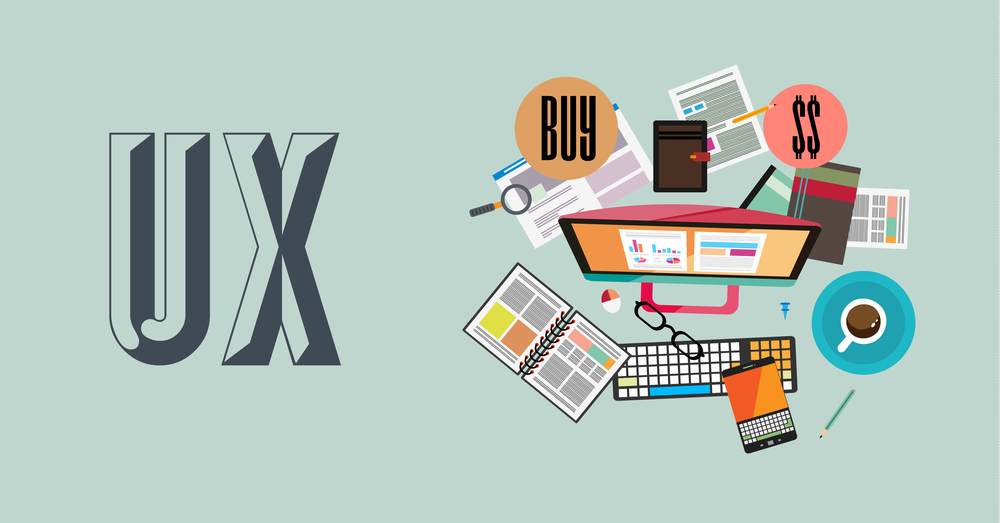
    User experience design (UX design, UXD, UED, or XD) is the process of creating evidence-based, interaction designs between human users and products or websites. Design decisions in UX design are driven by research, data analysis, and test results rather than aesthetic preferences and opinions. Unlike user interface design, which focuses solely on the design of a computer interface, UX design encompasses all aspects of a user’s perceived experience with a product or website, such as its usability, usefulness, desirability, brand perception, and overall performance. UX design is also an element of the customer experience (CX), which encompasses all aspects and stages of a customer’s experience and interaction with a company.
    The field of user experience design is a conceptual design discipline and has its roots in human factors and ergonomics, a field that, since the late 1940s, has focused on the interaction between human users, machines, and the contextual environments to design systems that address the user’s experience. With the proliferation of workplace computers in the early 1990s, user experience started to become a positive insight for designers. User experience design draws from design approaches like human-computer interaction and user-centered design, and includes elements from similar disciplines like interaction design, visual design, information architecture, user research, and others.

    Information architecture
    Information architecture is the art and science of structuring and organizing the information in products and services to support usability and findability.
    In the context of information architecture, information is separate from both knowledge and data, and lies nebulously between them. It is information about objects. The objects can range from websites, to software applications, to images and content etc. It is also concerned with metadata: terms used to describe and represent content objects such as documents, people, process, and organizations. Information architecture also encompasses how the pages and navigation are structured.

    Usability
    Usability is the extent to which a product can be used by specified users to achieve specified goals with effectiveness, efficiency and satisfaction in a specified context of use.
    Usability is attached to all tools used by humans and is extended to both digital and non-digital devices. Thus, it is a subset of user experience but not wholly contained. The section of usability that intersects with user experience design is related to humans’ ability to use a system or application. Good usability is essential to positive user experience but does not alone guarantee it.

    Accessibility
    After research, the designer uses the modeling of the users and their environments. User modeling or personas are composite archetypes based on behavior patterns uncovered during research. Personas provide designers a precise way of thinking and communicating about how groups of users behave, how they think, what they want to accomplish and why. Once created, personas help the designer to understand the users’ goals in specific contexts, which is particularly useful during ideation and for validating design concepts. Other types of models include workflow models, artifact models, and physical models.

    Website and Mobile design
    Website and Mobile design

    Design
    When the designer has a firm grasp on the user’s needs and goals, they begin to sketch out the interaction framework (also known as wireframes). This stage defines the high-level structure of screen layouts, as well as the product’s flow, behavior, and organization. There are many kinds of materials that can be involved during this iterative phase, from whiteboards to paper prototypes. As the interaction framework establishes an overall structure for product behavior, a parallel process focused on the visual and industrial designs. The visual design framework defines the experience attributes, visual language, and the visual style.
    Once a solid and stable framework is established, wireframes are translated from sketched storyboards to full-resolution screens that depict the user interface at the pixel level. At this point, it is critical for the programming team to collaborate closely with the designer. Their input is necessary to create a finished design that can and will be built while remaining true to the concept

    Test and iterate
    Usability testing is carried out by giving users various tasks to perform on the prototypes. Any issues or problems faced by the users are collected as field notes and these notes are used to make changes in the design and reiterate the testing phase. Aside from monitoring issues, questions asked by users are also noted in order to identify potential points of confusion. Usability testing is, at its core, a means to “evaluate, not create”.

    Accessibility of a system describes its ease of reach, use, and understanding. In terms of user experience design, it can also be related to the overall comprehensibility of the information and features. It helps shorten the learning curve associated with the system. Accessibility in many contexts can be related to the ease of use for people with disabilities and comes under usability. In addition, accessible design is the concept of services, products, or facilities in which designers should accommodate and consider for the needs of people with disabilities. According to the Web Content Accessibility Guidelines (WCAG), all content must follow by the four main principles of POUR: Perceivable, Operable, Understandable and Robust.

    WCAG complianceKey 
    Web Content Accessibility Guidelines (WCAG) 2.0 covers a wide range of recommendations for making Web content more accessible. This makes web content more usable to users in general. Making content more usable and readily accessible to all types of users enhances a user’s overall user experience.

    “Design is not just what it looks like and feels like. Design is how it works,” -Steve Jobs. The success or failure of your website hinges most heavily on usability and functionality. A beautiful website means nothing if it doesn’t have an effective user experience.

    Nexonta Technologies Inc.
    On to the next Level
    Source: Wikipedia

☎ ✉
f 𝕏
error: Content is protected !!