
Tag: covid-19

  • Things we know about COVID-19 blog

    Things we know about COVID-19 blog

    Unless you have been living under a rock, you like everyone else has probably been affected by the global pandemic known as COVID-19 or Corona Virus. Not only has it affected our day to day lives it has devastated the world economically, environmentally, socially and health wise. Along with every other effect that a pandemic can have on the world. So, we thought it only fitting that we gather some information and made our first blog for this fall Things we know about COVID-19.

    Dealing with the unforeseen challenges caused by the COVID-19 pandemic has taken a significant toll on people all across the world. The risks of crowds and travel are here to stay. Post-pandemic, Canada will be left with massive social challenges requiring unprecedented levels of innovation to overcome. Enlisting help from elsewhere in the world could boost the country’s recovery. COVID-19 is changing Canadian communities’ infrastructure needs: outdoor public space is more precious than ever, public transit is unsafe for those vulnerable to the virus, and a connection to the internet has become a lifeline for many community members.

    The COVID 19 pandemic, also known as the coronavirus pandemic, is an ongoing global pandemic of coronavirus disease 2019 (COVID 19), caused by severe acute respiratory syndrome coronavirus 2 (SARS CoV 2). The outbreak was first identified in December 2019 in Wuhan, China. The World Health Organization declared the outbreak a Public Health Emergency of International Concern on 30 January 2020 and a pandemic on 11 March. As of 30 August 2020, more than 25 million cases of COVID 19 have been reported in more than 188 countries and territories, resulting in more than 843,000 deaths; more than 16.4 million people have recovered.
    The virus is spread primarily via nose and mouth secretions including small droplets produced by coughing, sneezing, and talking. The droplets usually do not travel through air over long distances. However, those standing in close proximity may inhale these droplets and become infected. People may also become infected by touching a contaminated surface and then touching their face. The transmission may also occur through smaller droplets that are able to stay suspended in the air for longer periods of time in enclosed spaces. It is most contagious during the first three days after the onset of symptoms, although spread is possible before symptoms appear, and from people who do not show symptoms.
    Common symptoms include fever, cough, fatigue, shortness of breath or breathing difficulties, and loss of sense of smell. Complications may include pneumonia and acute respiratory distress syndrome. The time from exposure to onset of symptoms is typically around five days but may range from two to fourteen days. There are several vaccine candidates in development, although none have completed clinical trials to prove their safety and efficacy. There is no known specific antiviral medication, so primary treatment is currently symptomatic.

    Recommended preventive measures include hand washing, covering one’s mouth when coughing, maintaining distance from other people, wearing a face mask in public settings, disinfecting surfaces, increasing ventilation and air filtration indoors, and monitoring and self-isolation for people who suspect they are infected. Authorities worldwide have responded by implementing travel restrictions, lockdowns, workplace hazard controls, and facility closures in order to slow the spread of the disease. Many places have also worked to increase testing capacity and trace contacts of infected persons.

    The pandemic has caused global social and economic disruption, including the largest global recession since the Great Depression. Up to 100 million people have fallen into extreme poverty and global famines are affecting 265 million people. It has led to the postponement or cancellation of sporting, religious, political, and cultural events, widespread supply shortages exacerbated by panic buying, and decreased emissions of pollutants and greenhouse gases. Schools, universities, and colleges have been closed either on a nationwide or local basis in 161 countries, affecting approximately 98.6 percent of the world’s student population. Misinformation about the virus has circulated through social media and mass media. There have been incidents of xenophobia and discrimination against Chinese people and against those perceived as being Chinese or as being from areas with high infection rates.

    We are facing a global health crisis unlike any in the 75-year history of the United Nations — one that is killing people, spreading human suffering, and upending people’s lives. But this is much more than a health crisis. It is a human, economic and social crisis. The coronavirus disease (COVID-19), which has been characterized as a pandemic by the World Health Organization (WHO), is attacking societies at their core.

    Duration
    On 11 March 2020, the WHO said the pandemic could be controlled. The peak and ultimate duration of the outbreak are uncertain and may differ by location. Maciej Boni of Penn State University said, “Left unchecked, infectious outbreaks typically plateau and then start to decline when the disease runs out of available hosts. But it’s almost impossible to make any sensible projection right now about when that will be.” The Imperial College study led by Neil Ferguson stated that physical distancing and other measures will be required “until a vaccine becomes available. William Schaffner of Vanderbilt University said because the coronavirus is “so readily transmissible”, it “might turn into a seasonal disease, making a comeback every year”. The virulence of the comeback would depend on herd immunity and the extent of mutation. COVID 19 is a new disease, and many of the details of its spread are still under investigation. It spreads easily between people—more easily than influenza but not as easily as measles. People are most infectious when they show symptoms (even mild or non-specific symptoms), but may be infectious for up to two days before symptoms appear (pre-symptomatic transmission). They remain infectious for an estimated seven to twelve days in moderate cases and an average of two weeks in severe cases. People can also transmit the virus without showing any symptom (asymptomatic transmission), but it is unclear how often this happens. A June 2020 review found that 40–45% of infected people are asymptomatic.

    If not properly addressed through policy the social crisis created by the COVID-19 pandemic may also increase inequality, exclusion, discrimination and global unemployment in the medium and long term. Comprehensive, universal social protection systems, when in place, play a much durable role in protecting workers and in reducing the prevalence of poverty, since they act as automatic stabilizers. That is, they provide basic income security at all times, thereby enhancing people’s capacity to manage and overcome shocks.

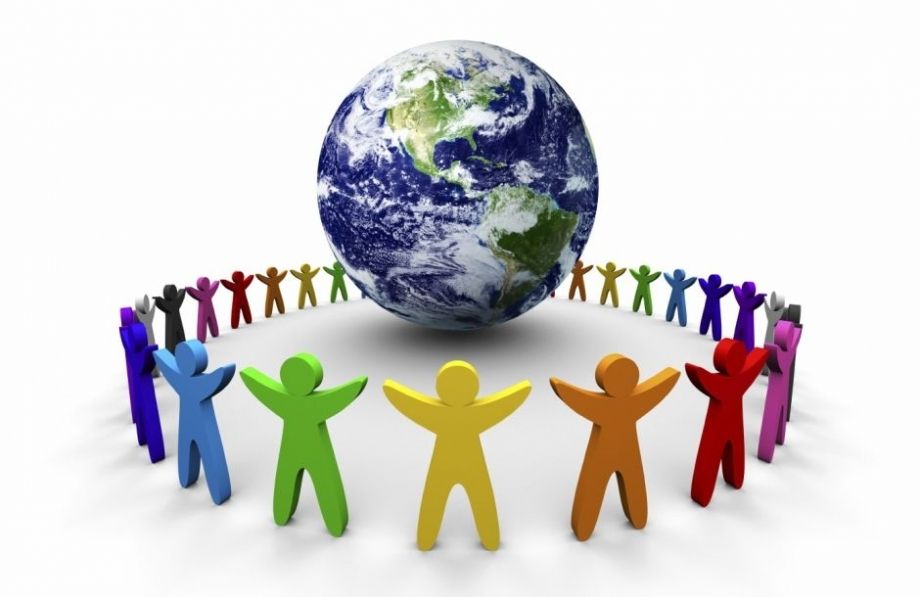
    Although the prognosis may be bleak, we as Optimists feel that if we follow the science, come together as a united world and work together to defeat the virus not only can we come out of this as a better and stronger world, we can create a new normal that is all inclusive and works to help everyone in our society. If we dare to care about the world and it’s inhabitants, we help chart a new course for our world.


    Source: Wikipedia

    Nexonta Technologies Inc.
    On to the Next Level.
  • Phoenix rising from the Corona COVID-19 ashes

    Phoenix rising from the Corona COVID-19 ashes

    Unless you have been living in a bunker prior to 2020 there is no doubt that the Corona virus COVID-19 pandemic has affected your life one way or another. We thought it would be appropriate to try to find some hope in this terrible time.
    Many are throwing around the term back to normal while others are seeing an opportunity to address many social, mental health, obesity, and environmental issues which combined have caused huge crisis to our health and our planet. Two things are certain, one is that we will have to rebuild starting from scratch and the other certainty is we can decide how to rebuild.

    It can be argued that revamping our social equality, mental health, climate change and carbon footprint might have been financially costly. Today, if we globally prioritize these key issues during our rebuild, we will know doubt emerge from this crisis a stronger, kinder, more sustainable and much more capable global society.
    In order for us to defeat this disaster and many more like it in the future we must come together in a united effort globally. This blog aims to focus on one aspect of the global pre-Corona crisis which is Climate Change.

    Carbon Footprint

    A carbon footprint is historically defined as the total greenhouse gas (GHG) emissions caused by an individual, event, organization, or product, expressed as carbon dioxide equivalent. Greenhouse gases, including the carbon-containing gases carbon dioxide and methane, can be emitted through the burning of fossil fuels, land clearance and the production and consumption of food, manufactured goods, materials, wood, roads, buildings, transportation and other services.

    Most of the carbon footprint emissions for the average U.S. household come from “indirect” sources, for example, fuel burned to produce goods far away from the final consumer. These are distinguished from emissions which come from burning fuel directly in one’s car or stove, commonly referred to as “direct” sources of the consumer’s carbon footprint. Each individual is responsible for their own Carbon Footprint.
    Greenhouse gas

    A greenhouse gas (sometimes abbreviated GHG) is gas that absorbs and emits radiant energy within the thermal infrared range. Greenhouse gases cause the greenhouse effect on planets. The primary greenhouse gases in Earth’s atmosphere are water vapor (H2O), carbon dioxide (CO2), methane (CH4), nitrous oxide (N2O), and ozone (O3). Without greenhouse gases, the average temperature of Earth’s surface would be about −18 °C (0 °F),rather than the present average of 15 °C (59 °F).

    Human activities since the beginning of the Industrial Revolution (around 1750) have produced a 45% increase in the atmospheric concentration of carbon dioxide, from 280 ppm in 1750 to 415 ppm in 2019. The last time the atmospheric concentration of carbon dioxide was this high was over 3 million years ago. This increase has occurred despite the uptake of more than half of the emissions by various natural “sinks” involved in the carbon cycle. The vast majority of anthropogenic carbon dioxide emissions come from combustion of fossil fuels, principally coal, oil, and natural gas, with additional contributions coming from deforestation, changes in land use, soil erosion and agriculture (including livestock). The leading source of anthropogenic methane emissions is animal agriculture, followed by fugitive emissions from gas, oil, coal and other industry, solid waste, wastewater and rice production.

    Renewable energy

    World electricity generation by source in 2017. Total generation was 26 PWh.
    Coal (38%)
    Natural Gas (23%)
    Hydro (16%)
    Nuclear (10%)
    Wind (4%)
    Oil (3%)
    Solar (2%)
    Biofuels (2%)
    Other (2%)

    Wind, solar, and hydroelectricity are three renewable sources of energy. Renewable energy is energy that is collected from renewable resources, which are naturally replenished on a human timescale, such as sunlight, wind, rain, tides, waves, and geothermal heat. Renewable energy often provides energy in four important areas: electricity generation, air and water heating/cooling, transportation, and rural (off-grid) energy services.

    At the national level, at least 30 nations around the world already have renewable energy contributing more than 20 percent of energy supply. National renewable energy markets are projected to continue to grow strongly in the coming decade and beyond. Some places and at least two countries, Iceland and Norway, generate all their electricity using renewable energy already, and many other countries have the set a goal to reach 100% renewable energy in the future. At least 47 nations around the world already have over 50 percent of electricity from renewable resources.

    Renewable energy resources exist over wide geographical areas, in contrast to fossil fuels, which are concentrated in a limited number of countries. Rapid deployment of renewable energy and energy efficiency technologies is resulting in significant energy security, climate change mitigation, and economic benefits. In international public opinion surveys there is strong support for promoting renewable sources such as solar power and wind power.

    Renewable resource
    A renewable resource is a natural resource which will replenish to replace the portion depleted by usage and consumption, either through natural reproduction or other recurring processes in a finite amount of time in a human time scale. Renewable resources are a part of Earth’s natural environment and the largest components of its ecosphere. A positive life cycle assessment is a key indicator of a resource’s sustainability.

    Carbon credit
    A carbon credit is a generic term for any tradable certificate or permit representing the right to emit one tonne of carbon dioxide or the equivalent amount of a different greenhouse gas (tCO2e).

    Carbon credits and carbon markets are a component of national and international attempts to mitigate the growth in concentrations of greenhouse gases (GHGs). One carbon credit is equal to one tonne of carbon dioxide, or in some markets, carbon dioxide equivalent gases. Carbon trading is an application of an emissions.

    The goal is to allow market mechanisms to drive industrial and commercial processes in the direction of low emissions or less carbon intensive approaches than those used when there is no cost to emitting carbon dioxide and other GHGs into the atmosphere. Since GHG mitigation projects generate credits, this approach can be used to finance carbon reduction schemes between trading partners and around the world.
    There are also many companies that sell carbon credits to commercial and individual customers who are interested in lowering their carbon footprint on a voluntary basis.

    These carbon offsetters purchase the credits from an investment fund or a carbon development company that has aggregated the credits from individual projects. Buyers and sellers can also use an exchange platform to trade, which is like a stock exchange for carbon credits. The quality of the credits is based in part on the validation process and sophistication of the fund or development company that acted as the sponsor to the carbon project. This is reflected in their price; voluntary units typically have less value than the units sold through the rigorously validated Clean Development Mechanism. The European Union’s carbon credits traded from $7.78 to $25.19 averaging $16.21 per tonne in 2018.

    Using Wikipedia, we have sourced some basic information to try to map out a road to recovery for our planet. While this is by no means a comprehensive plan it does show us that there is enough information available for us as a society to not only chart a new course but to take a kinder, gentler and compassionate course towards our Earth.
    If we heal the planet, we can help heal humanity. Start where you are, use what you have and put people first. We will get through this, the only question is will we be better or worse?

    Nexonta Technologies Inc.
    On to the Next Level

    Sources:
    Wikipedia

☎ ✉
f 𝕏
error: Content is protected !!