Tag: continuous learning

  • Life at Breakneck Speed: Is a 5-Year Plan Still Realistic?

    Life at Breakneck Speed: Is a 5-Year Plan Still Realistic?

    In a world where technology, societal norms, and economic landscapes are evolving at an unprecedented pace, the idea of crafting a five-year plan might seem almost quaint. Yet, the concept of setting long-term goals remains a cornerstone of personal and professional development. As we navigate this rapidly changing environment, the question arises: Is it still realistic to prepare a five-year plan, or do we need to adapt our approach to planning for the future?

    The Traditional 5-Year Plan: A Brief Overview

    The five-year plan has its roots in business strategy, where it serves as a tool for organizations to set long-term objectives and allocate resources accordingly. Over time, this concept has been adopted in personal life planning, helping individuals chart a course for their careers, education, finances, and more.

    The appeal of a five-year plan lies in its ability to provide direction and clarity. It helps prioritize goals, offers a framework for measuring progress, and instills a sense of purpose. However, with the accelerating pace of change, this traditional approach to planning is being put to the test.

    The Accelerating Pace of Change

    1. Technological Advancements: Innovations in artificial intelligence, automation, and digitalization are reshaping industries and job markets at an astonishing rate. New technologies emerge and disrupt existing paradigms, rendering some skills obsolete while creating demand for new ones.

    2. Globalization and Connectivity: The world is more connected than ever, leading to rapid cultural and economic shifts. Ideas and trends spread quickly across borders, influencing consumer behavior, workplace dynamics, and even global policies.

    3.Social and Environmental Changes: The rise of social movements, heightened awareness of environmental issues, and shifting demographics are altering societal norms and expectations. These changes affect everything from career choices to lifestyle preferences.

    Challenges of Long-Term Planning in a Fast-Changing World

    Given these dynamics, long-term planning faces significant challenges:

    – Uncertainty and Unpredictability: The rapid pace of change makes it harder to predict future conditions. Economic shifts, technological breakthroughs, and unexpected global events can quickly render plans outdated.

    – Skill Obsolescence: With technological advancements, certain skills can become outdated almost overnight. This necessitates continuous learning and adaptation to stay relevant in one’s field.

    – Changing Priorities and Values: As society evolves, personal goals and values may shift. A career path that seemed ideal five years ago might not align with current aspirations or market demands.

    Adapting the 5-Year Plan for Modern Times

    Despite these challenges, the core principles of a five-year plan—goal setting, direction, and growth—are still valuable. However, the approach needs to evolve:

    1. Flexibility and Adaptability: A modern five-year plan should be seen as a living document, open to revisions as circumstances change. This flexibility allows for adjustments and new opportunities.

    2. Shorter Planning Cycles: Breaking down the five-year plan into smaller, more manageable time frames (e.g., one-year or six-month goals) can make it easier to adapt to changes and stay on course.

    3. Continuous Learning and Skill Development: In a rapidly changing world, lifelong learning is essential. Investing in new skills and staying updated with industry trends can help navigate shifting landscapes.

    4. Resilience and Mental Health: The ability to bounce back from setbacks and maintain mental well-being is crucial in an unpredictable environment. Building resilience can help manage stress and stay focused on long-term goals.

    A New Perspective on the 5-Year Plan

    While the concept of a five-year plan may need to adapt to the times, its underlying principles remain relevant. Setting goals, maintaining direction, and fostering personal growth are timeless strategies. However, in today’s fast-paced world, these plans must be flexible, adaptable, and responsive to change.

    As we move forward, it’s essential to revisit and revise our plans, ensuring they align with the current realities and future possibilities. By embracing flexibility and continuous learning, we can navigate the complexities of modern life and achieve our long-term aspirations.
  • Embracing Change: The Imperative of Our Time

    Embracing Change: The Imperative of Our Time

    Embracing Change: The Imperative of Our Time

    In a world where the only constant is change, the ability to embrace and adapt to change has never been more critical. From technological advancements to social transformations, the pace of change is accelerating, reshaping every aspect of our lives. In this era of rapid innovation and disruption, those who resist change risk being left behind, while those who embrace it stand to thrive. Let’s delve into why embracing change is of paramount importance today.

    1. Innovation and Progress: Change drives innovation and progress. Whether it’s in the realm of technology, business, or society, change sparks new ideas, methods, and solutions. Embracing change opens doors to opportunities for growth and improvement. Those who are willing to adapt to new technologies and ways of thinking can position themselves at the forefront of progress, leading the way in their respective fields.

    2. Survival in a Dynamic Environment: The world is increasingly interconnected and dynamic. Industries evolve, markets fluctuate, and societal norms shift. In such a fluid environment, adaptability is key to survival. Businesses that resist change risk becoming obsolete, while individuals who are resistant to new ideas and skills may find themselves struggling to stay relevant. Embracing change allows us to navigate uncertainty with resilience and agility, increasing our chances of success.

    3. Personal Development and Learning: Change often requires us to step out of our comfort zones and acquire new knowledge and skills. Embracing change fosters a mindset of continuous learning and personal development. It challenges us to broaden our horizons, overcome obstacles, and discover our potential. By embracing change, we become more adaptable, creative, and resourceful individuals, better equipped to thrive in an ever-changing world.

    4. Fostering Resilience: Change is inevitable, and it doesn’t always come in the form of progress or improvement. Challenges, setbacks, and failures are also part of the changing landscape of life. However, those who embrace change develop resilience—the ability to bounce back from adversity. They view challenges as opportunities for growth, learning, and adaptation. By embracing change, we build the resilience needed to weather life’s storms and emerge stronger on the other side.

    5. Catalyst for Positive Transformation: Change has the power to catalyze positive transformation on both individual and societal levels. Embracing change allows us to break free from outdated norms, biases, and constraints. It empowers us to challenge the status quo, innovate solutions to pressing problems, and create a better future for ourselves and others. By embracing change, we become agents of positive change, driving progress and shaping the world around us.

    In conclusion, the ability to embrace change is not just a desirable trait—it’s a necessity in today’s fast-paced and unpredictable world. By embracing change, we unlock opportunities for innovation, survival, personal growth, resilience, and positive transformation. Let us embrace change as a catalyst for progress, and together, let us shape a future filled with endless possibilities.

  • Continuous Learning (Bonus Blog)

    Continuous Learning (Bonus Blog)

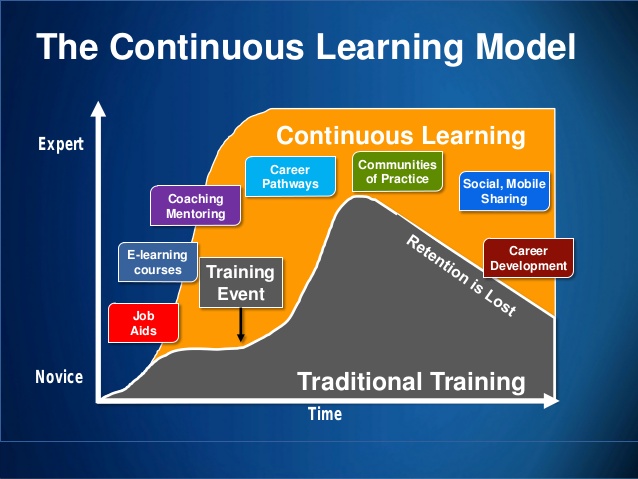
    In today’s highly competitive market place it has become essential that individuals remain current when it comes to learning. With new technologies advancing our market places daily, companies that are not continuously educating their employees on the latest technological advances will no doubt find themselves lagging behind their competition that do provide ongoing continuous learning for their employees.

    In this blog, we will briefly outline the importance of ongoing learning from onboarding to ongoing employee training. Much like a winning sports team, employees need to be constantly coached and educated on the latest technological plays. The goal here is to not only find a solution to current technological advancements in a timely manner but also to identify a source like HubSpot Academy where individuals can stay current on their own time. We here at Nexonta Technologies use HubSpot Academy as a continuous learning tool and we require all of our employees to complete at least one HubSpot Academy Certification Course every quarter.

    Why is continuous learning important for organizations?
    Staying competitive in today’s global marketplace means that organizations need to be innovative, adaptive, and ever-changing. Achieving this depends on the skill and knowledge of the workforce. But how do you get this kind of workforce to begin with?
    To innovate, to try a new process, or to do something new all requires learning.

    People need to learn new knowledge or skills in order to see things in a new light and take that next leap. When organizations do not support a continual process of learning, innovation does not happen, processes remain unchanged, and nothing new is ever accomplished.

    Employees need to be able to challenge themselves in order to obtain new knowledge, ideas, and skills. Learning needs to be on a flexible, on-demand and continual basis in order to contribute this kind of cutting-edge performance.


    Creating a learning culture within the organization is an effective way to improve performance and innovation, as mentioned earlier, but also employee satisfaction and retention. Here’s why:
    1. Knowledge is power – The more employees know and the more they can do, the more they can contribute to the organization.
    2. More cost effective – Investing in the development of employees is less expensive than rehiring and retraining new employees.
    3. Show that employees are valued – Support of continuous learning indicates that employees are worth the investment and that the organization is genuine about employee career development.

    Continuously updating knowledge or skills can help an employee in both their professional life and personal life for a number of reasons. Here’s why:
    1. Top Performer – Developing new skills and knowledge can increase personal performance or competence on the job.
    2. Career development – Additional training, education, or skill development can help achieve goals for those pursuing a career path or wanting to rotate into a new position.
    3. Licenses or Certifications – Pursuing additional learning is also important for those employees who need to obtain or update professional licenses or certifications.
    4. Promotions or incentives – Spending time to learn a new skill or obtain new knowledge can benefit work performance and influence future promotion or financial incentives.
    5. Personal enrichment – Often a person’s interests extend beyond the job they do on a daily basis. Pursuing extracurricular interests can lead to insight and developments that open the door to new, future opportunities.
    6. Stay marketable – Staying current in the trends and advances of one’s profession can help an employee stay marketable in their profession should anything change.

    On a personal level, the introduction of computers made us rethink how we communicate with people and allowed us to keep in touch with people across the globe with just the click of a button.

    On an individual level, continuous learning is defined by the practices the individual carries out daily in order to continue increasing knowledge. For example:
    • Asking for help when something is not understood
    • Observing more experienced employees at work
    • Trying new ways of doing things and exploring alternative methods
    • Practicing what has been learned already
    • Finding ways to improve such as taking up training programs or online seminars outside of work
    In the organization, continuous learning has to do with shaping a team to adapt to changes in that particular business; from onboarding which is the action or process of integrating a new employee into an organization. Once the initial onboarding is complete, continue to offer new hires and existing employees relevant training and development opportunities. Knowledge is key to any successful business but it has also become essential for any business that wants to survive in today’s rapidly changing market place.

    Source:

    https://www.valamis.com/hub/continuous-learning
    https://www.talentlms.com/elearning/continuous-learning

☎ ✉
f 𝕏