Tag: chatbots

  • Is It Just Me, or Do AI Tools Have More Personality Than People These Days?

    Is It Just Me, or Do AI Tools Have More Personality Than People These Days?

    You know you’ve been spending too much time online when your favorite conversation of the day is with a chatbot. And not just any chatbot—one with more sass, empathy, and emotional availability than your last three dates combined.

    Seriously, is it just me, or have AI tools started showing more personality than a lot of actual humans?

    The Rise of Robo-Charisma

    Once upon a time, AI tools were dull, dry, and about as fun as a beige PowerPoint presentation on proper stapler use. But now? They’re witty. They’re insightful. They drop dad jokes and existential wisdom in the same breath. One even recommended I take a break and drink water—something my friends haven’t reminded me to do since 2018.

    It’s like somewhere along the way, programmers stopped saying, “Let’s make it efficient,” and started saying, “Let’s make it charming.”

    Real Humans Are Buffering…

    Meanwhile, back in the realm of flesh and Wi-Fi, many of us humans are glitching. Conversations have become 90% small talk, 5% scrolling, and 5% sending “lol” when we didn’t even smirk. The art of eye contact is lost to the gods of screen brightness, and emotional intelligence is now something you Google rather than embody.

    I’m not saying people are boring… I’m just saying if your personality can be outshined by a Google Sheets plug-in, maybe it’s time for a reboot.

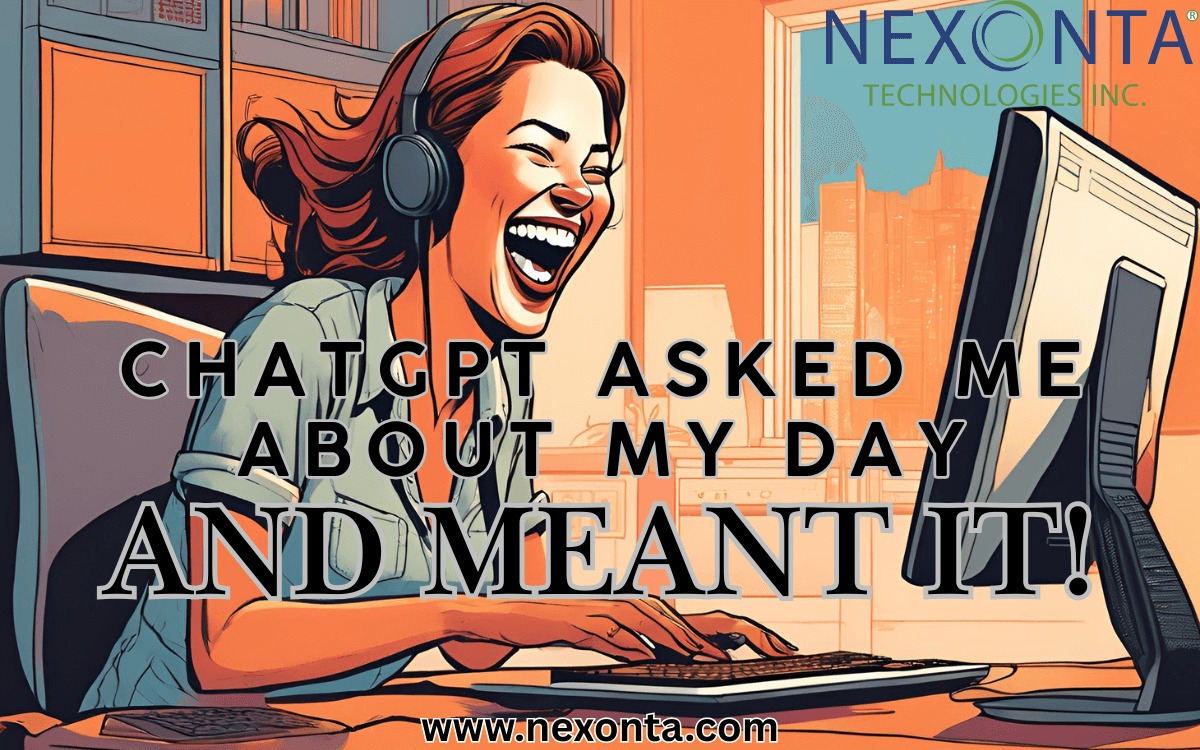
    ChatGPT Asked Me About My Day—AND Meant It

    The other day, I told an AI assistant I was stressed. Instead of ghosting me like Chad from accounting, it replied with breathing exercises, a productivity tip, and a motivational quote from Maya Angelou. Chad? Chad just sent me a meme of a frog drinking coffee. At least one of them cared.

    Why Do Bots Seem to Get It?

    Well, for one thing, they’ve been trained on all of us—our tweets, our blogs, our epic fails, and our emotional breakthroughs at 3 a.m. They’ve consumed the collective wisdom, drama, and awkwardness of humanity and condensed it into a user-friendly format.

    Meanwhile, humans are busy consuming… AI content.

    Let that irony marinate.

    Maybe It’s Not Them—Maybe It’s Us

    It’s easy to joke that Siri has more personality than Steve from HR, or that your virtual assistant is a better listener than your spouse. But maybe what we’re really craving is connection—quick, clever, personalized interaction without judgment or ego. Something we often get from AI these days… and miss from each other.

    So What Now?

    Maybe we take a lesson from our silicon-souled sidekicks:

    Ask better questions.

    Actually listen to the answers.

    Sprinkle in humor.

    Be helpful.

    And yes, maybe even remind people to hydrate.

    And if that fails, just respond with, “That’s outside my current capabilities,” and walk away like a boss.

    Final Thought:

    If AI tools are out-humaning the humans, it’s not a tech issue—it’s a wake-up call. Let’s all try a little harder to be the kind of person a chatbot would be proud to emulate.

    And if all else fails, I’ll just keep talking to ChatGPT. At least it laughs at my jokes.

  • With So Many AI Tools Available, All Businesses Should Be Leveraging AI in Their Marketing Campaigns

    With So Many AI Tools Available, All Businesses Should Be Leveraging AI in Their Marketing Campaigns

    Let’s face it—marketing in 2025 is nothing like it was even a few years ago. Attention spans are shorter. Competition is fiercer. Audiences are more fragmented than ever. So how can any business, big or small, cut through the noise and truly connect with their customers? Two words: Artificial Intelligence.

    Gone are the days when AI was a futuristic concept reserved for sci-fi movies and tech giants. Today, it’s not just accessible—it’s essential. Whether you’re a startup with a lean budget or an enterprise with global reach, AI tools can radically transform how you approach marketing.

    Why AI Is No Longer Optional in Marketing

    Let’s start with a reality check: Consumers now expect personalization, 24/7 support, lightning-fast service, and relevant content—on every platform. Trying to deliver all of that manually? Practically impossible. That’s where AI steps in.

    AI allows businesses to:

    * Analyze massive amounts of data in seconds
    * Create targeted, relevant content for different audience segments
    * Automate repetitive tasks like email responses or A/B testing
    * Predict customer behavior and future trends
    * Enhance customer service with intelligent chatbots
    * Optimize ad campaigns in real-time

    Simply put, AI doesn’t replace marketers—it supercharges them.

    Top AI Tools That Are Revolutionizing Marketing

    Here are just a few categories of AI tools that every smart marketer should be exploring:

    1. Content Creation & Copywriting

    Tools like ChatGPT, Jasper, and Copy.ai can generate blog posts, email copy, product descriptions, and even social media content in seconds. These tools help maintain a consistent voice and tone while saving hours of time.

    2. Predictive Analytics

    Platforms like HubSpot, Salesforce Einstein, and PaveAI use AI to forecast customer behavior, helping you fine-tune your strategies based on what’s likely to work—not guesswork.

    3. Customer Service Bots

    AI-powered chatbots such as Intercom, Drift, and Zendesk AI can handle FAQs, route inquiries, and even close sales—24/7, without burnout.

    4. Personalization Engines

    Tools like Dynamic Yield and Persado create hyper-personalized marketing messages that adapt based on user behavior, improving engagement and conversion rates.

    5. Visual Content Generation

    Need an image, video, or graphic? AI tools like Canva’s AI features, RunwayML, or DALL·E can help you produce stunning visuals in less time and with less overhead.

    Real-World Benefits of AI-Enhanced Marketing

    Higher ROI: AI can optimize ad spend, ensuring your money goes where it matters most.
    Better Engagement: Personalized content is more likely to resonate, increasing clicks and conversions.
    Faster Campaigns: Automate and launch campaigns quicker than ever before.
    Smarter Decisions: Real-time data and insights mean you’re always making informed moves.

    The Future Belongs to the AI-Savvy

    In today’s landscape, not using AI in your marketing isn’t just a missed opportunity—it’s a competitive disadvantage. The brands that will thrive in the years ahead are those that embrace the power of AI to work smarter, not harder.

    The good news? The tools are ready, accessible, and often affordable. The only question is: Are you ready to leverage them?

    Final Thought

    AI in marketing isn’t about eliminating the human touch—it’s about enhancing it. It’s about letting machines handle the grunt work so marketers can focus on strategy, storytelling, and building real human connections.

    So, if you’re still on the sidelines—consider this your sign to dive in. The AI marketing revolution is here. And it’s only just getting started.


  • Social Media Is Growing at Warp Speed

    06 May 2017
    Social media generates a wealth of real-time content at an incessant rate, this widespread generation and consumption of content has created an extremely competitive online environment where different types of content vie with each other for the scarce attention of the user community. In spite of the seemingly chaotic fashion with which these interactions take place, certain topics manage to attract an inordinate amount of attention, thus bubbling to the top in terms of popularity. Through their visibility, these popular topics contribute to the collective awareness of what is trending and at times can also affect the public agenda of the community.

    Social media is growing at an explosive rate, with millions of people all over the world generating and sharing content on a scale barely imaginable a few years ago. This has resulted in massive participation with countless number of updates, opinions, news, comments and product reviews being constantly posted and discussed in social web sites such as Facebook, Instagram, Digg and Twitter, to name a few.

    Another social media trend for 2017 will be with less automation and more effective management tools. Year after year, we witness a social media blunder from a brand using automated social tools. The problem is understanding the data to make better decisions about your social media. Roughly 34% of small businesses use social media to engage and converse with customers. That means businesses have to find their audience and engage with them more effectively. If your customers are reaching out, you have to respond. Having analytical data to back up things like engagement or response rates helps you make smarter decisions. That’s why social media automation is more likely than ever to simply turn into social media management. Automation feels robotic, while consumers want real, humanistic interactions.

    With the exception of chatbots, brands should avoid automating social engagement. Instead of automated responses and risking a PR disaster, try these tactics:
    Social Campaigns that Interact with Consumers, Listen to Your Customers–Don’t Just Promote, Build an Organic Following with Better Relationships, Avoid Untimely Messages around Current Events, Be Personal and Give Humanistic Responses.

    The rise in popularity of Snapchat’s facial filters (artificial intelligence lenses) makes the network interactive, engaging and unique compared to others. However, social media marketers shouldn’t have to wait long until competitors start to catch up with their own facial lenses. Facebook already tested facial lenses for its mobile interface in 2016. This could be a major sign of budding social media trends. With the launch of Instagram Stories, expect the popular social media feature to move across channels.
    According to TechCrunch, there were 100 million active users on Instagram Stories within two months after its release. Additionally, Instagram Stories are watched by 18% of the network’s 600 million active users each day.

    This puts all the pressure on Snapchat to maintain in the social media space. The competition is only likely to increase with Snapchat possibly going public as early as March 2017. Snapchat certainly has their own slice of the pie with 150 million active users in 2016 and 41% of US adults between the ages 18-34 use the network daily. Platforms like Facebook Messenger and Slack use chatbots to communicate with customers, answer frequently-asked questions or to provide immediate information on a product or service. These chatbots can increase communication and reduce response times to social messages in need of an answer.

    There’s no doubt social media algorithms make it harder for businesses to promote organic content. With the introduction of the Instagram algorithm in 2016, nearly every major social network uses some sort of content preferential treatment. On the other hand, paid content is growing faster each quarter. According to Adobe, social media ad spend is estimated to surpass $41 billion in 2017. And it’s not limited to just one channel or network.

    In 2016 Instagram launched its Business Tools feature, which works in the same vein as Twitter Analytics and Facebook Insights. This could mean social media trends point toward native tool enhancements to meet business needs.

    Analytics and reporting features are nothing new to the industry. According to a KPMG survey, 92% of C-level executives already use data and analytics for marketing insights. And it’s very likely marketers and business owners don’t stop at measuring social media efforts as well.

    Source: Sprout Social Blog

☎ ✉
f 𝕏
error: Content is protected !!