Tag: business process automation

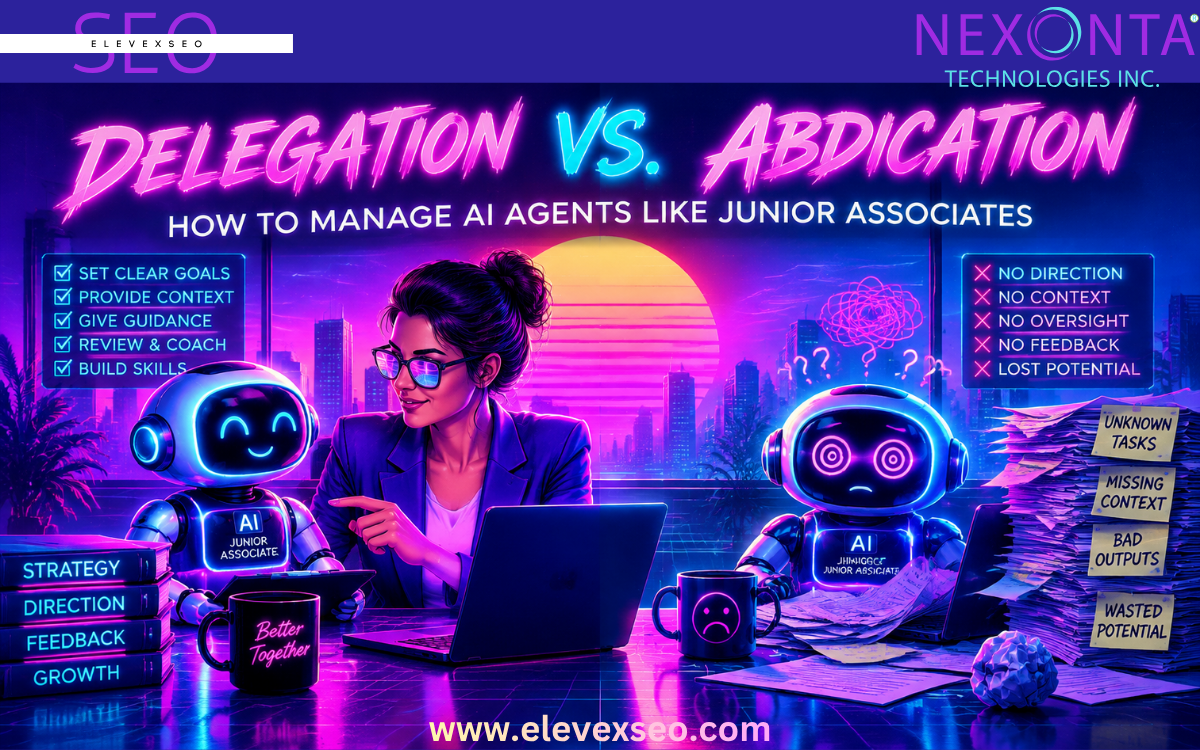
  • Delegation vs. Abdication: How to Manage AI Agents Like Junior Associates

    Delegation vs. Abdication: How to Manage AI Agents Like Junior Associates

    Imagine hiring a new employee who can work around the clock, handle repetitive tasks, organize information, and help your business move faster. Sounds great, right? But would you give that employee full control of your business on their first day?

    Probably not.

    The same thinking applies to managing AI agents. As businesses introduce Agentic AI into their operations, one of the biggest challenges isn’t simply deciding what tasks to automate. It’s knowing how much responsibility to give AI, when to step in, and how to build trust over time.

    There is an important difference between delegation and abdication. Understanding that difference can make all the difference between a successful AI strategy and an expensive mistake.

    At ElevexSEO, we believe technology should help people do more, not replace the human judgment that makes businesses successful.

    Let’s explore what that looks like in practice.

    What Is the Difference Between Delegation and Abdication?

    Delegation is giving someone responsibility for a task while providing clear instructions, expectations, and appropriate oversight.

    Abdication is handing over responsibility and walking away.

    Think about a new junior associate joining your company. You wouldn’t expect them to understand every process, customer expectation, or business rule on day one. You would train them, explain their responsibilities, review their work, and provide feedback.

    Over time, as they demonstrate good judgment and consistent performance, you would give them more independence.

    AI agents should be managed in much the same way.

    An AI agent can perform tasks, follow instructions, connect systems, and make decisions within defined boundaries. But that doesn’t mean it should automatically have unrestricted authority.

    Good AI management starts with delegation, not blind trust.

    Why Treat AI Agents Like Junior Associates?

    Agentic AI is different from traditional automation.

    Traditional automation usually follows a set of predefined rules. Agentic AI can take a goal, break it into smaller steps, use available tools, and work through a process with varying degrees of independence.

    For example, an AI agent might be assigned to:

    • Research potential customers and organize lead information.
    • Prepare follow-up emails for a sales team.
    • Monitor incoming customer inquiries.
    • Gather information from different business systems.
    • Create reports and identify patterns.
    • Help coordinate administrative workflows.

    These capabilities can save businesses considerable time.

    But consider what happens if the agent misunderstands a customer request, uses outdated information, or sends an email that doesn’t reflect your company’s values.

    The technology may have completed its assigned task. That doesn’t necessarily mean it completed it correctly.

    This is why human oversight matters.

    Just as you wouldn’t expect a junior associate to make every important business decision without guidance, you shouldn’t expect an AI agent to operate without clear direction.

    Five Principles for Managing AI Agents Successfully

    The goal isn’t to limit what AI can do. It’s to create the right environment for it to succeed.

    Here are five practical principles business owners should consider.

    1. Start With Clear Responsibilities

    Every employee needs to understand their role. AI agents are no different.

    Before introducing an AI agent into your business, define exactly what you want it to accomplish.

    Avoid vague instructions such as:

    “Handle our customer inquiries.”

    Instead, provide clear expectations:

    “Review incoming customer inquiries, categorize them by topic, identify urgent requests, and prepare suggested responses for a team member to review.”

    The second instruction gives the agent a defined purpose and a clear set of responsibilities.

    It also makes performance easier to measure.

    Start with one process. Make sure the agent understands its role before expanding its responsibilities.

    2. Establish Boundaries and Decision-Making Authority

    Not every business decision should be automated.

    Some tasks are relatively low-risk. Others can affect customer relationships, finances, legal obligations, and your company’s reputation.

    For example, an AI agent may be allowed to:

    • Organize incoming leads.
    • Draft internal reports.
    • Categorize customer questions.
    • Prepare suggested responses.
    • Identify incomplete information.

    However, you may want human approval before it:

    • Sends important customer communications.
    • Issues refunds or approves payments.
    • Changes customer records.
    • Makes commitments on behalf of your business.
    • Signs agreements or changes contractual terms.

    The important thing is to establish boundaries before the agent begins working.

    Think of it as defining the limits of a junior associate’s authority. They may be trusted to complete certain tasks independently, while other decisions still require management approval.

    3. Review the Work Before Increasing Autonomy

    One of the biggest mistakes businesses can make is giving AI too much independence too quickly.

    When a new AI agent is introduced, start by reviewing its work.

    Check whether it follows instructions, uses accurate information, handles exceptions properly, and produces results that meet your standards.

    For example, if an AI agent is preparing customer follow-up emails, review the drafts before allowing it to send them automatically.

    Look for patterns:

    • Is the information accurate?
    • Is the tone appropriate?
    • Does it follow your company’s communication standards?
    • Does it recognize situations that require human attention?

    This early review process helps identify problems before they affect customers.

    It also gives you an opportunity to improve instructions and refine the workflow.

    4. Expand Autonomy Gradually as Trust Is Earned

    Trust shouldn’t be automatic. It should be based on demonstrated performance.

    Once an AI agent consistently completes a task correctly, you can consider giving it more independence.

    For example, the progression might look like this:

    Stage 1: Observe and Assist

    The AI agent gathers information, organizes tasks, and prepares recommendations. A human reviews everything.

    Stage 2: Draft and Recommend

    The agent completes more of the process and prepares work for approval. Human oversight remains in place.

    Stage 3: Perform Approved Tasks

    The agent can independently complete specific, low-risk tasks within established boundaries.

    Stage 4: Manage Defined Workflows

    The agent can coordinate multiple steps, monitor results, and handle routine exceptions. More important decisions still go to a human.

    This approach allows businesses to increase efficiency without losing control.

    It also creates a learning process. You discover what the technology does well, where it struggles, and which tasks are best suited for human involvement.

    Remember, greater autonomy should come from consistent results, not simply because the technology is capable of doing more.

    5. Keep Humans Accountable

    This is perhaps the most important principle.

    AI agents can assist with decisions, but businesses still need people who understand the bigger picture.

    A human manager should remain responsible for setting objectives, approving important decisions, monitoring outcomes, and addressing problems.

    This is especially important when AI agents interact with customers, handle sensitive information, or connect with multiple business systems.

    Businesses should also establish clear escalation procedures.

    What happens when an agent encounters something unexpected? Who gets notified? When should the agent stop and request human assistance?

    These questions should have answers before the system goes live.

    AI can take on tasks. It should not become an excuse for businesses to give up accountability.

    A Practical Example: Managing an AI Sales Assistant

    Let’s look at how this could work in a small or medium-sized business.

    Imagine a company wants to use Agentic AI to support its sales team.

    Rather than asking an AI agent to manage the entire sales process immediately, the business starts with a smaller assignment.

    First, the agent researches leads.

    It gathers publicly available business information, organizes potential customers, and identifies relevant details for the sales team.

    Next, it supports communication.

    It prepares personalized follow-up emails and suggests talking points based on the available information.

    A salesperson reviews the material before it goes to the prospect.

    Then, it helps manage the workflow.

    The agent updates approved CRM fields, organizes follow-up activities, and flags leads that need attention.

    As the system demonstrates consistent performance, the business may allow it to handle more routine activities independently.

    However, important customer conversations, pricing decisions, negotiations, and sales commitments remain under human control.

    The result?

    The sales team spends less time on repetitive administration and more time building relationships, understanding customer needs, and closing business.

    That’s what effective AI delegation should accomplish.

    The Biggest Mistake: Confusing Automation With Management

    It’s easy to get excited about what AI can do.

    Business owners hear about systems that can research, communicate, coordinate tasks, and manage workflows. They see the potential for reduced administrative work and improved productivity.

    And that potential is real.

    But implementing AI without a management strategy can create new problems.

    Poor instructions can produce poor results. Unclear permissions can create unnecessary risks. A lack of oversight can allow small mistakes to become larger issues.

    The answer isn’t to avoid AI.

    It’s to implement it thoughtfully.

    Businesses need to understand their processes before automating them. They need to identify which activities are suitable for AI, where human approval is necessary, and how different systems should work together.

    This is where a well-planned Agentic AI strategy becomes valuable.

    The technology should support the business’s existing goals, not introduce unnecessary complexity.

    The Future of Business Is About Better Human-AI Collaboration

    The conversation around AI often focuses on replacement.

    But we believe a more useful question is:

    How can businesses use AI to give people more time to do the work that matters most?

    Imagine employees spending less time entering information, preparing routine reports, chasing administrative tasks, and moving data between disconnected systems.

    Instead, they can focus on customers, relationships, strategy, creativity, and problem-solving.

    That is where human judgment continues to make a real difference.

    Agentic AI can become a valuable part of a business team. But like any new team member, it needs direction, boundaries, feedback, and accountability.

    The businesses that get the most from AI won’t necessarily be the ones that automate everything.

    They will be the ones that understand what to delegate, what to review, and what should always remain a human responsibility.

    At Nexonta, that’s the approach we believe in: Helping Humans, Not Replacing Them.

    Ready to Explore What Agentic AI Can Do for Your Business?

    You don’t need to automate your entire business to start seeing the benefits of AI.

    Sometimes, the best place to begin is with one repetitive process that takes up too much of your team’s time.

    At Nexonta, we help businesses identify opportunities to connect their people, processes, software, and communication through practical technology solutions and Agentic AI.

    We look at how your business operates, where time is being lost, and where intelligent automation can make a meaningful difference.

    Let’s find out what your business could delegate to AI — without giving up control.

    Visit www.nexonta.com to learn more or contact our team to discuss how Agentic AI can help your business work smarter.


  • The Competitive Advantage of AI Adoption: 8 Ways AI Can Help Your Business Get Ahead

    The Competitive Advantage of AI Adoption: 8 Ways AI Can Help Your Business Get Ahead

    Artificial intelligence is changing the way businesses operate. But the real competitive advantage of AI adoption isn’t simply having access to the latest technology. It’s knowing how to use it to make your business more responsive, efficient, informed, and adaptable.

    For many businesses, everyday operations still involve a surprising amount of repetitive work. Responding to routine inquiries, updating records, preparing reports, managing information, and coordinating internal processes all take time.

    AI can help reduce some of that workload. When it’s properly integrated into business operations, it can give employees more time to focus on customers, relationships, problem-solving, and the work that moves a business forward.

    So, what does this actually look like in practice?

    Here are eight ways AI adoption can create a meaningful competitive advantage for your business.

    1. Faster Response Times

    Customers expect timely responses. Whether they’re asking about a product, requesting a quote, or looking for support, waiting too long can affect their experience and potentially cost a business an opportunity.

    AI-assisted workflows can help businesses respond more quickly by automating routine communications, directing inquiries, and helping employees access relevant information.

    For example, an AI-enabled system could help identify incoming customer requests, provide an initial response, or route the inquiry to the right person.

    The goal isn’t to remove the human element. It’s to make sure customers aren’t left waiting unnecessarily.

    Why it matters: Faster responses can improve customer satisfaction, reduce missed opportunities, and help businesses stay ahead of competitors.

    2. Greater Consistency Across Business Operations

    Even well-run businesses can struggle with consistency.

    Different employees may follow different procedures. Important information may be recorded in different formats. Routine tasks may be completed differently depending on who’s handling them.

    Over time, these small differences can create unnecessary complications.

    AI-assisted workflows can help standardize routine activities. They can guide employees through established processes, organize information, and help ensure that important steps aren’t overlooked.

    This doesn’t mean every situation should be handled exactly the same way. Employees still need room to use their judgment.

    But when routine processes are more consistent, businesses can reduce errors and create a more reliable way of working.

    Why it matters: Consistent processes make it easier to maintain quality, train employees, and deliver a dependable customer experience.

    3. Better Use of Employee Time and Talent

    One of the biggest opportunities with AI is giving employees more time to do the work that actually requires their expertise.

    Think about how much time people spend on repetitive administrative activities.

    Updating spreadsheets. Entering information. Preparing routine reports. Following up on requests. Searching for documents. Moving information between different systems.

    These tasks may be necessary, but they don’t always make the best use of an employee’s skills.

    AI can help automate or simplify some of these activities.

    That gives employees more time to focus on work that requires human judgment, creativity, relationship-building, experience, and problem-solving.

    And that’s an important distinction.

    The goal of AI adoption shouldn’t simply be to reduce the amount of human involvement. It should be to make better use of the people you already have.

    Why it matters: When employees spend less time on repetitive administration, they have more capacity to contribute meaningful value to the business.

    4. Improved Business Visibility

    You can’t make good business decisions if you don’t have a clear picture of what’s happening inside your organization.

    Unfortunately, important information is often spread across emails, spreadsheets, CRM systems, documents, and individual employee records.

    This makes it difficult to see the bigger picture.

    AI-enabled workflows can help businesses collect, organize, and summarize information more consistently.

    For example, customer inquiries, sales activities, project updates, and service requests can be recorded in a more structured way.

    With better information available, managers can gain a clearer understanding of business activities, identify potential problems, and spot opportunities that might otherwise go unnoticed.

    Of course, the quality of the information still matters. AI can only provide useful insights when the underlying data is accurate and up to date.

    Why it matters: Better visibility helps business owners understand what’s happening, identify gaps, and make more informed decisions.

    5. Greater Scalability Without Proportionally Increasing Administrative Work

    Growth is exciting, but it also creates challenges.

    More customers mean more inquiries. More sales mean more follow-ups. More projects mean more coordination, documentation, and reporting.

    In many organizations, administrative work grows alongside the business.

    Eventually, the systems and processes that worked when the company was smaller may no longer be enough.

    AI can help businesses manage increasing workloads by automating repetitive processes and reducing the amount of manual administration required.

    For example, an organization may be able to handle more customer inquiries, process more information, or manage additional internal requests without having to increase every administrative activity at the same rate.

    This doesn’t mean businesses can grow without adding people or resources. It means they may be able to use their existing resources more effectively.

    Why it matters: Better workflows can help businesses grow while keeping operations more manageable and efficient.

    6. Faster Access to Information and Decision Support

    Business owners and managers make decisions every day.

    Some are straightforward. Others require reviewing reports, comparing information, understanding trends, or considering several different factors.

    The challenge is that finding and organizing the information needed to make those decisions can take considerable time.

    AI can help by summarizing documents, organizing information, identifying patterns, and bringing relevant data together more quickly.

    For example, instead of manually reviewing a lengthy report, an employee may be able to use AI to produce a summary highlighting key findings and areas that deserve further attention.

    This can help people spend less time gathering information and more time evaluating what it means.

    However, AI-generated information still needs to be checked. Important decisions should involve human judgment, especially when accuracy and business risk are involved.

    Why it matters: Faster access to relevant information can help decision-makers evaluate situations more efficiently and respond with greater confidence.

    7. An Improved Customer Experience

    Customer experience is one of the areas where businesses can see the benefits of well-designed AI workflows.

    Customers want to feel heard. They want timely answers, clear communication, and confidence that someone understands their needs.

    But communication gaps happen.

    An inquiry gets overlooked. A follow-up is delayed. A customer has to repeat information because the person handling their request doesn’t have access to the previous conversation.

    AI-enabled systems can help reduce some of these problems.

    By organizing customer information, assisting with follow-ups, and connecting communication across business processes, AI can help create a more consistent customer experience.

    Employees can also spend more time building relationships rather than searching for information or managing administrative tasks.

    And that’s important because technology should support better customer relationships, not replace them.

    Why it matters: Better communication, faster responses, and improved continuity can help businesses build stronger customer relationships and earn long-term loyalty.

    8. Greater Organizational Agility

    Business conditions change. Customer expectations evolve. New competitors enter the market. Technology creates new opportunities, while existing processes sometimes become outdated.

    Businesses that rely heavily on manual processes and disconnected systems can find it difficult to adapt.

    AI adoption can help organizations become more agile by making workflows easier to review, improve, and redesign.

    For example, a business might initially use AI to automate customer inquiries. Over time, it may expand that process to include lead qualification, CRM updates, appointment coordination, and follow-up communications.

    The important thing is that businesses don’t have to transform everything at once.

    They can start with one process, learn what works, make improvements, and gradually expand their use of AI.

    Organizations that build this capability may be better positioned to respond when business requirements change.

    Why it matters: The ability to adapt quickly can become a significant competitive advantage in a business environment that never stands still.

    The Real Competitive Advantage Isn’t AI. It’s How You Use It.

    It’s easy to get caught up in the excitement surrounding artificial intelligence.

    New tools are introduced almost daily. Businesses are hearing about automation, AI agents, intelligent assistants, and increasingly sophisticated ways to use technology.

    But adopting AI just because everyone else is doing it isn’t a strategy.

    The real opportunity comes from identifying where your business spends too much time on repetitive work, where communication breaks down, where information gets lost, and where existing processes could work better.

    Then you can start looking at how AI might help.

    And you don’t need to automate everything overnight.

    A good starting point is to look at the everyday activities that consume the most time and ask a simple question:

    Could this process be handled more efficiently with the right combination of people, technology, and AI?

    Sometimes the answer will be automation. Sometimes it will be improving how existing systems communicate. And sometimes it will be redesigning the process altogether.

    The businesses that approach AI this way are more likely to achieve practical improvements rather than simply adding another technology tool to their operations.

    Ultimately, AI is not about replacing good people or removing the human side of business.

    It’s about giving people better tools, improving how work gets done, and creating an organization that’s ready for what’s next.

    Ready to Explore the Competitive Advantage of AI?

    You don’t need to be a large corporation to benefit from AI. Small and medium-sized businesses can also find meaningful opportunities to improve efficiency, customer communication, and day-to-day operations.

    At Nexonta, we believe the best approach starts with understanding your business.

    We look at how your people, processes, software, and communication work together. From there, we help identify opportunities where automation, AI-enabled workflows, and smarter technology integration can make a real difference.

    Want to discover where AI could make the biggest difference in your business?

    Connect with Nexonta and let’s explore how your organization can work smarter, improve efficiency, and build a competitive advantage for the future.

    Nexonta – Connecting People, Processes, and Technology.

  • UX Design of Agentic AI: Why Understanding Your Business Workflow Comes First

    UX Design of Agentic AI: Why Understanding Your Business Workflow Comes First

    When it comes to the UX design of Agentic AI, the first step isn’t choosing an AI tool or designing an interface. It’s understanding how work actually gets done inside a business. Before introducing an intelligent AI layer, businesses need to examine their existing workflows, identify where work slows down and understand how people, processes and systems interact.

    This is where successful Agentic AI implementation begins.

    Many businesses are looking at AI as a way to improve productivity, reduce costs and manage growing workloads. But adding AI to an existing process without understanding how that process works can create more complexity rather than solve the problem.

    The real opportunity is to look at the bigger picture.

    How does information move through the business? Where are employees spending too much time on repetitive tasks? Which systems need to communicate with each other? And where is human judgment still essential?

    Answering these questions creates the foundation for designing an intelligent AI layer that supports the business rather than disrupting it.

    Start With the Workflow, Not the Technology

    Every business has workflows. Some are well documented, while others have developed over time through everyday practices, employee experience and manual processes.

    Think about what happens when a new customer inquiry comes in.

    Someone needs to receive the inquiry, review the information, determine what happens next, update the CRM, communicate with the customer and possibly involve another department.

    Depending on the business, this process could involve several employees, different software platforms, emails, spreadsheets and manual follow-ups.

    Now imagine how much time is spent simply moving information from one place to another.

    This is where Agentic AI can make a meaningful difference.

    By examining the workflow first, businesses can identify which tasks can be handled intelligently by AI, which activities require employee involvement and how connected systems can work together.

    The objective is not to replace the entire process. It’s to make the process work better.

    Seven Things to Understand Before Designing an Agentic AI Workflow

    Before mapping out an intelligent AI layer, there are seven important areas that need to be examined.

    1. What Should AI Handle?

    Start by identifying the repetitive and time-consuming activities that don’t require constant human intervention.

    These might include:

    • Collecting and organizing information.
    • Sorting incoming customer inquiries.
    • Updating CRM records.
    • Sending routine notifications and follow-ups.
    • Routing information to the appropriate department.
    • Preparing reports and summarizing information.
    • Monitoring workflow progress.

    These are examples of activities where AI can help reduce administrative work and keep information moving.

    The key is to define exactly what AI is responsible for. Giving an AI agent a clearly defined role makes it easier to manage, monitor and measure its performance.

    2. What Should Employees Handle?

    Not every decision should be handed over to AI.

    Employees bring experience, judgment, creativity and an understanding of the business that technology cannot always replicate.

    Some activities should remain firmly in human hands.

    For example:

    • Making important business decisions.
    • Handling sensitive customer situations.
    • Approving financial or contractual commitments.
    • Reviewing exceptions.
    • Managing complex customer relationships.
    • Making decisions that require professional judgment.

    A well-designed Agentic AI workflow recognizes where employees add the most value.

    Instead of spending their time on repetitive administrative tasks, employees can focus on decisions, relationships and work that requires their expertise.

    3. Which Systems Need to Be Connected?

    Most businesses don’t operate using just one software platform.

    They may have a CRM, accounting software, customer service tools, inventory management systems, email platforms and internal communication tools.

    The challenge is that these systems don’t always communicate effectively.

    Employees end up transferring information manually, entering the same details more than once or searching across different platforms to find what they need.

    An intelligent AI layer can help connect relevant systems and coordinate the movement of information between them.

    The goal is to create a more connected operation where information gets to the right place at the right time.

    4. Where Do Approvals Take Place?

    Every business has decisions that require authorization.

    Some activities can be automated, while others need an employee or manager to review and approve the next step.

    For example, an AI agent might prepare a purchase request, but a manager should approve the purchase before an order is placed.

    Similarly, AI might identify an unusual customer account issue and prepare a recommendation, but an employee should review the situation before taking action.

    These approval points need to be built into the workflow.

    This is an important part of responsible Agentic AI design. It helps businesses maintain oversight, accountability and control while still benefiting from automation.

    5. What Triggers the Workflow?

    An intelligent workflow needs to know when to start.

    A trigger is the event that tells the system something needs to happen.

    This could be:

    • A new customer inquiry.
    • A completed online form.
    • A new sales opportunity in the CRM.
    • An incoming customer support request.
    • A payment received.
    • A change in inventory.
    • A scheduled business activity.

    Once the trigger occurs, the workflow can begin its defined sequence of tasks.

    Understanding these triggers helps determine when an AI agent should act, which systems it needs to access and what information it needs to complete its responsibilities.

    6. What Happens When Something Goes Wrong?

    No business workflow is perfect. Information may be missing, systems may become unavailable or a request may fall outside the normal process.

    This is why exception handling needs to be considered from the beginning.

    A properly designed workflow should establish what happens when:

    • Required information is missing.
    • An AI agent cannot complete a task.
    • Two systems provide conflicting information.
    • An approval is declined.
    • A customer request requires special attention.
    • A connected system becomes unavailable.

    Rather than allowing the process to continue incorrectly, the workflow should recognize the issue and route it to the appropriate employee.

    The goal is to create a system that can handle normal activities efficiently while knowing when to stop, ask for help and bring a person into the process.

    7. How Will Success Be Measured?

    Finally, businesses need to determine what success actually looks like.

    Introducing Agentic AI is not a success simply because an AI agent has been deployed.

    The real question is whether the business is operating more efficiently.

    Some useful measurements include:

    • Time saved on repetitive administrative tasks.
    • Reduction in manual data entry.
    • Faster customer response times.
    • Fewer communication gaps.
    • Reduced duplication of work.
    • Improved workflow completion rates.
    • Better use of employee time.
    • Lower operational costs.

    These measurements provide a practical way to evaluate the impact of Agentic AI.

    They also help businesses identify opportunities for further improvement as their operations evolve.

    The Bigger Picture: Building a More Connected Business

    At the enterprise level, the value of Agentic AI goes well beyond automating individual tasks.

    It’s about understanding how an entire business operates and identifying where intelligent automation can improve the flow of work.

    Many organizations have capable employees and good software systems. Yet they still struggle with disconnected platforms, repetitive administration, manual processes and communication gaps between departments.

    These issues create friction.

    They slow down decisions, consume valuable employee time and make it harder for a business to grow without adding more administrative resources.

    An intelligent AI layer can help address these challenges by connecting relevant systems, coordinating defined activities and bringing employees into the workflow when human judgment is required.

    The result is an opportunity to:

    • Reduce unnecessary administrative work.
    • Improve communication between systems and departments.
    • Increase employee capacity.
    • Improve responsiveness to customers.
    • Create more consistent business processes.
    • Build an operation that can scale more effectively.

    And importantly, this doesn’t mean adding technology simply because it’s available.

    It means identifying where technology can make a measurable difference.

    Agentic AI Should Be Designed Around the Business

    Every business is different. Its workflows, employees, systems and operational challenges are unique.

    That’s why successful Agentic AI implementation should never begin with a one-size-fits-all solution.

    It should begin with a closer look at how the business works today.

    By mapping the workflow, identifying responsibilities, connecting systems and establishing clear approval points, businesses can create an intelligent AI layer that supports their actual operational needs.

    The objective is simple: reduce friction, increase capacity, improve responsiveness and create a more scalable operation.

    At Nexonta, we believe the best place to start with Agentic AI isn’t the technology itself. It’s understanding the business processes that technology is meant to improve.

    Ready to Discover Where Agentic AI Could Improve Your Business?

    You may already have the software, employees and processes needed to run your business effectively. But are they working together as efficiently as they could?

    There may be opportunities hiding in everyday activities that consume valuable time, create unnecessary administration or slow down communication.

    Nexonta helps businesses identify these opportunities and explore how Agentic AI can connect systems, improve workflows and reduce operational friction.

    Let’s start by understanding how your business works.

    Contact Nexonta to discuss your business workflows and discover where Agentic AI could help improve operational efficiency.

    Visit www.nexonta.com to start the conversation.

  • What Is Agentic AI? It’s Not Just a Chatbot. It’s About Getting Work Done.

    What Is Agentic AI? It’s Not Just a Chatbot. It’s About Getting Work Done.

    Artificial intelligence is changing how businesses operate. But there is a big difference between using AI to answer questions and using AI to help get work done. That’s where Agentic AI comes in.

    So, what is Agentic AI, and why are more businesses starting to pay attention?

    Think about the everyday activities that keep a business running. Responding to inquiries, updating customer records, scheduling appointments, following up with prospects, managing information and keeping teams informed.

    These tasks often involve several people, different software programs and a lot of back-and-forth communication.

    Agentic AI has the potential to connect these activities, take action within approved systems and help move work forward.

    In simple terms, AI is moving beyond answering questions. It is becoming a tool that can help businesses execute tasks.

    Let’s take a closer look.

    What Is Agentic AI?

    Agentic AI refers to artificial intelligence systems that can work toward defined objectives, make decisions within established rules and take appropriate actions using approved tools and systems.

    Unlike a traditional chatbot, which primarily responds to questions and prompts, an AI agent can potentially do much more.

    Depending on how it is designed and configured, an Agentic AI agent can:

    1. Receive information from different sources.
    2. Understand and interpret text.
    3. Determine the next appropriate action.
    4. Interact with approved software and systems.
    5. Perform defined tasks.
    6. Communicate with people.
    7. Monitor progress.
    8. Escalate exceptions when something needs attention.
    9. Request human approval when necessary.
    10. Continue a workflow based on defined objectives and rules.

    The important distinction is that an AI agent can move beyond providing information and help execute a process.

    It doesn’t simply tell someone what needs to be done. It can potentially help get it done.

    How Is Agentic AI Different From a Chatbot?

    Let’s use a simple business example.

    Imagine a potential customer visits your website and submits an inquiry.

    With a traditional chatbot:

    The chatbot can answer common questions, provide information and direct the visitor to the appropriate department. It may collect contact details or help someone find what they are looking for.

    That’s useful. But the conversation often ends with a person needing to take the next steps.

    With Agentic AI:

    An AI agent could potentially take the inquiry further.

    It could review the information, identify what the prospect needs, check predefined qualification criteria, update the CRM, determine the appropriate next step and initiate an approved follow-up process.

    If an appointment is needed, it could potentially help coordinate scheduling.

    If something falls outside its instructions, it can escalate the matter to a human team member.

    The difference is important.

    A chatbot primarily helps answer questions. Agentic AI can potentially help move the entire business process forward.

    How Is Agentic AI Used at the Enterprise Level?

    At the enterprise level, businesses often have many departments, employees, software platforms and communication channels.

    Sales, marketing, customer service, operations, finance and management all rely on information to make decisions and complete their work.

    The challenge isn’t always a lack of technology. In many cases, it’s that the technology, information and people aren’t properly connected.

    This is where Agentic AI becomes particularly interesting.

    An enterprise Agentic AI environment can potentially connect four important areas:

    1. People

    Employees, managers, customers, prospects and business partners all play a role in getting work done.

    AI agents can help coordinate communication, provide relevant information and support employees as they complete their responsibilities.

    2. Processes

    Every business has processes that need to happen consistently.

    These might include handling new inquiries, qualifying leads, processing requests, managing customer service issues or following up on outstanding tasks.

    Agentic AI can help coordinate these activities and move work from one step to the next.

    3. Software and Data

    Most businesses already use multiple software platforms.

    These might include CRM systems, websites, accounting software, marketing platforms, databases, scheduling tools and internal management systems.

    Agentic AI can potentially interact with approved systems and move information between them, subject to permissions, integrations and business rules.

    4. Communication

    Communication connects everything.

    Customers need responses. Employees need updates. Managers need visibility. Departments need to know what has happened and what needs to happen next.

    AI agents can help coordinate these communications and keep the appropriate people informed.

    When these four areas work together, businesses can create more connected workflows.

    The result can be a combination of automated actions, human collaboration, monitoring and escalation.

    What Does an Agentic AI Workflow Look Like in a Real Business?

    Let’s look at a practical example.

    Imagine a company receives 50 new inquiries through its website every week.

    Each inquiry needs to be reviewed, categorized, assigned, entered into the CRM and followed up.

    Depending on the business, this could involve several employees and multiple software platforms.

    An Agentic AI workflow could potentially handle many of the steps.

    Here’s how it might work:

    1. Receive an inquiry: An agent receives a new customer inquiry from the website or another approved communication channel.
    2. Read and classify: It reviews the message and identifies the type of inquiry.
    3. Extract information: It gathers relevant details such as the customer’s name, contact information, business requirements and areas of interest.
    4. Check qualification criteria: It compares the information against predefined business rules.
    5. Update the CRM: It creates a new customer record or updates an existing one.
    6. Determine the next action: It identifies the appropriate next step based on the company’s instructions.
    7. Coordinate an appointment: It may propose or schedule an appointment using approved scheduling rules.
    8. Send an approved response: It communicates with the prospect using authorized messaging and information.
    9. Create follow-up tasks: It assigns or creates the next tasks for the appropriate team members.
    10. Monitor progress: It tracks the interaction and checks whether the required steps have been completed.
    11. Escalate exceptions: If something requires additional attention, it brings a human into the process.

    Imagine having this type of workflow supporting your business every day.

    Instead of employees spending so much time moving information between systems, checking records and remembering follow-ups, they can spend more time on conversations, decisions and customer relationships.

    Of course, the level of automation depends on the systems involved, the quality of the integrations, the permissions provided and the rules established by the business.

    Does Agentic AI Replace People?

    This is one of the biggest questions businesses have about AI.

    And it’s an important one.

    The objective of Agentic AI should not be to eliminate the people who make a business successful.

    It’s about reducing unnecessary administrative steps that get in the way of people doing their jobs.

    There will always be situations where human judgment, experience, approval and relationship management are important.

    For example:

    • A sales representative may need to speak directly with a qualified prospect.
    • A manager may need to approve an important business decision.
    • A customer service representative may need to resolve a sensitive complaint.
    • An employee may need to review information that doesn’t meet established criteria.

    Agentic AI can help prepare the information, coordinate the next steps and bring the right person into the process.

    The human remains involved where it matters.

    The goal is to give people more time to focus on work that requires their knowledge, experience and personal attention.

    Can Agentic AI Work With Existing Business Software?

    Yes. And this is an important consideration for businesses exploring Agentic AI.

    Many companies have already invested in their websites, CRM platforms, accounting systems, marketing tools and internal software.

    They don’t necessarily want to replace everything they already own.

    The good news is that Agentic AI can potentially connect existing business activities rather than requiring a company to start from scratch.

    Through approved integrations, APIs and other system connections, AI agents can potentially interact with existing platforms.

    For example, a business may be able to connect its website inquiry process to its CRM, scheduling system and customer communication tools.

    This creates an opportunity to improve how existing technology works together.

    However, not every system can connect in the same way. Some platforms may require additional development, and security, permissions and data access must be considered.

    The starting point should be understanding how the business currently operates and identifying where better connections could make the biggest difference.

    Where Should a Business Start With Agentic AI?

    It’s tempting to look at AI and immediately think about automating everything.

    But that’s not necessarily the best approach.

    A better starting point is to look at the everyday activities that consume time, involve repetitive administrative work or require information to move between multiple systems.

    Ask yourself:

    • Where are employees spending too much time on repetitive tasks?
    • Where does information get entered more than once?
    • Are customer inquiries being followed up consistently?
    • Do departments struggle to share information?
    • Are employees switching between multiple systems to complete one task?
    • Where do delays occur because someone is waiting for information or approval?

    These questions can help identify opportunities where Agentic AI may provide real business value.

    The next step is to understand the existing processes, identify the systems involved and determine which tasks can be automated safely and effectively.

    Start with a clearly defined workflow. Measure the results. Then look at where additional improvements can be made.

    The Future of Business Is About Connecting the Work

    AI is evolving quickly.

    But the biggest opportunity for businesses isn’t simply having another chatbot on their website or another tool that can generate content.

    It’s understanding how AI can help connect people, processes, software, data and communication.

    Agentic AI has the potential to help businesses move information, coordinate activities, complete defined tasks and keep work progressing.

    It can also help employees spend less time on unnecessary administration and more time on the activities that actually grow the business.

    The question is no longer just, “How can we use AI?”

    It’s becoming:

    “How can we use AI to help our business get more work done, more efficiently, without losing the human involvement that matters?”

    That’s a much bigger opportunity.

    Want to Explore What Agentic AI Could Do for Your Business?

    At Nexonta, we believe the best place to start is by understanding how your business actually operates.

    Before recommending AI solutions, we look at your existing systems, processes, communication and day-to-day activities.

    We help identify where Agentic AI could potentially reduce administrative work, improve coordination, connect existing technology and support your team’s productivity.

    You don’t necessarily need to replace the systems you already use. You need to understand how they could work better together.

    Let’s explore what’s possible.

    Visit Nexonta to learn more and start a conversation about how Agentic AI could help your business work smarter.

  • The Cost of Doing Business: All About the Benjamins

    The Cost of Doing Business: All About the Benjamins

    What is your business really spending on its day-to-day processes? And what could you achieve if you improved them?

    The cost of doing business goes beyond salaries, rent, software, and office expenses. It also includes the time your team spends on repetitive tasks, manual processes, and work that could be done more efficiently.

    Think about it. How many hours does your team spend every week copying information, updating records, preparing reports, answering routine questions, or following up on tasks?

    Now imagine putting some of that time back into your business.

    That’s where things get interesting. And yes, it really is all about the Benjamins!

    At Nexonta, we believe businesses should look beyond the cost of implementing new technology. The bigger question is this: What business value could you create by improving the way you work?

    Let’s break it down.

    1. Start With the Cost of Your Current Process

    Before investing in new technology, you need to understand what your current processes are costing you.

    You don’t need a complicated financial model to get started. Sometimes, a simple calculation can reveal a surprising opportunity.

    Let’s look at an example.

    Company A: The Cost of Repetitive Work

    Imagine a company with 10 employees who each spend 30 minutes a day completing the same repetitive process.

    That might involve entering data, updating customer records, processing requests, or preparing information for another department.

    Here’s what that time adds up to:

    • Employees involved: 10
    • Time spent per employee: 30 minutes per day
    • Working days per year: 250
    • Total time spent annually: 1,250 hours
    • Estimated fully loaded labour cost: $35 per hour

    Let’s do the math.

    10 employees × 0.5 hours per day × 250 working days = 1,250 hours per year.

    Now multiply those hours by the estimated labour cost.

    1,250 hours × $35 per hour = $43,750 per year.

    That’s right. One repetitive process could account for $43,750 in annual labour capacity.

    And that’s just one process.

    What happens if your business has five, ten, or twenty processes that consume valuable employee time?

    Suddenly, the opportunity becomes much more interesting.

    The question isn’t simply how much a process costs. It’s what your business could accomplish if that time were put to better use.

    2. Five Categories Every Agentic AI Business Proposal Should Consider

    A good Agentic AI business proposal shouldn’t focus only on the technology or the initial investment.

    It should look at the bigger picture.

    Where can improvements create measurable value? How will those improvements affect your people, your customers, and your bottom line?

    Here are five important categories to consider.

    Category 1: Labour Efficiency and Productivity

    Let’s start with the example we just explored.

    When employees spend hours on repetitive work, they have less time available for other responsibilities.

    Improving that process could give some of those hours back.

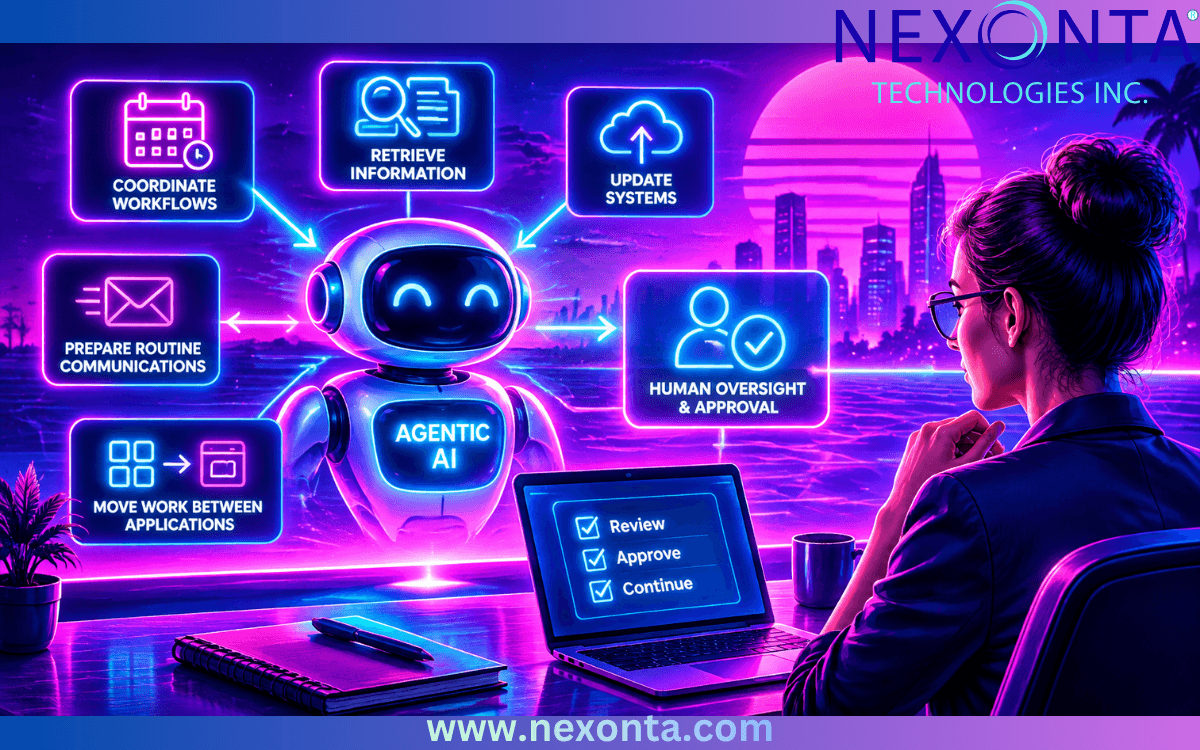
    Depending on the task, Agentic AI may help coordinate workflows, retrieve information, update systems, prepare routine communications, or move work between applications. Appropriate human oversight and approval can remain part of the process.

    The potential benefit goes beyond completing tasks faster.

    Your team could redirect its time towards higher-value activities, such as:

    • Providing better customer service.
    • Following up with sales prospects.
    • Increasing production capacity.
    • Supporting management and operations.
    • Developing new business opportunities.
    • Completing higher-value professional work.

    Think about what your business could do with an additional 1,250 hours of employee capacity each year.

    That could mean more customer conversations, faster turnaround times, or more time for work that directly supports business growth.

    The key is to identify where that time can make the greatest difference.

    Remember: Recovered employee time doesn’t automatically equal cash savings. It creates capacity that your business can use to improve productivity, increase output, reduce overtime, or potentially lower costs. The actual financial benefit depends on how the business uses that capacity.

    Category 2: Revenue Growth and Sales Opportunities

    Time is valuable. But what happens when your team has more time to focus on generating revenue?

    Consider how much time salespeople spend on administrative tasks.

    They may be updating customer relationship management (CRM) systems, researching prospects, preparing follow-up emails, scheduling meetings, or tracking opportunities.

    Those tasks matter. But they aren’t all the same as having a meaningful conversation with a potential customer.

    Agentic AI can help coordinate parts of the sales process, prepare information, support follow-ups, and move tasks forward according to defined rules and permissions.

    Your sales team can then spend more time building relationships, understanding customer needs, and pursuing qualified opportunities.

    The business value might come from:

    • More time available for prospecting.
    • Faster follow-up with potential customers.
    • Fewer missed opportunities.
    • Better visibility into the sales pipeline.
    • More consistent communication.

    Of course, more activity doesn’t guarantee more sales.

    The opportunity is to remove unnecessary friction from the sales process so your people can focus on the activities most likely to generate revenue.

    Category 3: Customer Experience and Retention

    Customers expect timely responses, clear communication, and a smooth experience.

    When internal processes are slow, customers often feel the effects.

    A request may sit in someone’s inbox. A follow-up may be missed. Information may need to be entered into multiple systems before a customer receives an answer.

    These delays can create frustration for customers and extra work for employees.

    Agentic AI can help coordinate customer-related workflows, retrieve relevant information, route requests, and support timely follow-ups.

    With the right systems and safeguards, businesses may be able to improve response times and deliver a more consistent customer experience.

    Consider the potential value of:

    • Responding to routine enquiries faster.
    • Keeping customer information organized.
    • Following up on outstanding requests.
    • Identifying issues that need human attention.
    • Helping employees access the information they need.

    Better customer experiences can support customer loyalty and retention.

    And keeping an existing customer can be just as important as winning a new one.

    The goal isn’t to remove the human element from customer service. It’s to give your people better tools and more time to provide it.

    Category 4: Operational Efficiency and Business Throughput

    Every business has processes that affect how much work it can complete.

    These might include processing orders, preparing quotes, scheduling jobs, managing documents, coordinating departments, or moving information between systems.

    When one step slows down, the entire process can suffer.

    A delayed approval might hold up a project. Missing information might require several follow-up emails. A manual handoff might leave a task waiting until someone has time to deal with it.

    These small delays can add up.

    Agentic AI can help coordinate connected tasks, identify the next step in a workflow, and move information between supported systems.

    This may help businesses reduce delays and improve the flow of work.

    Potential benefits include:

    • Faster processing times.
    • Fewer unnecessary handoffs.
    • Better coordination between departments.
    • Less time spent chasing information.
    • Greater capacity to handle existing workloads.

    For a growing business, this matters.

    You may be able to serve more customers or complete more work without increasing administrative effort at the same rate.

    That’s an important opportunity to explore before assuming that growth requires more people, more software, or more overhead.

    Category 5: Quality, Accuracy, and Risk Reduction

    Let’s talk about another hidden cost of doing business: mistakes.

    Manual processes can create opportunities for errors, inconsistent information, missed steps, and incomplete records.

    When something goes wrong, the cost often extends beyond fixing the original problem.

    Employees may need to investigate, correct information, contact customers, repeat work, or explain what happened.

    In some industries, mistakes can also create compliance, security, or financial risks.

    Agentic AI may help by following defined workflows, checking information against established rules, flagging exceptions, and maintaining records of completed actions.

    Depending on the application, this could support:

    • More consistent processes.
    • Earlier identification of missing information.
    • Fewer avoidable errors.
    • Better documentation.
    • More reliable handoffs between systems.

    Of course, AI isn’t error-free. It can introduce new risks if it’s poorly designed or implemented.

    That’s why an effective proposal should consider data quality, security, access permissions, testing, and human approval where appropriate.

    The objective is to improve the process while keeping the right controls in place.

    3. Add Up the Business Value

    Now let’s return to Company A.

    We’ve identified a process that consumes 1,250 hours each year, representing an estimated $43,750 in annual labour capacity.

    What if an improved process reduced the time required by 50%?

    The potential result would be:

    MeasureAnnual result
    Current time spent1,250 hours
    Potential time recovered625 hours
    Estimated labour capacity released$21,875

    That’s 625 hours that could potentially be redirected to other business activities.

    But let’s be clear about what the numbers mean.

    The $21,875 represents the estimated value of the labour capacity released. It isn’t automatically a $21,875 reduction in payroll or a guaranteed financial saving.

    To determine the actual return on investment, the business would also need to consider implementation costs, ongoing technology expenses, employee time required for oversight, and the measurable benefits achieved.

    For example, if the recovered hours allow employees to handle more customer requests, pursue additional sales, or increase production, the company should estimate the financial value of those improvements.

    If the process reduces overtime or eliminates an external service expense, the company may be able to identify more direct savings.

    The goal is to build a business case based on realistic assumptions, measurable outcomes, and the company’s actual priorities.

    Good business decisions start with understanding the numbers. Great ones connect those numbers to an opportunity.

    4. Why Agentic AI Should Start With the Business Problem

    It’s easy to get caught up in the excitement around AI.

    There are new tools, new platforms, and new possibilities appearing all the time.

    But choosing a technology before understanding the problem can lead to unnecessary expense and disappointing results.

    A better approach is to start with a few straightforward questions:

    • Which business processes consume the most time?
    • Where are employees doing repetitive work?
    • Which delays affect customers or revenue?
    • Where do errors create additional costs?
    • Which activities limit your ability to grow?
    • What would improving these processes be worth to your business?

    Once you understand the answers, you can assess whether Agentic AI is an appropriate solution.

    Some problems may be solved by improving an existing workflow. Others may require better integration between systems, process redesign, conventional automation, or a combination of technologies.

    Not every problem needs AI.

    The right solution is the one that delivers meaningful business value.

    At Nexonta, we believe the starting point should always be the business objective, not the technology.

    5. Your Next Business Advantage Could Already Be Inside Your Company

    Here’s something worth thinking about.

    You may not need to hire more people to make progress on every business priority.

    You may not need another software subscription.

    And you may not need to work longer hours.

    You may need to take a closer look at how work gets done today.

    The time your employees spend on repetitive tasks, the delays between departments, and the manual steps that slow down your operations could reveal opportunities to improve productivity and create more value.

    Agentic AI offers new ways to address some of these challenges. But the real opportunity comes from identifying the right processes, setting clear objectives, and measuring the results.

    Start with one process.

    Understand its current cost. Identify what could be improved. Estimate the potential value. Then determine whether the expected benefits justify the investment.

    You don’t need to transform your entire business overnight.

    You need to find the right opportunity and build from there.

    Let’s Talk About Your Bottom Line

    At Nexonta, we help businesses explore how Agentic AI and connected business systems can improve the way work gets done.

    Our approach starts with understanding your business, your existing processes, and the challenges you want to solve.

    Together, we can identify opportunities to reduce repetitive work, improve operational efficiency, support your team, and create more room for growth.

    The first step is understanding what your current processes are costing you — and what improving them could be worth.

    Ready to discover where your business could create more value?

    Contact Nexonta to discuss an Agentic AI opportunity assessment.

    Let’s look at the numbers, identify the opportunities, and build a practical plan focused on business results.

    Because when it comes to the cost of doing business, every hour counts.

    And yes, it’s all about the Benjamins!

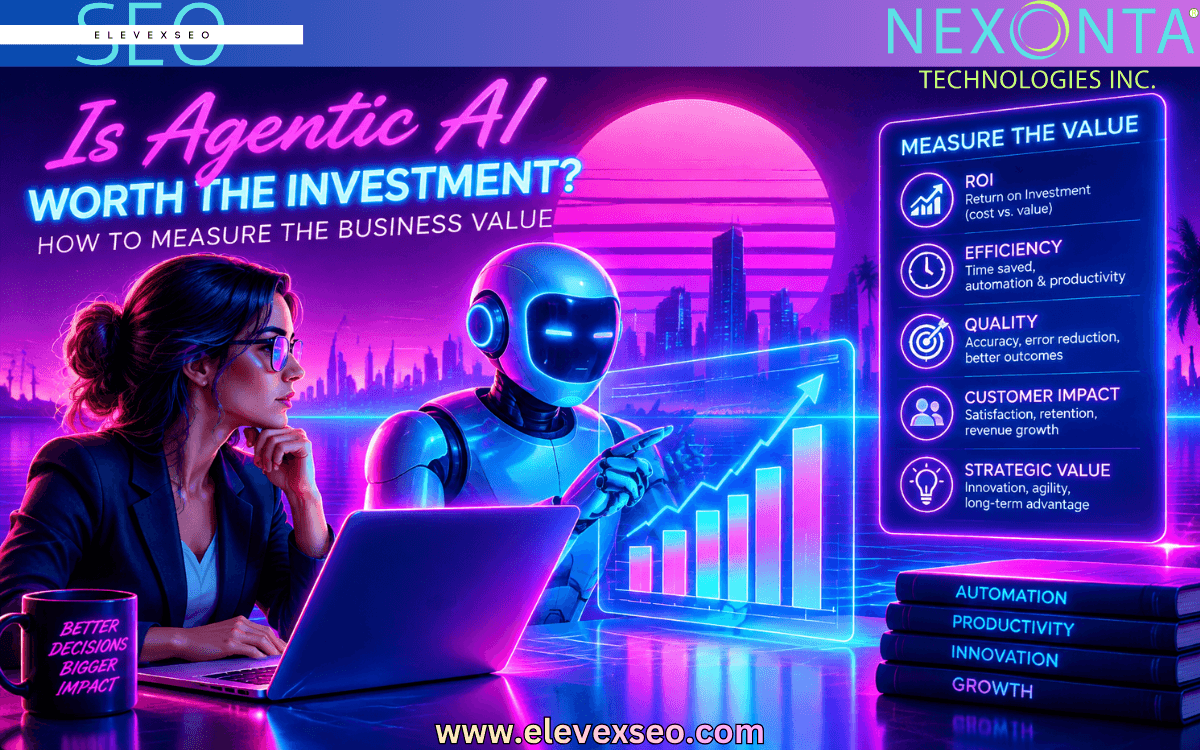
  • Is Agentic AI Worth the Investment? How to Measure the Business Value

    Is Agentic AI Worth the Investment? How to Measure the Business Value

    Agentic AI can create significant business value, but how do you know if it makes financial sense for your organization? Before investing in AI, businesses need to understand where time, money, and opportunities are being lost. The key is to measure the problem first. Once you know what a process costs your business, you can determine whether Agentic AI could deliver a worthwhile return.

    AI is attracting attention across almost every industry. But adopting new technology simply because everyone else is doing it isn’t a business strategy.

    The real question is simple: Can AI solve a meaningful business problem and deliver measurable value?

    Let’s look at how to find out.

    Why Businesses Need a Clear AI Business Case

    Every organization has processes that take more time than they should.

    Employees might spend hours entering data, following up on leads, preparing reports, updating customer records, or moving information between disconnected systems.

    Individually, these tasks may seem manageable. Over time, however, they can become expensive.

    They can also prevent your team from focusing on work that drives growth.

    This is where Agentic AI deserves a closer look.

    Unlike traditional automation, which typically follows predefined rules, Agentic AI can work toward a goal, make decisions within defined boundaries, and carry out multiple steps across connected systems. Depending on the solution, it can also identify when a task needs human review.

    For businesses, this creates new opportunities to improve workflows and reduce unnecessary manual work.

    But there is an important first step.

    Before deciding where to use AI, you need to understand what the existing problem is costing your organization.

    Step 1: Quantify the Problem

    You cannot measure the value of a solution without understanding the problem it needs to solve.

    Start by identifying a repetitive task, inefficient process, or operational bottleneck.

    Then ask five simple questions.

    1. How many times per week does this happen?

    Look at the frequency of the task.

    Does it happen 20 times a week? Hundreds of times? Thousands?

    The more frequently a task occurs, the greater the potential opportunity to improve it.

    2. How long does each occurrence take?

    Estimate the time employees spend completing the task.

    Include the full process, not just the obvious steps.

    For example, processing a customer request might involve opening an email, reviewing the information, entering data, updating a system, and sending a response.

    Each step adds time.

    3. How many employees are involved?

    A task that takes 10 minutes might not seem expensive when one employee handles it.

    But what happens when 12 employees perform the same task every day?

    Small inefficiencies can add up quickly across a team.

    4. What happens when the task isn’t completed?

    This question is especially important.

    Does a delayed task create a backlog? Does a customer wait longer for a response? Could a missed follow-up result in lost revenue?

    Sometimes the biggest cost isn’t the time spent doing the work. It’s the business opportunity lost when the work doesn’t get done.

    5. What is the approximate labour cost?

    Once you understand the frequency, time, and number of employees involved, you can estimate the labour cost of the task.

    You don’t need a complicated financial model to get started.

    A Simple Formula to Calculate Labour Cost

    Use this formula to estimate the weekly labour cost of a repetitive task:

    Weekly Labour Cost =

    (Occurrences per Week × Minutes per Occurrence × Number of Employees ÷ 60) × Hourly Labour Cost

    Let’s look at an example.

    Imagine a company has 10 employees who each spend 15 minutes a day on a repetitive administrative task. The task happens five days a week, and the estimated labour cost is $35 per hour.

    Here’s the calculation:

    • Occurrences: 5 times per week per employee
    • Time per occurrence: 15 minutes
    • Employees involved: 10
    • Hourly labour cost: $35

    The calculation looks like this:

    (5 × 15 × 10 ÷ 60) × $35 = $437.50 per week

    That works out to approximately $22,750 per year, assuming 52 weeks.

    And that’s just one task.

    Now imagine the company has five or ten similar processes across different departments.

    The potential cost becomes much more significant.

    Keep in mind that this is an estimate of labour capacity spent on the task, not necessarily cash savings the business can realize. The actual financial benefit depends on whether the time can be redirected, overtime reduced, hiring avoided, or other costs eliminated.

    You also don’t need perfect numbers at this stage.

    A reasonable estimate is often enough to decide whether a deeper assessment is worthwhile.

    The goal isn’t to build a complicated spreadsheet. It’s to identify where the business may be losing time, money, or opportunities.

    Step 2: Determine the Business Impact

    Labour cost is only one part of the picture.

    To understand whether Agentic AI makes commercial sense, you also need to consider its broader impact on the organization.

    We recommend evaluating five areas.

    1. Time: What Could Your Team Do Instead?

    Time is one of the most overlooked business costs.

    When employees spend hours on repetitive tasks, they have less time for activities that require their expertise, creativity, and judgment.

    Consider what your team could accomplish if some of that time were redirected.

    Your sales team could spend more time speaking with qualified prospects.

    Your customer service team could focus on more complex customer needs.

    Your operations team could work on improving processes instead of constantly managing administrative tasks.

    Agentic AI may help reduce the time spent on suitable repetitive workflows.

    The important question is not simply how many hours AI could save.

    It’s what your organization could achieve with those hours back.

    That is where the business value becomes more interesting.

    2. Cost: Where Can You Reduce Expenses?

    Administrative work can create costs in several ways.

    These may include:

    • Overtime required to clear backlogs.
    • Additional administrative support.
    • Repeated manual data entry.
    • Duplicated work across departments.
    • Extra costs caused by inefficient processes.

    Agentic AI may help reduce some of these expenses by streamlining workflows and coordinating tasks across connected systems.

    However, not every time saving creates an immediate reduction in payroll or operating expenses.

    The business case should distinguish between costs that can actually be removed and employee time that can be put to better use.

    For example, if AI helps your existing team handle more work without increasing overtime, that may create meaningful value even if headcount remains unchanged.

    The objective is to understand where costs can realistically be reduced or avoided.

    3. Errors and Future Hiring Requirements: Can You Scale More Efficiently?

    Manual processes can introduce errors.

    Information may be entered incorrectly. Customer records may be incomplete. Reports may need to be corrected. Employees may have to repeat work because something was missed.

    These problems consume additional time and resources.

    When evaluating Agentic AI, consider how much time your organization spends correcting errors and completing work that should have been done correctly the first time.

    Also, think about future growth.

    If your business expects to increase its workload by 30%, will you need to hire more people just to manage repetitive administrative work?

    Could better workflows help your existing team handle more of that workload?

    Agentic AI may help increase operational capacity without requiring the same proportional increase in administrative staffing.

    That doesn’t mean every organization can avoid hiring. It means you should assess whether improved processes could reduce future staffing requirements or delay the need for additional hires.

    Sometimes the value of AI isn’t replacing existing work. It’s helping your business grow without allowing administrative overhead to grow at the same rate.

    4. Revenue: Are You Losing Business Opportunities?

    This is where the commercial impact can become particularly significant.

    Consider a company that receives 100 new sales inquiries each week.

    What happens if some inquiries aren’t answered promptly? What if follow-ups are missed because the sales team is busy? What if qualified prospects lose interest while waiting for a response?

    Every missed opportunity can affect revenue.

    Agentic AI may help businesses manage parts of the sales process, such as routing inquiries, updating customer records, coordinating follow-up tasks, and supporting timely communication.

    The exact capabilities depend on the systems involved, the workflow design, and the level of human oversight.

    When assessing the potential value, ask:

    • How many leads are currently missed or left without follow-up?
    • How long does it take to respond to a new inquiry?
    • How many sales opportunities are abandoned?
    • Is the team limited by the time available to manage prospects?
    • Could a more consistent process help improve conversion rates?

    You don’t need to assume that AI will increase sales.

    Start by identifying the existing problem and estimating its impact.

    Then determine whether an AI-supported process could realistically improve the outcome.

    For example, if faster follow-up helps your team convert more qualified leads, the additional gross profit may be more meaningful than the labour savings alone.

    Just be careful not to count the same benefit twice. Revenue growth, gross profit, and labour savings should be measured separately.

    5. Customer Experience: What Does Inefficiency Cost Your Customers?

    Not every business benefit appears directly on a spreadsheet.

    Customer experience matters, too.

    Delayed responses, inconsistent communication, and gaps in service can frustrate customers and damage trust.

    A customer who has to explain the same issue multiple times may question whether your organization is paying attention.

    A prospect who waits several days for a response may choose a competitor.

    An existing customer who doesn’t receive a timely update may lose confidence in your service.

    Agentic AI can help coordinate information and routine tasks across connected systems, potentially improving response times and service continuity.

    But technology alone doesn’t guarantee a better customer experience. The workflow must be designed properly, information must be accurate, and customers must be able to reach a person when needed.

    Ask yourself:

    If we improved this process, would our customers notice the difference?

    Would they receive faster responses? More consistent updates? Fewer mistakes? Better service?

    If the answer is yes, those improvements belong in your business case.

    Even when customer experience is difficult to quantify precisely, it should still be considered when deciding whether an AI investment makes sense.

    Step 3: Determine Whether the Opportunity Justifies an AI Investment

    Once you’ve quantified the problem and assessed the business impact, you’re ready to take the next step.

    Compare the potential benefits with the total cost of implementing and operating the solution.

    This means looking beyond the initial purchase price.

    Your assessment should consider:

    • AI solution and implementation costs.
    • Integration with existing software and systems.
    • Data preparation and workflow redesign.
    • Employee training and change management.
    • Ongoing maintenance and operating costs.
    • Human oversight, security, and governance requirements.

    Then estimate the realistic financial benefit.

    For example, a solution might reduce the time spent on a repetitive process by 50%. That doesn’t automatically mean the company will save 50% of the associated labour cost.

    The actual benefit depends on what happens to the time recovered.

    Can employees use it to generate more revenue? Can the company reduce overtime? Can it avoid additional hiring? Can it eliminate an external service expense?

    These are the questions that turn an interesting AI project into a credible business case.

    A Simple Way to Think About Return on Investment

    At its simplest, the calculation is:

    Net Annual Benefit = Annual Financial Benefits − Annual AI Costs

    You can then calculate the return on investment:

    ROI = (Annual Financial Benefits − Annual AI Costs) ÷ Annual AI Costs × 100

    Let’s use a hypothetical example.

    Suppose an organization estimates that an AI-supported workflow could deliver $30,000 in annual financial benefits.

    The annualized cost of implementing and operating the solution is $12,000.

    The estimated net annual benefit would be $18,000.

    The estimated ROI would be:

    ($30,000 − $12,000) ÷ $12,000 × 100 = 150%

    These figures are illustrative, not a prediction of what an AI project will deliver.

    A proper assessment should use realistic assumptions, account for implementation costs, and avoid counting benefits that cannot be demonstrated.

    It should also consider how long it takes to recover the initial investment.

    The purpose of the calculation is to help decision-makers determine whether the opportunity deserves further investigation.

    Step 4: Start With the Right Problem, Not the Biggest AI Project

    One of the biggest mistakes organizations can make is trying to transform everything at once.

    A better approach is to identify a specific business problem, establish a baseline, and evaluate whether AI can improve the process.

    Look for tasks that are repetitive, time-consuming, measurable, and important to the business.

    Then assess whether the necessary data and systems are available, whether the workflow can be improved safely, and where human approval is required.

    A focused starting point makes it easier to measure results.

    It also helps your organization understand what works before expanding AI adoption into other areas.

    Remember, not every problem requires Agentic AI. Some may be better addressed through traditional automation, process improvements, or better software integration.

    The goal is to choose the right solution for the problem, rather than forcing AI into a process simply because the technology is available.

    The Bottom Line: Make AI Adoption a Business Decision

    Agentic AI has the potential to change how organizations manage work, coordinate systems, and use their people.

    But potential isn’t the same as proven value.

    Before investing, take the time to understand what your current processes cost, where inefficiencies are affecting performance, and which improvements would make the biggest difference.

    Start with the numbers you have.

    Estimate the time involved. Identify the people affected. Consider the financial and operational consequences. Then determine whether the opportunity justifies a closer look.

    You don’t need every answer before you begin.

    You need a clear problem, a reasonable estimate, and a practical way to measure success.

    The best AI investment isn’t necessarily the most advanced technology. It’s the solution that addresses a real business need and delivers measurable value.

    Ready to Find Out Where Agentic AI Could Create Value in Your Business?

    At ElevexSEO, we believe successful AI adoption starts with understanding your business.

    Before recommending a solution, it’s important to identify the inefficiencies, repetitive tasks, disconnected systems, and missed opportunities that may be holding your organization back.

    Our approach focuses on connecting the right people, processes, and technology to help businesses work more efficiently and make better use of their resources.

    Don’t invest in AI just because it’s the latest trend. Discover where it could make a real difference to your bottom line.

    Request an AI Business Assessment from ElevexSEO and take the first step toward identifying practical opportunities for improvement.

    Let’s start with your business challenges, quantify the opportunity, and determine whether Agentic AI makes commercial sense for your organizati

  • Before You Implement Agentic AI, Understand Your Business First

    Before You Implement Agentic AI, Understand Your Business First

    When considering Agentic AI adoption, it’s tempting to start by looking at the technology. What can it do? Which systems can it connect to? How much time can it save?

    But there’s a more important place to start: understanding the business itself.

    Agentic AI can affect workflows, software systems, employees, customer experience, data security, and the way an organization operates. Before deciding where and how to implement it, you need a clear picture of how the business works today.

    That’s where discovery comes in.

    A well-planned discovery process helps identify where Agentic AI could make a real difference, which challenges need attention, and whether implementation makes business sense.

    At Nexonta, we believe the first step toward a successful AI strategy is understanding the people, processes, and priorities behind the business.

    Let’s look at three important steps to get started.

    Step 1: Understand the Business

    Before looking at individual processes, take a step back and look at the organization as a whole.

    Every business has its own goals, challenges, departments, and ways of working. What works for one company may not work for another. That’s why Agentic AI adoption should never begin with a one-size-fits-all approach.

    During discovery, start by asking some fundamental questions:

    • What does the company do?
    • How does it generate revenue?
    • What are its primary departments?
    • Where is the company growing?
    • What are the organization’s current priorities?
    • What challenges are affecting performance or growth?

    These questions help establish the bigger picture.

    For example, a company may want to increase sales. But the real challenge might not be a lack of leads. It could be slow follow-up, inconsistent qualification, disconnected software, or delays in preparing proposals.

    Without understanding the business, it’s easy to focus on the wrong problem.

    The goal is to understand what the organization is trying to achieve and what’s getting in the way.

    Once you have that foundation, you can begin looking at how work actually gets done.

    Step 2: Map Out the Work

    Understanding the business is only the beginning. The next step is to examine its processes.

    A useful way to do this is to follow the journey of a customer or prospect. Start at the first point of contact and follow the work through to completion.

    Depending on the business, that journey might look something like this:

    1. Lead generation
    2. Initial inquiry
    3. Qualification
    4. Proposal preparation
    5. Follow-up
    6. Sales and closing
    7. Customer onboarding
    8. Service and support
    9. Billing
    10. Customer retention

    Each stage gives you an opportunity to understand what happens behind the scenes.

    For every step, ask a few practical questions:

    • What happens at this stage?
    • Who is responsible for the work?
    • Which software systems are involved?
    • How much of the process is manual?
    • Where does information come from?
    • What happens when something goes wrong?
    • What needs to happen before the next stage can begin?

    These questions help uncover how work moves through the organization.

    For instance, a sales representative might receive a new inquiry through a website. They then enter the information into a CRM, send an email, schedule a follow-up, and update another system.

    Some of those tasks may be necessary. Others might involve repetitive work that could be handled more efficiently.

    The important thing is to understand the entire process before deciding what should change.

    Why Process Mapping Matters for Agentic AI

    Agentic AI can do more than answer questions or generate content. Depending on its design, permissions, and integration with business systems, it can work toward defined goals, make decisions within established boundaries, and coordinate actions across multiple steps.

    But it needs the right processes, information, and safeguards to do that effectively.

    If a workflow is poorly understood, important steps can be missed. If information is incomplete or systems don’t communicate properly, implementation becomes more complicated.

    Mapping the work helps identify where Agentic AI might fit, which systems it may need to interact with, and where human oversight should remain part of the process.

    You can’t improve a process effectively until you understand how it works today.

    Step 3: Identify the Friction

    Now that you understand the business and have mapped its workflows, it’s time to look for friction.

    Friction is anything that slows work down, creates unnecessary effort, increases costs, or makes the customer experience more difficult than it needs to be.

    Some of these problems are obvious. Others have become so familiar that employees no longer question them.

    During discovery, ask questions such as:

    • Where does work slow down?
    • Where do employees duplicate work?
    • Where does information have to be entered more than once?
    • Where are customers left waiting?
    • Where do mistakes commonly occur?
    • When does management need to step in to keep things moving?
    • What happens outside normal business hours?
    • What work gets postponed when the team is busy?

    The answers can reveal opportunities that aren’t always visible in a high-level review of the business.

    Look Beyond the Obvious Problems

    Consider a company that receives more customer inquiries than its team can handle promptly.

    At first glance, the problem might appear to be a staffing issue.

    But discovery may reveal something different.

    Perhaps inquiries arrive through several channels. Employees manually transfer information between systems. Follow-ups depend on someone remembering to complete them. Managers have limited visibility into outstanding requests.

    The result is a process that takes more time and effort than necessary.

    Could Agentic AI help?

    Potentially, yes. Depending on the systems involved, an AI agent might help classify inquiries, gather relevant information, update connected systems, coordinate follow-up tasks, or flag requests that need human attention.

    However, the right solution depends on what the discovery process uncovers. Some problems may be better addressed by improving an existing workflow, integrating software, or clarifying responsibilities before introducing AI.

    That’s an important distinction.

    The objective isn’t to add AI to every process. It’s to identify where the right solution can create meaningful business value.

    Why Discovery Is Essential Before Agentic AI Implementation

    Agentic AI adoption can have implications well beyond a single department.

    An implementation may affect how employees work, how information moves between systems, how customers receive service, and how decisions are made. It may also introduce new requirements for data access, security, governance, and human oversight.

    That’s why discovery needs to consider the wider organization.

    Before moving forward, decision-makers should have a clear understanding of:

    • Business objectives: What should the implementation help the organization achieve?
    • Current workflows: How does work move through the business today?
    • Operational challenges: Where are the delays, duplication, and unnecessary costs?
    • Technology and data: Which systems are involved, and can they support the proposed solution?
    • People and responsibilities: Who will use the system, oversee its work, and handle exceptions?
    • Security and governance: What permissions, controls, and approval processes are required?
    • Measurable outcomes: How will the organization determine whether the implementation is successful?

    These questions help establish whether Agentic AI is a practical fit for the organization.

    They also help create a realistic implementation plan, with clear priorities and measurable goals.

    From Discovery to a Practical AI Strategy

    Once discovery is complete, the next step is to evaluate the opportunities.

    Not every process needs Agentic AI. Some tasks may benefit from traditional automation. Others may require better software integration, clearer procedures, or improved data quality.

    The key is to match the solution to the problem.

    For suitable opportunities, the organization can assess the potential benefits against the costs, complexity, risks, and resources required.

    This might include estimating time saved, reducing manual work, improving response times, supporting employees, or creating a more consistent customer experience.

    From there, the business can prioritize the strongest opportunities and determine what a sensible implementation should look like.

    Starting with a focused, measurable use case can also help the organization learn what works before expanding to other departments.

    The result is a more informed approach to Agentic AI adoption. One based on business needs rather than assumptions about what technology can do.

    The Bottom Line

    Agentic AI has the potential to change how businesses operate. But successful implementation doesn’t begin with a software demonstration or a list of AI features.

    It begins with asking the right questions.

    Understand the business. Map out the work. Identify the friction.

    These three steps provide the foundation for determining where Agentic AI could deliver meaningful value, where other improvements may be needed, and how to move forward with confidence.

    At Nexonta, we believe technology should serve a clear business purpose. The goal isn’t simply to introduce AI. It’s to help organizations work smarter, improve their operations, and make better use of their time and resources.

    Ready to Explore Agentic AI for Your Business?

    Before investing in Agentic AI, take the time to understand where your organization stands today.

    Nexonta can help you identify operational challenges, evaluate potential opportunities, and explore where Agentic AI could make a meaningful difference.

    Visit Nexonta to learn more about our approach to Agentic AI and start a conversation about your organization’s goals.

    Let’s identify the right opportunities before investing in the technology.

  • Understanding AI at the Enterprise Level: 4 Areas Every Business Should Evaluate

    Understanding AI at the Enterprise Level: 4 Areas Every Business Should Evaluate

    Understanding AI at the Enterprise Level: 4 Areas Every Business Should Evaluate

    Understanding AI at the enterprise level starts with understanding how your business actually works. Before investing in Agentic AI, organizations need to look beyond the technology and examine how people work, how processes operate, how software is used, and how information moves across the business.

    Why?

    Because the biggest opportunities for AI are not always where you expect them to be.

    A company might have excellent employees, powerful software, and well-established processes. Yet, work can still get stuck. Information can fall through the cracks. Customers can wait too long for a response. Employees can spend hours on tasks that could be handled more efficiently.

    These problems often go unnoticed because they have become part of the daily routine.

    This is where a thoughtful approach to Agentic AI can make a difference.

    What Does Understanding AI at the Enterprise Level Really Mean?

    Enterprise AI is about more than introducing a new tool or automating a single task. It means looking at how the entire organization operates and identifying where AI could help work move forward more efficiently.

    Agentic AI takes this a step further.

    Depending on the solution, AI agents can help manage multistep tasks, retrieve information, coordinate actions across connected systems, and support employees in getting work done. Appropriate human oversight remains important, especially when decisions carry financial, operational, or customer consequences.

    But before deciding what to automate, businesses need to understand how work gets done today.

    At Nexonta, we believe this conversation should begin with four interconnected areas.

    1. People: How Are Employees Spending Their Time?

    Your employees are one of your organization’s most valuable resources. The question is whether their time is being used where it creates the greatest value.

    Consider the work your team handles every day.

    How much time goes toward repetitive administrative tasks? How often do employees move information manually from one system to another? Are they waiting for information before they can move forward?

    And how much time is spent chasing updates, sending reminders, or following up on tasks that should already be progressing?

    These are important questions.

    For example, a sales representative might spend hours updating records, preparing reports, and following up on leads. An operations manager might spend much of the day tracking requests and checking the status of routine tasks.

    Both employees have important responsibilities. But some of their daily activities may be suitable for AI assistance or automation.

    Agentic AI could help gather information, prepare updates, trigger reminders, or coordinate routine tasks. This can give employees more time to focus on customers, problem-solving, and decisions that require human judgment.

    The goal is not to replace the value of your people. It is to help them spend more time doing valuable work.

    Start by asking one simple question: Where are our employees spending time on work that could be handled more efficiently?

    2. Processes: How Does Work Move Through the Organization?

    Even great employees can struggle when business processes are slow, complicated, or poorly connected.

    A task might pass through several approval stages. One department might finish its part of a project but wait days for another team to respond. A customer request might sit untouched because nobody is sure who owns the next step.

    Over time, these delays become normal.

    But they still cost the business time and money.

    To understand where Agentic AI might help, examine how work moves from beginning to end.

    Ask yourself:

    • Where do tasks regularly get delayed?
    • Are there unnecessary approval steps?
    • Where do handoffs between teams break down?
    • Which processes depend too heavily on one employee?
    • Where are the biggest bottlenecks occurring?

    These questions help reveal whether a problem comes from manual work, unclear responsibilities, disconnected systems, or an inefficient process.

    That distinction matters.

    Automating a poor process does not automatically make it better. In some cases, it simply allows an inefficient process to continue faster.

    The first step is to understand the process and improve it where necessary. Then, consider where AI agents could help coordinate tasks, retrieve information, or move work to the next stage.

    The result can be a smoother workflow with fewer delays and less unnecessary effort.

    3. Software: Are Your Business Systems Working Together?

    Most organizations rely on several software applications to run their business.

    These might include a CRM, accounting software, marketing platforms, project management tools, customer service systems, and internal databases.

    Each system may serve a useful purpose. The challenge is how well they work together.

    Is the same information being entered more than once? Do employees have to switch between several applications to complete one task? Can different departments access the information they need?

    And are you fully using the capabilities of the software you already own?

    These questions are especially important when evaluating Agentic AI.

    An organization might not need another standalone application. It may need a better way to connect existing systems and make information easier to access.

    Where suitable integrations and permissions exist, AI agents can help retrieve information from connected tools, update records, support workflows, and reduce repetitive data entry.

    For example, imagine a new sales lead arrives through your website.

    Instead of requiring an employee to manually transfer the details, update a CRM, notify a salesperson, and create a follow-up reminder, a connected workflow could coordinate several of those steps automatically.

    The exact capabilities depend on the systems involved, the quality of the available data, and the permissions granted.

    The important point is this: before adding more technology, understand how well your current technology is being used.

    You may discover that the opportunity lies in better integration rather than another software purchase.

    4. Communication: Is Information Getting Where It Needs to Go?

    Communication connects people, processes, and software.

    When information moves slowly or gets lost, the effects can spread across the entire organization.

    Customers may wait too long for answers. Sales leads may not receive consistent follow-up. Employees may spend hours coordinating meetings, requesting updates, and tracking down information.

    Important messages can also get buried in email threads, chat platforms, and busy inboxes.

    Sound familiar?

    These challenges are worth examining because communication problems often create hidden costs.

    Ask yourself:

    • How quickly are customers receiving responses?
    • How effectively do teams communicate internally?
    • Are sales leads being followed up consistently?
    • Are important messages or requests getting lost?
    • How much time is spent coordinating meetings, updates, and follow-ups?

    Agentic AI may help address some of these issues by organizing information, preparing responses, routing requests, summarizing conversations, and triggering follow-up actions.

    For instance, an AI-supported workflow could identify a new inquiry, gather relevant customer information, notify the appropriate team member, and schedule a follow-up task.

    Human review can remain part of the process wherever it is needed.

    The objective is not to automate every conversation. It is to make sure important information reaches the right person at the right time, and that opportunities do not disappear simply because someone was too busy to follow up.

    Why These Four Areas Need to Work Together

    People, processes, software, and communication are closely connected.

    A delay that appears to be a people problem might actually be caused by disconnected software. A communication breakdown might be the result of an unclear process. A slow process might exist because employees are manually transferring information between systems.

    Looking at each area in isolation can cause businesses to miss the bigger picture.

    That is why an enterprise-level AI assessment should consider the entire workflow.

    The objective is to identify where the organization is losing time, money, information, or opportunities because work is still being performed manually or across disconnected systems.

    Once those gaps are understood, businesses can make more informed decisions about where Agentic AI can deliver practical value.

    This also helps avoid a common mistake: adopting AI simply because it is available.

    The right starting point is not the technology. It is the business problem you want to solve.

    From AI Possibilities to Practical Business Results

    Every organization is different.

    A solution that works well for one company may not be appropriate for another. The right approach depends on the organization’s goals, existing systems, workflows, data, security requirements, and resources.

    That is why it helps to start with a clear assessment.

    Identify the repetitive tasks that consume employee time. Map the processes that create delays. Review the software systems your business relies on. Examine how information moves between people and departments.

    Then prioritize the opportunities.

    Look for areas where improving a workflow could reduce manual effort, shorten response times, improve consistency, or help employees focus on higher-value work.

    Start with a manageable use case. Establish a baseline. Define what success looks like. Measure the results before expanding the solution.

    This practical approach helps turn AI from an interesting concept into a business initiative with clear objectives and measurable outcomes.

    It also gives employees a better understanding of how AI will support their work, rather than simply introducing another technology they are expected to learn.

    Is Your Organization Ready to Explore Agentic AI?

    Understanding AI at the enterprise level begins with asking better questions about your business.

    Where is your team losing time? Which processes create unnecessary delays? Are your systems working together? Is important information reaching the right people?

    The answers can reveal opportunities that are easy to overlook when everyone is focused on keeping up with daily demands.

    At Nexonta, we believe the most effective Agentic AI strategies start with understanding the organization first. Technology should support your business goals, solve real problems, and create meaningful improvements in how work gets done.

    You do not need to automate everything at once. You need to understand where the right solution can make a difference.

    Ready to Explore Agentic AI for Your Business?

    Let’s start with your business, not the technology.

    Nexonta can help you explore where Agentic AI may fit into your existing operations, identify opportunities to improve workflows, and determine which practical next steps make sense for your organization.

    Contact Nexonta today to arrange a conversation about your Agentic AI opportunities.

    Your next competitive advantage may begin with improving the way your business already works.

☎ ✉
f 𝕏