Tag: business ai

  • Agentic AI and Humans: How They Work Together in the Enterprise

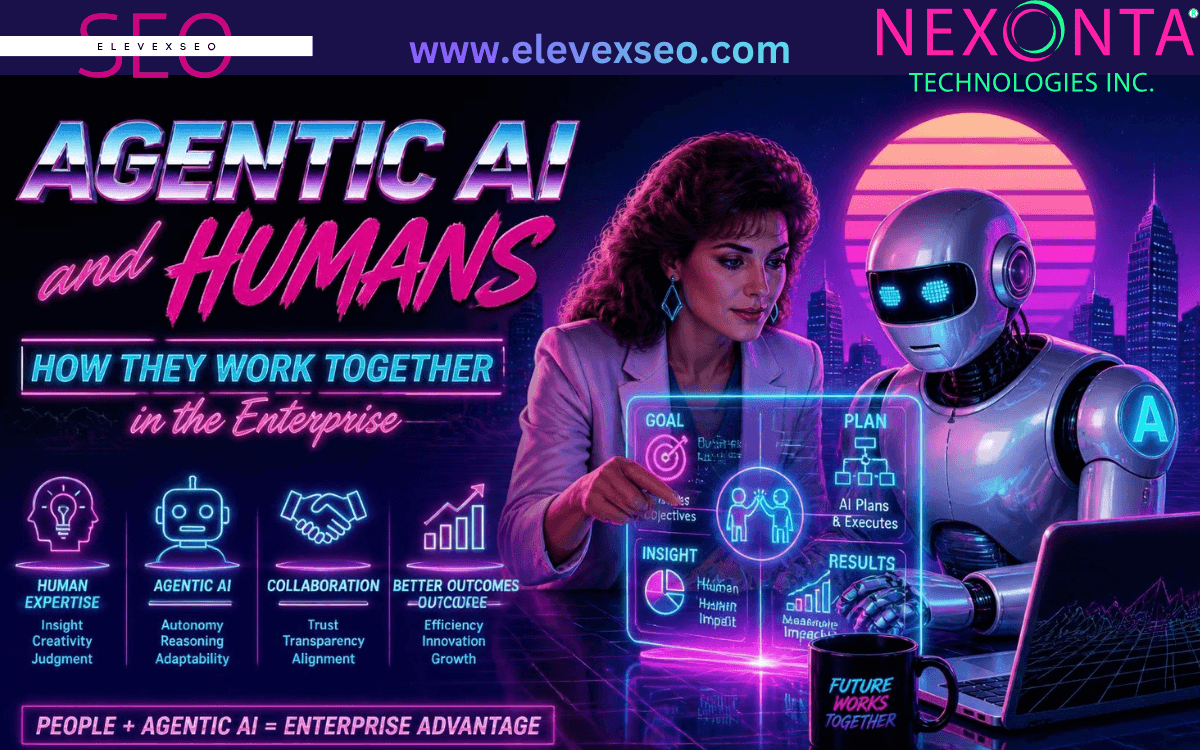
    Agentic AI and Humans: How They Work Together in the Enterprise

    Lately, we have been talking a lot about Agentic AI. There is good reason for that. The technology is moving quickly, and we are already hearing about some exciting developments expected in 2027.

    But as we have become more involved in the Agentic AI conversation, we have noticed something else.

    There is still a lot of confusion about how Agentic AI and humans actually work together.

    Some people hear “AI agents” and immediately think about automation replacing people. Others imagine a business where AI simply takes over tasks and employees step aside.

    That is not the way we see it.

    At the enterprise level, Agentic AI is designed to create a working relationship between humans and AI.

    And that distinction matters.

    Agentic AI Is Not Just Another Automation Tool

    Traditional automation is generally designed to follow a specific set of instructions.

    If this happens, do that.

    That can be incredibly useful. But businesses are rarely that simple.

    Workflows change. Customers change. Priorities change. Problems appear unexpectedly. Employees have to make decisions and move information from one system to another.

    This is where Agentic AI starts to become interesting.

    Rather than simply completing one isolated task, an AI agent can be designed to work across a broader workflow. It can help interpret information, coordinate tasks, identify next steps and support people as work moves through a process.

    The human is still part of that process.

    The technology becomes another layer of intelligence within the workflow.

    The Human and AI Relationship

    Think about a business owner who spends hours every week dealing with repetitive administrative work.

    There may be emails to review, information to organize, reports to prepare, customer inquiries to respond to and internal communications to coordinate.

    None of these tasks may seem overwhelming on their own.

    Together, however, they can consume a significant amount of time.

    This is where the relationship between humans and Agentic AI can become valuable.

    The AI can help manage parts of the workflow while people remain responsible for decisions that require judgment, context, relationships and accountability.

    In simple terms:

    Humans provide direction, judgment and oversight.

    AI can help manage information, processes and repetitive work.

    That creates a very different conversation from simply asking whether AI will replace employees.

    The more useful question may be:

    Where can humans and AI work together to make the business operate better?

    Where Agentic AI Can Help Businesses

    Every organization has bottlenecks.

    Sometimes they are obvious.

    Sometimes they are hidden inside everyday work.

    A business might be dealing with:

    • Repetitive workflows
    • Operational bottlenecks
    • Excessive administrative workloads
    • Missed opportunities
    • Inefficient communication
    • Information scattered across different systems
    • Slow follow-up
    • Growing overhead
    • Employees spending valuable time on low-value tasks

    These problems can create a domino effect.

    A small delay in one part of the business can create another delay somewhere else.

    Eventually, people spend more time managing the process than actually moving the business forward.

    Agentic AI can potentially help connect these pieces.

    Instead of looking at AI as a collection of individual tools, businesses can begin looking at it as an intelligent workflow layer.

    That is an important shift.

    From Individual AI Tools to an Intelligent Workflow

    Many businesses already use AI.

    They may use ChatGPT to create content. Another tool might summarize meetings. Another might help with customer service. Someone else might use AI to analyze data.

    Each tool can be useful.

    But what happens when these tools operate as disconnected pieces?

    People still have to move information between them.

    That creates another problem.

    The opportunity with Agentic AI is to think beyond individual applications and start looking at the entire workflow.

    What happens when a customer inquiry comes in?

    Where does the information go?

    Who reviews it?

    What happens next?

    What information needs to be collected?

    Who needs to be notified?

    What happens if the customer does not respond?

    Where is the information stored?

    These are workflow questions.

    Agentic AI can potentially help coordinate parts of that process while keeping humans involved where human judgment is important.

    What About the Cost?

    This is where every business owner should slow down and look at the numbers.

    Adopting AI is not automatically a cost saving.

    There can be software costs, implementation costs, integration costs, training costs and ongoing management costs.

    There can also be a learning curve.

    So the question should not simply be:

    “How much does AI cost?”

    A better question is:

    “What does this workflow currently cost the business?”

    That means looking at the time employees spend on repetitive work, the cost of delays, missed opportunities, unnecessary administrative work and the operational cost of keeping inefficient processes in place.

    A simple cost-benefit assessment might look at four areas:

    1. Time

    How many hours are currently spent on repetitive or administrative tasks?

    2. Labour

    Could employees spend more of their working time on higher-value activities?

    3. Revenue Opportunities

    Are leads, customers or opportunities being missed because follow-up is slow or inconsistent?

    4. Operational Efficiency

    Could better coordination reduce delays, duplication or unnecessary overhead?

    This does not mean every business will see the same financial return.

    The economics will depend on the business, the workflow, the technology being implemented and how effectively it is adopted.

    But the exercise itself is important.

    Before investing in AI, understand the problem you are trying to solve.

    The Competitive Advantage May Be the Workflow

    There is another part of this conversation that businesses should consider.

    AI tools are becoming increasingly accessible.

    That means simply having access to AI may not be much of a differentiator.

    The bigger opportunity may come from how a business uses AI.

    Two companies could have access to similar AI technology.

    One might use it to generate occasional content.

    The other might integrate AI into customer communication, internal processes, research, reporting and operational workflows.

    The technology may be similar.

    The workflows are not.

    That difference could become increasingly important as businesses continue adopting AI.

    Competitive advantage may come less from owning a particular AI tool and more from building smarter ways of working.

    Humans Still Matter

    This is perhaps the most important part of the conversation.

    Agentic AI does not eliminate the need for people.

    Businesses still need people to understand customers, make strategic decisions, build relationships, handle complex situations and take responsibility for important outcomes.

    AI can process information quickly.

    That does not mean it understands the business in the same way the people inside that business do.

    This is why human oversight remains important.

    The goal is not to remove humans from the workflow.

    The goal is to give people better tools.

    Imagine an employee spending less time searching through information and more time talking to a customer.

    Imagine a business owner spending less time chasing administrative tasks and more time working on growth.

    Imagine a sales team receiving better-organized information before making a customer call.

    That is where the human-AI relationship becomes much more interesting.

    Start With the Bottleneck, Not the Technology

    One of the biggest mistakes businesses can make is starting with the technology.

    They find an exciting AI platform and then try to figure out where to use it.

    We believe the conversation should start somewhere else.

    Start with the bottleneck.

    Where is the business losing time?

    Where are employees frustrated?

    Where are customers waiting?

    Where is information getting lost?

    Where is communication breaking down?

    Where is overhead increasing?

    Where are opportunities being missed?

    Once those questions are answered, it becomes much easier to determine whether Agentic AI has a meaningful role to play.

    Technology should solve a business problem.

    It should not become another problem for the business to manage.

    Looking Ahead to 2027

    The next stage of AI is likely to be less about simply asking an AI chatbot a question and more about how AI can participate in the workflows that businesses already depend on.

    That makes the conversation around Agentic AI particularly interesting.

    The businesses exploring this technology today are not simply asking, “What can AI do?”

    They are beginning to ask better questions.

    Where can AI help us work more efficiently?

    Where can humans add the most value?

    Which workflows should be redesigned?

    What should remain human-led?

    How can we build a business that uses AI without losing the human element?

    Those questions are likely to become even more important as Agentic AI continues to develop.

    The Future Is the Relationship

    Agentic AI does not have to be a story about humans versus machines.

    It can be a story about better ways of working.

    The opportunity is to combine human experience, judgment and creativity with AI’s ability to process information, coordinate workflows and handle repetitive work.

    For business owners, that could mean fewer bottlenecks, less administrative pressure and more time focused on the work that actually moves the business forward.

    But the first step is not buying an AI system.

    It is understanding your business.

    Find the bottlenecks.

    Understand the workflows.

    Calculate where time and resources are being spent.

    Then ask where Agentic AI could create meaningful value.

    That is where the human-AI relationship really begins.

    Ready to Look at Your AI Opportunities?

    If your business is dealing with repetitive workflows, growing administrative workloads, communication challenges or operational bottlenecks, it may be time to look at where AI can actually fit into the business.

    Start with the workflow. Find the bottleneck. Then explore what Agentic AI could do.

    Explore Your AI Opportunities

    The future of business AI is not simply about using more technology.

    It is about using technology more intelligently — and keeping people at the centre of the process.

  • The Future Belongs to Agentic AI: Why Businesses Should Start Adopting It Now

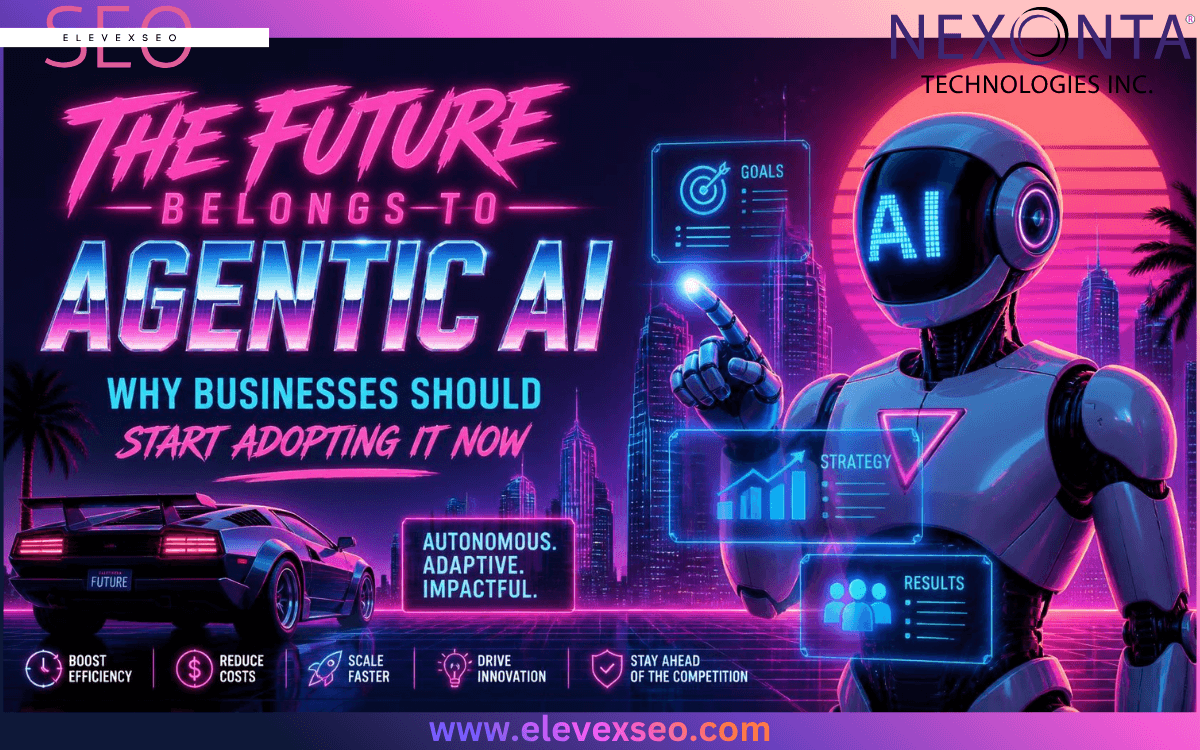
    The Future Belongs to Agentic AI: Why Businesses Should Start Adopting It Now

    Agentic AI is changing the way businesses use artificial intelligence, and companies that start exploring it early will have an opportunity to build a real advantage over time. Until recently, most businesses were just beginning to experiment with AI. Tools like ChatGPT and Claude have made large language models accessible to almost everyone. They are powerful tools, and they have changed the way people think about AI.

    But something much bigger is happening now.

    AI is moving beyond simply answering questions, writing content, or analyzing information.

    We are entering the age of Agentic AI.

    From Asking AI Questions to Getting Things Done

    There is an important difference between using an AI chatbot and using an AI agent.

    You can ask ChatGPT to write an email. You can ask Claude to summarize a document. You can ask an AI model to analyze information or help you brainstorm an idea.

    All of that is useful.

    But what if AI could take the next step?

    What if you could tell an AI system:

    “Here is a problem in my business. Find a way to solve it.”

    That is where Agentic AI becomes particularly interesting.

    Instead of simply responding to a prompt, an AI agent can be designed to work toward a specific goal. Depending on the system, it can analyze information, make decisions, use different software tools, complete tasks, check its work, and move through multiple steps to accomplish an objective.

    The shift is significant.

    We are moving from AI that answers questions to AI that can help perform work.

    ChatGPT and Claude Are Only the Beginning

    For many companies, the introduction to AI has been through tools such as ChatGPT and Claude.

    That makes perfect sense.

    They are easy to access and can be incredibly useful for everyday business tasks.

    Companies are using large language models to help with writing, research, customer communications, brainstorming, coding, data analysis, marketing and much more.

    But these are only part of the larger AI landscape.

    There is a rapidly expanding ecosystem of AI models, tools, platforms and specialized systems. Different models can be better suited to different types of tasks.

    One model might be useful for writing.

    Another might be better suited to coding.

    Another could specialize in analyzing images, processing data, searching information or handling a specific business workflow.

    The opportunity comes from connecting these capabilities together.

    That is one of the reasons Agentic AI is so exciting.

    What Is Agentic AI?

    In simple terms, Agentic AI refers to AI systems designed to pursue goals and carry out a series of actions with a greater degree of autonomy.

    Think of the difference between an assistant who waits for instructions and one who understands the objective and works through the steps needed to accomplish it.

    For example, imagine a company wants to improve its lead-generation process.

    A traditional AI chatbot might help write a marketing email.

    An Agentic AI system could potentially be designed to support a much larger workflow.

    It might:

    * Research a target market
    * Identify potential prospects
    * Analyze available information
    * Organize the data
    * Help personalize outreach
    * Track responses
    * Identify follow-up opportunities
    * Generate reports
    * Recommend the next action

    The exact capabilities depend on the technology, integrations, permissions and human oversight involved.

    But the underlying idea is powerful.

    Instead of using AI for one task at a time, businesses can begin thinking about AI in terms of complete workflows and business outcomes.

    Businesses Can Start With the Problem

    This may be one of the biggest changes Agentic AI brings to the table.

    You don’t necessarily have to start by asking:

    “Which AI tool should we buy?”

    You can start with a much better question:

    “What problem are we trying to solve?”

    Maybe your sales team spends hours researching prospects.

    Maybe customer information is scattered across several systems.

    Maybe your employees spend too much time moving information from one platform to another.

    Maybe reporting takes days.

    Maybe your marketing team is producing content but struggling to maintain a consistent process.

    Maybe there is a repetitive workflow that nobody enjoys doing but someone has to do it.

    These are business problems first.

    The technology comes second.

    An experienced Agentic AI agency can look at the problem, examine the existing workflow and determine where AI agents, automation, data and other technologies may fit.

    That changes the conversation completely.

    From Buying Software to Building Solutions

    For years, businesses have largely approached technology by purchasing software.

    Need accounting? Buy accounting software.

    Need customer relationship management? Buy a CRM.

    Need email marketing? Buy an email platform.

    Need project management? Buy project management software.

    Those tools remain important.

    But Agentic AI introduces another possibility.

    Instead of forcing every business problem into an existing software package, companies can increasingly explore custom AI-powered solutions built around the way their business actually operates.

    That does not mean every business needs a custom AI agent.

    It doesn’t.

    Sometimes an existing tool is exactly what a company needs.

    But when a business has a complex workflow or a problem that doesn’t fit neatly into an off-the-shelf solution, Agentic AI can open up new possibilities.

    The Rise of the Agentic AI Agency

    This is where the role of an Agentic AI agency becomes particularly interesting.

    Most business owners don’t want to become AI engineers.

    They don’t want to spend months learning how different AI models work.

    They want their business problems solved.

    An Agentic AI agency can help bridge that gap.

    The conversation can begin with the business rather than the technology.

    You explain what is happening.

    You explain what isn’t working.

    You explain where your team is spending time.

    You explain what you would like to accomplish.

    From there, an AI-focused team can investigate the available technologies and determine what type of solution could potentially address the problem.

    That might involve one AI model.

    It might involve several models.

    It might involve AI agents, automation, APIs, databases, existing business software and human oversight working together.

    The goal isn’t to use AI simply because AI is fashionable.

    The goal is to use the right technology to solve the right business problem.

    Early Adoption Doesn’t Mean Rushing In

    There is an important distinction between being an early adopter and jumping into every new AI tool that appears.

    Businesses don’t need to chase every shiny new technology.

    In fact, that can create more problems than it solves.

    Early adoption should be thoughtful.

    Start with a real business need.

    Look at the process.

    Understand the risks.

    Determine where human oversight is required.

    Protect sensitive information.

    Measure the results.

    Then improve the system over time.

    The businesses that learn how to work effectively with AI may be better positioned to adapt as the technology continues to develop.

    And that learning process can start today.

    Agentic AI Could Change the Way We Think About Business

    For decades, businesses have looked for ways to make processes faster and more efficient.

    Computers changed how information was processed.

    The internet changed how businesses communicated and sold products.

    Cloud computing changed how companies accessed software and data.

    Automation changed how repetitive tasks were handled.

    AI is now pushing that evolution further.

    Agentic AI could change how businesses think about work itself.

    Instead of asking:

    “How can we make this task faster?”

    businesses may increasingly ask:

    “Can this entire process be redesigned?”

    That is a much bigger question.

    And it opens the door to some very interesting possibilities.

    The Businesses That Start Learning Now Will Be Better Prepared for What Comes Next

    Nobody knows exactly what the AI landscape will look like five or ten years from now.

    The technology is moving too quickly.

    New models are appearing.

    New tools are being developed.

    New business applications are emerging.

    What we can see already is that AI is becoming more capable and more integrated into everyday business operations.

    That makes now a good time for businesses to learn.

    Not necessarily to automate everything.

    Not necessarily to replace people.

    But to understand what is possible.

    Start by identifying the repetitive, expensive or frustrating problems inside your business.

    Then ask a simple question:

    “Could Agentic AI help us solve this?”

    You might be surprised by the answer.

    The Future of AI Is About More Than Chatbots

    ChatGPT and Claude helped introduce millions of people to the possibilities of generative AI.

    But they are not the entire story.

    The next phase is about connecting AI capabilities with tools, information, workflows and business objectives.

    That is where Agentic AI enters the picture.

    The future may not belong to businesses that simply use the most AI tools.

    It may belong to businesses that learn how to use AI strategically to solve real problems.

    And the companies that begin exploring those possibilities now will have more experience to build on as the technology continues to evolve.

    Ready to Explore What Agentic AI Could Do for Your Business?

    You don’t need to know which AI model to use.

    You don’t need to understand every new AI platform.

    Start with your business problem.

    Tell us what isn’t working, what is taking too much time, or what you wish your business could do better.

    Our team can help explore where Agentic AI may fit and what a practical AI-powered solution could look like for your organization.

    The future of AI isn’t just about asking better questions. It’s about creating better solutions.

    Ready to see what Agentic AI could do for your business? Let’s start with the problem you’re trying to solve.

  • AI and the Future of Business: Why Humans Still Matter

    AI and the Future of Business: Why Humans Still Matter

    AI and the future of business are closely connected. But if there is one thing we have learned over the past few years, it is that building the future is not as simple as plugging AI into every part of a business and expecting everything to run better.

    In some ways, writing a book is a lot like restoring a vintage car.

    You find an old car with incredible potential. You can see what it could become. But then the real work begins.

    You start chasing down parts.

    Some parts are easy to find. Others take weeks, months, or even years. Some have to be restored. Others need to be replaced completely. And sometimes, the part you thought would solve everything turns out not to fit at all.

    Writing a book can feel exactly the same.

    You have an idea. You have a vision. You know there is something worth building.

    But getting from the original idea to the finished product takes time, patience, research, creativity, and a lot of pieces coming together.

    And that is not all that different from what we have seen happening with artificial intelligence.

    The AI Rush

    Over the past several years, we have watched companies of all sizes rush to bring AI into their everyday operations.

    The goal made perfect sense.

    Work faster. Reduce costs. Automate repetitive tasks. Improve efficiency. Make better decisions.

    Billions of dollars have been invested into AI systems, software, infrastructure, and custom solutions designed to help businesses operate more efficiently.

    And there is no question that AI can be incredibly powerful.

    But then something interesting started to happen.

    Some companies discovered that building a completely customized AI operating system for their organization was not the simple solution they expected.

    The technology was moving too quickly.

    The costs could be enormous.

    And in some cases, the systems being built did not deliver the return companies had hoped for.

    That does not mean AI failed.

    Far from it.

    It may simply mean we are still in the early stages of understanding what AI is really going to become.

    We’ve Seen This Before

    If that sounds familiar, there is a reason.

    Think back to the late 1990s and early 2000s.

    The internet was changing everything.

    Companies knew it was going to be important. Investors knew it was going to be important. Consumers were beginning to understand that the internet was going to change the way we lived and worked.

    The excitement was enormous.

    So was the investment.

    Then came the dot-com crash.

    Many companies disappeared. Billions of dollars were lost. Businesses that looked unstoppable suddenly weren’t.

    It would have been easy to look at the situation and conclude that the internet had been overhyped.

    But that wasn’t what happened.

    The internet kept growing.

    The technology improved. Businesses learned how to use it. Consumers became more comfortable with it.

    And eventually, the internet became something we could hardly imagine living without.

    AI may follow a similar path.

    AI Isn’t Going Away

    The current AI boom may eventually go through a period of correction.

    Some companies will fail.

    Some investments will not work out.

    Some AI projects will be abandoned.

    And some of the ideas that seem revolutionary today may not be around five years from now.

    That is part of how technology evolves.

    But that does not mean AI is going away.

    Over the next five to seven years, we may see a significant transition in the way businesses use AI.

    Instead of trying to make AI responsible for everything, companies may become much more selective.

    They will figure out where AI actually creates value.

    They will use it where it makes sense.

    And they will leave the things that require human judgment, creativity, relationships, and emotional intelligence to people.

    That could ultimately be a much better model.

    The Human Element Cannot Be Automated

    This is where things get really interesting.

    AI can help you write.

    It can help you research.

    It can analyze enormous amounts of information in seconds.

    It can identify patterns humans might miss.

    It can automate repetitive work.

    But AI does not replace the person behind the idea.

    Think about writing a book.

    AI can help you organize your thoughts. It can help you research a topic. It can help you rewrite a paragraph or find a better way to explain something.

    But it doesn’t have your memories.

    It doesn’t have the experiences that shaped you.

    It doesn’t know why a particular story matters to you.

    It doesn’t have the personal connection behind the words.

    Those things come from you.

    And that is what makes the finished work yours.

    Technology Is the Tool. Humans Are the Builders.

    This may be one of the most important lessons we can take from the current AI revolution.

    We should not be asking whether AI can replace humans.

    We should be asking how humans can use AI to become better at what they already do.

    That is a very different question.

    A carpenter doesn’t become less important because power tools exist.

    A photographer doesn’t become less creative because editing software exists.

    And a writer doesn’t become less valuable because AI can help with words.

    The tools have changed.

    The human still creates the vision.

    Back to That Vintage Car

    Let’s go back to the vintage car for a moment.

    Imagine finding a classic car sitting in a garage.

    The engine needs work.

    The paint is faded.

    The interior needs to be rebuilt.

    Some parts are missing.

    You could walk away because the project looks too difficult.

    Or you could start restoring it one piece at a time.

    That is what building something meaningful often looks like.

    Whether you’re writing a book, building a business, developing a new product, or figuring out how to use AI, there will always be pieces that don’t fit perfectly the first time.

    You adjust.

    You learn.

    You find another part.

    You try again.

    Eventually, something starts to take shape.

    The People Who Stick With It Will Benefit

    The next five to seven years could be an important period for AI.

    There will likely be plenty of hype.

    There will also be failures.

    There will be companies that spend too much, build the wrong systems, or move too quickly.

    But there will also be companies that learn.

    They will experiment.

    They will find practical ways to use AI.

    They will keep the human element at the centre of their business.

    And over time, those companies may be the ones that benefit most from the technology.

    We saw something similar happen with the internet.

    The companies that survived the early chaos learned how to use the technology rather than simply chase the hype.

    AI may require the same kind of patience.

    We Don’t Need to Fear the Future

    Technology has always changed the way we work.

    The printing press changed publishing.

    The automobile changed transportation.

    The telephone changed communication.

    The internet changed almost everything.

    AI will change things too.

    The question isn’t whether change is coming.

    It’s how we choose to respond to it.

    We can chase every new trend.

    Or we can slow down, learn, experiment, and figure out where these tools genuinely make our lives and businesses better.

    That may be the smarter approach.

    Because the future of AI isn’t really about humans versus machines.

    It’s about what happens when humans and technology work together.

    And just like restoring a vintage car, the finished product may take longer than we expected.

    But that doesn’t mean the project isn’t worth doing.

    Sometimes the best things are built one part at a time.

    Ready to Explore What AI Can Actually Do for Your Business?

    Don’t get caught up in the hype.

    Start by looking at where AI can genuinely help your business save time, improve efficiency, and make better use of the resources you already have.

    Start exploring practical AI solutions today and discover where AI can work alongside your team — not replace it.

  • Embracing the Future: Insights from the 2024 Collision Tech Conference in Toronto

    Embracing the Future: Insights from the 2024 Collision Tech Conference in Toronto

    I recently had the pleasure of attending the 2024 Collision Tech Conference in Toronto, a gathering that brought together some of the brightest minds and innovative companies in the tech industry. Amidst the buzz of cutting-edge technology and groundbreaking ideas, one theme stood out prominently: the future belongs to AI.

    The Growing Presence of AI

    As I walked through the bustling halls of the conference, it was impossible to ignore the pervasive presence of artificial intelligence. From startups to established tech giants, everyone was showcasing AI-driven solutions designed to transform various industries. The excitement around AI was palpable, reflecting its growing influence in our lives and its potential to revolutionize the way we interact with technology.

    Key Highlights and Takeaways

    1. AI in Healthcare

    One of the most compelling discussions I attended was on the application of AI in healthcare. Experts highlighted how AI is being used to enhance diagnostic accuracy, personalize treatment plans, and even predict patient outcomes. Companies demonstrated AI-powered tools that can analyze medical images with remarkable precision, potentially catching diseases like cancer at earlier, more treatable stages. The promise of AI in healthcare is not just in efficiency but in significantly improving patient care and outcomes.

    2. AI and Climate Change

    Another critical area where AI is making strides is in addressing climate change. Panels discussed innovative AI algorithms that are optimizing energy usage, predicting environmental changes, and aiding in the development of sustainable technologies. AI’s ability to process vast amounts of data quickly makes it an invaluable tool in our fight against climate change, enabling more effective monitoring and response strategies.

    3. Ethical AI and Governance

    The ethical implications of AI were also a hot topic at the conference. As AI systems become more integrated into our daily lives, ensuring they operate fairly and transparently is crucial. Discussions centered around developing frameworks for ethical AI, addressing biases in algorithms, and creating policies that protect user privacy and data security. It was heartening to see a strong commitment to building AI systems that not only enhance our capabilities but also uphold our values.

    4. AI in Business and Industry

    From automating routine tasks to providing deep insights through data analysis, AI is reshaping the business landscape. At the conference, numerous sessions were dedicated to showcasing how AI can drive efficiency, innovation, and growth across various industries. Real-world case studies demonstrated AI’s potential to streamline supply chains, enhance customer experiences, and foster new business models.

    The Future of AI: Opportunities and Challenges

    The Collision Tech Conference painted a vivid picture of a future where AI plays a central role in advancing technology and society. However, it also underscored the challenges we must address to harness AI’s full potential. These include ensuring equitable access to AI technologies, addressing job displacement concerns, and maintaining robust ethical standards.

    Personal Reflections

    Attending the 2024 Collision Tech Conference was an eye-opening experience. It reinforced my belief that AI is not just a buzzword but a transformative force that will shape our future in profound ways. The innovations on display and the passionate discussions about AI’s potential left me optimistic about the road ahead. However, it also reminded me of our collective responsibility to guide AI development thoughtfully and ethically.

    As we move forward, it’s clear that AI will continue to be a driving force in technology and society. The insights gained from the Collision Tech Conference have inspired me to stay engaged with this dynamic field and contribute to the conversation about how we can leverage AI for the greater good.

    The 2024 Collision Tech Conference in Toronto was a testament to the incredible advancements in AI and its potential to transform our world. By embracing AI and addressing its challenges head-on, we can look forward to a future that is not only more technologically advanced but also more equitable and sustainable.

☎ ✉
f 𝕏