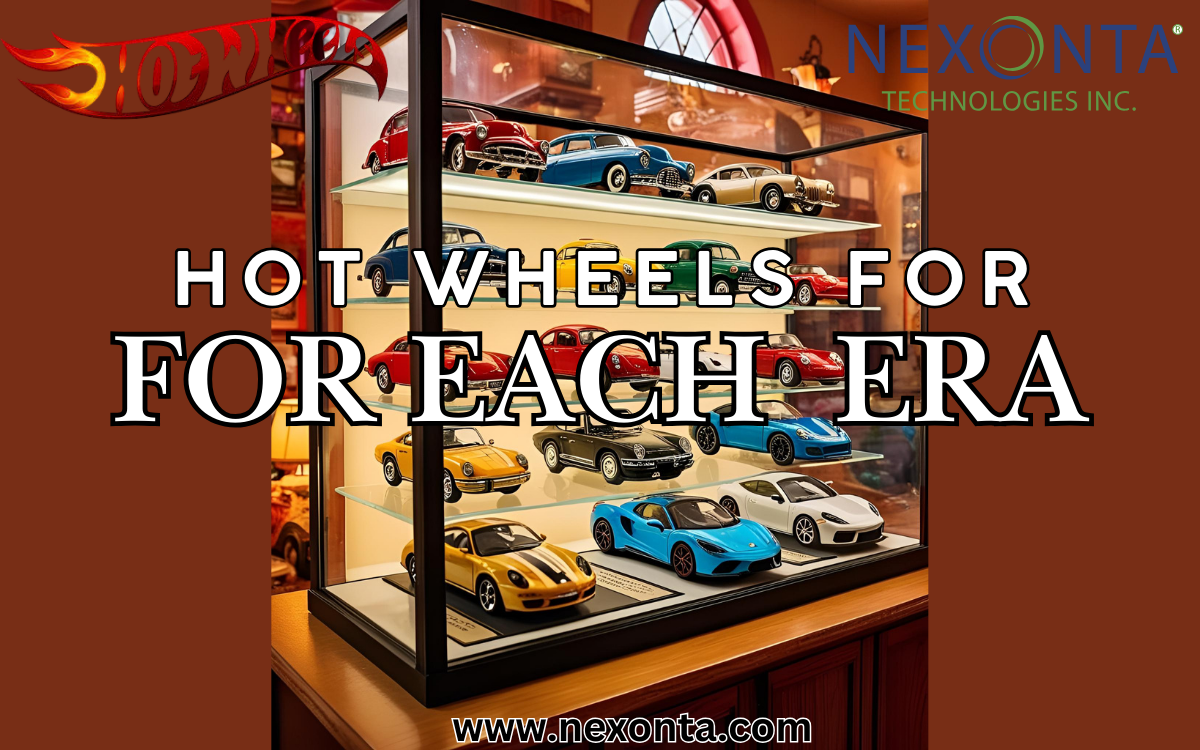
When you hold a Hot Wheels car in your hand, you’re not just holding a toy—you’re holding a piece of history. Every tiny die-cast model tells a story, reflecting the era it was born in. From the muscle cars of the ‘60s to today’s electric revolution, your Hot Wheels collection is more than a hobby; it’s a time capsule of society’s ever-evolving relationship with automobiles.
The Evolution of Automobiles in Miniature Form
For over five decades, Hot Wheels has captured the essence of automotive innovation. Whether you’re a seasoned collector or a casual enthusiast, your collection likely mirrors the key shifts in car design, technology, and cultural trends. Let’s take a ride through history and explore how Hot Wheels tracks society’s love affair with cars.
The 1960s: The Golden Age of Muscle Cars
Hot Wheels launched in 1968, right in the heart of the muscle car era. American roads were dominated by powerful, aggressive cars like the Dodge Charger, Ford Mustang, and Chevrolet Camaro. These cars symbolized freedom, rebellion, and raw horsepower—values that defined the decade.
Hot Wheels wasted no time immortalizing these beasts, introducing their “Original Sweet 16” lineup with sleek, hot-rod designs, mag wheels, and bold paint jobs. Owning these early Hot Wheels models today is like owning a piece of classic Americana.
The 1970s: Gas Crisis and Exotic Influence
As the muscle car era faded due to the oil crisis, fuel efficiency became a priority. Japanese automakers, like Honda and Toyota, started making waves, and European exotics like Ferrari and Lamborghini captured the imagination of enthusiasts.
Hot Wheels expanded its lineup with more diverse models, including European sports cars and compact vehicles, reflecting this global shift. If your collection features a Datsun 240Z or a Porsche 911 Turbo, you’ve got miniature representations of this transformative time in the auto industry.
The 1980s: Turbocharged and High-Tech
The ‘80s brought turbochargers, boxy designs, and futuristic styling. This was the decade of the DeLorean DMC-12 (thanks to Back to the Future), the Ferrari Testarossa, and the Buick Grand National. Cars were becoming computerized, and Hot Wheels reflected that with models featuring high-tech aesthetics.
Collectors from this era might also remember the rise of blackwall wheels, replacing the original redlines, and cars with bold neon colors that screamed ‘80s excess.
The 1990s: JDM and Street Racing Take Over
The ‘90s ushered in a new automotive culture—Japanese Domestic Market (JDM) cars and street racing. Thanks to movies like The Fast and the Furious and the popularity of import tuning, cars like the Toyota Supra, Nissan Skyline GT-R, and Honda NSX became legends.
Hot Wheels embraced this shift by introducing race-ready models, tuner cars, and even drift-inspired designs. If you own a collection from this time, you probably have some of the coolest street racers in miniature form.
The 2000s & 2010s: Hypercars, Hybrids, and Electric Dreams
As we entered the 21st century, the automotive world split into two extremes—insanely fast hypercars like the Bugatti Veyron and McLaren P1 and eco-friendly hybrids like the Toyota Prius and Tesla Model S.
Hot Wheels responded by releasing high-speed exotics and eco-conscious models, reflecting the changing priorities of the car world. If your collection includes Tesla Roadsters, Koenigseggs, or hybrid hypercars, you’ve got a front-row seat to the evolution of modern engineering.
Today and Beyond: The Age of Electric and Autonomous Vehicles
Now, we’re seeing an even bigger shift—self-driving cars, full-electric lineups, and sustainability-focused designs. Hot Wheels continues to adapt, releasing models of the Tesla Cybertruck, Rivian R1T, and Lucid Air.
What does this mean for collectors? Your Hot Wheels cars aren’t just fun collectibles; they’re a glimpse into what the future of transportation might look like.
Why Your Collection Matters
Your Hot Wheels collection is more than a display of tiny cars—it’s a rolling history book that tells the story of innovation, culture, and technology. Every model represents a moment in time, a societal shift, or a groundbreaking automotive milestone.
Whether you’re drawn to vintage muscle, sleek supercars, or cutting-edge electric vehicles, each car in your collection holds a unique place in history. So, the next time you add a new Hot Wheels car to your shelf, remember—you’re not just collecting toys, you’re preserving a legacy.
🚗🔥 What’s your favorite era of Hot Wheels? Let’s talk in the comments!
