Tag: AI return on investment

  • The Cost of Doing Business: All About the Benjamins

    The Cost of Doing Business: All About the Benjamins

    What is your business really spending on its day-to-day processes? And what could you achieve if you improved them?

    The cost of doing business goes beyond salaries, rent, software, and office expenses. It also includes the time your team spends on repetitive tasks, manual processes, and work that could be done more efficiently.

    Think about it. How many hours does your team spend every week copying information, updating records, preparing reports, answering routine questions, or following up on tasks?

    Now imagine putting some of that time back into your business.

    That’s where things get interesting. And yes, it really is all about the Benjamins!

    At Nexonta, we believe businesses should look beyond the cost of implementing new technology. The bigger question is this: What business value could you create by improving the way you work?

    Let’s break it down.

    1. Start With the Cost of Your Current Process

    Before investing in new technology, you need to understand what your current processes are costing you.

    You don’t need a complicated financial model to get started. Sometimes, a simple calculation can reveal a surprising opportunity.

    Let’s look at an example.

    Company A: The Cost of Repetitive Work

    Imagine a company with 10 employees who each spend 30 minutes a day completing the same repetitive process.

    That might involve entering data, updating customer records, processing requests, or preparing information for another department.

    Here’s what that time adds up to:

    • Employees involved: 10
    • Time spent per employee: 30 minutes per day
    • Working days per year: 250
    • Total time spent annually: 1,250 hours
    • Estimated fully loaded labour cost: $35 per hour

    Let’s do the math.

    10 employees × 0.5 hours per day × 250 working days = 1,250 hours per year.

    Now multiply those hours by the estimated labour cost.

    1,250 hours × $35 per hour = $43,750 per year.

    That’s right. One repetitive process could account for $43,750 in annual labour capacity.

    And that’s just one process.

    What happens if your business has five, ten, or twenty processes that consume valuable employee time?

    Suddenly, the opportunity becomes much more interesting.

    The question isn’t simply how much a process costs. It’s what your business could accomplish if that time were put to better use.

    2. Five Categories Every Agentic AI Business Proposal Should Consider

    A good Agentic AI business proposal shouldn’t focus only on the technology or the initial investment.

    It should look at the bigger picture.

    Where can improvements create measurable value? How will those improvements affect your people, your customers, and your bottom line?

    Here are five important categories to consider.

    Category 1: Labour Efficiency and Productivity

    Let’s start with the example we just explored.

    When employees spend hours on repetitive work, they have less time available for other responsibilities.

    Improving that process could give some of those hours back.

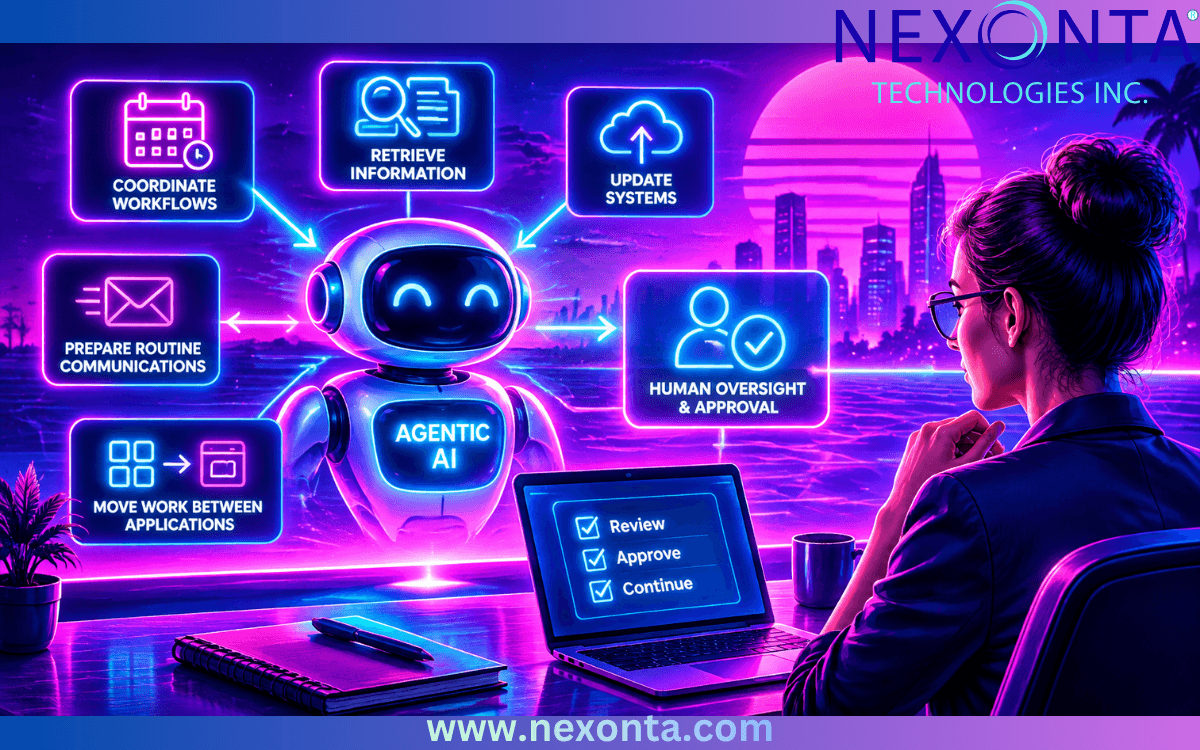
    Depending on the task, Agentic AI may help coordinate workflows, retrieve information, update systems, prepare routine communications, or move work between applications. Appropriate human oversight and approval can remain part of the process.

    The potential benefit goes beyond completing tasks faster.

    Your team could redirect its time towards higher-value activities, such as:

    • Providing better customer service.
    • Following up with sales prospects.
    • Increasing production capacity.
    • Supporting management and operations.
    • Developing new business opportunities.
    • Completing higher-value professional work.

    Think about what your business could do with an additional 1,250 hours of employee capacity each year.

    That could mean more customer conversations, faster turnaround times, or more time for work that directly supports business growth.

    The key is to identify where that time can make the greatest difference.

    Remember: Recovered employee time doesn’t automatically equal cash savings. It creates capacity that your business can use to improve productivity, increase output, reduce overtime, or potentially lower costs. The actual financial benefit depends on how the business uses that capacity.

    Category 2: Revenue Growth and Sales Opportunities

    Time is valuable. But what happens when your team has more time to focus on generating revenue?

    Consider how much time salespeople spend on administrative tasks.

    They may be updating customer relationship management (CRM) systems, researching prospects, preparing follow-up emails, scheduling meetings, or tracking opportunities.

    Those tasks matter. But they aren’t all the same as having a meaningful conversation with a potential customer.

    Agentic AI can help coordinate parts of the sales process, prepare information, support follow-ups, and move tasks forward according to defined rules and permissions.

    Your sales team can then spend more time building relationships, understanding customer needs, and pursuing qualified opportunities.

    The business value might come from:

    • More time available for prospecting.
    • Faster follow-up with potential customers.
    • Fewer missed opportunities.
    • Better visibility into the sales pipeline.
    • More consistent communication.

    Of course, more activity doesn’t guarantee more sales.

    The opportunity is to remove unnecessary friction from the sales process so your people can focus on the activities most likely to generate revenue.

    Category 3: Customer Experience and Retention

    Customers expect timely responses, clear communication, and a smooth experience.

    When internal processes are slow, customers often feel the effects.

    A request may sit in someone’s inbox. A follow-up may be missed. Information may need to be entered into multiple systems before a customer receives an answer.

    These delays can create frustration for customers and extra work for employees.

    Agentic AI can help coordinate customer-related workflows, retrieve relevant information, route requests, and support timely follow-ups.

    With the right systems and safeguards, businesses may be able to improve response times and deliver a more consistent customer experience.

    Consider the potential value of:

    • Responding to routine enquiries faster.
    • Keeping customer information organized.
    • Following up on outstanding requests.
    • Identifying issues that need human attention.
    • Helping employees access the information they need.

    Better customer experiences can support customer loyalty and retention.

    And keeping an existing customer can be just as important as winning a new one.

    The goal isn’t to remove the human element from customer service. It’s to give your people better tools and more time to provide it.

    Category 4: Operational Efficiency and Business Throughput

    Every business has processes that affect how much work it can complete.

    These might include processing orders, preparing quotes, scheduling jobs, managing documents, coordinating departments, or moving information between systems.

    When one step slows down, the entire process can suffer.

    A delayed approval might hold up a project. Missing information might require several follow-up emails. A manual handoff might leave a task waiting until someone has time to deal with it.

    These small delays can add up.

    Agentic AI can help coordinate connected tasks, identify the next step in a workflow, and move information between supported systems.

    This may help businesses reduce delays and improve the flow of work.

    Potential benefits include:

    • Faster processing times.
    • Fewer unnecessary handoffs.
    • Better coordination between departments.
    • Less time spent chasing information.
    • Greater capacity to handle existing workloads.

    For a growing business, this matters.

    You may be able to serve more customers or complete more work without increasing administrative effort at the same rate.

    That’s an important opportunity to explore before assuming that growth requires more people, more software, or more overhead.

    Category 5: Quality, Accuracy, and Risk Reduction

    Let’s talk about another hidden cost of doing business: mistakes.

    Manual processes can create opportunities for errors, inconsistent information, missed steps, and incomplete records.

    When something goes wrong, the cost often extends beyond fixing the original problem.

    Employees may need to investigate, correct information, contact customers, repeat work, or explain what happened.

    In some industries, mistakes can also create compliance, security, or financial risks.

    Agentic AI may help by following defined workflows, checking information against established rules, flagging exceptions, and maintaining records of completed actions.

    Depending on the application, this could support:

    • More consistent processes.
    • Earlier identification of missing information.
    • Fewer avoidable errors.
    • Better documentation.
    • More reliable handoffs between systems.

    Of course, AI isn’t error-free. It can introduce new risks if it’s poorly designed or implemented.

    That’s why an effective proposal should consider data quality, security, access permissions, testing, and human approval where appropriate.

    The objective is to improve the process while keeping the right controls in place.

    3. Add Up the Business Value

    Now let’s return to Company A.

    We’ve identified a process that consumes 1,250 hours each year, representing an estimated $43,750 in annual labour capacity.

    What if an improved process reduced the time required by 50%?

    The potential result would be:

    MeasureAnnual result
    Current time spent1,250 hours
    Potential time recovered625 hours
    Estimated labour capacity released$21,875

    That’s 625 hours that could potentially be redirected to other business activities.

    But let’s be clear about what the numbers mean.

    The $21,875 represents the estimated value of the labour capacity released. It isn’t automatically a $21,875 reduction in payroll or a guaranteed financial saving.

    To determine the actual return on investment, the business would also need to consider implementation costs, ongoing technology expenses, employee time required for oversight, and the measurable benefits achieved.

    For example, if the recovered hours allow employees to handle more customer requests, pursue additional sales, or increase production, the company should estimate the financial value of those improvements.

    If the process reduces overtime or eliminates an external service expense, the company may be able to identify more direct savings.

    The goal is to build a business case based on realistic assumptions, measurable outcomes, and the company’s actual priorities.

    Good business decisions start with understanding the numbers. Great ones connect those numbers to an opportunity.

    4. Why Agentic AI Should Start With the Business Problem

    It’s easy to get caught up in the excitement around AI.

    There are new tools, new platforms, and new possibilities appearing all the time.

    But choosing a technology before understanding the problem can lead to unnecessary expense and disappointing results.

    A better approach is to start with a few straightforward questions:

    • Which business processes consume the most time?
    • Where are employees doing repetitive work?
    • Which delays affect customers or revenue?
    • Where do errors create additional costs?
    • Which activities limit your ability to grow?
    • What would improving these processes be worth to your business?

    Once you understand the answers, you can assess whether Agentic AI is an appropriate solution.

    Some problems may be solved by improving an existing workflow. Others may require better integration between systems, process redesign, conventional automation, or a combination of technologies.

    Not every problem needs AI.

    The right solution is the one that delivers meaningful business value.

    At Nexonta, we believe the starting point should always be the business objective, not the technology.

    5. Your Next Business Advantage Could Already Be Inside Your Company

    Here’s something worth thinking about.

    You may not need to hire more people to make progress on every business priority.

    You may not need another software subscription.

    And you may not need to work longer hours.

    You may need to take a closer look at how work gets done today.

    The time your employees spend on repetitive tasks, the delays between departments, and the manual steps that slow down your operations could reveal opportunities to improve productivity and create more value.

    Agentic AI offers new ways to address some of these challenges. But the real opportunity comes from identifying the right processes, setting clear objectives, and measuring the results.

    Start with one process.

    Understand its current cost. Identify what could be improved. Estimate the potential value. Then determine whether the expected benefits justify the investment.

    You don’t need to transform your entire business overnight.

    You need to find the right opportunity and build from there.

    Let’s Talk About Your Bottom Line

    At Nexonta, we help businesses explore how Agentic AI and connected business systems can improve the way work gets done.

    Our approach starts with understanding your business, your existing processes, and the challenges you want to solve.

    Together, we can identify opportunities to reduce repetitive work, improve operational efficiency, support your team, and create more room for growth.

    The first step is understanding what your current processes are costing you — and what improving them could be worth.

    Ready to discover where your business could create more value?

    Contact Nexonta to discuss an Agentic AI opportunity assessment.

    Let’s look at the numbers, identify the opportunities, and build a practical plan focused on business results.

    Because when it comes to the cost of doing business, every hour counts.

    And yes, it’s all about the Benjamins!
  • Is Agentic AI Worth the Investment? How to Measure the Business Value

    Is Agentic AI Worth the Investment? How to Measure the Business Value

    Agentic AI can create significant business value, but how do you know if it makes financial sense for your organization? Before investing in AI, businesses need to understand where time, money, and opportunities are being lost. The key is to measure the problem first. Once you know what a process costs your business, you can determine whether Agentic AI could deliver a worthwhile return.

    AI is attracting attention across almost every industry. But adopting new technology simply because everyone else is doing it isn’t a business strategy.

    The real question is simple: Can AI solve a meaningful business problem and deliver measurable value?

    Let’s look at how to find out.

    Why Businesses Need a Clear AI Business Case

    Every organization has processes that take more time than they should.

    Employees might spend hours entering data, following up on leads, preparing reports, updating customer records, or moving information between disconnected systems.

    Individually, these tasks may seem manageable. Over time, however, they can become expensive.

    They can also prevent your team from focusing on work that drives growth.

    This is where Agentic AI deserves a closer look.

    Unlike traditional automation, which typically follows predefined rules, Agentic AI can work toward a goal, make decisions within defined boundaries, and carry out multiple steps across connected systems. Depending on the solution, it can also identify when a task needs human review.

    For businesses, this creates new opportunities to improve workflows and reduce unnecessary manual work.

    But there is an important first step.

    Before deciding where to use AI, you need to understand what the existing problem is costing your organization.

    Step 1: Quantify the Problem

    You cannot measure the value of a solution without understanding the problem it needs to solve.

    Start by identifying a repetitive task, inefficient process, or operational bottleneck.

    Then ask five simple questions.

    1. How many times per week does this happen?

    Look at the frequency of the task.

    Does it happen 20 times a week? Hundreds of times? Thousands?

    The more frequently a task occurs, the greater the potential opportunity to improve it.

    2. How long does each occurrence take?

    Estimate the time employees spend completing the task.

    Include the full process, not just the obvious steps.

    For example, processing a customer request might involve opening an email, reviewing the information, entering data, updating a system, and sending a response.

    Each step adds time.

    3. How many employees are involved?

    A task that takes 10 minutes might not seem expensive when one employee handles it.

    But what happens when 12 employees perform the same task every day?

    Small inefficiencies can add up quickly across a team.

    4. What happens when the task isn’t completed?

    This question is especially important.

    Does a delayed task create a backlog? Does a customer wait longer for a response? Could a missed follow-up result in lost revenue?

    Sometimes the biggest cost isn’t the time spent doing the work. It’s the business opportunity lost when the work doesn’t get done.

    5. What is the approximate labour cost?

    Once you understand the frequency, time, and number of employees involved, you can estimate the labour cost of the task.

    You don’t need a complicated financial model to get started.

    A Simple Formula to Calculate Labour Cost

    Use this formula to estimate the weekly labour cost of a repetitive task:

    Weekly Labour Cost =

    (Occurrences per Week × Minutes per Occurrence × Number of Employees ÷ 60) × Hourly Labour Cost

    Let’s look at an example.

    Imagine a company has 10 employees who each spend 15 minutes a day on a repetitive administrative task. The task happens five days a week, and the estimated labour cost is $35 per hour.

    Here’s the calculation:

    • Occurrences: 5 times per week per employee
    • Time per occurrence: 15 minutes
    • Employees involved: 10
    • Hourly labour cost: $35

    The calculation looks like this:

    (5 × 15 × 10 ÷ 60) × $35 = $437.50 per week

    That works out to approximately $22,750 per year, assuming 52 weeks.

    And that’s just one task.

    Now imagine the company has five or ten similar processes across different departments.

    The potential cost becomes much more significant.

    Keep in mind that this is an estimate of labour capacity spent on the task, not necessarily cash savings the business can realize. The actual financial benefit depends on whether the time can be redirected, overtime reduced, hiring avoided, or other costs eliminated.

    You also don’t need perfect numbers at this stage.

    A reasonable estimate is often enough to decide whether a deeper assessment is worthwhile.

    The goal isn’t to build a complicated spreadsheet. It’s to identify where the business may be losing time, money, or opportunities.

    Step 2: Determine the Business Impact

    Labour cost is only one part of the picture.

    To understand whether Agentic AI makes commercial sense, you also need to consider its broader impact on the organization.

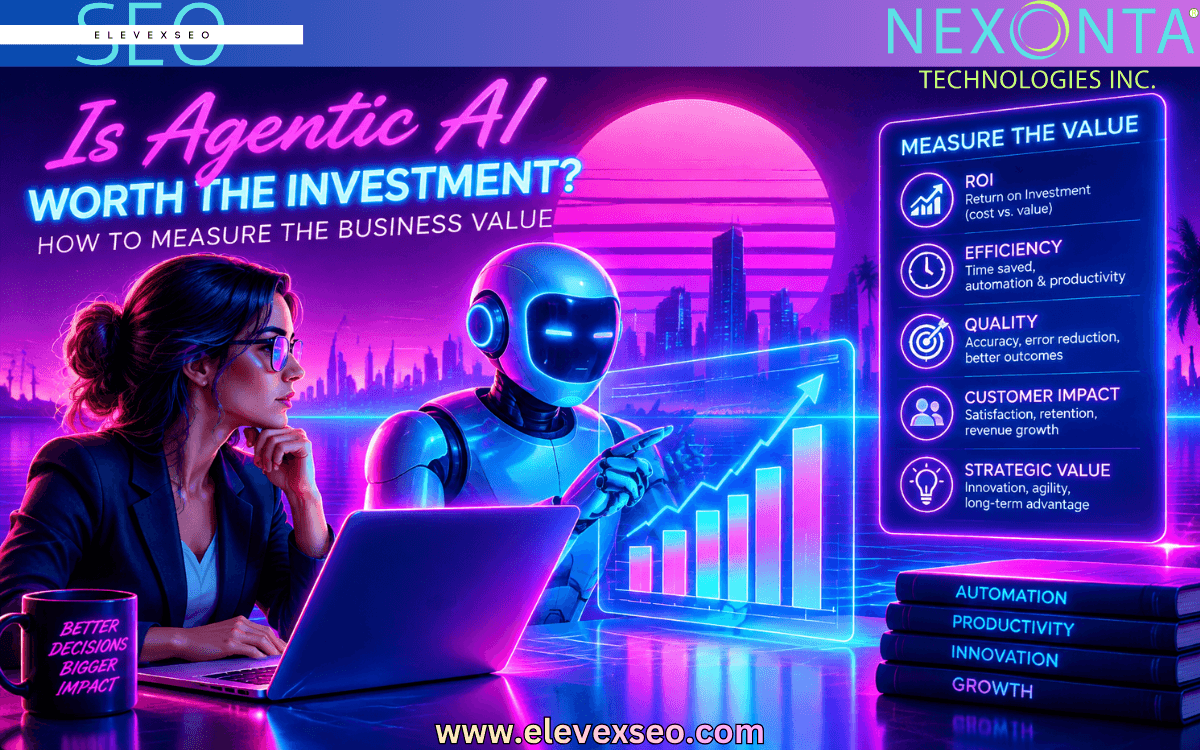
    We recommend evaluating five areas.

    1. Time: What Could Your Team Do Instead?

    Time is one of the most overlooked business costs.

    When employees spend hours on repetitive tasks, they have less time for activities that require their expertise, creativity, and judgment.

    Consider what your team could accomplish if some of that time were redirected.

    Your sales team could spend more time speaking with qualified prospects.

    Your customer service team could focus on more complex customer needs.

    Your operations team could work on improving processes instead of constantly managing administrative tasks.

    Agentic AI may help reduce the time spent on suitable repetitive workflows.

    The important question is not simply how many hours AI could save.

    It’s what your organization could achieve with those hours back.

    That is where the business value becomes more interesting.

    2. Cost: Where Can You Reduce Expenses?

    Administrative work can create costs in several ways.

    These may include:

    • Overtime required to clear backlogs.
    • Additional administrative support.
    • Repeated manual data entry.
    • Duplicated work across departments.
    • Extra costs caused by inefficient processes.

    Agentic AI may help reduce some of these expenses by streamlining workflows and coordinating tasks across connected systems.

    However, not every time saving creates an immediate reduction in payroll or operating expenses.

    The business case should distinguish between costs that can actually be removed and employee time that can be put to better use.

    For example, if AI helps your existing team handle more work without increasing overtime, that may create meaningful value even if headcount remains unchanged.

    The objective is to understand where costs can realistically be reduced or avoided.

    3. Errors and Future Hiring Requirements: Can You Scale More Efficiently?

    Manual processes can introduce errors.

    Information may be entered incorrectly. Customer records may be incomplete. Reports may need to be corrected. Employees may have to repeat work because something was missed.

    These problems consume additional time and resources.

    When evaluating Agentic AI, consider how much time your organization spends correcting errors and completing work that should have been done correctly the first time.

    Also, think about future growth.

    If your business expects to increase its workload by 30%, will you need to hire more people just to manage repetitive administrative work?

    Could better workflows help your existing team handle more of that workload?

    Agentic AI may help increase operational capacity without requiring the same proportional increase in administrative staffing.

    That doesn’t mean every organization can avoid hiring. It means you should assess whether improved processes could reduce future staffing requirements or delay the need for additional hires.

    Sometimes the value of AI isn’t replacing existing work. It’s helping your business grow without allowing administrative overhead to grow at the same rate.

    4. Revenue: Are You Losing Business Opportunities?

    This is where the commercial impact can become particularly significant.

    Consider a company that receives 100 new sales inquiries each week.

    What happens if some inquiries aren’t answered promptly? What if follow-ups are missed because the sales team is busy? What if qualified prospects lose interest while waiting for a response?

    Every missed opportunity can affect revenue.

    Agentic AI may help businesses manage parts of the sales process, such as routing inquiries, updating customer records, coordinating follow-up tasks, and supporting timely communication.

    The exact capabilities depend on the systems involved, the workflow design, and the level of human oversight.

    When assessing the potential value, ask:

    • How many leads are currently missed or left without follow-up?
    • How long does it take to respond to a new inquiry?
    • How many sales opportunities are abandoned?
    • Is the team limited by the time available to manage prospects?
    • Could a more consistent process help improve conversion rates?

    You don’t need to assume that AI will increase sales.

    Start by identifying the existing problem and estimating its impact.

    Then determine whether an AI-supported process could realistically improve the outcome.

    For example, if faster follow-up helps your team convert more qualified leads, the additional gross profit may be more meaningful than the labour savings alone.

    Just be careful not to count the same benefit twice. Revenue growth, gross profit, and labour savings should be measured separately.

    5. Customer Experience: What Does Inefficiency Cost Your Customers?

    Not every business benefit appears directly on a spreadsheet.

    Customer experience matters, too.

    Delayed responses, inconsistent communication, and gaps in service can frustrate customers and damage trust.

    A customer who has to explain the same issue multiple times may question whether your organization is paying attention.

    A prospect who waits several days for a response may choose a competitor.

    An existing customer who doesn’t receive a timely update may lose confidence in your service.

    Agentic AI can help coordinate information and routine tasks across connected systems, potentially improving response times and service continuity.

    But technology alone doesn’t guarantee a better customer experience. The workflow must be designed properly, information must be accurate, and customers must be able to reach a person when needed.

    Ask yourself:

    If we improved this process, would our customers notice the difference?

    Would they receive faster responses? More consistent updates? Fewer mistakes? Better service?

    If the answer is yes, those improvements belong in your business case.

    Even when customer experience is difficult to quantify precisely, it should still be considered when deciding whether an AI investment makes sense.

    Step 3: Determine Whether the Opportunity Justifies an AI Investment

    Once you’ve quantified the problem and assessed the business impact, you’re ready to take the next step.

    Compare the potential benefits with the total cost of implementing and operating the solution.

    This means looking beyond the initial purchase price.

    Your assessment should consider:

    • AI solution and implementation costs.
    • Integration with existing software and systems.
    • Data preparation and workflow redesign.
    • Employee training and change management.
    • Ongoing maintenance and operating costs.
    • Human oversight, security, and governance requirements.

    Then estimate the realistic financial benefit.

    For example, a solution might reduce the time spent on a repetitive process by 50%. That doesn’t automatically mean the company will save 50% of the associated labour cost.

    The actual benefit depends on what happens to the time recovered.

    Can employees use it to generate more revenue? Can the company reduce overtime? Can it avoid additional hiring? Can it eliminate an external service expense?

    These are the questions that turn an interesting AI project into a credible business case.

    A Simple Way to Think About Return on Investment

    At its simplest, the calculation is:

    Net Annual Benefit = Annual Financial Benefits − Annual AI Costs

    You can then calculate the return on investment:

    ROI = (Annual Financial Benefits − Annual AI Costs) ÷ Annual AI Costs × 100

    Let’s use a hypothetical example.

    Suppose an organization estimates that an AI-supported workflow could deliver $30,000 in annual financial benefits.

    The annualized cost of implementing and operating the solution is $12,000.

    The estimated net annual benefit would be $18,000.

    The estimated ROI would be:

    ($30,000 − $12,000) ÷ $12,000 × 100 = 150%

    These figures are illustrative, not a prediction of what an AI project will deliver.

    A proper assessment should use realistic assumptions, account for implementation costs, and avoid counting benefits that cannot be demonstrated.

    It should also consider how long it takes to recover the initial investment.

    The purpose of the calculation is to help decision-makers determine whether the opportunity deserves further investigation.

    Step 4: Start With the Right Problem, Not the Biggest AI Project

    One of the biggest mistakes organizations can make is trying to transform everything at once.

    A better approach is to identify a specific business problem, establish a baseline, and evaluate whether AI can improve the process.

    Look for tasks that are repetitive, time-consuming, measurable, and important to the business.

    Then assess whether the necessary data and systems are available, whether the workflow can be improved safely, and where human approval is required.

    A focused starting point makes it easier to measure results.

    It also helps your organization understand what works before expanding AI adoption into other areas.

    Remember, not every problem requires Agentic AI. Some may be better addressed through traditional automation, process improvements, or better software integration.

    The goal is to choose the right solution for the problem, rather than forcing AI into a process simply because the technology is available.

    The Bottom Line: Make AI Adoption a Business Decision

    Agentic AI has the potential to change how organizations manage work, coordinate systems, and use their people.

    But potential isn’t the same as proven value.

    Before investing, take the time to understand what your current processes cost, where inefficiencies are affecting performance, and which improvements would make the biggest difference.

    Start with the numbers you have.

    Estimate the time involved. Identify the people affected. Consider the financial and operational consequences. Then determine whether the opportunity justifies a closer look.

    You don’t need every answer before you begin.

    You need a clear problem, a reasonable estimate, and a practical way to measure success.

    The best AI investment isn’t necessarily the most advanced technology. It’s the solution that addresses a real business need and delivers measurable value.

    Ready to Find Out Where Agentic AI Could Create Value in Your Business?

    At ElevexSEO, we believe successful AI adoption starts with understanding your business.

    Before recommending a solution, it’s important to identify the inefficiencies, repetitive tasks, disconnected systems, and missed opportunities that may be holding your organization back.

    Our approach focuses on connecting the right people, processes, and technology to help businesses work more efficiently and make better use of their resources.

    Don’t invest in AI just because it’s the latest trend. Discover where it could make a real difference to your bottom line.

    Request an AI Business Assessment from ElevexSEO and take the first step toward identifying practical opportunities for improvement.

    Let’s start with your business challenges, quantify the opportunity, and determine whether Agentic AI makes commercial sense for your organizati

☎ ✉
f 𝕏