Author: info

  • Understanding AI at the Enterprise Level: 4 Areas Every Business Should Evaluate

    Understanding AI at the Enterprise Level: 4 Areas Every Business Should Evaluate

    Understanding AI at the Enterprise Level: 4 Areas Every Business Should Evaluate

    Understanding AI at the enterprise level starts with understanding how your business actually works. Before investing in Agentic AI, organizations need to look beyond the technology and examine how people work, how processes operate, how software is used, and how information moves across the business.

    Why?

    Because the biggest opportunities for AI are not always where you expect them to be.

    A company might have excellent employees, powerful software, and well-established processes. Yet, work can still get stuck. Information can fall through the cracks. Customers can wait too long for a response. Employees can spend hours on tasks that could be handled more efficiently.

    These problems often go unnoticed because they have become part of the daily routine.

    This is where a thoughtful approach to Agentic AI can make a difference.

    What Does Understanding AI at the Enterprise Level Really Mean?

    Enterprise AI is about more than introducing a new tool or automating a single task. It means looking at how the entire organization operates and identifying where AI could help work move forward more efficiently.

    Agentic AI takes this a step further.

    Depending on the solution, AI agents can help manage multistep tasks, retrieve information, coordinate actions across connected systems, and support employees in getting work done. Appropriate human oversight remains important, especially when decisions carry financial, operational, or customer consequences.

    But before deciding what to automate, businesses need to understand how work gets done today.

    At Nexonta, we believe this conversation should begin with four interconnected areas.

    1. People: How Are Employees Spending Their Time?

    Your employees are one of your organization’s most valuable resources. The question is whether their time is being used where it creates the greatest value.

    Consider the work your team handles every day.

    How much time goes toward repetitive administrative tasks? How often do employees move information manually from one system to another? Are they waiting for information before they can move forward?

    And how much time is spent chasing updates, sending reminders, or following up on tasks that should already be progressing?

    These are important questions.

    For example, a sales representative might spend hours updating records, preparing reports, and following up on leads. An operations manager might spend much of the day tracking requests and checking the status of routine tasks.

    Both employees have important responsibilities. But some of their daily activities may be suitable for AI assistance or automation.

    Agentic AI could help gather information, prepare updates, trigger reminders, or coordinate routine tasks. This can give employees more time to focus on customers, problem-solving, and decisions that require human judgment.

    The goal is not to replace the value of your people. It is to help them spend more time doing valuable work.

    Start by asking one simple question: Where are our employees spending time on work that could be handled more efficiently?

    2. Processes: How Does Work Move Through the Organization?

    Even great employees can struggle when business processes are slow, complicated, or poorly connected.

    A task might pass through several approval stages. One department might finish its part of a project but wait days for another team to respond. A customer request might sit untouched because nobody is sure who owns the next step.

    Over time, these delays become normal.

    But they still cost the business time and money.

    To understand where Agentic AI might help, examine how work moves from beginning to end.

    Ask yourself:

    • Where do tasks regularly get delayed?
    • Are there unnecessary approval steps?
    • Where do handoffs between teams break down?
    • Which processes depend too heavily on one employee?
    • Where are the biggest bottlenecks occurring?

    These questions help reveal whether a problem comes from manual work, unclear responsibilities, disconnected systems, or an inefficient process.

    That distinction matters.

    Automating a poor process does not automatically make it better. In some cases, it simply allows an inefficient process to continue faster.

    The first step is to understand the process and improve it where necessary. Then, consider where AI agents could help coordinate tasks, retrieve information, or move work to the next stage.

    The result can be a smoother workflow with fewer delays and less unnecessary effort.

    3. Software: Are Your Business Systems Working Together?

    Most organizations rely on several software applications to run their business.

    These might include a CRM, accounting software, marketing platforms, project management tools, customer service systems, and internal databases.

    Each system may serve a useful purpose. The challenge is how well they work together.

    Is the same information being entered more than once? Do employees have to switch between several applications to complete one task? Can different departments access the information they need?

    And are you fully using the capabilities of the software you already own?

    These questions are especially important when evaluating Agentic AI.

    An organization might not need another standalone application. It may need a better way to connect existing systems and make information easier to access.

    Where suitable integrations and permissions exist, AI agents can help retrieve information from connected tools, update records, support workflows, and reduce repetitive data entry.

    For example, imagine a new sales lead arrives through your website.

    Instead of requiring an employee to manually transfer the details, update a CRM, notify a salesperson, and create a follow-up reminder, a connected workflow could coordinate several of those steps automatically.

    The exact capabilities depend on the systems involved, the quality of the available data, and the permissions granted.

    The important point is this: before adding more technology, understand how well your current technology is being used.

    You may discover that the opportunity lies in better integration rather than another software purchase.

    4. Communication: Is Information Getting Where It Needs to Go?

    Communication connects people, processes, and software.

    When information moves slowly or gets lost, the effects can spread across the entire organization.

    Customers may wait too long for answers. Sales leads may not receive consistent follow-up. Employees may spend hours coordinating meetings, requesting updates, and tracking down information.

    Important messages can also get buried in email threads, chat platforms, and busy inboxes.

    Sound familiar?

    These challenges are worth examining because communication problems often create hidden costs.

    Ask yourself:

    • How quickly are customers receiving responses?
    • How effectively do teams communicate internally?
    • Are sales leads being followed up consistently?
    • Are important messages or requests getting lost?
    • How much time is spent coordinating meetings, updates, and follow-ups?

    Agentic AI may help address some of these issues by organizing information, preparing responses, routing requests, summarizing conversations, and triggering follow-up actions.

    For instance, an AI-supported workflow could identify a new inquiry, gather relevant customer information, notify the appropriate team member, and schedule a follow-up task.

    Human review can remain part of the process wherever it is needed.

    The objective is not to automate every conversation. It is to make sure important information reaches the right person at the right time, and that opportunities do not disappear simply because someone was too busy to follow up.

    Why These Four Areas Need to Work Together

    People, processes, software, and communication are closely connected.

    A delay that appears to be a people problem might actually be caused by disconnected software. A communication breakdown might be the result of an unclear process. A slow process might exist because employees are manually transferring information between systems.

    Looking at each area in isolation can cause businesses to miss the bigger picture.

    That is why an enterprise-level AI assessment should consider the entire workflow.

    The objective is to identify where the organization is losing time, money, information, or opportunities because work is still being performed manually or across disconnected systems.

    Once those gaps are understood, businesses can make more informed decisions about where Agentic AI can deliver practical value.

    This also helps avoid a common mistake: adopting AI simply because it is available.

    The right starting point is not the technology. It is the business problem you want to solve.

    From AI Possibilities to Practical Business Results

    Every organization is different.

    A solution that works well for one company may not be appropriate for another. The right approach depends on the organization’s goals, existing systems, workflows, data, security requirements, and resources.

    That is why it helps to start with a clear assessment.

    Identify the repetitive tasks that consume employee time. Map the processes that create delays. Review the software systems your business relies on. Examine how information moves between people and departments.

    Then prioritize the opportunities.

    Look for areas where improving a workflow could reduce manual effort, shorten response times, improve consistency, or help employees focus on higher-value work.

    Start with a manageable use case. Establish a baseline. Define what success looks like. Measure the results before expanding the solution.

    This practical approach helps turn AI from an interesting concept into a business initiative with clear objectives and measurable outcomes.

    It also gives employees a better understanding of how AI will support their work, rather than simply introducing another technology they are expected to learn.

    Is Your Organization Ready to Explore Agentic AI?

    Understanding AI at the enterprise level begins with asking better questions about your business.

    Where is your team losing time? Which processes create unnecessary delays? Are your systems working together? Is important information reaching the right people?

    The answers can reveal opportunities that are easy to overlook when everyone is focused on keeping up with daily demands.

    At Nexonta, we believe the most effective Agentic AI strategies start with understanding the organization first. Technology should support your business goals, solve real problems, and create meaningful improvements in how work gets done.

    You do not need to automate everything at once. You need to understand where the right solution can make a difference.

    Ready to Explore Agentic AI for Your Business?

    Let’s start with your business, not the technology.

    Nexonta can help you explore where Agentic AI may fit into your existing operations, identify opportunities to improve workflows, and determine which practical next steps make sense for your organization.

    Contact Nexonta today to arrange a conversation about your Agentic AI opportunities.

    Your next competitive advantage may begin with improving the way your business already works.
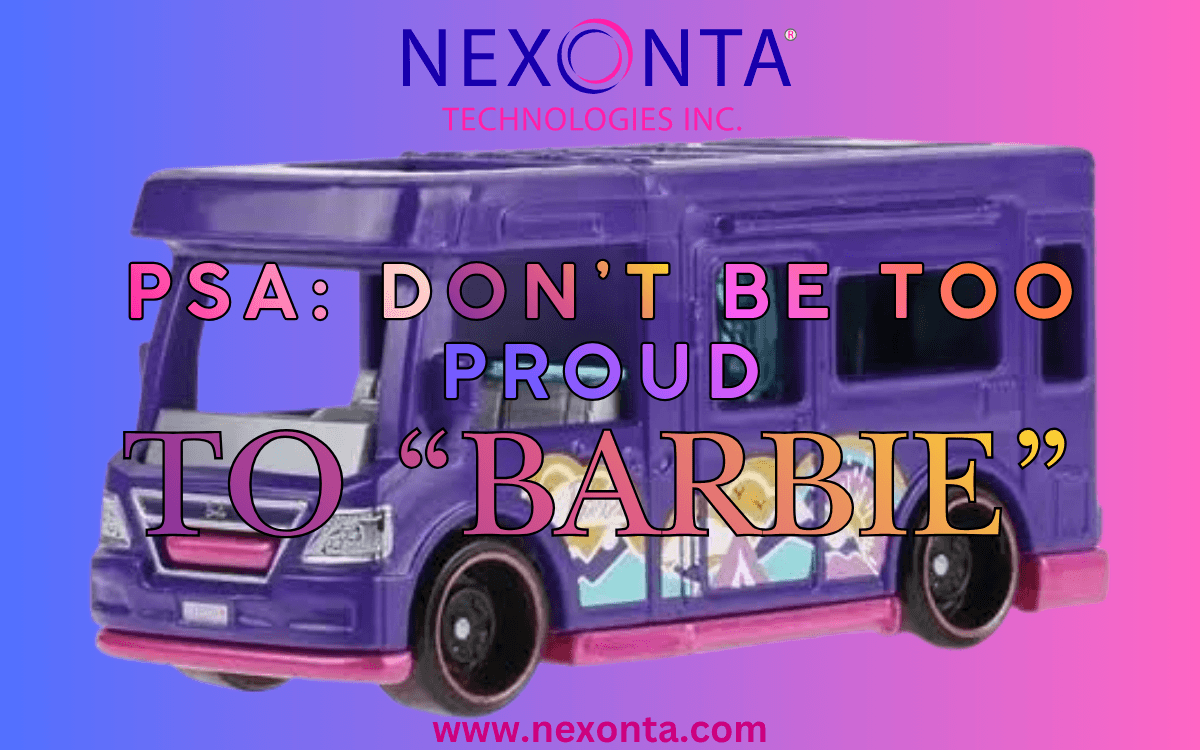
  • PSA: Don’t Be Too Proud to “Barbie”

    PSA: Don’t Be Too Proud to “Barbie”

    PSA to all the male Hot Wheels collectors out there: don’t be too proud to “Barbie.” You might just be passing up something pretty special. Yesterday, DeeMoney and I were doing our regular Friday-after-work grocery shopping when, as usual, we made our way to the back of the store to check the Hot Wheels pegs. And this time, we found a Barbie Dream Camper. Actually, we found two.

    The Friday Hot Wheels Check

    If you collect Hot Wheels, you know the routine.

    You finish work. You grab the groceries. Then you make your way to the toy aisle to see what’s hanging on the pegs.

    It has become part of our Friday ritual.

    Sure enough, there was a fresh Hot Wheels restock waiting for us.

    The pegs were full.

    Well, mostly full.

    There were already a few cars missing, so someone had clearly beaten us to the pick. That’s part of collecting. You never really know what you’re going to find or who got there five minutes before you.

    But then we spotted something that made us stop.

    There wasn’t just one.

    There were two Barbie Dream Campers sitting on the pegs.

    And yes, we grabbed both.

    No hesitation.

    No second-guessing.

    Just two very happy collectors adding something different to the collection.

    Don’t Be Too Proud to “Barbie”

    Here’s the thing.

    There can sometimes be this idea that certain cars are more “serious” collector pieces than others.

    But if you’re a Hot Wheels collector, you already know that collecting is about much more than simply picking the cars you think everyone else wants.

    It’s about history.

    It’s about design.

    It’s about the stories behind the cars.

    And sometimes, it’s about appreciating the connection between two of the biggest names in toy history.

    That brings us to Barbie and Hot Wheels.

    Barbie and Hot Wheels Have a Pretty Amazing Connection

    For anyone who doesn’t know the history, Hot Wheels and Barbie have an incredible connection.

    Elliot Handler, one of the co-founders of Mattel and the creator of Hot Wheels, was married to Ruth Handler, the co-founder of Mattel and the creator of Barbie.

    Talk about a toy power couple.

    Between the two of them, they helped shape an enormous part of modern toy history.

    So when Barbie and Hot Wheels come together, it isn’t just some random crossover.

    There’s history behind it.

    There’s a legacy behind it.

    And that makes Barbie-themed Hot Wheels releases pretty interesting additions to a collection.

    Two Barbie Dream Campers? Absolutely.

    That’s why seeing two Barbie Dream Campers sitting there was an easy decision for us.

    We grabbed them.

    Both of them.

    Because sometimes you find something that simply makes sense for your collection.

    And honestly, I think that’s one of the best parts of collecting.

    You don’t always have to follow the crowd.

    You don’t have to collect only the cars that other collectors tell you are important.

    Collect what interests you.

    Collect what makes you smile.

    Collect the cars that have a story.

    And if that happens to be Barbie?

    Barbie away.

    Your Collection Reflects You

    At the end of the day, your Hot Wheels collection is personal.

    It reflects your interests.

    Your memories.

    Your sense of humour.

    Your appreciation for design and automotive history.

    And, sometimes, your willingness to grab something completely unexpected.

    That’s what makes collecting so much fun.

    One collector might walk right past a Barbie Dream Camper.

    Another collector might see it and immediately know it belongs in the collection.

    There’s no wrong answer.

    So, to all the male collectors out there, here’s your public service announcement:

    Don’t be too proud to “Barbie.”

    You might be surprised by what you find.

    And if you happen to see two Barbie Dream Campers sitting on the pegs?

    Well…

    You know what to do.

    Grab them.

    Keep Collecting. Keep Looking. Keep Having Fun.

    Every trip to the store can turn into a little treasure hunt.

    You never know what will be waiting on those pegs.

    A new mainline.

    A Treasure Hunt.

    A casting you’ve been looking for.

    Or something completely unexpected that suddenly becomes one of your favourite finds.

    That’s the beauty of Hot Wheels collecting.

    It’s not just about the cars.

    It’s about the hunt, the history and the memories you create along the way.

    So keep checking those pegs.

    Keep an open mind.

    And remember:

    Your collection is a reflection of your character, your interests and your appreciation for the wonderful legacy of Hot Wheels.

    Even if there’s a little Barbie in it.

    Ready to see what’s waiting on the pegs?

    Keep the hunt going and follow along with us as DeeMoney and I continue discovering the cars, castings and collector surprises that make Hot Wheels so much fun.

    Because you never know what you’re going to find on your next grocery run.

  • Agentic AI Is Changing How Businesses Compete

    Agentic AI Is Changing How Businesses Compete

    Over the past 15 years, we have watched technology evolve at a remarkable pace. Agentic AI is now taking that evolution to another level. Unless you have been closely following technology, it can be easy to fall behind. What once seemed like something reserved for large technology companies is quickly becoming accessible to businesses of all sizes.

    And this is where things get interesting.

    Technology Is Moving Faster Than Ever

    Think about how much has changed in just 15 years.

    We moved from desktop-heavy businesses to cloud computing. Smartphones became essential business tools. Social media changed how companies communicate with customers. E-commerce transformed how people shop. Then came generative AI and large language models.

    Now we are entering the next phase.

    AI is moving from answering questions to taking action.

    That is a major shift.

    Traditional AI can help you find information, analyze data, write content, or answer questions. Agentic AI takes things further by allowing AI systems to work toward a goal, make decisions within defined parameters, use different tools, and complete a series of tasks.

    Instead of simply asking AI, “What should I do?”

    Businesses can increasingly tell AI, “Here is the goal. Help me get it done.”

    That changes the conversation completely.

    The Rise of Agentic AI and Agentic Systems

    Over the next several years, we are likely to see significant growth in Agentic AI and agentic systems.

    These systems can connect different parts of a business workflow.

    Imagine a company where AI agents can help monitor customer inquiries, organize information, identify opportunities, prepare reports, support marketing activities, manage repetitive administrative work, and help teams make faster decisions.

    The important point is not that AI will replace every person or every job.

    The bigger opportunity is that businesses can begin using AI to multiply what their existing teams can accomplish.

    That could be especially important for small and medium-sized businesses.

    Small Businesses Can Think Bigger

    For decades, large enterprises have had an advantage.

    They could afford larger teams, specialized departments, expensive technology, data analysts, automation systems, and complex infrastructure.

    A smaller company might have a handful of people doing many of the same jobs.

    That gap is beginning to change.

    Agentic AI could give smaller businesses access to capabilities that previously required significant financial and human resources.

    A small company may not need to build a massive technology department to automate parts of its operation.

    Instead, it may be able to connect AI agents to the tools it already uses and create workflows that operate continuously.

    That does not make a small business identical to Amazon or Shopify.

    But it can potentially give smaller organizations access to enterprise-style efficiencies without enterprise-level costs.

    And that is a significant change.

    Speed May Become a Competitive Advantage

    Business has always rewarded companies that can move quickly.

    But speed has traditionally required people.

    More people meant more capacity. More capacity meant higher costs.

    Agentic AI introduces another variable.

    Businesses may be able to increase the speed of certain processes without increasing their workforce at the same rate.

    For example, an AI-powered workflow could monitor information, identify a task, gather the required data, create a draft, send it through an approval process, and update another system.

    The human team can then focus on the decisions that actually require human judgment.

    That combination of human expertise + AI-driven execution could become one of the defining business models of the next decade.

    The LLM Could Become Part of the Business Infrastructure

    There is another change worth watching.

    Today, most people think about large language models as tools they interact with.

    We open ChatGPT, Claude, Gemini, or another platform and ask a question.

    But the next stage may look very different.

    AI could become embedded directly into business operations.

    Instead of employees constantly opening an AI application, AI may operate behind the scenes as part of a company’s workflow.

    At some point, a significant share of business transactions and processes may be supported by a particular large language model or network of AI agents.

    The AI becomes less visible.

    The workflow becomes more automated.

    And the business becomes more connected.

    This Is Bigger Than Another Technology Trend

    It is easy to look at every new technology and call it a trend.

    But Agentic AI represents something different because it can affect how work actually gets done.

    The shift is not simply from one software platform to another.

    It is potentially a shift from software that people operate to systems that can actively participate in completing business processes.

    That could affect marketing.

    It could affect sales.

    It could affect customer service.

    It could affect accounting, administration, research, operations, logistics, and many other areas.

    And because these changes are happening globally, businesses do not have to wait for the largest companies to make the first move.

    The opportunity is already beginning to develop.

    The Businesses That Adapt Will Have More Options

    Nobody can predict exactly what the business environment will look like five or ten years from now.

    Technology will continue to change. AI models will evolve. Regulations will change. New platforms will emerge. Some technologies will disappear.

    But one thing is becoming increasingly clear:

    Businesses will need to understand how AI fits into the way they operate.

    The question is no longer simply whether a company should use AI.

    The more important question is:

    Where can AI create real value inside the business?

    That is where the conversation needs to go.

    Start with the repetitive work.

    Look at the bottlenecks.

    Identify where employees spend time moving information from one system to another.

    Look at customer response times.

    Look at reporting.

    Look at marketing workflows.

    Look at the tasks that slow the business down.

    Then ask a simple question:

    Could an AI agent help?

    The Next Business Revolution Is Already Underway

    Agentic AI is still developing, and there will undoubtedly be challenges along the way.

    Businesses will need to think carefully about security, privacy, oversight, accuracy, integration, and human accountability.

    But the potential is difficult to ignore.

    For the first time, small and medium-sized businesses have the opportunity to access increasingly sophisticated technology without having to build everything from the ground up.

    That could change the competitive landscape.

    The future may not belong only to companies with the biggest teams or the largest technology budgets.

    It may increasingly belong to businesses that know how to combine people, technology, data, and intelligent automation effectively.

    The technology is moving quickly.

    The question is whether your business is moving with it.

    Ready to Explore What Agentic AI Could Do for Your Business?

    You do not need to automate everything at once.

    Start with one workflow.

    Find one repetitive process. Identify one bottleneck. Look at one area where your team is spending too much time on work that could potentially be automated.

    Then start testing.

    Agentic AI is not simply about doing more with technology. It is about creating a smarter way for people and technology to work together.

    The businesses exploring that opportunity today may have very different ways of working tomorrow.

    Ready to see where AI could fit into your business? Start by identifying the processes that consume the most time, create the most friction, and offer the greatest opportunity for improvement.

    The next era of business is already taking shape.

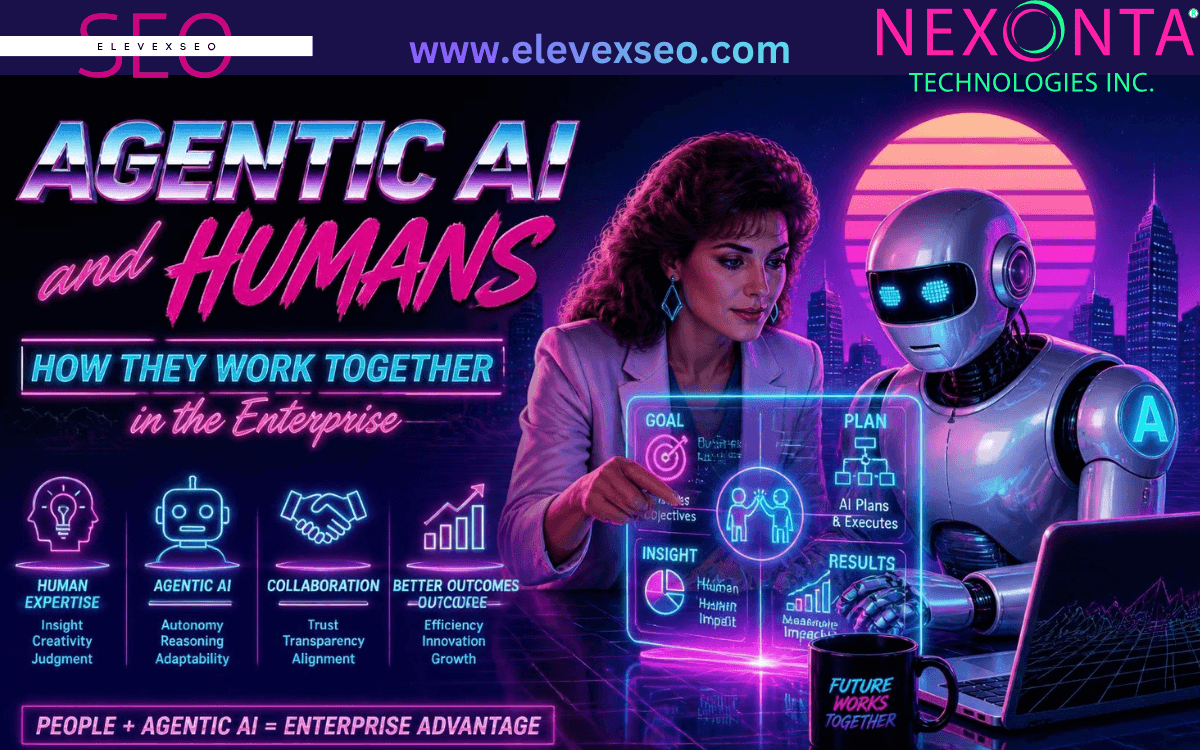
  • Agentic AI and Humans: How They Work Together in the Enterprise

    Agentic AI and Humans: How They Work Together in the Enterprise

    Lately, we have been talking a lot about Agentic AI. There is good reason for that. The technology is moving quickly, and we are already hearing about some exciting developments expected in 2027.

    But as we have become more involved in the Agentic AI conversation, we have noticed something else.

    There is still a lot of confusion about how Agentic AI and humans actually work together.

    Some people hear “AI agents” and immediately think about automation replacing people. Others imagine a business where AI simply takes over tasks and employees step aside.

    That is not the way we see it.

    At the enterprise level, Agentic AI is designed to create a working relationship between humans and AI.

    And that distinction matters.

    Agentic AI Is Not Just Another Automation Tool

    Traditional automation is generally designed to follow a specific set of instructions.

    If this happens, do that.

    That can be incredibly useful. But businesses are rarely that simple.

    Workflows change. Customers change. Priorities change. Problems appear unexpectedly. Employees have to make decisions and move information from one system to another.

    This is where Agentic AI starts to become interesting.

    Rather than simply completing one isolated task, an AI agent can be designed to work across a broader workflow. It can help interpret information, coordinate tasks, identify next steps and support people as work moves through a process.

    The human is still part of that process.

    The technology becomes another layer of intelligence within the workflow.

    The Human and AI Relationship

    Think about a business owner who spends hours every week dealing with repetitive administrative work.

    There may be emails to review, information to organize, reports to prepare, customer inquiries to respond to and internal communications to coordinate.

    None of these tasks may seem overwhelming on their own.

    Together, however, they can consume a significant amount of time.

    This is where the relationship between humans and Agentic AI can become valuable.

    The AI can help manage parts of the workflow while people remain responsible for decisions that require judgment, context, relationships and accountability.

    In simple terms:

    Humans provide direction, judgment and oversight.

    AI can help manage information, processes and repetitive work.

    That creates a very different conversation from simply asking whether AI will replace employees.

    The more useful question may be:

    Where can humans and AI work together to make the business operate better?

    Where Agentic AI Can Help Businesses

    Every organization has bottlenecks.

    Sometimes they are obvious.

    Sometimes they are hidden inside everyday work.

    A business might be dealing with:

    • Repetitive workflows
    • Operational bottlenecks
    • Excessive administrative workloads
    • Missed opportunities
    • Inefficient communication
    • Information scattered across different systems
    • Slow follow-up
    • Growing overhead
    • Employees spending valuable time on low-value tasks

    These problems can create a domino effect.

    A small delay in one part of the business can create another delay somewhere else.

    Eventually, people spend more time managing the process than actually moving the business forward.

    Agentic AI can potentially help connect these pieces.

    Instead of looking at AI as a collection of individual tools, businesses can begin looking at it as an intelligent workflow layer.

    That is an important shift.

    From Individual AI Tools to an Intelligent Workflow

    Many businesses already use AI.

    They may use ChatGPT to create content. Another tool might summarize meetings. Another might help with customer service. Someone else might use AI to analyze data.

    Each tool can be useful.

    But what happens when these tools operate as disconnected pieces?

    People still have to move information between them.

    That creates another problem.

    The opportunity with Agentic AI is to think beyond individual applications and start looking at the entire workflow.

    What happens when a customer inquiry comes in?

    Where does the information go?

    Who reviews it?

    What happens next?

    What information needs to be collected?

    Who needs to be notified?

    What happens if the customer does not respond?

    Where is the information stored?

    These are workflow questions.

    Agentic AI can potentially help coordinate parts of that process while keeping humans involved where human judgment is important.

    What About the Cost?

    This is where every business owner should slow down and look at the numbers.

    Adopting AI is not automatically a cost saving.

    There can be software costs, implementation costs, integration costs, training costs and ongoing management costs.

    There can also be a learning curve.

    So the question should not simply be:

    “How much does AI cost?”

    A better question is:

    “What does this workflow currently cost the business?”

    That means looking at the time employees spend on repetitive work, the cost of delays, missed opportunities, unnecessary administrative work and the operational cost of keeping inefficient processes in place.

    A simple cost-benefit assessment might look at four areas:

    1. Time

    How many hours are currently spent on repetitive or administrative tasks?

    2. Labour

    Could employees spend more of their working time on higher-value activities?

    3. Revenue Opportunities

    Are leads, customers or opportunities being missed because follow-up is slow or inconsistent?

    4. Operational Efficiency

    Could better coordination reduce delays, duplication or unnecessary overhead?

    This does not mean every business will see the same financial return.

    The economics will depend on the business, the workflow, the technology being implemented and how effectively it is adopted.

    But the exercise itself is important.

    Before investing in AI, understand the problem you are trying to solve.

    The Competitive Advantage May Be the Workflow

    There is another part of this conversation that businesses should consider.

    AI tools are becoming increasingly accessible.

    That means simply having access to AI may not be much of a differentiator.

    The bigger opportunity may come from how a business uses AI.

    Two companies could have access to similar AI technology.

    One might use it to generate occasional content.

    The other might integrate AI into customer communication, internal processes, research, reporting and operational workflows.

    The technology may be similar.

    The workflows are not.

    That difference could become increasingly important as businesses continue adopting AI.

    Competitive advantage may come less from owning a particular AI tool and more from building smarter ways of working.

    Humans Still Matter

    This is perhaps the most important part of the conversation.

    Agentic AI does not eliminate the need for people.

    Businesses still need people to understand customers, make strategic decisions, build relationships, handle complex situations and take responsibility for important outcomes.

    AI can process information quickly.

    That does not mean it understands the business in the same way the people inside that business do.

    This is why human oversight remains important.

    The goal is not to remove humans from the workflow.

    The goal is to give people better tools.

    Imagine an employee spending less time searching through information and more time talking to a customer.

    Imagine a business owner spending less time chasing administrative tasks and more time working on growth.

    Imagine a sales team receiving better-organized information before making a customer call.

    That is where the human-AI relationship becomes much more interesting.

    Start With the Bottleneck, Not the Technology

    One of the biggest mistakes businesses can make is starting with the technology.

    They find an exciting AI platform and then try to figure out where to use it.

    We believe the conversation should start somewhere else.

    Start with the bottleneck.

    Where is the business losing time?

    Where are employees frustrated?

    Where are customers waiting?

    Where is information getting lost?

    Where is communication breaking down?

    Where is overhead increasing?

    Where are opportunities being missed?

    Once those questions are answered, it becomes much easier to determine whether Agentic AI has a meaningful role to play.

    Technology should solve a business problem.

    It should not become another problem for the business to manage.

    Looking Ahead to 2027

    The next stage of AI is likely to be less about simply asking an AI chatbot a question and more about how AI can participate in the workflows that businesses already depend on.

    That makes the conversation around Agentic AI particularly interesting.

    The businesses exploring this technology today are not simply asking, “What can AI do?”

    They are beginning to ask better questions.

    Where can AI help us work more efficiently?

    Where can humans add the most value?

    Which workflows should be redesigned?

    What should remain human-led?

    How can we build a business that uses AI without losing the human element?

    Those questions are likely to become even more important as Agentic AI continues to develop.

    The Future Is the Relationship

    Agentic AI does not have to be a story about humans versus machines.

    It can be a story about better ways of working.

    The opportunity is to combine human experience, judgment and creativity with AI’s ability to process information, coordinate workflows and handle repetitive work.

    For business owners, that could mean fewer bottlenecks, less administrative pressure and more time focused on the work that actually moves the business forward.

    But the first step is not buying an AI system.

    It is understanding your business.

    Find the bottlenecks.

    Understand the workflows.

    Calculate where time and resources are being spent.

    Then ask where Agentic AI could create meaningful value.

    That is where the human-AI relationship really begins.

    Ready to Look at Your AI Opportunities?

    If your business is dealing with repetitive workflows, growing administrative workloads, communication challenges or operational bottlenecks, it may be time to look at where AI can actually fit into the business.

    Start with the workflow. Find the bottleneck. Then explore what Agentic AI could do.

    Explore Your AI Opportunities

    The future of business AI is not simply about using more technology.

    It is about using technology more intelligently — and keeping people at the centre of the process.

  • Hot Wheels for Every Mood: There’s a Car for Every Day

    Hot Wheels for Every Mood: There’s a Car for Every Day

    Hot Wheels has a funny way of making ordinary days feel a little more special. Over the past few years, we’ve been posting a different Hot Wheels car on our Instagram account every day. And along the way, we started noticing something pretty amazing.

    There really is a Hot Wheels for every day. And every mood.

    Some days call for something fast and flashy. Other days, you might want something classic, cool, tough, funny, or just plain different. With thousands of Hot Wheels models out there, it’s not hard to find one that seems to match exactly how you’re feeling.

    There’s a Hot Wheels for Every Feeling

    That’s one of the things we love most about collecting.

    Hot Wheels aren’t just little cars sitting on a shelf. Each one can have its own personality.

    Feeling energetic? Grab a car that looks like it’s ready to hit the track.

    Having one of those days when you need a little attitude? There’s a Hot Wheels for that too.

    Maybe you’re feeling nostalgic and want a classic model that takes you back to another time. Or perhaps you just want something fun that makes you smile.

    That’s the beauty of the collection.

    There’s always another car that seems to fit the moment.

    Our Daily Hot Wheels Tradition

    For the past few years, we’ve made a habit of sharing a Hot Wheels car on Instagram every day.

    At first, it was simply a fun way to share the collection.

    But over time, it became something more.

    Choosing a car each day started to feel like a little daily ritual. Some days the choice was easy. Other days, we would look through the collection and think, “Which car feels right today?”

    And sometimes the answer surprised us.

    That’s when we realized that collecting Hot Wheels isn’t only about finding rare cars or adding another model to the collection.

    It can also be about enjoying the little things.

    The Joy of Finding Your Match

    One of the best parts of collecting Hot Wheels is that everyone can have a different favourite.

    Your favourite might be a Ferrari, Porsche, Lamborghini, Corvette, Batmobile, or an exotic supercar.

    Or maybe it’s a car that nobody else would pick.

    That’s perfectly fine.

    There’s no right or wrong choice.

    Your Hot Wheels collection tells a story about what catches your eye and what makes you happy. And sometimes, the car you connect with today might not be the one you would have picked yesterday.

    That’s what makes it fun.

    So, What Hot Wheels Are You Feeling Today?

    For me, today’s choice is the Golden ’67 Corvette.

    It has that classic look that just feels right. It’s stylish, unmistakable, and has plenty of personality.

    So today, this is my Hot Wheels mood.

    Tomorrow could be something completely different.

    And that’s the fun of collecting.

    You never really know which little car is going to catch your eye next.

    Your Turn

    Take a look at your own Hot Wheels collection.

    Forget about which car is the rarest or most valuable for a moment.

    Instead, ask yourself:

    What Hot Wheels are you feeling today?

    Maybe it’s your favourite car. Maybe it reminds you of a great memory. Or maybe you simply looked at it and thought, “Yep. That’s the one.”

    Whatever the reason, share it with us.

    Follow along on Instagram and join us as we find a Hot Wheels for every day, every mood, and every moment.

    Because sometimes, it only takes a little car to make an ordinary day feel a little more special.

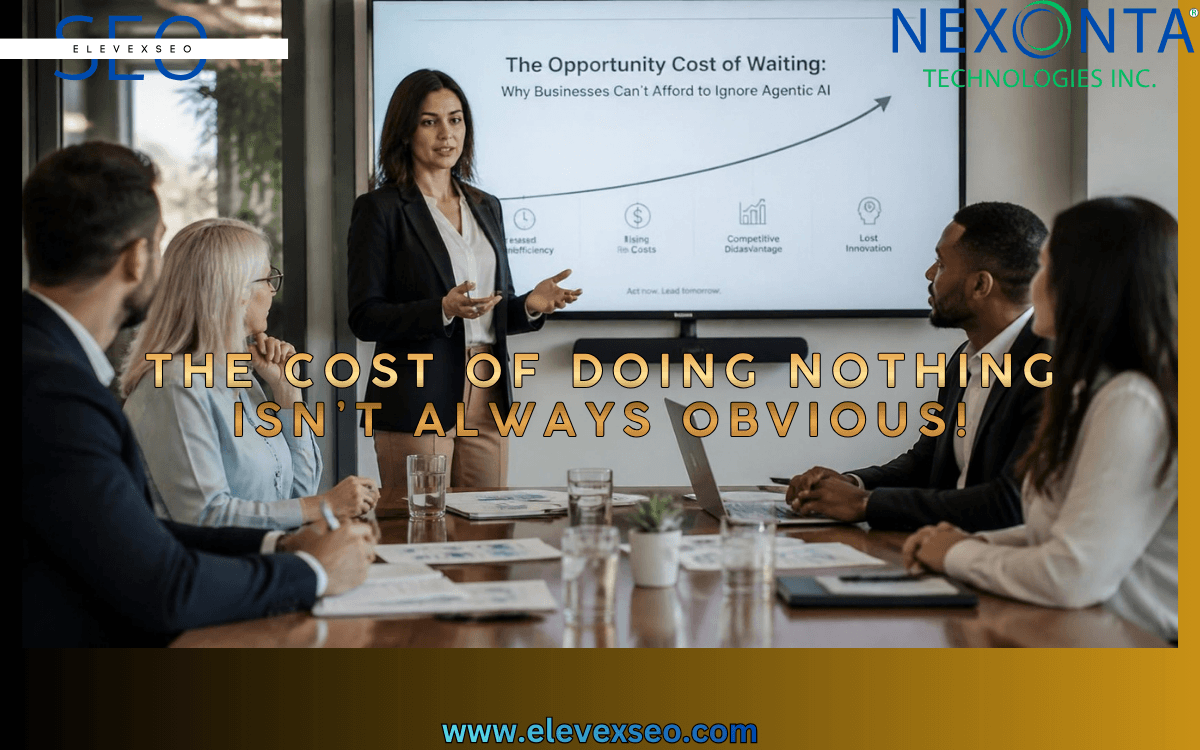
  • The Opportunity Cost of Waiting: Why Businesses Can’t Afford to Ignore Agentic AI

    The Opportunity Cost of Waiting: Why Businesses Can’t Afford to Ignore Agentic AI

    Opportunity cost is the value of what you give up when you choose one option over another.

    In business, that can be a difficult concept to see when the decision involves new technology. If you decide not to embrace Agentic AI, there may be no immediate cost on your balance sheet. But that doesn’t mean the decision is free. The real cost may be what your business misses while others move forward.

    We’ve seen something similar before.

    Remember What Happened With the Internet?

    Go back to the early days of the internet.

    When the dot-com bubble burst in 2000 and 2001, confidence in the internet economy took a major hit. Companies failed. Investments disappeared. Many people became cautious about the technology and questioned whether the internet had been overhyped.

    It was understandable.

    The technology was still developing. The business models were changing. And there was plenty of uncertainty.

    But the internet itself wasn’t going away.

    Businesses that continued investing in websites, e-commerce, digital communication and online services helped shape what came next. Over time, the internet became part of the basic infrastructure of modern business.

    The lesson wasn’t that every early internet investment was a winner.

    The lesson was that a technology can go through a period of volatility without disappearing.

    And that distinction matters when we look at AI today.

    AI Isn’t Going Away

    Artificial intelligence has already moved beyond being a futuristic idea.

    It is becoming part of how businesses research, communicate, analyze information, create content, support customers and automate repetitive work.

    Now we are seeing another step forward: Agentic AI.

    Unlike a traditional AI tool that simply responds to a prompt, Agentic AI can be designed to work through a series of tasks toward a specific goal.

    It can help research information, make decisions within defined parameters, use connected tools and complete multi-step workflows.

    That changes the conversation.

    The question is no longer simply:

    “Should we use AI?”

    A better question may be:

    “What is the opportunity cost of waiting?”

    The Cost of Doing Nothing Isn’t Always Obvious

    When a company decides not to adopt a new technology, the decision can feel safe.

    There is no new software to implement.

    No employees need to be trained.

    No processes need to change.

    No budget needs to be allocated.

    For the moment, everything stays the same.

    But your competitors may not be staying the same.

    They may be using AI to respond to customers faster. They may be automating administrative work. They may be analyzing data more efficiently. They may be finding new ways to reach customers and improve their internal processes.

    None of this means AI automatically makes one company better than another.

    It does mean that the technology can change the economics of how work gets done.

    And that creates an opportunity cost for businesses that wait too long.

    Waiting Has a Cost

    Imagine two businesses operating in the same industry.

    Both have capable employees. Both have good products. Both have loyal customers.

    One begins experimenting with Agentic AI.

    It starts small.

    The company identifies repetitive tasks. It tests AI-assisted workflows. It learns what works and what doesn’t. Employees become more comfortable working alongside AI.

    The other company decides to wait.

    Maybe it wants to see what happens first.

    That sounds reasonable.

    But six months later, the first company has six months of experience that the second company doesn’t have.

    A year later, it may have redesigned several workflows.

    Its employees may understand how to use AI effectively.

    Its leadership may have a clearer idea of where AI creates value and where it doesn’t.

    That experience itself has value.

    And it is part of the opportunity cost of waiting.

    You Don’t Have to Bet the Company on AI

    Embracing Agentic AI doesn’t mean handing your business over to a machine.

    It doesn’t mean replacing every employee.

    And it certainly doesn’t mean adopting every new AI product that comes along.

    Smart adoption can start much smaller.

    Look at your business and ask:

    * What tasks take too much employee time?
    * Where are people repeatedly doing the same work?
    * Where are customers waiting for answers?
    * What information takes too long to find?
    * Which processes involve too many manual steps?
    * Where could better automation improve the customer or employee experience?

    Those questions can reveal opportunities.

    You may discover that Agentic AI has a role to play in one small area of the business.

    That’s often a better place to start than trying to transform everything at once.

    The Biggest Risk May Be Standing Still

    Every new technology brings uncertainty.

    There will be companies that adopt AI badly.

    There will be tools that disappear.

    There will be products that fail to deliver what they promise.

    There will also be companies that find practical ways to use AI to improve how they work.

    That is why the goal shouldn’t be to chase the latest AI trend.

    The goal should be to understand the technology well enough to make informed decisions.

    Because there is a difference between being cautious and standing still.

    The internet taught businesses that a technology can be messy in its early stages and still become incredibly important.

    Agentic AI may be following a similar path.

    We don’t know exactly what the next five or ten years will look like.

    But we do know that AI is continuing to develop.

    The question for business leaders is what they choose to do with that reality.

    The Opportunity Cost Question Every Business Should Ask

    Instead of asking only:

    “What will it cost us to adopt Agentic AI?”

    Ask another question:

    “What could it cost us if we don’t?”

    That doesn’t mean every business needs to adopt Agentic AI immediately.

    It means every business should understand the opportunity before deciding.

    Research it.

    Test it.

    Start with one workflow.

    Measure the results.

    Learn from the experience.

    Then decide where it makes sense to go next.

    Because the biggest cost may not be the money spent experimenting with AI.

    It may be the opportunities, efficiencies and experience your business misses while waiting for everyone else to figure it out.

    AI Is Moving Forward. Is Your Business?

    The businesses that navigated the early internet era successfully weren’t necessarily the ones that predicted everything correctly.

    They were the ones willing to learn, adapt and figure out where the technology could create real value.

    Agentic AI gives businesses another opportunity to do exactly that.

    You don’t have to predict the future.

    You just have to be willing to explore it.

    Ready to Explore the Opportunity?

    Don’t wait until Agentic AI becomes something your competitors already understand.

    Start by identifying one process in your business that could be improved through AI.

    Learn what is possible. Ask the right questions. Test a practical use case. And build your AI strategy from there.

    The first step isn’t adopting everything. It’s understanding what’s possible.

    Explore how Agentic AI could work for your business today.

  • Agentic AI: The Next Competitive Advantage for Growing Businesses

    Agentic AI: The Next Competitive Advantage for Growing Businesses

    Agentic AI is changing the way businesses think about growth, productivity, sales, marketing, and scale. At Nexonta Technologies, we believe this is more than another technology trend. It represents a major shift in how organizations will get work done and compete in the years ahead.

    The question is no longer whether AI will become part of business.

    The bigger question is how deeply AI will become part of your business.

    AI Has Already Changed the Game

    Think about how quickly generative AI changed the way we work.

    A few years ago, if you wanted to write a research paper, you might spend hours searching for information, organizing your thoughts and writing everything yourself.

    Today, you can use a tool like ChatGPT to help research, organize, draft and refine that same work in a fraction of the time.

    That does not mean the human becomes unnecessary.

    It means the human has a much more powerful tool.

    Now imagine taking that idea much further.

    Instead of AI simply helping you complete a task, Agentic AI can help manage a series of tasks, make decisions within defined boundaries, interact with systems and move work forward.

    That is where things start to get very interesting for businesses.

    What Is Agentic AI?

    Traditional software usually waits for you to tell it what to do.

    Generative AI can respond to your questions and requests.

    Agentic AI takes another step forward.

    It is designed to work toward a goal. Depending on how it is built and governed, an AI agent can plan steps, use tools, interact with business systems and carry out parts of a workflow with less human intervention.

    In simple terms:

    Generative AI helps you do the work.

    Agentic AI can help move the work forward.

    That difference could have a major impact on how businesses operate.

    The Race Has Started

    This is where business leaders need to start paying attention.

    Organizations are already exploring and scaling AI agents across areas such as technology, knowledge management, software development, marketing, sales and operations. Recent 2026 research from McKinsey shows that larger organizations are moving from AI experimentation toward scaling AI agents, although adoption is still far from universal.

    That creates an interesting situation.

    Not every competitor is using Agentic AI.

    But some are.

    And the gap between experimenting with AI and actually building it into business processes could become increasingly important.

    The competitive advantage may not come from simply having access to AI.

    It may come from knowing how to use it as part of the way your business operates.

    What Could Agentic AI Mean for Your Business?

    Every organization is different. That means there is no single Agentic AI strategy that works for everyone.

    But there are some areas where businesses are already looking at opportunities.

    Sales

    AI agents can help organize information, support lead research, assist with follow-up processes and help sales teams spend more time on meaningful conversations.

    Marketing

    Marketing teams can use AI to support research, content development, campaign workflows, customer insights and other repetitive processes.

    Customer Service

    AI agents can help manage routine requests, find information and support customers across different stages of the customer journey.

    Operations

    Businesses can look at repetitive workflows and identify where AI could help coordinate tasks, move information between systems or reduce manual work.

    Business Intelligence

    AI can help teams work with large amounts of information and surface useful insights faster.

    The goal is not to replace every person or automate everything.

    The goal is to identify where intelligent technology can help your people work smarter and your business move faster.

    This Is Bigger Than Another AI Tool

    This is an important distinction.

    Adding another AI tool to your technology stack is not necessarily an AI strategy.

    Agentic AI becomes much more interesting when it connects with the way your business actually operates.

    That means looking at your workflows.

    Your data.

    Your systems.

    Your customers.

    Your sales process.

    Your marketing.

    Your internal operations.

    And then asking a simple question:

    Where could AI create meaningful leverage?

    That is a much better starting point than simply asking, “What AI tool should we buy?”

    Big Tech Is Moving Fast

    There is another reality businesses need to recognize.

    The biggest technology companies are investing heavily in AI infrastructure, agents, orchestration and enterprise applications.

    The technology is evolving quickly.

    And the rules of the AI ecosystem are being shaped by companies with enormous resources, data, infrastructure and development teams.

    That creates both an opportunity and a challenge for smaller and mid-sized organizations.

    You may not have the resources of a global technology company.

    But you do not necessarily need them.

    The opportunity is to understand what these technologies can do and identify where they can create value inside your own organization.

    You Don’t Need to Transform Everything at Once

    One of the biggest mistakes a business can make is thinking that adopting Agentic AI means changing everything overnight.

    It doesn’t.

    A smarter approach is to start with the business.

    Look at where your team spends time.

    Look for repetitive processes.

    Identify bottlenecks.

    Find areas where employees are spending valuable time on work that could potentially be assisted or coordinated by AI.

    Then build from there.

    This approach also gives organizations an opportunity to put the right governance and controls in place. As AI agents become more autonomous, oversight, security, data quality and accountability become increasingly important.

    The Real Question Is: Where Do You Want to Go?

    At Nexonta Technologies, we see Agentic AI as an important part of the next generation of sales and marketing technology.

    Our focus is on helping organizations understand where technology can create real business value.

    Because technology should not be adopted simply because it is new.

    It should have a purpose.

    It should solve problems.

    It should help people.

    And ultimately, it should help businesses grow and scale.

    The organizations that take the time to understand Agentic AI now will be in a much better position to make informed decisions as the technology continues to develop.

    You don’t have to know exactly what your AI strategy should look like today.

    But it is worth asking the question.

    What happens if your competitors figure it out before you do?

    The AI Race Isn’t About Being First. It’s About Being Ready.

    The AI landscape is moving quickly.

    You do not need to chase every new tool.

    You do need to understand what is changing.

    Agentic AI represents a shift from AI that simply assists people toward AI that can potentially participate more directly in business workflows.

    For small, medium and large organizations, that creates a new conversation about productivity, growth and scale.

    And that conversation is already happening.

    Ready to Explore What Agentic AI Could Mean for Your Business?

    Nexonta Technologies helps organizations explore the next generation of sales and marketing technology, including opportunities created by Agentic AI.

    Let’s look at where AI could make a meaningful difference in your business — and where it may not.

    Start the conversation with Nexonta Technologies and discover where Agentic AI could fit into your growth strategy.

  • So Excited for the Fall Drop of Hot Wheels!

    So Excited for the Fall Drop of Hot Wheels!

    There is something exciting about the fall drop of Hot Wheels, especially when you never quite know what you are going to find when you walk up to the pegs. I don’t know if anyone else has noticed this, but this year it feels like there have been more Hot Wheels drops than usual. Every time we stop by one of our Hot Wheels stomping grounds, there seems to be something sitting there that we have never seen before.

    Maybe there really have been more drops this year.

    Or maybe it just feels that way.

    Either way, we are definitely not complaining!

    Every Visit Seems to Bring Something New

    One of the best parts of collecting Hot Wheels is that you never really know what you are going to find.

    You can walk into a store thinking you are just going to take a quick look at the pegs. Then you spot something new.

    And suddenly, that “quick look” turns into a full search.

    We have had quite a few of those moments lately.

    Every time we visit one of our regular Hot Wheels stops, there seems to be a new model, a different colour, a fresh assortment, or something we simply don’t remember seeing before.

    That is what makes the hunt so much fun.

    You just never know what might be waiting for you.

    Is There Really More Hot Wheels This Year?

    Now, this is where we have to admit that we could be imagining it.

    We haven’t been keeping an official count of every Hot Wheels drop throughout the year. So we can’t say for certain that there have actually been more releases or cases hitting the stores.

    But it sure feels like it!

    And honestly, does it really matter?

    Part of the fun is noticing those little changes when you are out hunting.

    Maybe the pegs look different.

    Maybe there are new models showing up.

    Maybe a store that was picked over last week suddenly has something interesting.

    Whatever the reason, it gives us another excuse to stop and take a look.

    The Fall Drop Makes the Hunt Even More Exciting

    There is something about the fall season that makes Hot Wheels hunting feel a little different.

    The new drops start showing up, and suddenly we are paying even closer attention to the pegs.

    What is new?

    What haven’t we seen yet?

    Is there a Treasure Hunt hiding in there?

    Is there a casting we have been waiting for?

    And, of course, is there something completely unexpected sitting right in front of us?

    That is the fun of collecting.

    You can never be completely sure what you are going to find.

    And That Keeps Us Coming Back

    One of the biggest reasons we keep checking the pegs is simple.

    There is always the possibility of finding something new.

    Even when we don’t find a car we are looking for, there is still something exciting about seeing what has arrived since our last visit.

    Sometimes we find exactly what we hoped for.

    Sometimes we find something we didn’t even know we wanted.

    And sometimes we walk away empty-handed.

    That is all part of the hunt.

    You never know what the next visit will bring.

    Bring On the Fall Hot Wheels!

    So, are there actually more Hot Wheels drops this year?

    We honestly don’t know.

    Maybe there are.

    Maybe we are just noticing them more.

    But either way, we are having a lot of fun with it.

    The fall drop has us checking the pegs a little more often and wondering what might show up next.

    And really, isn’t that what collecting is all about?

    The surprise.

    The hunt.

    The excitement of finding something new.

    So bring on the fall Hot Wheels!

    We will be checking those pegs.

    And who knows what we might find next?

    Are You Finding More Hot Wheels This Year?

    We want to hear from other collectors!

    Have you noticed more Hot Wheels drops or new models showing up at your regular stores this year?

    Leave a comment and tell us what you have been finding on the pegs.

    And if you are enjoying the Hot Wheels hunt with us, keep checking back for more collecting stories, new finds, and Hot Wheels adventures.

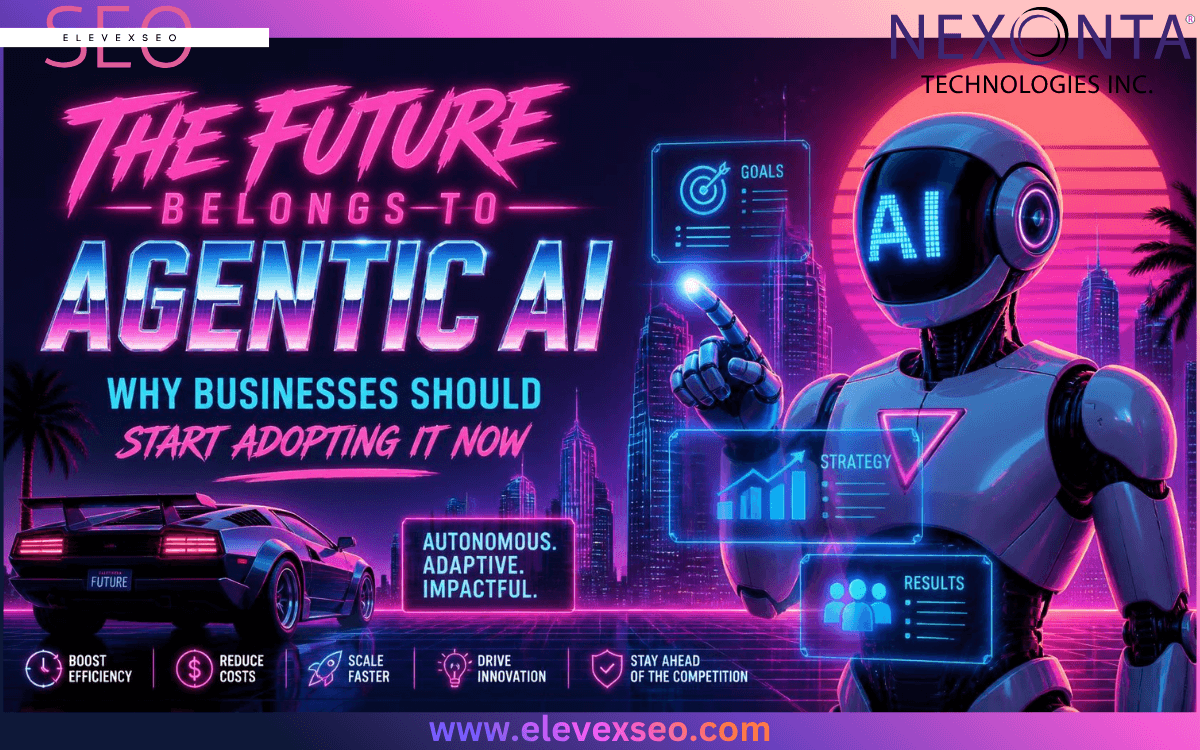
  • The Future Belongs to Agentic AI: Why Businesses Should Start Adopting It Now

    The Future Belongs to Agentic AI: Why Businesses Should Start Adopting It Now

    Agentic AI is changing the way businesses use artificial intelligence, and companies that start exploring it early will have an opportunity to build a real advantage over time. Until recently, most businesses were just beginning to experiment with AI. Tools like ChatGPT and Claude have made large language models accessible to almost everyone. They are powerful tools, and they have changed the way people think about AI.

    But something much bigger is happening now.

    AI is moving beyond simply answering questions, writing content, or analyzing information.

    We are entering the age of Agentic AI.

    From Asking AI Questions to Getting Things Done

    There is an important difference between using an AI chatbot and using an AI agent.

    You can ask ChatGPT to write an email. You can ask Claude to summarize a document. You can ask an AI model to analyze information or help you brainstorm an idea.

    All of that is useful.

    But what if AI could take the next step?

    What if you could tell an AI system:

    “Here is a problem in my business. Find a way to solve it.”

    That is where Agentic AI becomes particularly interesting.

    Instead of simply responding to a prompt, an AI agent can be designed to work toward a specific goal. Depending on the system, it can analyze information, make decisions, use different software tools, complete tasks, check its work, and move through multiple steps to accomplish an objective.

    The shift is significant.

    We are moving from AI that answers questions to AI that can help perform work.

    ChatGPT and Claude Are Only the Beginning

    For many companies, the introduction to AI has been through tools such as ChatGPT and Claude.

    That makes perfect sense.

    They are easy to access and can be incredibly useful for everyday business tasks.

    Companies are using large language models to help with writing, research, customer communications, brainstorming, coding, data analysis, marketing and much more.

    But these are only part of the larger AI landscape.

    There is a rapidly expanding ecosystem of AI models, tools, platforms and specialized systems. Different models can be better suited to different types of tasks.

    One model might be useful for writing.

    Another might be better suited to coding.

    Another could specialize in analyzing images, processing data, searching information or handling a specific business workflow.

    The opportunity comes from connecting these capabilities together.

    That is one of the reasons Agentic AI is so exciting.

    What Is Agentic AI?

    In simple terms, Agentic AI refers to AI systems designed to pursue goals and carry out a series of actions with a greater degree of autonomy.

    Think of the difference between an assistant who waits for instructions and one who understands the objective and works through the steps needed to accomplish it.

    For example, imagine a company wants to improve its lead-generation process.

    A traditional AI chatbot might help write a marketing email.

    An Agentic AI system could potentially be designed to support a much larger workflow.

    It might:

    * Research a target market
    * Identify potential prospects
    * Analyze available information
    * Organize the data
    * Help personalize outreach
    * Track responses
    * Identify follow-up opportunities
    * Generate reports
    * Recommend the next action

    The exact capabilities depend on the technology, integrations, permissions and human oversight involved.

    But the underlying idea is powerful.

    Instead of using AI for one task at a time, businesses can begin thinking about AI in terms of complete workflows and business outcomes.

    Businesses Can Start With the Problem

    This may be one of the biggest changes Agentic AI brings to the table.

    You don’t necessarily have to start by asking:

    “Which AI tool should we buy?”

    You can start with a much better question:

    “What problem are we trying to solve?”

    Maybe your sales team spends hours researching prospects.

    Maybe customer information is scattered across several systems.

    Maybe your employees spend too much time moving information from one platform to another.

    Maybe reporting takes days.

    Maybe your marketing team is producing content but struggling to maintain a consistent process.

    Maybe there is a repetitive workflow that nobody enjoys doing but someone has to do it.

    These are business problems first.

    The technology comes second.

    An experienced Agentic AI agency can look at the problem, examine the existing workflow and determine where AI agents, automation, data and other technologies may fit.

    That changes the conversation completely.

    From Buying Software to Building Solutions

    For years, businesses have largely approached technology by purchasing software.

    Need accounting? Buy accounting software.

    Need customer relationship management? Buy a CRM.

    Need email marketing? Buy an email platform.

    Need project management? Buy project management software.

    Those tools remain important.

    But Agentic AI introduces another possibility.

    Instead of forcing every business problem into an existing software package, companies can increasingly explore custom AI-powered solutions built around the way their business actually operates.

    That does not mean every business needs a custom AI agent.

    It doesn’t.

    Sometimes an existing tool is exactly what a company needs.

    But when a business has a complex workflow or a problem that doesn’t fit neatly into an off-the-shelf solution, Agentic AI can open up new possibilities.

    The Rise of the Agentic AI Agency

    This is where the role of an Agentic AI agency becomes particularly interesting.

    Most business owners don’t want to become AI engineers.

    They don’t want to spend months learning how different AI models work.

    They want their business problems solved.

    An Agentic AI agency can help bridge that gap.

    The conversation can begin with the business rather than the technology.

    You explain what is happening.

    You explain what isn’t working.

    You explain where your team is spending time.

    You explain what you would like to accomplish.

    From there, an AI-focused team can investigate the available technologies and determine what type of solution could potentially address the problem.

    That might involve one AI model.

    It might involve several models.

    It might involve AI agents, automation, APIs, databases, existing business software and human oversight working together.

    The goal isn’t to use AI simply because AI is fashionable.

    The goal is to use the right technology to solve the right business problem.

    Early Adoption Doesn’t Mean Rushing In

    There is an important distinction between being an early adopter and jumping into every new AI tool that appears.

    Businesses don’t need to chase every shiny new technology.

    In fact, that can create more problems than it solves.

    Early adoption should be thoughtful.

    Start with a real business need.

    Look at the process.

    Understand the risks.

    Determine where human oversight is required.

    Protect sensitive information.

    Measure the results.

    Then improve the system over time.

    The businesses that learn how to work effectively with AI may be better positioned to adapt as the technology continues to develop.

    And that learning process can start today.

    Agentic AI Could Change the Way We Think About Business

    For decades, businesses have looked for ways to make processes faster and more efficient.

    Computers changed how information was processed.

    The internet changed how businesses communicated and sold products.

    Cloud computing changed how companies accessed software and data.

    Automation changed how repetitive tasks were handled.

    AI is now pushing that evolution further.

    Agentic AI could change how businesses think about work itself.

    Instead of asking:

    “How can we make this task faster?”

    businesses may increasingly ask:

    “Can this entire process be redesigned?”

    That is a much bigger question.

    And it opens the door to some very interesting possibilities.

    The Businesses That Start Learning Now Will Be Better Prepared for What Comes Next

    Nobody knows exactly what the AI landscape will look like five or ten years from now.

    The technology is moving too quickly.

    New models are appearing.

    New tools are being developed.

    New business applications are emerging.

    What we can see already is that AI is becoming more capable and more integrated into everyday business operations.

    That makes now a good time for businesses to learn.

    Not necessarily to automate everything.

    Not necessarily to replace people.

    But to understand what is possible.

    Start by identifying the repetitive, expensive or frustrating problems inside your business.

    Then ask a simple question:

    “Could Agentic AI help us solve this?”

    You might be surprised by the answer.

    The Future of AI Is About More Than Chatbots

    ChatGPT and Claude helped introduce millions of people to the possibilities of generative AI.

    But they are not the entire story.

    The next phase is about connecting AI capabilities with tools, information, workflows and business objectives.

    That is where Agentic AI enters the picture.

    The future may not belong to businesses that simply use the most AI tools.

    It may belong to businesses that learn how to use AI strategically to solve real problems.

    And the companies that begin exploring those possibilities now will have more experience to build on as the technology continues to evolve.

    Ready to Explore What Agentic AI Could Do for Your Business?

    You don’t need to know which AI model to use.

    You don’t need to understand every new AI platform.

    Start with your business problem.

    Tell us what isn’t working, what is taking too much time, or what you wish your business could do better.

    Our team can help explore where Agentic AI may fit and what a practical AI-powered solution could look like for your organization.

    The future of AI isn’t just about asking better questions. It’s about creating better solutions.

    Ready to see what Agentic AI could do for your business? Let’s start with the problem you’re trying to solve.

  • Is Agentic AI the New Website?

    Is Agentic AI the New Website?

    Twenty-something years ago, businesses started realizing that websites could change the way they attract customers and get work done, much like the Yellow Pages and directories changed business before it. Back then, relying only on word of mouth, referrals, the Yellow Pages, and business directories was no longer enough.

    Then the internet changed everything.

    Websites became the new front door for businesses. Google became the place people went to find them. Over time, websites and search engines became essential parts of marketing, sales, customer service, and day-to-day operations.

    Today, we may be standing at the beginning of another major shift.

    Agentic AI is the new kid on the block.
    And this time, the change could go much further than simply having another tool on your computer.

    From the Yellow Pages to Google

    Think about how much business has changed over the past two decades.
    There was a time when someone looking for a plumber, accountant, lawyer, restaurant, or local retailer might pick up the Yellow Pages.
    Then came the website.

    Instead of asking, “Who do you know?” people could search online.

    Google quickly became one of the most important places for businesses to be found. A company’s website became its digital storefront. It was available 24 hours a day, seven days a week.

    Businesses learned that having a website was no longer optional.

    It became part of doing business. Then came social media, online advertising, e-commerce, online reviews, marketing automation, customer relationship management systems, and countless other digital tools.

    Each step changed how businesses connected with customers.

    Now another shift is happening.

    What Is Agentic AI?

    So, what exactly is Agentic AI? In simple terms, Agentic AI refers to AI systems that can take action toward a goal instead of simply responding to a question or generating content.

    Traditional AI might answer a question.
    Agentic AI can potentially take the next steps.
    It can help organize information, analyze data, complete repetitive tasks, coordinate workflows, monitor activity, and interact with other systems.
    Instead of saying:
    “Here is how you could do this.”
    An agentic system may be able to say:
    “I’ve completed the steps that were assigned to me.”
    That difference is important.
    The real opportunity isn’t simply having a smarter chatbot.
    It is having digital systems that can help businesses do more of the work automatically.

    Large Companies Have Already Been Moving in This Direction

    Large multinational organizations have been investing heavily in artificial intelligence and automation for years.
    For many of these organizations, the goal isn’t necessarily to replace people. It is to remove repetitive work.
    Think about all the tasks inside a business that happen over and over again.
    Sorting information.
    Moving data between systems.
    Preparing reports.
    Following up with customers.
    Scheduling.
    Monitoring processes.
    Answering common questions.
    Checking information.
    Generating routine communications.

    These tasks can consume enormous amounts of time. When technology can handle some of that work, people can spend more time on activities that require judgment, creativity, relationships, problem-solving, and strategic thinking. That is where Agentic AI becomes particularly interesting.

    The Big Change: AI Is Moving From Assistant to Worker

    This may be one of the biggest changes we’re going to see.
    For years, we’ve thought about technology as something we operate.
    We open an application.
    We type something.
    We click a button.
    We wait for the result.
    Agentic AI starts to change that relationship.
    Instead of simply using software, we can begin giving software goals and instructions.
    For example:
    “Review these customer inquiries and identify the ones that need immediate attention.”
    Or:
    “Look at this week’s sales information and prepare a summary of the biggest changes.”
    Or:
    “Monitor these leads and flag the ones that haven’t been contacted.”
    The technology can potentially handle multiple steps in the process.
    That doesn’t mean humans disappear from the process.
    In many cases, it means humans can move further up the value chain.

    Why This Matters to Small and Medium-Sized Businesses

    For a long time, advanced technology was often something that belonged to the biggest companies.
    They had the budgets.
    They had the IT departments.
    They had teams of developers and consultants.
    Small and medium-sized businesses often didn’t have those resources.
    That is changing.
    AI tools are becoming increasingly accessible to smaller organizations.
    A small business doesn’t necessarily need a massive technology department to begin exploring how AI could help with marketing, customer service, administration, research, sales support, or internal operations.
    That creates an interesting opportunity.
    A smaller company may be able to use technology that, not that long ago, was mainly available to much larger organizations.

    Is Agentic AI Actually the New Website?

    This is where things get interesting.
    A website changed how customers found a business.
    Agentic AI could change how businesses interact with customers and get work done.
    Your website might tell people who you are, what you do, and how to contact you.
    An AI agent could potentially help someone find the right information, answer questions, qualify an inquiry, schedule a meeting, follow up, or move a request into the next stage of the process.
    That is a very different role.
    And it doesn’t mean websites are going away.
    Quite the opposite.
    Your website, Google presence, social media, online reviews, and other digital assets may become even more important because they provide the information that AI systems use to understand your business.
    The difference is that the way people access that information may be changing.

    Your Online Presence Still Matters

    This is an important point for business owners.
    Agentic AI doesn’t eliminate the need for a strong online presence.
    It may make one even more important.
    If an AI system is helping someone find a business, it needs reliable information to work with.
    Who are you?
    What do you offer?
    Where are you located?
    Who do you serve?
    What makes your business different?
    How can someone contact you?
    Are your business details accurate across the web?
    Does your website clearly explain what you do?
    These fundamentals still matter.
    In fact, businesses may need to start thinking about their online presence not only in terms of being found by people, but also in terms of being understood by AI systems.

    The Website Isn’t Dead. The Digital Front Door Is Evolving.

    Twenty years ago, the big question was:
    “Does your business have a website?”
    Today, that question isn’t nearly enough.
    The bigger question may become:
    “Can your business be found, understood, and acted on by AI?”
    That is a much bigger conversation.
    The businesses that start exploring Agentic AI now don’t necessarily need to completely transform everything overnight.
    They can start small.
    Look at the repetitive tasks inside the business.
    Identify where employees spend too much time doing manual work.
    Look at customer questions that come up again and again.
    Look at lead follow-up.
    Look at reporting.
    Look at research.
    Then ask a simple question:
    Could AI help us do this better or faster?
    You may be surprised by how many opportunities you find.
    The Next Digital Shift Is Already Underway
    The internet didn’t eliminate relationships.
    Websites didn’t eliminate salespeople.
    Google didn’t eliminate businesses.
    They changed how businesses were discovered and how people interacted with them.
    Agentic AI may follow a similar path.
    It isn’t necessarily about replacing the people behind a business.
    It is about giving those people better tools.
    The companies that understand this early will have an opportunity to rethink how they market, communicate, sell, and operate.
    And just as businesses eventually learned that they needed a website, there may come a time when businesses realize they need to think about AI agents as part of their digital infrastructure.
    The question isn’t whether the technology will continue to evolve.
    It will.
    The more interesting question is:
    How will your business use it?

    Ready to Explore What Agentic AI Could Do for Your Business?

    You don’t need to rebuild your entire business to get started.
    Start by looking at the repetitive tasks that take up time every week. Then look at where AI could help your team work smarter, respond faster, and spend more time on the things that actually require a human touch.
    Agentic AI is still evolving. But the opportunity to start exploring it is already here.
    Want to see where Agentic AI could fit into your business?
    Let’s start the conversation.

☎ ✉
f 𝕏