Tag: business innovation

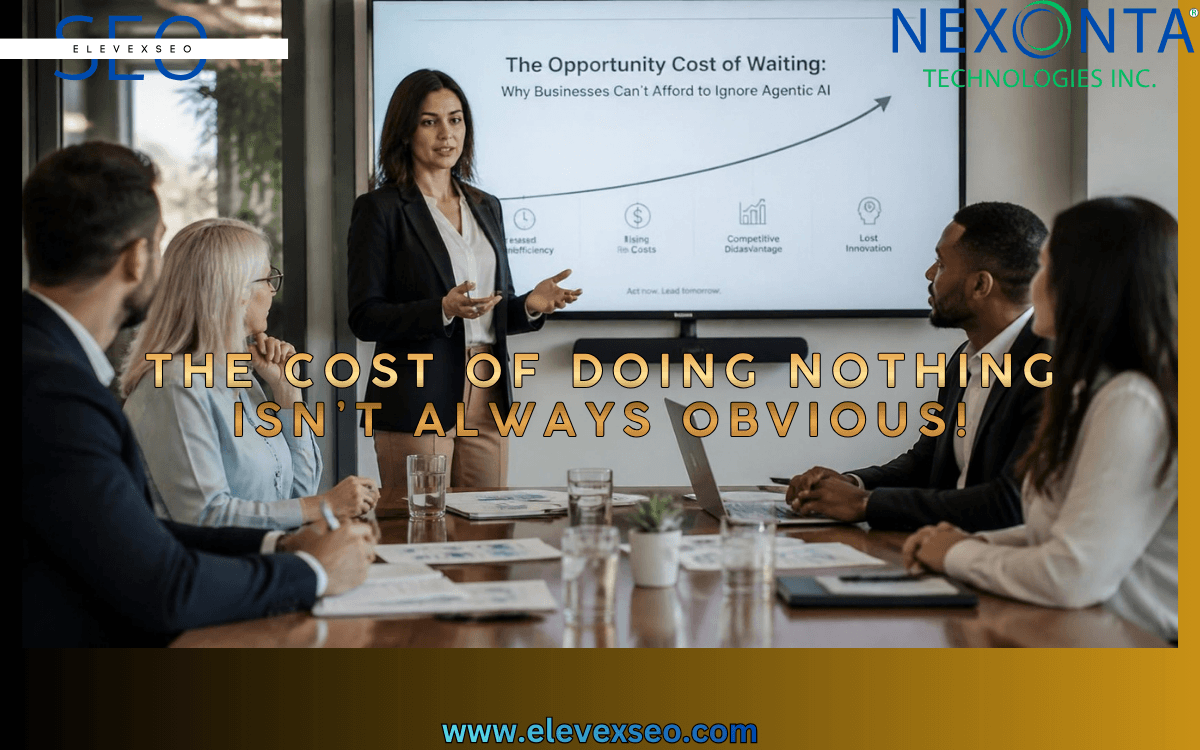
  • The Opportunity Cost of Waiting: Why Businesses Can’t Afford to Ignore Agentic AI

    The Opportunity Cost of Waiting: Why Businesses Can’t Afford to Ignore Agentic AI

    Opportunity cost is the value of what you give up when you choose one option over another.

    In business, that can be a difficult concept to see when the decision involves new technology. If you decide not to embrace Agentic AI, there may be no immediate cost on your balance sheet. But that doesn’t mean the decision is free. The real cost may be what your business misses while others move forward.

    We’ve seen something similar before.

    Remember What Happened With the Internet?

    Go back to the early days of the internet.

    When the dot-com bubble burst in 2000 and 2001, confidence in the internet economy took a major hit. Companies failed. Investments disappeared. Many people became cautious about the technology and questioned whether the internet had been overhyped.

    It was understandable.

    The technology was still developing. The business models were changing. And there was plenty of uncertainty.

    But the internet itself wasn’t going away.

    Businesses that continued investing in websites, e-commerce, digital communication and online services helped shape what came next. Over time, the internet became part of the basic infrastructure of modern business.

    The lesson wasn’t that every early internet investment was a winner.

    The lesson was that a technology can go through a period of volatility without disappearing.

    And that distinction matters when we look at AI today.

    AI Isn’t Going Away

    Artificial intelligence has already moved beyond being a futuristic idea.

    It is becoming part of how businesses research, communicate, analyze information, create content, support customers and automate repetitive work.

    Now we are seeing another step forward: Agentic AI.

    Unlike a traditional AI tool that simply responds to a prompt, Agentic AI can be designed to work through a series of tasks toward a specific goal.

    It can help research information, make decisions within defined parameters, use connected tools and complete multi-step workflows.

    That changes the conversation.

    The question is no longer simply:

    “Should we use AI?”

    A better question may be:

    “What is the opportunity cost of waiting?”

    The Cost of Doing Nothing Isn’t Always Obvious

    When a company decides not to adopt a new technology, the decision can feel safe.

    There is no new software to implement.

    No employees need to be trained.

    No processes need to change.

    No budget needs to be allocated.

    For the moment, everything stays the same.

    But your competitors may not be staying the same.

    They may be using AI to respond to customers faster. They may be automating administrative work. They may be analyzing data more efficiently. They may be finding new ways to reach customers and improve their internal processes.

    None of this means AI automatically makes one company better than another.

    It does mean that the technology can change the economics of how work gets done.

    And that creates an opportunity cost for businesses that wait too long.

    Waiting Has a Cost

    Imagine two businesses operating in the same industry.

    Both have capable employees. Both have good products. Both have loyal customers.

    One begins experimenting with Agentic AI.

    It starts small.

    The company identifies repetitive tasks. It tests AI-assisted workflows. It learns what works and what doesn’t. Employees become more comfortable working alongside AI.

    The other company decides to wait.

    Maybe it wants to see what happens first.

    That sounds reasonable.

    But six months later, the first company has six months of experience that the second company doesn’t have.

    A year later, it may have redesigned several workflows.

    Its employees may understand how to use AI effectively.

    Its leadership may have a clearer idea of where AI creates value and where it doesn’t.

    That experience itself has value.

    And it is part of the opportunity cost of waiting.

    You Don’t Have to Bet the Company on AI

    Embracing Agentic AI doesn’t mean handing your business over to a machine.

    It doesn’t mean replacing every employee.

    And it certainly doesn’t mean adopting every new AI product that comes along.

    Smart adoption can start much smaller.

    Look at your business and ask:

    * What tasks take too much employee time?
    * Where are people repeatedly doing the same work?
    * Where are customers waiting for answers?
    * What information takes too long to find?
    * Which processes involve too many manual steps?
    * Where could better automation improve the customer or employee experience?

    Those questions can reveal opportunities.

    You may discover that Agentic AI has a role to play in one small area of the business.

    That’s often a better place to start than trying to transform everything at once.

    The Biggest Risk May Be Standing Still

    Every new technology brings uncertainty.

    There will be companies that adopt AI badly.

    There will be tools that disappear.

    There will be products that fail to deliver what they promise.

    There will also be companies that find practical ways to use AI to improve how they work.

    That is why the goal shouldn’t be to chase the latest AI trend.

    The goal should be to understand the technology well enough to make informed decisions.

    Because there is a difference between being cautious and standing still.

    The internet taught businesses that a technology can be messy in its early stages and still become incredibly important.

    Agentic AI may be following a similar path.

    We don’t know exactly what the next five or ten years will look like.

    But we do know that AI is continuing to develop.

    The question for business leaders is what they choose to do with that reality.

    The Opportunity Cost Question Every Business Should Ask

    Instead of asking only:

    “What will it cost us to adopt Agentic AI?”

    Ask another question:

    “What could it cost us if we don’t?”

    That doesn’t mean every business needs to adopt Agentic AI immediately.

    It means every business should understand the opportunity before deciding.

    Research it.

    Test it.

    Start with one workflow.

    Measure the results.

    Learn from the experience.

    Then decide where it makes sense to go next.

    Because the biggest cost may not be the money spent experimenting with AI.

    It may be the opportunities, efficiencies and experience your business misses while waiting for everyone else to figure it out.

    AI Is Moving Forward. Is Your Business?

    The businesses that navigated the early internet era successfully weren’t necessarily the ones that predicted everything correctly.

    They were the ones willing to learn, adapt and figure out where the technology could create real value.

    Agentic AI gives businesses another opportunity to do exactly that.

    You don’t have to predict the future.

    You just have to be willing to explore it.

    Ready to Explore the Opportunity?

    Don’t wait until Agentic AI becomes something your competitors already understand.

    Start by identifying one process in your business that could be improved through AI.

    Learn what is possible. Ask the right questions. Test a practical use case. And build your AI strategy from there.

    The first step isn’t adopting everything. It’s understanding what’s possible.

    Explore how Agentic AI could work for your business today.

  • AI Business Growth: The Next Chapter of Innovation Has Already Begun

    AI Business Growth: The Next Chapter of Innovation Has Already Begun

    For the past three years, AI Business Growth has been one of the most talked-about topics in the world. Every week seemed to bring a new artificial intelligence platform, application, or tool promising to change everything.

    Some succeeded.

    Many disappeared.

    Others evolved into something completely different.

    While it may have felt chaotic at times, something remarkable happened during this period. AI opened the door to a new wave of innovation, entrepreneurship, and opportunity that is only beginning to show its full potential.

    Today, we are entering the next phase.

    A phase where artificial intelligence is no longer just a trend. It is becoming a practical tool that helps businesses grow, communities thrive, and people solve problems that once seemed impossible.

    The Experimentation Phase Is Over

    The last few years were filled with exploration.

    Companies tested AI in customer service.

    Marketing teams experimented with content creation.

    Developers built thousands of applications.

    Investors poured billions into new technologies.

    It was exciting, but it was also unpredictable.

    Now the landscape is changing.

    Businesses are moving beyond experimentation and focusing on real-world results. They want solutions that save time, reduce costs, improve efficiency, and create new opportunities.

    In other words, AI is maturing.

    The conversation is no longer about what AI might do.

    The conversation is about what AI is already doing.

    Creating Opportunities Where They Never Existed Before

    One of the most exciting aspects of artificial intelligence is its ability to level the playing field.

    For decades, many communities and industries were held back by outdated systems and limited access to resources.

    Small businesses struggled to compete with large corporations.

    Remote communities had fewer opportunities to access expertise and technology.

    Innovators with great ideas often lacked the tools needed to bring those ideas to life.

    AI is helping change that.

    Today, a single entrepreneur can access tools that were once available only to large organizations with massive budgets.

    A small company can automate tasks that used to require entire departments.

    Researchers can process enormous amounts of data in hours instead of months.

    The barriers are getting lower, and the opportunities are getting bigger.

    The Story That Caught My Attention

    Recently, I came across a story that perfectly captures the potential of this new era.

    A young scientist developed a process that converts plastic waste into fuel that can power vehicles and equipment that run on gasoline or other fuel sources.

    Think about that for a moment.

    For years, plastic waste has been one of the world’s most frustrating environmental challenges.

    Now imagine turning that problem into a solution.

    Instead of seeing waste, this scientist saw opportunity.

    Instead of accepting limitations, they searched for a better way.

    This is exactly the kind of thinking that AI can help accelerate.

    Artificial intelligence can analyze data, identify patterns, and uncover possibilities that might otherwise remain hidden.

    It does not replace human creativity.

    It amplifies it.

    The breakthrough still begins with a person who is willing to ask a better question.

    The Future Is Limitless

    Throughout history, every major technological advancement has created new possibilities.

    The internet changed communication.

    Smartphones changed accessibility.

    Cloud computing changed how businesses operate.

    Artificial intelligence is doing something even bigger.

    It is helping people solve problems faster than ever before.

    The possibilities extend into healthcare, education, transportation, energy, manufacturing, agriculture, and virtually every other sector of the economy.

    Tomorrow’s breakthroughs may come from a teenager in a small town, a startup operating from a garage, or a scientist working on a challenge that nobody else has been able to solve.

    Technology is making innovation more accessible than ever.

    That should excite all of us.

    Why Businesses Should Pay Attention

    The companies that embrace AI today are positioning themselves for long-term success.

    They are finding ways to serve customers better.

    They are improving productivity.

    They are making smarter decisions based on better data.

    Most importantly, they are creating room for innovation.

    Businesses that ignore these opportunities may find themselves relying on systems designed for a world that no longer exists.

    The future belongs to organizations that are willing to adapt, learn, and evolve.

    AI Is Not the Destination—It Is the Vehicle

    Many people think AI is the end goal.

    It isn’t.

    AI is a tool.

    A powerful one.

    But like any tool, its value depends on how it is used.

    The real goal is progress.

    The real goal is solving problems.

    The real goal is creating opportunities that improve lives and strengthen communities.

    Artificial intelligence simply helps us get there faster.

    Final Thoughts

    The last three years have shown us what is possible when technology and human creativity work together.

    The next three years may be even more exciting.

    We are moving beyond the hype and into a period of meaningful growth, innovation, and real-world impact.

    From transforming waste into fuel to helping businesses operate more efficiently, the examples are everywhere.

    The future is not limited by what we know today.

    It is shaped by what we are willing to imagine tomorrow.

    And with artificial intelligence helping to unlock new possibilities, that future may be closer than we think.

    Are you ready to discover what AI can do for your business, organization, or next big idea?

    Don’t wait for the future to arrive—start building it today.

    Explore the latest AI tools, challenge old ways of thinking, and look for opportunities where others see obstacles.

    The next breakthrough could come from your idea, your business, or your community.

    Let AI show you what’s possible.

  • Nexonta Is Not Just a Tech Company—It’s a Solutions Hub

    Nexonta Is Not Just a Tech Company—It’s a Solutions Hub

    In today’s world, problems don’t come neatly packaged.
    So why should solutions?

    That’s exactly where Nexonta Technologies stands apart.

    We’re not here to sell you a single product and call it a day.
    We’re here to figure it out. Whatever “it” is.

    The Old Way vs. The New Reality

    For a long time, most companies worked like this:

    * You have a problem
    * They offer their product
    * You try to make it fit

    Sometimes it works.
    A lot of times, it doesn’t.

    Because real-world challenges are layered. They involve systems, people, timing, and change.

    That’s why a one-size-fits-all solution just doesn’t cut it anymore.


    A Different Mindset: “Let’s Figure It Out”

    At Nexonta, the approach is simple—but powerful:

    Start with the problem. Not the product.

    That means asking better questions:

    * What’s actually slowing things down?
    * Where are the gaps?
    * What’s the long-term goal?

    From there, we build solutions that *fit the situation*, not force the situation to fit the solution.

    Sometimes that means combining multiple technologies.
    Sometimes it means rethinking the entire process.

    But it always means one thing: doing what works best for you.

    Why Solutions Hubs Are the Future

    More companies are starting to shift this way—and for good reason.

    Today’s organizations need:

    * Flexibility
    * Speed
    * Integration across systems
    * Solutions that can evolve

    A solutions hub brings all of that together.

    Instead of juggling multiple vendors, tools, and strategies, you get a cohesive path forward.

    And that’s where Nexonta thrives.

    Innovation Isn’t Just About Technology

    Let’s be clear—this isn’t just about using the latest tools.

    It’s about how those tools are used.

    True innovation looks like:

    * Connecting systems that weren’t designed to work together
    * Simplifying complex workflows
    * Finding smarter, more efficient paths forward
    * Adapting quickly when things change

    Technology is just the vehicle.
    The real value is in the thinking behind it.

    Real Solutions for Real Problems

    Every business is different. Every challenge is unique.

    That’s why Nexonta focuses on building:

    * Tailored strategies
    * Integrated solutions
    * Future-ready systems

    Not just something that works today…
    But something that keeps working as you grow.

    The Bottom Line

    The companies that win today aren’t the ones with the most products.

    They’re the ones that know how to solve problems creatively, quickly, and effectively.

    That’s the shift.
    That’s the future.
    And that’s exactly where Nexonta operates.

    Ready to Rethink Your Approach? 

    If you’re tired of trying to force the wrong solutions into the right problems…

    It might be time for a different conversation.

    Let’s figure it out—together.
    Reach out to Nexonta Technologies today and discover what a true solutions-first approach looks like.

  • Happy 2026 from Nexonta Technologies!

    Happy 2026 from Nexonta Technologies!

    If the past few years have taught us anything, it’s this: business doesn’t stand still. And neither can we.

    As business owners, we’ve all been tested.
    We’ve adapted.
    We’ve pivoted.
    We’ve learned some hard lessons along the way.

    2025 gave us clarity.
    2026 is about action.

    This is the year we stop just reacting and start intentionally building.

    At Nexonta Technologies, we’ve spent the last year paying attention. Watching what worked. Letting go of what didn’t. Listening closely to our clients, our partners, and the market as a whole.

    Now it’s time to implement everything we’ve learned.

    Turning lessons into momentum

    The challenges of the past few years forced businesses to rethink how they operate. From technology and systems to communication and customer experience, nothing was off-limits.

    That wasn’t easy.
    But it was necessary.

    Those challenges shaped smarter strategies. Stronger foundations. Better decision-making.

    2026 is the year those lessons turn into real momentum.

    A year to build with confidence

    This year isn’t about chasing every trend or trying to do more just to stay busy. It’s about doing the right things, on purpose.

    It’s about:

    * Building systems that actually support growth
    * Using technology to simplify, not complicate
    * Staying flexible while remaining focused
    * Making decisions with confidence, not fear

    At Nexonta Technologies, our focus remains simple: helping businesses use technology in a way that makes sense, scales efficiently, and supports long-term success.

    Moving forward together

    We’re excited about what’s ahead. Not because it will be easy — but because we’re better prepared than ever before.

    To our clients, partners, and fellow business owners: thank you for being part of the journey. Your resilience, creativity, and determination continue to inspire us.

    Here’s to implementing what we’ve learned.
    Here’s to building smarter.
    Here’s to growth, clarity, and momentum.

    Happy 2026 from all of us at Nexonta Technologies!

    Wishing you a productive, successful, and prosperous year ahead 

  • Level Up or Get Left Behind: Why Bold Moves and Innovation Are Non-Negotiable

    Level Up or Get Left Behind: Why Bold Moves and Innovation Are Non-Negotiable

    If the internet has taught us anything, it’s this: bold is better, and innovation is where it’s at. Plain and simple.

    We all love the classics. Who doesn’t want Katz’s in NYC or Schwartz’s in Montreal to stay exactly the same? That’s comfort, that’s nostalgia—it’s why we go back. But everything else? Everything else we want to be next-level good. We want businesses that aren’t just keeping up—they’re leading.

    Staying the same might feel safe, but safe doesn’t win hearts, doesn’t grab attention, and definitely doesn’t keep up with a world moving at the speed of TikTok trends and AI-driven everything. Innovation is no longer a nice-to-have. It’s survival.

    Leveling up doesn’t mean losing your soul or ditching your brand’s DNA. It means asking, “How can we do this better, faster, smarter, more memorable?” It’s about taking risks that matter. It’s about standing out, not just blending in.

    The businesses that win today are the ones willing to experiment, to be bold, to break the mold—but do it with purpose. Your customers notice. They share. They come back.

    So, look around your business. Where can you level up? Is it the customer experience? The product itself? The way you communicate? Now is the time to go big. Stay true to your core, but don’t be afraid to push the edges. Because next-level good is what keeps people talking—and keeps your business alive.

    Innovation isn’t a trend. It’s a mindset. And boldness? Well, boldness is contagious.

    Level up. Your business—and your customers—will thank you.

  • Innovation Isn’t Just for Tech Anymore: Why Every Business Needs to Get Creative

    Innovation Isn’t Just for Tech Anymore: Why Every Business Needs to Get Creative

    We usually think of innovation as something happening in Silicon Valley. Apps, AI, robots, driverless cars — that’s where our minds go. But here’s the reality: innovation is no longer just for tech companies. From coffee shops to fitness studios to old-school mom-and-pop stores, the businesses that thrive today are the ones willing to get creative.

    And let’s be honest — the world is changing too quickly for anyone to just “set it and forget it.”

    Innovation Is About Survival, Not Just Growth

    Think about Blockbuster. They thought people would always drive to a store to rent movies. Meanwhile, Netflix was experimenting with DVDs by mail, then streaming, then producing their own shows. The result? Blockbuster is a trivia answer, and Netflix is part of our daily lives.

    Innovation isn’t about bells and whistles. It’s about staying relevant when customer expectations, technology, and lifestyles shift.

    Brick-and-Mortar Businesses Are Getting Bold

    Here’s the fun part: it’s not just online companies rethinking how they operate.

    * Restaurants are using QR code menus, subscription models, and even themed pop-up experiences to keep customers coming back.
    * Gyms and studios are layering in hybrid memberships — online classes plus in-person sessions — to meet people where they are.
    * Retail shops are blending ecommerce with in-store perks, like same-day pickup or in-store exclusives.

    This isn’t “tech business.” It’s just smart business.

    Customers Expect More Now

    People are spoiled for choice. If you don’t deliver convenience, value, or a fresh experience, someone else will. That doesn’t mean small businesses have to reinvent the wheel. Sometimes innovation is as simple as:

    * Rethinking how you price (like bundles or memberships).
    * Finding new ways to market (short-form video, collaborations, events).
    * Creating a unique experience that makes people want to come back.

    The Long Game: Profitability Through Creativity

    Here’s the secret: innovation isn’t about chasing trends. It’s about future-proofing your business. The coffee shop that adds a membership program today is less vulnerable tomorrow when new competitors pop up. The retail store that experiments with online sales now is ready when customer habits shift again.

    Innovation isn’t optional. It’s insurance.

    Final Thought

    Whether you’re building the next app or running a family restaurant, the principle is the same: standing still is falling behind. The good news? Innovation doesn’t have to be massive or expensive. It just has to be thoughtful.

    So the question isn’t, “Should I innovate?” The question is, “What small step can I take today to make my business more relevant tomorrow?”

  • From Crisis to Catalyst: How COVID and Tariffs Create New Opportunities for Business Growth

    From Crisis to Catalyst: How COVID and Tariffs Create New Opportunities for Business Growth

    First, it was COVID. Then, tariffs. Two monumental disruptions that have rocked global economies and tested the resilience of businesses across every sector. But as history has shown us time and again, challenges often bring the greatest opportunities. While the world may shift, the fundamentals of business—adaptability, innovation, and delivering value—remain the same. What does change, however, is how and where these fundamentals are applied.

    In this new era, entrepreneurs who can read the signs, pivot boldly, and respond with creativity will be the ones who not only survive—but thrive.

    1. Disruption Breeds Innovation

    Every economic shake-up forces businesses to re-evaluate how they operate. During COVID, companies quickly embraced digital transformation, remote work, and e-commerce at unprecedented speeds. Now, tariffs are forcing businesses to rethink supply chains, re-source materials, and localize production. While this may seem like a headache, it’s actually a golden opportunity to uncover inefficiencies and build leaner, more resilient business models.

    Key Takeaway: The friction caused by disruption often creates the spark for innovation.

    2. Localization is the New Globalization

    Tariffs are prompting companies to look closer to home for production and sourcing. That shift can ignite entire industries in domestic markets—everything from manufacturing to logistics to sustainable farming. Entrepreneurs now have a chance to build businesses that support local economies while meeting the growing demand for transparency and traceability.

    Opportunity: Think local manufacturing, regional logistics hubs, and “Made in [Your Country]” branding that resonates with post-pandemic consumers.

    3. Digital-First Businesses Are Just Getting Started

    COVID was a massive accelerator for digital adoption, but we’re still in the early innings. Telehealth, remote education, e-commerce, and fintech exploded during the pandemic, but these industries are continuing to evolve—and so are consumer expectations. The businesses that succeed going forward will be the ones that focus on user experience, accessibility, and solving real-world problems using technology.

    Business Growth Insight: There’s still massive room for niche services that combine digital convenience with personalized human touch.

    4. Solving New Problems = New Business Models

    The combination of health crises and economic barriers has created a whole new set of problems for people, governments, and industries. That means there’s never been a better time to launch problem-solving ventures—especially ones that are agile, socially conscious, and scalable.

    From logistics startups helping small businesses navigate tariffs to wellness brands addressing post-COVID mental health—this is fertile ground for new ideas.

    5. Fundamentals Still Rule—But Strategy Must Evolve

    Let’s be clear: the basics of business haven’t changed. Understand your customer. Offer value. Deliver consistently. Build trust. What has changed is how we execute these principles. We now need to blend agility with purpose. Innovation with empathy. Technology with humanity.

    Pro Tip: Businesses that stay true to their values while flexing their strategies will build the kind of brand loyalty that lasts through any crisis.

    COVID may have brought the world to a standstill. Tariffs may be reshaping global trade. But if history is any guide, disruption is the breeding ground for transformation. Entrepreneurs who keep their eyes open, stay grounded in business fundamentals, and dare to reimagine the future will be the ones writing the next chapter of economic growth.

    The question isn’t whether we can weather the storm—it’s whether we can harness it to build something better.

  • Innovation is crucial in today’s businesses for several compelling reasons:

    Innovation is crucial in today’s businesses for several compelling reasons:

    Innovation is crucial in today’s businesses for several compelling reasons:

    1. Competitive Advantage: Businesses that innovate can differentiate themselves from competitors. Developing new products, services, or processes allows a company to stay ahead of the curve and remain competitive in the market.

    2. Adaptation to Change: The business landscape is constantly evolving due to technological advancements, changing customer preferences, and global events (e.g., economic shifts, pandemics). Innovating helps companies adapt to these changes and remain resilient.

    3. Efficiency and Productivity: Innovation often leads to increased efficiency and productivity. By finding better ways to do things, businesses can reduce costs, improve workflow, and enhance overall performance.

    4. Customer Satisfaction: Innovative solutions are often geared toward addressing customer needs and pain points. By continually innovating, businesses can provide better products and services, leading to higher customer satisfaction and loyalty.

    5. Revenue Growth: Successful innovations can open up new revenue streams. New products or services can expand a company’s market reach, attract new customers, and increase sales.

    6. Employee Engagement: Fostering a culture of innovation can boost employee engagement and morale. When employees are encouraged to contribute their creative ideas and see them implemented, it can lead to greater job satisfaction.

    7. Risk Mitigation: Innovating can also help businesses mitigate risks. For instance, diversifying product lines or adopting new technologies can reduce dependence on a single source of revenue or outdated processes.

    8. Sustainability: Innovations can lead to more sustainable practices and products, which is becoming increasingly important in today’s environmentally conscious world. Being seen as a socially responsible and eco-friendly company can enhance brand reputation.

    9. Global Reach: Innovation can facilitate globalization. New technologies, communication tools, and business models can enable companies to expand their reach to international markets and compete on a global scale.

    10. Future-Proofing: Businesses that continuously innovate are better prepared for the future. They can anticipate and adapt to emerging trends and disruptions, ensuring long-term viability.

    11. Intellectual Property and Competitive Barriers: Patents and other forms of intellectual property protection can provide a competitive advantage, creating barriers to entry for potential rivals.

    12. Regulatory Compliance: Regulatory requirements are continually evolving in various industries. Innovation can help businesses stay compliant with new laws and regulations.

    In summary, innovation is essential for businesses in today’s fast-paced and dynamic environment. It enables companies to stay relevant, competitive, and agile, and it often leads to improved performance, customer satisfaction, and financial success.

  • Nexonta Technologies Moving Forward!

    Nexonta Technologies Moving Forward!

    Nexonta Technologies Moving Forward

    A business or company is a legally recognized organization designed to provide goods, services, or both to consumers. Businesses are predominant in capitalist economies, in which most businesses are privately owned and typically formed to earn profit that will increase the wealth of its owners. The owners and operators of private, for-profit businesses have as one of their main objectives the receipt or generation of a financial return in exchange for work and acceptance of risk. Businesses can also be formed not-for-profit or be state-owned. Denis Waitley: The secret to productive goal setting is in establishing clearly defined goals, writing them down and then focusing on them several times a day with words, pictures and emotions as if we’ve already achieved them.
    Dennis Waitley:

    The winners in life think constantly in terms of I can, I will, and I am. Losers, on the other hand, concentrate their waking thoughts on what they should have or would have done, or what they can’t do. Often we find ourselves in a bad situation. Often you feel like giving up. It is at such times that you need to energize yourself with inspirational thoughts. Richard Bach said, “In order to win, you must expect to win.” That is the secret of success. If you believe in yourself, you can achieve your goals. Belief has the power to transcend all hurdles, real and imaginary. You need faith, despite the stop signs, on the road ahead. This belief give us a new sense of optimism.

    With enthusiasm, you can scale mountains. With an enthusiasm quote by your side, you always can keep your spirits alive. Keep in mind that, according to a Stanford Research Institute study success is 88 percent attitude and 12 percent education. The results should be no surprise to anyone. Maintaining a positive attitude is an important factor in your ability to succeed in life and stay sane through tough times. It’s also a topic of great importance to many business owners. Dealing with people is probably the biggest problem you face, especially if you are in business. Yes, and that is also true if you are a housewife, architect or engineer.

    Dale Carnegie –

    They say a year in the Internet business is like a dog year.. equivalent to seven years in a regular person’s life. In other words, it’s evolving faster and faster.

    Vinton Cerf – Internet – Business – Innovation

☎ ✉
f 𝕏
error: Content is protected !!