



12 October 2026
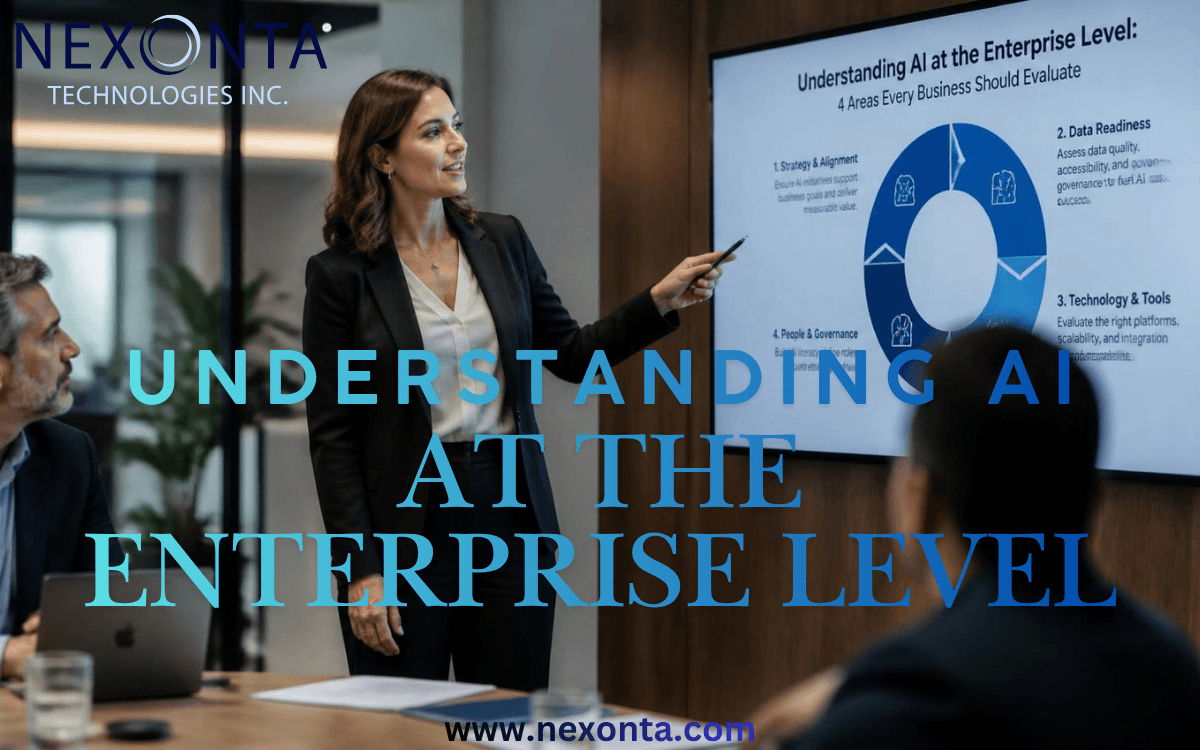
Understanding AI at the Enterprise Level: 4 Areas Every Business Should Evaluate
Understanding AI at the enterprise level starts with understanding how your business actually works. Before investing in Agentic AI, organizations need to look beyond the technology and examine how people work, how processes operate, how software is used, and how information moves across the business.
Why?
Because the biggest opportunities for AI are not always where you expect them to be.
A company might have excellent employees, powerful software, and well-established processes. Yet, work can still get stuck. Information can fall through the cracks. Customers can wait too long for a response. Employees can spend hours on tasks that could be handled more efficiently.
These problems often go unnoticed because they have become part of the daily routine.
This is where a thoughtful approach to Agentic AI can make a difference.
What Does Understanding AI at the Enterprise Level Really Mean?
Enterprise AI is about more than introducing a new tool or automating a single task. It means looking at how the entire organization operates and identifying where AI could help work move forward more efficiently.
Agentic AI takes this a step further.
Depending on the solution, AI agents can help manage multistep tasks, retrieve information, coordinate actions across connected systems, and support employees in getting work done. Appropriate human oversight remains important, especially when decisions carry financial, operational, or customer consequences.
But before deciding what to automate, businesses need to understand how work gets done today.
At Nexonta, we believe this conversation should begin with four interconnected areas.
1. People: How Are Employees Spending Their Time?
Your employees are one of your organization’s most valuable resources. The question is whether their time is being used where it creates the greatest value.
Consider the work your team handles every day.
How much time goes toward repetitive administrative tasks? How often do employees move information manually from one system to another? Are they waiting for information before they can move forward?
And how much time is spent chasing updates, sending reminders, or following up on tasks that should already be progressing?
These are important questions.
For example, a sales representative might spend hours updating records, preparing reports, and following up on leads. An operations manager might spend much of the day tracking requests and checking the status of routine tasks.
Both employees have important responsibilities. But some of their daily activities may be suitable for AI assistance or automation.
Agentic AI could help gather information, prepare updates, trigger reminders, or coordinate routine tasks. This can give employees more time to focus on customers, problem-solving, and decisions that require human judgment.
The goal is not to replace the value of your people. It is to help them spend more time doing valuable work.
Start by asking one simple question: Where are our employees spending time on work that could be handled more efficiently?
2. Processes: How Does Work Move Through the Organization?
Even great employees can struggle when business processes are slow, complicated, or poorly connected.
A task might pass through several approval stages. One department might finish its part of a project but wait days for another team to respond. A customer request might sit untouched because nobody is sure who owns the next step.
Over time, these delays become normal.
But they still cost the business time and money.
To understand where Agentic AI might help, examine how work moves from beginning to end.
Ask yourself:
- Where do tasks regularly get delayed?
- Are there unnecessary approval steps?
- Where do handoffs between teams break down?
- Which processes depend too heavily on one employee?
- Where are the biggest bottlenecks occurring?
These questions help reveal whether a problem comes from manual work, unclear responsibilities, disconnected systems, or an inefficient process.
That distinction matters.
Automating a poor process does not automatically make it better. In some cases, it simply allows an inefficient process to continue faster.
The first step is to understand the process and improve it where necessary. Then, consider where AI agents could help coordinate tasks, retrieve information, or move work to the next stage.
The result can be a smoother workflow with fewer delays and less unnecessary effort.
3. Software: Are Your Business Systems Working Together?
Most organizations rely on several software applications to run their business.
These might include a CRM, accounting software, marketing platforms, project management tools, customer service systems, and internal databases.
Each system may serve a useful purpose. The challenge is how well they work together.
Is the same information being entered more than once? Do employees have to switch between several applications to complete one task? Can different departments access the information they need?
And are you fully using the capabilities of the software you already own?
These questions are especially important when evaluating Agentic AI.
An organization might not need another standalone application. It may need a better way to connect existing systems and make information easier to access.
Where suitable integrations and permissions exist, AI agents can help retrieve information from connected tools, update records, support workflows, and reduce repetitive data entry.
For example, imagine a new sales lead arrives through your website.
Instead of requiring an employee to manually transfer the details, update a CRM, notify a salesperson, and create a follow-up reminder, a connected workflow could coordinate several of those steps automatically.
The exact capabilities depend on the systems involved, the quality of the available data, and the permissions granted.
The important point is this: before adding more technology, understand how well your current technology is being used.
You may discover that the opportunity lies in better integration rather than another software purchase.
4. Communication: Is Information Getting Where It Needs to Go?
Communication connects people, processes, and software.
When information moves slowly or gets lost, the effects can spread across the entire organization.
Customers may wait too long for answers. Sales leads may not receive consistent follow-up. Employees may spend hours coordinating meetings, requesting updates, and tracking down information.
Important messages can also get buried in email threads, chat platforms, and busy inboxes.
Sound familiar?
These challenges are worth examining because communication problems often create hidden costs.
Ask yourself:
- How quickly are customers receiving responses?
- How effectively do teams communicate internally?
- Are sales leads being followed up consistently?
- Are important messages or requests getting lost?
- How much time is spent coordinating meetings, updates, and follow-ups?
Agentic AI may help address some of these issues by organizing information, preparing responses, routing requests, summarizing conversations, and triggering follow-up actions.
For instance, an AI-supported workflow could identify a new inquiry, gather relevant customer information, notify the appropriate team member, and schedule a follow-up task.
Human review can remain part of the process wherever it is needed.
The objective is not to automate every conversation. It is to make sure important information reaches the right person at the right time, and that opportunities do not disappear simply because someone was too busy to follow up.
Why These Four Areas Need to Work Together
People, processes, software, and communication are closely connected.
A delay that appears to be a people problem might actually be caused by disconnected software. A communication breakdown might be the result of an unclear process. A slow process might exist because employees are manually transferring information between systems.
Looking at each area in isolation can cause businesses to miss the bigger picture.
That is why an enterprise-level AI assessment should consider the entire workflow.
The objective is to identify where the organization is losing time, money, information, or opportunities because work is still being performed manually or across disconnected systems.
Once those gaps are understood, businesses can make more informed decisions about where Agentic AI can deliver practical value.
This also helps avoid a common mistake: adopting AI simply because it is available.
The right starting point is not the technology. It is the business problem you want to solve.
From AI Possibilities to Practical Business Results
Every organization is different.
A solution that works well for one company may not be appropriate for another. The right approach depends on the organization’s goals, existing systems, workflows, data, security requirements, and resources.
That is why it helps to start with a clear assessment.
Identify the repetitive tasks that consume employee time. Map the processes that create delays. Review the software systems your business relies on. Examine how information moves between people and departments.
Then prioritize the opportunities.
Look for areas where improving a workflow could reduce manual effort, shorten response times, improve consistency, or help employees focus on higher-value work.
Start with a manageable use case. Establish a baseline. Define what success looks like. Measure the results before expanding the solution.
This practical approach helps turn AI from an interesting concept into a business initiative with clear objectives and measurable outcomes.
It also gives employees a better understanding of how AI will support their work, rather than simply introducing another technology they are expected to learn.
Is Your Organization Ready to Explore Agentic AI?
Understanding AI at the enterprise level begins with asking better questions about your business.
Where is your team losing time? Which processes create unnecessary delays? Are your systems working together? Is important information reaching the right people?
The answers can reveal opportunities that are easy to overlook when everyone is focused on keeping up with daily demands.
At Nexonta, we believe the most effective Agentic AI strategies start with understanding the organization first. Technology should support your business goals, solve real problems, and create meaningful improvements in how work gets done.
You do not need to automate everything at once. You need to understand where the right solution can make a difference.
Ready to Explore Agentic AI for Your Business?
Let’s start with your business, not the technology.
Nexonta can help you explore where Agentic AI may fit into your existing operations, identify opportunities to improve workflows, and determine which practical next steps make sense for your organization.
Contact Nexonta today to arrange a conversation about your Agentic AI opportunities.
Your next competitive advantage may begin with improving the way your business already works.