




5 October 2026
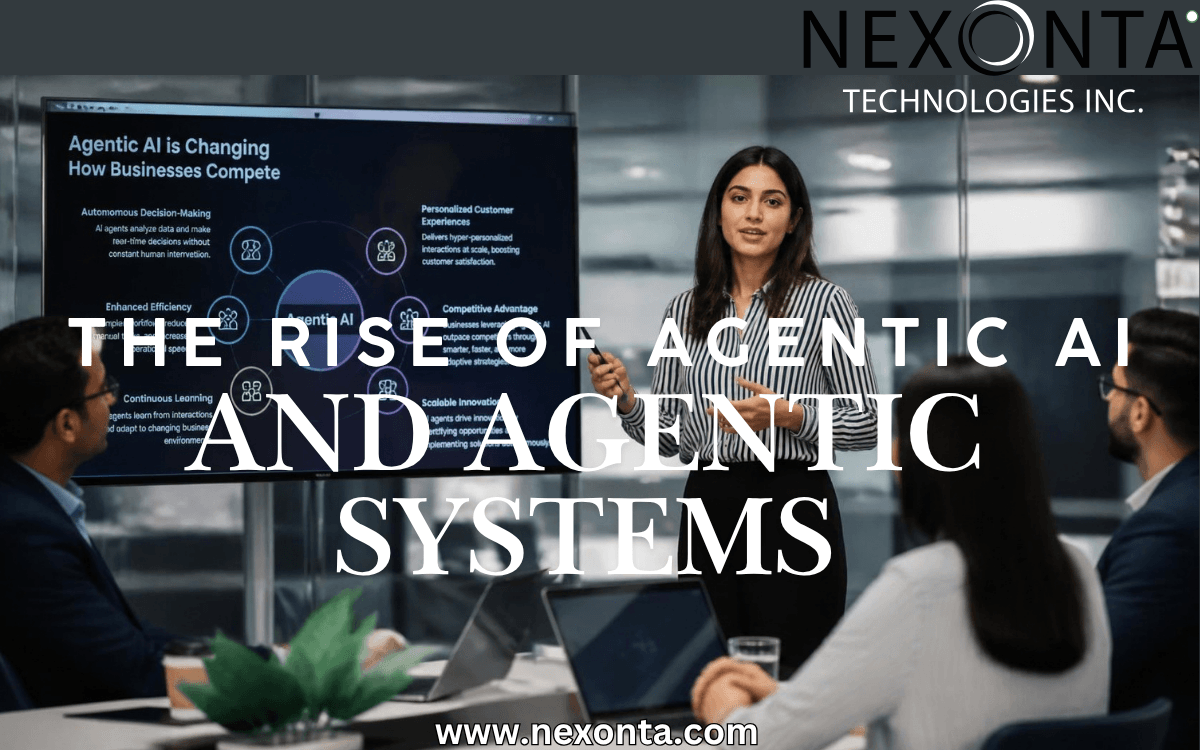
Agentic AI Is Changing How Businesses Compete
Over the past 15 years, we have watched technology evolve at a remarkable pace. Agentic AI is now taking that evolution to another level. Unless you have been closely following technology, it can be easy to fall behind. What once seemed like something reserved for large technology companies is quickly becoming accessible to businesses of all sizes.
And this is where things get interesting.
Technology Is Moving Faster Than Ever
Think about how much has changed in just 15 years.
We moved from desktop-heavy businesses to cloud computing. Smartphones became essential business tools. Social media changed how companies communicate with customers. E-commerce transformed how people shop. Then came generative AI and large language models.
Now we are entering the next phase.
AI is moving from answering questions to taking action.
That is a major shift.
Traditional AI can help you find information, analyze data, write content, or answer questions. Agentic AI takes things further by allowing AI systems to work toward a goal, make decisions within defined parameters, use different tools, and complete a series of tasks.
Instead of simply asking AI, “What should I do?”
Businesses can increasingly tell AI, “Here is the goal. Help me get it done.”
That changes the conversation completely.
The Rise of Agentic AI and Agentic Systems
Over the next several years, we are likely to see significant growth in **Agentic AI and agentic systems**.
These systems can connect different parts of a business workflow.
Imagine a company where AI agents can help monitor customer inquiries, organize information, identify opportunities, prepare reports, support marketing activities, manage repetitive administrative work, and help teams make faster decisions.
The important point is not that AI will replace every person or every job.
The bigger opportunity is that businesses can begin using AI to multiply what their existing teams can accomplish.
That could be especially important for small and medium-sized businesses.
Small Businesses Can Think Bigger
For decades, large enterprises have had an advantage.
They could afford larger teams, specialized departments, expensive technology, data analysts, automation systems, and complex infrastructure.
A smaller company might have a handful of people doing many of the same jobs.
That gap is beginning to change.
Agentic AI could give smaller businesses access to capabilities that previously required significant financial and human resources.
A small company may not need to build a massive technology department to automate parts of its operation.
Instead, it may be able to connect AI agents to the tools it already uses and create workflows that operate continuously.
That does not make a small business identical to Amazon or Shopify.
But it can potentially give smaller organizations access to enterprise-style efficiencies without enterprise-level costs.
And that is a significant change.
Speed May Become a Competitive Advantage
Business has always rewarded companies that can move quickly.
But speed has traditionally required people.
More people meant more capacity. More capacity meant higher costs.
Agentic AI introduces another variable.
Businesses may be able to increase the speed of certain processes without increasing their workforce at the same rate.
For example, an AI-powered workflow could monitor information, identify a task, gather the required data, create a draft, send it through an approval process, and update another system.
The human team can then focus on the decisions that actually require human judgment.
That combination of human expertise + AI-driven execution could become one of the defining business models of the next decade.
The LLM Could Become Part of the Business Infrastructure
There is another change worth watching.
Today, most people think about large language models as tools they interact with.
We open ChatGPT, Claude, Gemini, or another platform and ask a question.
But the next stage may look very different.
AI could become embedded directly into business operations.
Instead of employees constantly opening an AI application, AI may operate behind the scenes as part of a company’s workflow.
At some point, a significant share of business transactions and processes may be supported by a particular large language model or network of AI agents.
The AI becomes less visible.
The workflow becomes more automated.
And the business becomes more connected.
This Is Bigger Than Another Technology Trend
It is easy to look at every new technology and call it a trend.
But Agentic AI represents something different because it can affect how work actually gets done.
The shift is not simply from one software platform to another.
It is potentially a shift from software that people operate to systems that can actively participate in completing business processes.
That could affect marketing.
It could affect sales.
It could affect customer service.
It could affect accounting, administration, research, operations, logistics, and many other areas.
And because these changes are happening globally, businesses do not have to wait for the largest companies to make the first move.
The opportunity is already beginning to develop.
The Businesses That Adapt Will Have More Options
Nobody can predict exactly what the business environment will look like five or ten years from now.
Technology will continue to change. AI models will evolve. Regulations will change. New platforms will emerge. Some technologies will disappear.
But one thing is becoming increasingly clear:
Businesses will need to understand how AI fits into the way they operate.
The question is no longer simply whether a company should use AI.
The more important question is:
Where can AI create real value inside the business?
That is where the conversation needs to go.
Start with the repetitive work.
Look at the bottlenecks.
Identify where employees spend time moving information from one system to another.
Look at customer response times.
Look at reporting.
Look at marketing workflows.
Look at the tasks that slow the business down.
Then ask a simple question:
Could an AI agent help?
The Next Business Revolution Is Already Underway
Agentic AI is still developing, and there will undoubtedly be challenges along the way.
Businesses will need to think carefully about security, privacy, oversight, accuracy, integration, and human accountability.
But the potential is difficult to ignore.
For the first time, small and medium-sized businesses have the opportunity to access increasingly sophisticated technology without having to build everything from the ground up.
That could change the competitive landscape.
The future may not belong only to companies with the biggest teams or the largest technology budgets.
It may increasingly belong to businesses that know how to combine people, technology, data, and intelligent automation effectively.
The technology is moving quickly.
The question is whether your business is moving with it.
Ready to Explore What Agentic AI Could Do for Your Business?
You do not need to automate everything at once.
Start with one workflow.
Find one repetitive process. Identify one bottleneck. Look at one area where your team is spending too much time on work that could potentially be automated.
Then start testing.
Agentic AI is not simply about doing more with technology. It is about creating a smarter way for people and technology to work together.
The businesses exploring that opportunity today may have very different ways of working tomorrow.
Ready to see where AI could fit into your business? Start by identifying the processes that consume the most time, create the most friction, and offer the greatest opportunity for improvement.
The next era of business is already taking shape.
Professional woman presenting the opportunities of Agentic AI and explaining how AI-powered systems are changing the way businesses operate, improve efficiency, and compete in a rapidly evolving global economy.