




17 August 2026
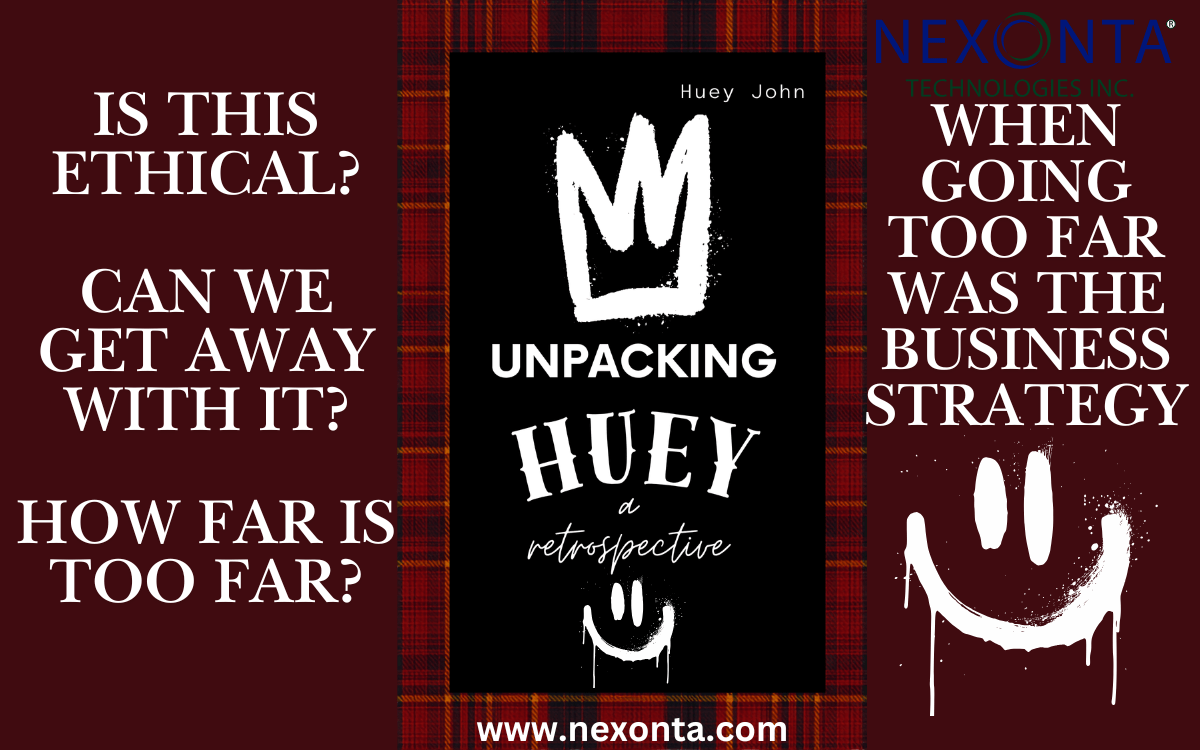
When Going Too Far Was the Business Strategy
From time to time, being a movie buff leads you to a line that sticks with you. A line that somehow captures a moment in history and makes you think about how much the world has changed. In Misconduct, starring Josh Duhamel, Al Pacino and Anthony Hopkins, there is a scene that does exactly that. Anthony Hopkins delivers the line: “You’ve gone down a rabbit hole. Then at some point you have to ask yourself, how far are you willing to go to get out?”
It is one of those lines that makes you stop and think.
Stalin said “It’s better to go too far than not far enough.”
But the real question isn’t how far you can go.
It is whether you should have gone there in the first place.
Whether you agree with the sentiment or not, it captures something that was familiar in many corporate environments decades ago.
There was a time when protecting the organization came first. Secrets stayed inside the company. Employees were expected to protect the brand. Questioning senior leadership was not always encouraged. And in some organizations, there was a strong belief that if something wasn’t technically illegal, it was fair game. That created an interesting grey area.
The question wasn’t always:
“Is this ethical?”
Sometimes the question was:
“Can we get away with it?”
And that is a very different question.
The Corporate World Has Changed
The business world of the 1990s was very different from the one we operate in today.Information moved more slowly. There was no social media putting corporate decisions under a microscope within minutes. Employees didn’t have the same ability to share information publicly. Consumers had fewer ways to compare companies, investigate claims or organize around an issue.
That created more room for organizations to push boundaries. Some companies tested those boundaries aggressively.They looked for loopholes. They protected information. They negotiated around the rules. And sometimes they pushed the envelope as far as they thought they could without crossing a legal line. But there is a big difference between legal and ethical. Something can be legal and still be wrong. That distinction is becoming much harder for organizations to ignore.
The Rabbit Hole Gets Deeper
This is where the quote from Misconduct really hits home. Once you’ve gone down the rabbit hole, getting back out can become complicated. One questionable decision leads to another. One secret requires another secret to protect it. One small compromise becomes a larger compromise. Before long, people aren’t trying to determine what the right thing to do is. They’re trying to figure out how to protect the decisions they’ve already made.That’s when corporate culture can become dangerous. Because the problem isn’t necessarily one bad decision. It is the normalization of bad decisions.
The Next Generation Is Watching
And here is where things get interesting. Many of the people entering leadership positions today grew up watching what happened in previous generations.They saw corporate scandals. They saw companies get caught manipulating information, mistreating employees or putting profits ahead of people.They watched organizations defend questionable behaviour until the evidence became impossible to ignore. And they learned from it. Not everyone, of course.But there is a growing expectation that businesses should be accountable for more than their bottom line.Employees want to know what a company stands for. Consumers want transparency. Investors increasingly look at corporate governance.And younger leaders are often much less willing to accept the old attitude of “that’s just how business works.” Maybe that is one of the more positive developments of our time.
From “Can We?” to “Should We?”
Corporate ethics isn’t about being perfect. Businesses are run by people. People make mistakes. Good decisions sometimes produce bad outcomes. And difficult choices are part of running any organization. But there should be a line.
A healthy corporate culture encourages people to ask difficult questions before a problem becomes a crisis.
Can we do this?
Should we do this?
Who could be affected?
Would we be comfortable explaining this decision publicly?
That last question can be particularly powerful.
Imagine every major corporate decision being published on the front page of a newspaper tomorrow. Would everyone involved still feel comfortable with the decision? If the answer is no, perhaps the decision deserves another look.
Transparency Changes Everything
Technology has also changed the balance of power. Information is everywhere. Employees can communicate. Customers can research. Journalists can investigate. Social media can turn a relatively small issue into a global conversation overnight. Companies can no longer assume that their secrets will remain secrets forever. And perhaps that’s a good thing. Transparency forces organizations to think beyond short-term gains. It encourages leaders to consider reputation, trust and long-term consequences. Because rebuilding trust is much harder than protecting it in the first place.
We Don’t Have to Go Down the Rabbit Hole
That brings us back to that line from Misconduct.
“How far are you willing to go to get out?”
Maybe the better question is:
“Why go that far in the first place?”
There will always be pressure to make the sale.
There will always be competition.
There will always be shareholders, deadlines, targets and difficult decisions.
But successful businesses don’t have to choose between doing well and doing the right thing. In fact, the strongest organizations understand that trust is one of their most valuable assets. You can lose money and recover. You can lose a customer and find another. But once people stop trusting you, rebuilding that trust can take years.
The Business World We Leave Behind
Every generation inherits something from the one before it. Sometimes we inherit good ideas. Sometimes we inherit bad habits.And sometimes we inherit a lesson about what not to do. Perhaps that is what makes the next generation of business leaders so important. They have an opportunity to redefine what success looks like. Not simply how much money a company makes. Not how aggressively it can compete. Not how close it can get to the legal line without crossing it. But how well it can build something people actually trust. Because ultimately, the goal shouldn’t be to figure out how far we can go. The goal should be knowing where the line is — and having the integrity not to cross it.
What Do You Think?
Have corporate ethics changed for the better? Are today’s businesses more accountable than they were 20 or 30 years ago? Or have we simply found new ways to push the boundaries?
We’d love to hear what you think. Join the conversation and share your perspective on where business ethics are headed next.
The best businesses aren’t just built on profits. They’re built on trust.