




24 March 2026
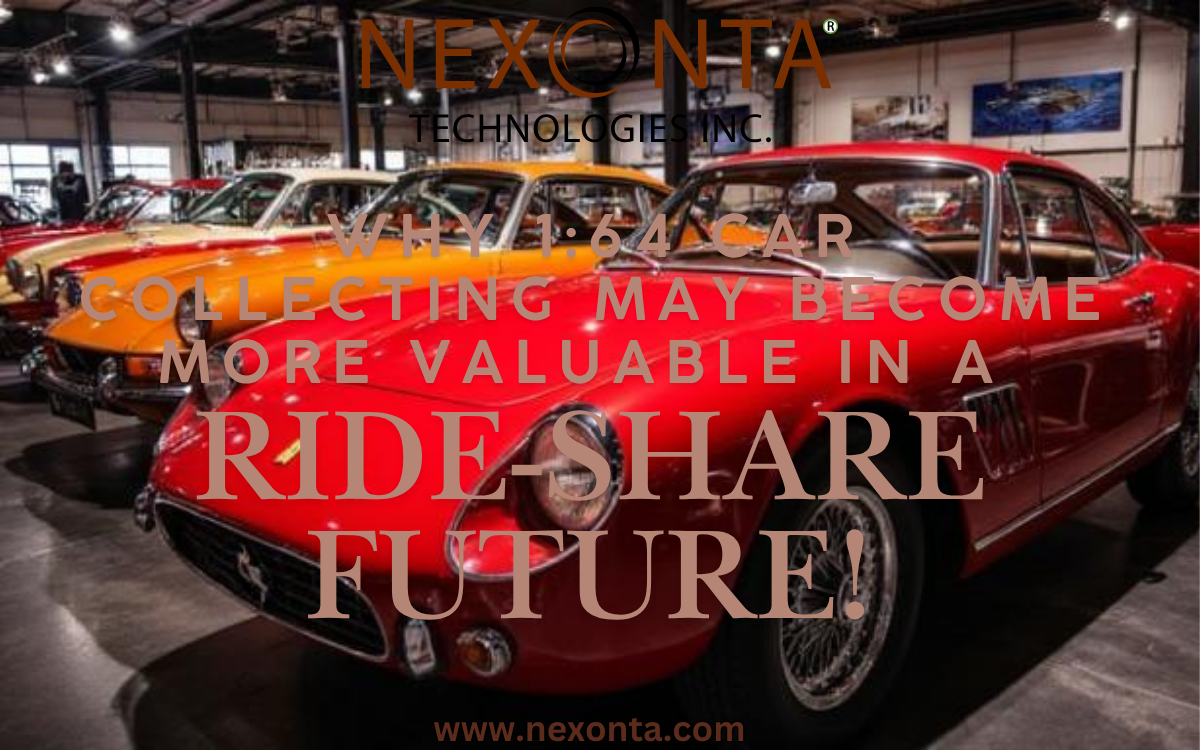
Why 1:64 Car Collecting May Become More Valuable in a Ride-Share Future
A couple of weeks ago, my business partner Dee said something that really stuck with me.
She mentioned that within the next 5 years, people may not own automobiles at the same rate we’ve been used to for decades. Between ride-sharing, autonomous vehicles, and changing city lifestyles, owning a car might become less of a necessity and more of a choice.
At first, that might sound like a big shift. But when you think about it, it makes sense.
And it also opens up an interesting question.
If fewer people are attached to owning cars… what happens to our connection with cars themselves?
The Shift Away from Ownership
We’re already starting to see the direction things are heading.
Ride-sharing services have made transportation more flexible. You can get where you need to go without worrying about insurance, maintenance, or parking.
At the same time, autonomous vehicle technology is progressing quickly. While it’s still evolving, the long-term vision is clear: mobility on demand.
For many people living in cities, owning a vehicle may no longer feel essential.
Instead of owning a car, people may simply access one when they need it.
Convenience is becoming the priority.
Why Cars Still Matter Emotionally
Even with all this change, cars are not just about transportation.
They represent something deeper.
For many people, cars are tied to memories. First cars. Road trips. Late-night drives. Family moments. Personal milestones.
That emotional connection doesn’t disappear just because ownership patterns change.
In fact, it may become even more important.
When something becomes less common in daily life, it often becomes more meaningful in other ways.
The Rise of 1:64 Collecting
This is where 1:64 scale collecting comes into the picture.
Collections like Hot Wheels and other die-cast models allow people to stay connected to automotive culture without needing to own the full-sized version.
They capture the design, creativity, and history of real vehicles in a compact and accessible form.
And they do something else too.
They preserve moments in automotive history.
Every model tells a story. A specific era. A specific design language. A specific cultural moment.
As real-world car ownership evolves, these collections can act as a bridge between generations.
They keep the passion alive.
Why This Matters More in the Future
If Dee’s prediction holds true, and fewer people own cars in the future, then physical collections may become even more valuable—not just financially, but culturally.
Here’s why:
* They preserve automotive history in a tangible way
* They allow enthusiasts to stay connected to cars without ownership
* They create a sense of identity and nostalgia
* They can represent eras that may no longer exist in everyday life
In a world that’s moving toward digital and on-demand everything, physical collections stand out.
They are real. They are intentional. They tell a story you can hold in your hand.
Collecting as a Way to Stay Connected
Collecting 1:64 scale vehicles isn’t just about having models on a shelf.
It’s about maintaining a connection to something bigger.
It’s about appreciating design, history, and innovation.
And for many people, it becomes a personal archive of what they value most about the automotive world.
As the industry evolves, collectors may find that their collections become more than a hobby.
They become a way to preserve a legacy.
We’re entering a time where how we use cars is changing.
Ownership may become less common.
Access and convenience may take center stage.
But appreciation for automobiles isn’t going anywhere.
If anything, it’s evolving.
And that’s why 1:64 collecting could play a bigger role than ever before.
It keeps the spirit of the automotive era alive in a world that’s moving in a different direction.
If you’ve ever enjoyed cars, even just a little, now is a great time to start or expand a collection.
You don’t need a garage full of vehicles to be part of automotive culture. You just need a shelf, a vision, and a passion for what cars represent.
Start small. Be intentional. Build something that reflects your story.
Because in a future where cars may be less about ownership and more about access…
Your collection could become your personal connection to an era worth remembering.